
Europe’s Grass of the Future: What Will It Look Like?
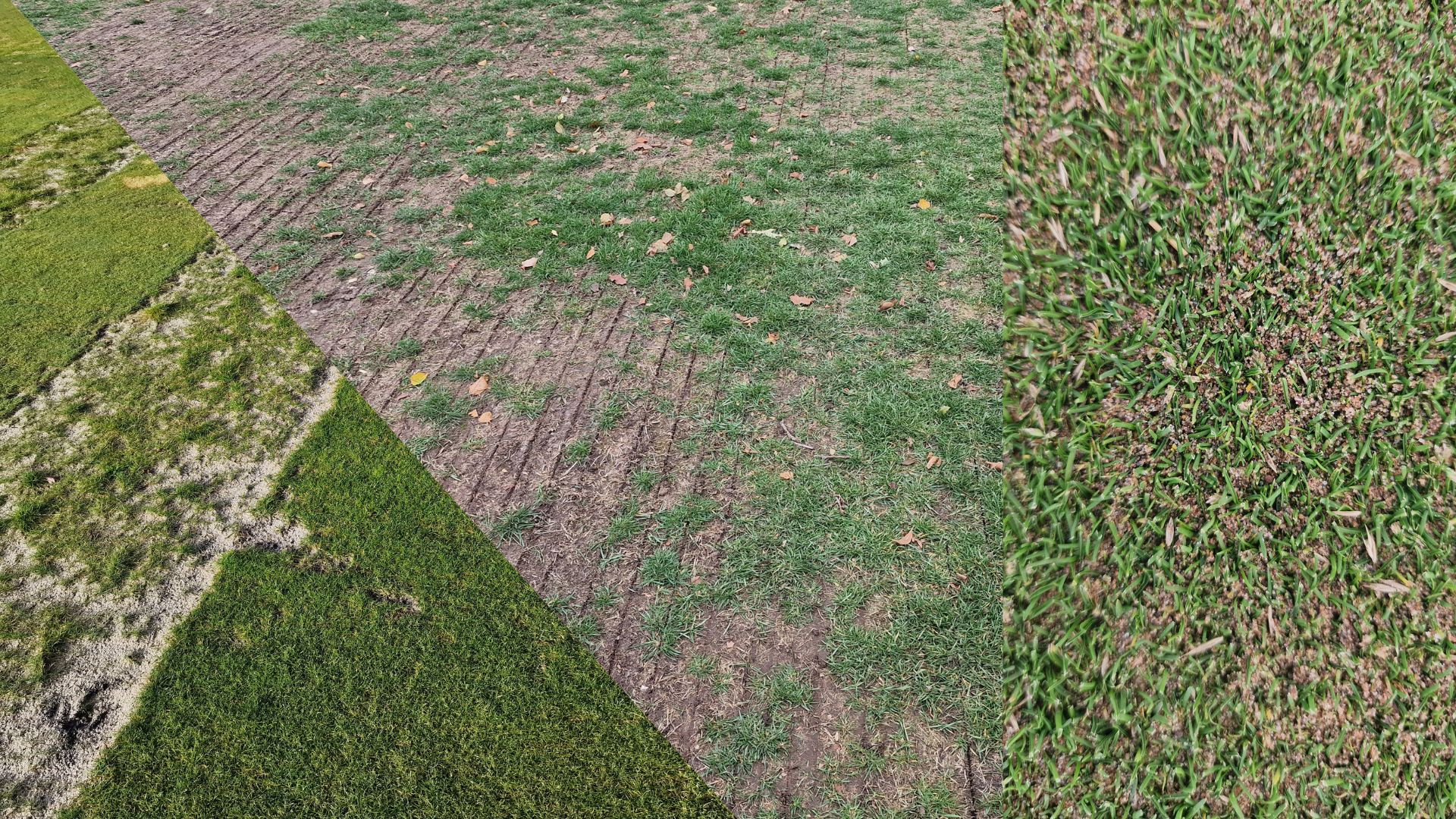
It’s overseeding season. Anyone walking across Europe’s golf courses this autumn will notice, looking at the fairways, that the hot, dry summer—which showed golfing nations like England, France, and Germany the limits of coping with the effects of climate change—has left its mark. Large bare patches have been slit-seeded and overseeded. Greenkeepers are hoping that at least a wet autumn and a moderate winter will ensure that playing conditions return to optimal levels next year.
Which seed is being used?
It’s an exciting question, because seed selection, too, is no longer what it was perhaps 15 years ago. The climate in Europe has changed, and with it, depending on the region, so have the requirements for seed. “The hot, dry summers of recent years haven’t changed our view of which grass varieties will remain relevant in the future,” summarizes Anne Mette Dahl Jensen, Product Development Manager for Turf at seed producer DLF. “But they have sparked a discussion about adapting to heat and drought, especially in Europe.”
This discussion isn’t entirely new. Seed producers essentially act as a kind of prophet in the industry. Since it can take up to 20 years from the first stages of developing a seed to its implementation on the market, part of the job of seed developers is to recognize the future needs of the market early on. With its so-called Resilient Blue Technology, for example, manufacturer Barenbrug already brought a heat- and drought-tolerant seed technology to market back in 2020. At DLF, too, water conservation and heat tolerance have played an important role for years.
Fescue or Bermudagrass?
Fescue and Bermuda—these are the two technical terms a layperson notices when talking to greenkeepers or turf experts about solutions for heat and drought. The seed producers themselves take a much more nuanced view of the situation. A clear trend here is the sharply rising interest in Festuca arundinacea, a species historically used mainly in the warmer regions of Southern Europe, but now increasingly in demand in central and northern Europe due to its combination of drought and heat tolerance along with deep root structures.
Olaf Bos, Technical Specialist for Turf at Barenbrug, and Jansen agree that certain fescue species, i.e. fescue grasses, survive well even in drought thanks to their low water consumption and deep rooting. However, both point out that it’s important to clearly distinguish between drought tolerance and heat tolerance. While fescue grasses are very efficient with water, heat tolerance is usually not their strength. “Warm-season grasses are coming,” notes Olaf Bos. Customers are increasingly looking at golf courses in Asia or Africa, where heat is a daily reality.
“Species from Asia or of tropical origin, in my opinion, have a smaller chance of success than species with a more African origin. Of course, marketing can create a lot of hype around certain species or technologies. However, that does not necessarily mean they will also perform well in the long term under European conditions.
When it comes to using Bermudagrass in Central Europe, on the other hand, there are now some solid arguments in favor of its survival, even though until now it has mainly been used in regions such as Florida, South Carolina, or the Arabian Peninsula. “There are increasing signs that this species is also gaining importance in parts of Central Europe,” Jansen summarizes the current developments. “There are observations of Bermudagrass establishing itself in certain areas, and several sports facilities outside Southern Europe are already examining its potential.”
Where does the research focus lie?
In any case, the requirements placed on grasses are more complex than they might seem at first glance. Besides the challenges of heat and drought, resistance to disease is also important. And the grass still has to appeal to the customer. This includes factors such as a certain color that is perceived as particularly appealing. Ultimately, though, the durability of the grasses also plays an important role. Sports turf on football or cricket pitches is exposed to particularly high stress. On golf courses, too, there are zones—heavily used walking areas, for example—that need to withstand a great deal.
When talking about new seed, the development goals vary by region across Europe. In Southern Europe, DLF focuses on maximum heat resistance, high water-use efficiency, minimized irrigation volumes, and pronounced salt tolerance. In Northern Europe, by contrast, the focus is on winter hardiness, persistence, drought tolerance during summer dry spells, as well as nutrient and water efficiency.
The region decides
Anyone reorienting their golf facility must, above all, think regionally. Olaf Bos therefore strongly advises against blindly trusting trends and marketing claims. Simply asking the greenkeeper in the neighboring town isn’t a well-founded approach either. “The real solutions for heat and drought tolerance are often found at the variety level rather than at the species level. ” In other words: within a single species, there’s a wide range of different cultivars that are better or worse suited to a given region.
Test plots on golf courses are therefore important. They prevent a situation where large quantities of seed are purchased for a facility, only to discover afterward that it doesn’t meet regional requirements. It’s much more sensible, especially when planning a general shift in direction, to compare several varieties on test plots first and only then decide on the variant that will be seeded across larger areas.
Quick answers are in demand
Given the marked climatic changes of recent years, many a golf course operator hopes for a quick miracle solution from their seed supplier. But no such thing exists. Seed, in fact, is a matter for people with a great deal of patience, no matter how fast the climate changes. While more advanced breeding tools and more precise screening processes are, in principle, being applied here too, that doesn’t change the fact that “the breeding process, from the first cross between two parent plants to the commercial market launch of a variety, still takes around 16 years,” according to Bos. This timeframe, incidentally, applies more or less to the entire seed breeding industry.
What’s needed, in the end, is seed that continues to perform for decades after its market launch. After all, it also remains in a golf course’s soil for years. As you can see—however small and inconspicuous the individual seed grains may be, their development is every bit as complex. And choosing the right one is just as crucial for the golf course. Getting it wrong can mean more disease, higher water consumption, and even more bare patches. Who wants that?