GC Sylt: golf course, vacation destination, habitat
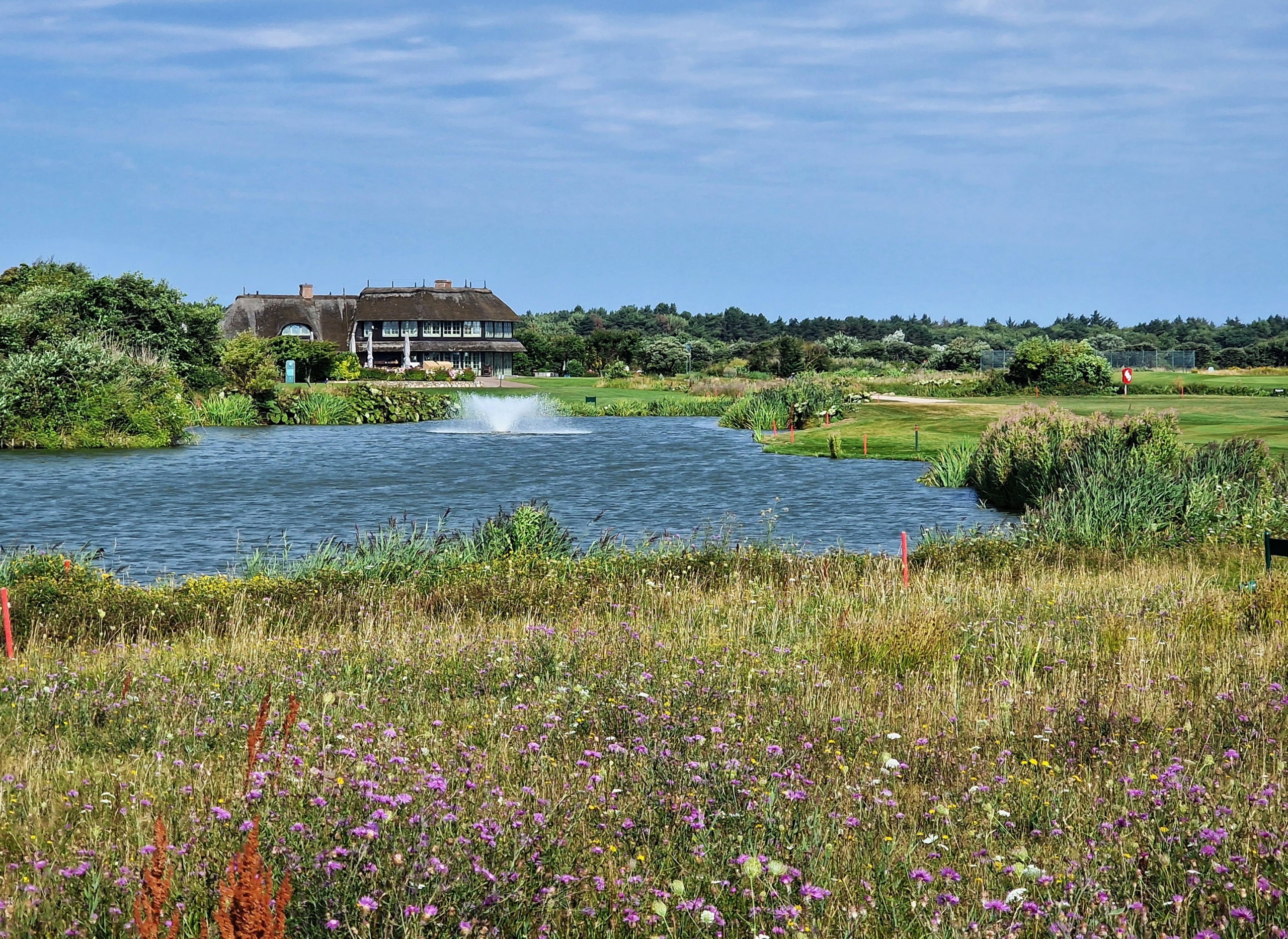
The black-headed gulls on the island at hole 10 of GC Sylt are doing excellently: the birds have populated the 18-hole course for years. The pond at hole ten thus fulfills three functions simultaneously: it is an interesting strategic obstacle for golfers, contributes to securing the club’s water management as a storage pond, and also serves as a habitat. The black-headed gull is a good indicator that the GC Sylt golf facility is much more than just a sports surface: the large meadows and wetlands provide an abundant food supply for the gulls, and the ecological function of the total 60-hectare area should not be underestimated.
The traditional club has for years achieved the combination of a first-class golf facility, an attractive vacation space for tourists, and a habitat for fauna and flora. One can sense the extensive experience Thomas Schweikert, Head Greenkeeper, has with his land. For years, GC Sylt has participated in the certification by the DGV Environmental Certificate Golf und Natur. Since the introduction of the Golf Biodivers program, the club has also been in constant exchange with scientists from the University of Kiel, who are carrying out enhancement measures with regional seeds on a total of three areas.
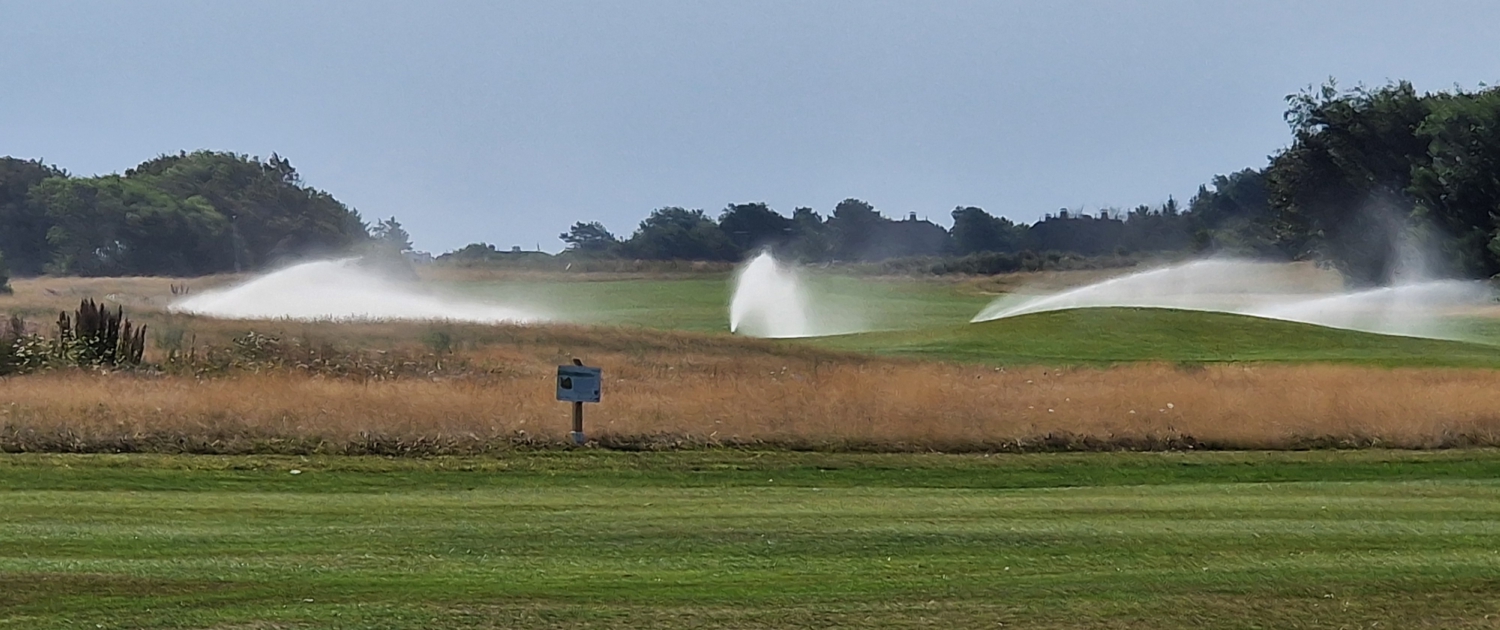
A look away from the fairways shows that the club scores particularly well with high-quality extensive areas. “It is truly surprising how quickly it all develops,” Schweikert concludes, looking at one of the flowering areas. “I actually only had some regional seeds left over here,” he explains with a slight shake of his head. A colorful piece of meadow has developed. The golf facility stands out with its diversity—it offers seasonally moist areas as well as dry grasslands and heathland. “Our golfers are thrilled, and so are the vacationers,” explains Schweikert. Although the perennial flower mixes do not yet look attractive to many players in the first season, he has received plenty of applause for the biodiversity projects by the second year at the latest.
Heathland development is an important project
Over one hectare of new heathland was to be created during the renovation of eleven fairways, which has since been completed. Heathland is among the most endangered habitats in Schleswig-Holstein. Today, 50 percent of the remaining statewide area is located on the island of Sylt. Of this, the Braderuper Heide represents the largest contiguous area. A small piece of it extends onto the grounds of the golf facility, which, with its nearly 60 hectares of land, borders this nature reserve and the subsequent Wadden Sea on one side, while offering a view of the Kampen dunes on the other.
According to Schweikert’s experience, the heath is unpredictable. “In some cases, it develops in areas where we hadn’t even planted it.” Conversely, on other surfaces, it has long since succumbed to grasses, herbs, or native flowers.
Greenkeeping looks to the future with machinery and grasses
The climatic conditions on the island are unique anyway: the constant wind quickly leads to dehydration, which is why Schweikert has been promoting a drought-resistant population with Festuca grasses on the fairways for years. This benefits him in view of the increasingly hot summers. Bare spots on the fairways are not to be found at GC Sylt after the summer of 2024; the maintenance condition of the fairways is first-class despite the heat and drought of recent months.
Schweikert now also has support in greenkeeping from robots. “The future belongs to such models,” he explains, referring to the fully autonomous fairway mower that handles nine of the 18 holes. For Golf Club Sylt, not only autonomous mowing but above all the electrification of greenkeeping machinery is a key aspect. The club already has fully electric greens mowers, and some of the transport vehicles are also electric. Combined with the fairway mowers, this has resulted in a large fleet of greenkeeping machinery that is no longer dependent on fossil fuels. For Schweikert, this means not only less noise while working but also independence from fluctuating diesel prices, a cleaner workplace, and, with regard to the “Golf und Natur” program, further progress in the club’s CO2 balance.