
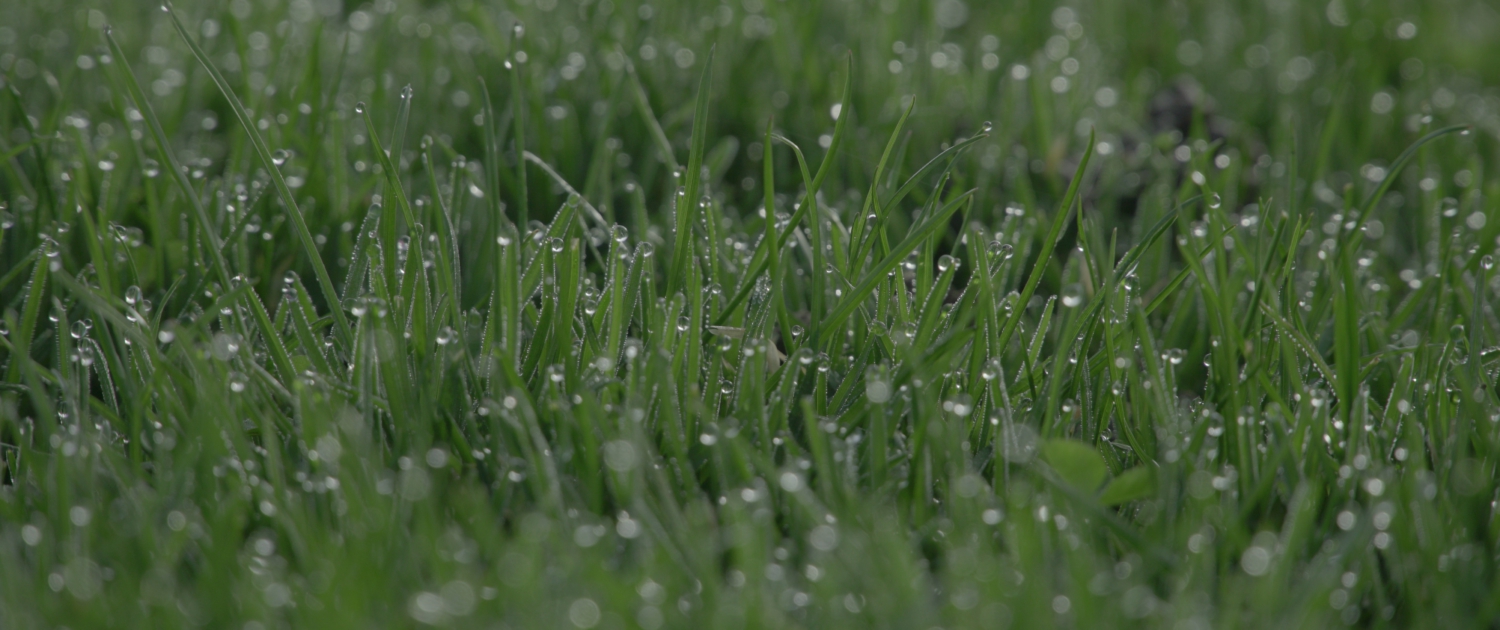
In the fall, dew is a common occurrence on the golf course. When nighttime temperatures drop and the air is humid, a fine film of water often forms on the grass in the early morning. What for golfers initially just means that their shoes get wet and the ball doesn’t roll as far plays a significant role in turf maintenance. This is because if the turf remains damp for many hours, certain turf diseases can develop more easily. If you talk to Christian Spring, Principal Scientist at the STRI Group, one of the world’s leading research and consulting firms specializing in golf and sports turf, it becomes clear just how complex the issue of dew is and what far-reaching consequences it can have for the quality of a golf course. Dew—as we’ve learned—may look harmless, but it can cause real problems if it isn’t removed regularly. Given the staffing challenges at many golf courses, this is precisely the issue: time-consuming manual tasks are at risk of being neglected if there aren’t enough greenkeepers on staff.
What exactly is dew?
Dew forms when the air—and especially the surface of the grass—cools down during the night. Moisture from the air condenses into tiny water droplets on the leaves. Depending on weather conditions, this can last for many hours—typically from late evening into the morning. As a result, the total amount of dew in late summer can easily accumulate to well over 1,000 litres per 18 holes.
For the golf course, dew is therefore not just “a little water.” The prolonged moisture on the leaves alters the microclimate immediately at the grass surface. At the same time, in addition to condensed water, the dew also contains liquid that originates from the plants themselves and includes, among other things, sugars and amino acids.
Why does condensation need to be removed?
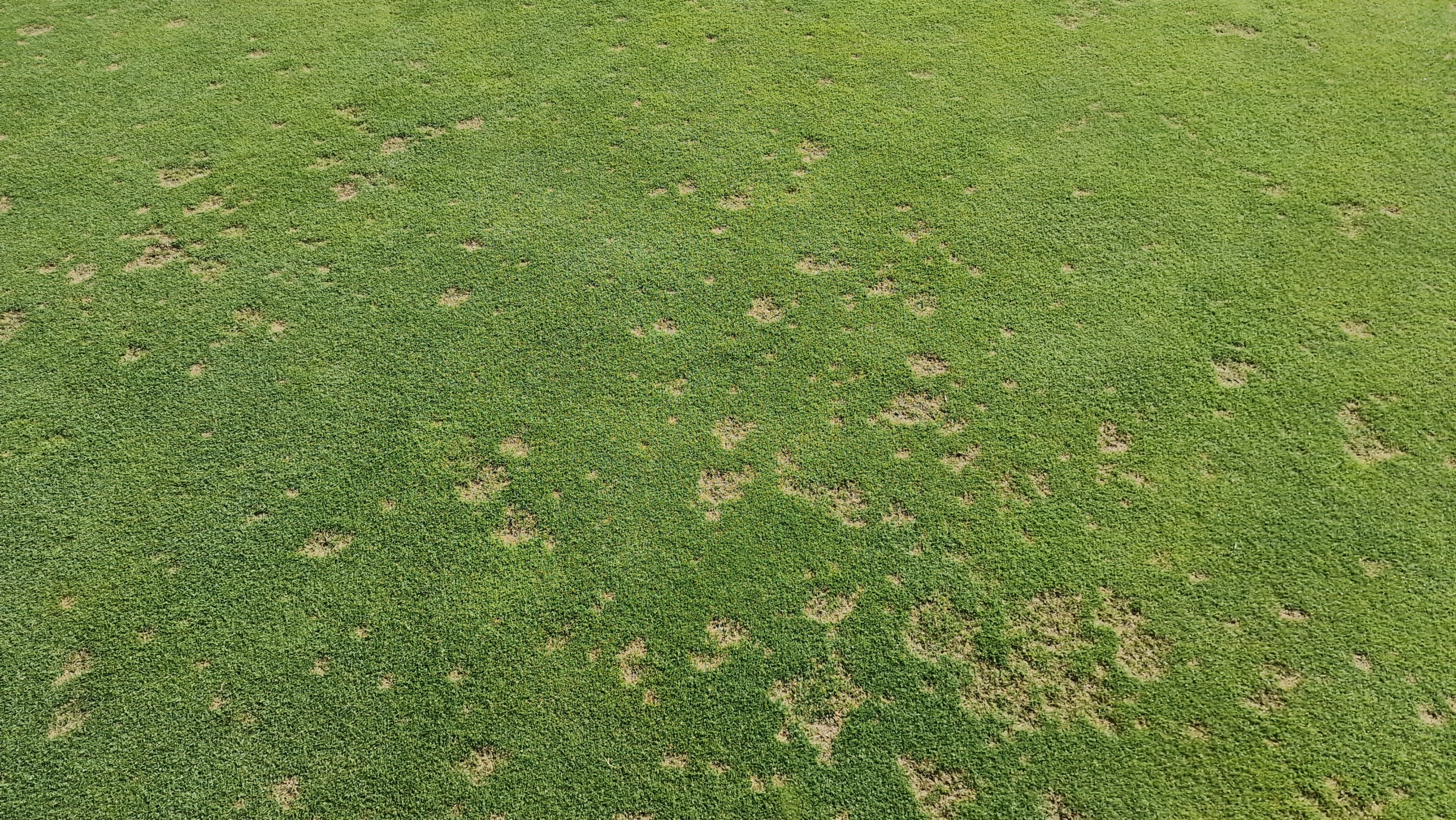
The most important reason is the health of the turf. A surface that remains constantly damp creates ideal conditions for various fungal diseases. One particularly well-known example is dollar spot, a turf disease that can very quickly cause significant damage to playing surfaces and, especially on greens, severely impair the quality of play.
However, the dew itself is not the problem. What matters is what is known as “leaf wetness”: The longer the leaves remain moist without interruption, the more favorable the conditions become for pathogens. If, on the other hand, the moisture is regularly interrupted, it becomes more difficult for pathogens to develop.
This is particularly relevant in the fall. Cool nights, ample moisture, and days that are still relatively warm can create conditions that increase the risk of disease. Removing dew is therefore a key strategy that golf courses can use to try to keep diseases under control as early as possible and, if possible, without the additional use of pesticides.
A 2011 study by Pennsylvania State University confirms this correlation. In the fairway areas examined in that study, daily dew removal during the late-summer trials led to a significant reduction in dollar spot infestation. At the same time, the protective effect of fungicides—the use of which is strictly regulated in much of Europe anyway—was prolonged. The authors also concluded that the positive effect of frequent mowing was due, among other things, to the fact that mowing simultaneously removed dew mechanically from the leaves.
How do you remove dew?
The easiest method is to mow early in the morning. As the mower moves, it not only removes part of the grass surface but also wipes the dew off the blades. That’s why it can be a good idea to run the mower with the cutting deck disengaged, even on days when you don’t actually plan to mow.
Another traditional method is to drag the surface. To do this, you can pull hoses, ropes, chains, or special nets across the lawn, for example. Rubber scrapers or absorbent materials are also used. Light rolling can also help remove moisture from the grass surface.
What matters most here is not so much a specific method as the timing. If the dew is removed early in the morning, the long, uninterrupted period of leaf wetness is broken. If, on the other hand, you wait until late morning, the sun has often already caused the dew to disappear for the most part—by then, the period of prolonged leaf wetness may have already lasted too long and encouraged the onset of diseases. Furthermore, according to STRI expert Spring, relying solely on mechanically wiping away the dew can also lead to dewdrops reforming if conditions are favorable.
Placing fans along the edges of the green can also have positive effects. “I’ve seen their positive effects firsthand in several studies,” Christian Spring concludes. “They create additional airflow over the grass surface, reduce canopy humidity, and lower the risk of dew forming.”
Is it possible to prevent dew chemically?
Yes. There are special dew-dispersing agents on the market, often based on surfactants. They alter the surface tension of water. As a result, no clusters of water droplets form on the grass, or rather, the moisture is distributed differently across the surface. Depending on the product and conditions, the effect can last for several days.
“I can confirm the positive effects from my own experience,” explains Christian Spring, who himself participated in studies on “dew removal and dew-dispersing agents.” “Their advantage is that they provide protection overnight, and this protection lasts for several days.” However, Spring also makes it clear that dew dispersants alone should not be the solution. “If I was managing high value turf that I know could be susceptible to disease in autumn I would certainly consider dew dispersants alongside my physical methods. ”
In practice, therefore, the goal is to combine the various options in a meaningful way and to focus the use of products on situations in which they actually provide added value.
Removing dew with a robot
A new development is automated dew removal. This is because early in the morning, in particular, greenkeeping teams face an organisational challenge: the time when dew should be removed most effectively coincides with numerous other maintenance tasks.
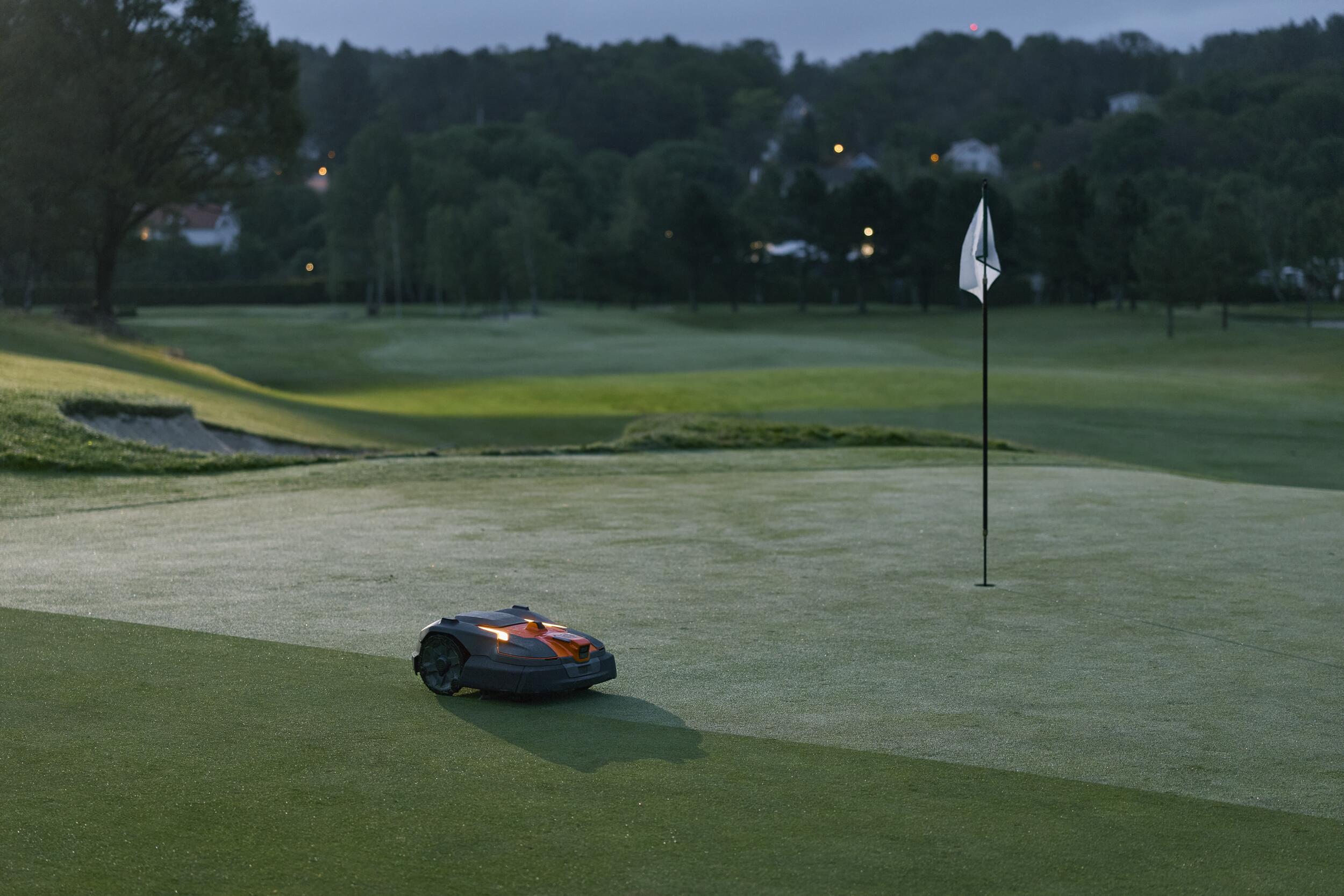
This is where a new type of autonomous mowing technology comes into play. Husqvarna’s Automower 580L EPOS can be equipped with a special attachment instead of the standard cutting unit. The robot then moves autonomously across the defined areas and mechanically removes the dew. Between individual greens, the attachment is raised to prevent the spread of pathogens from one area to the next.
The key benefit of this method is the time saved: The machine can begin operating in the early morning hours while the grounds maintenance team prepares for or carries out other tasks. Such automation could therefore be particularly appealing at larger courses. Superintendents often lack sufficient staff, especially on weekends, and the task of manually removing dew—which can take several hours—is one that could be effectively automated. The “dew mower” technology is currently being studied as part of an international research project by the International Turfgrass Research Initiative, which focuses on integrated and environmentally friendly strategies for combating dollar spot.
Managing dew properly
The conclusion is clear: Dew is essentially a natural part of the water cycle in grassy areas. It becomes a problem primarily when the leaves remain wet for a long time and conditions are favorable for turf diseases. Removing dew is therefore an essential measure. Weather conditions, the nature of the area, and the actual disease pressure determine the combination of measures to be used for this purpose.