GC Holledau: More biodiversity across 27 holes
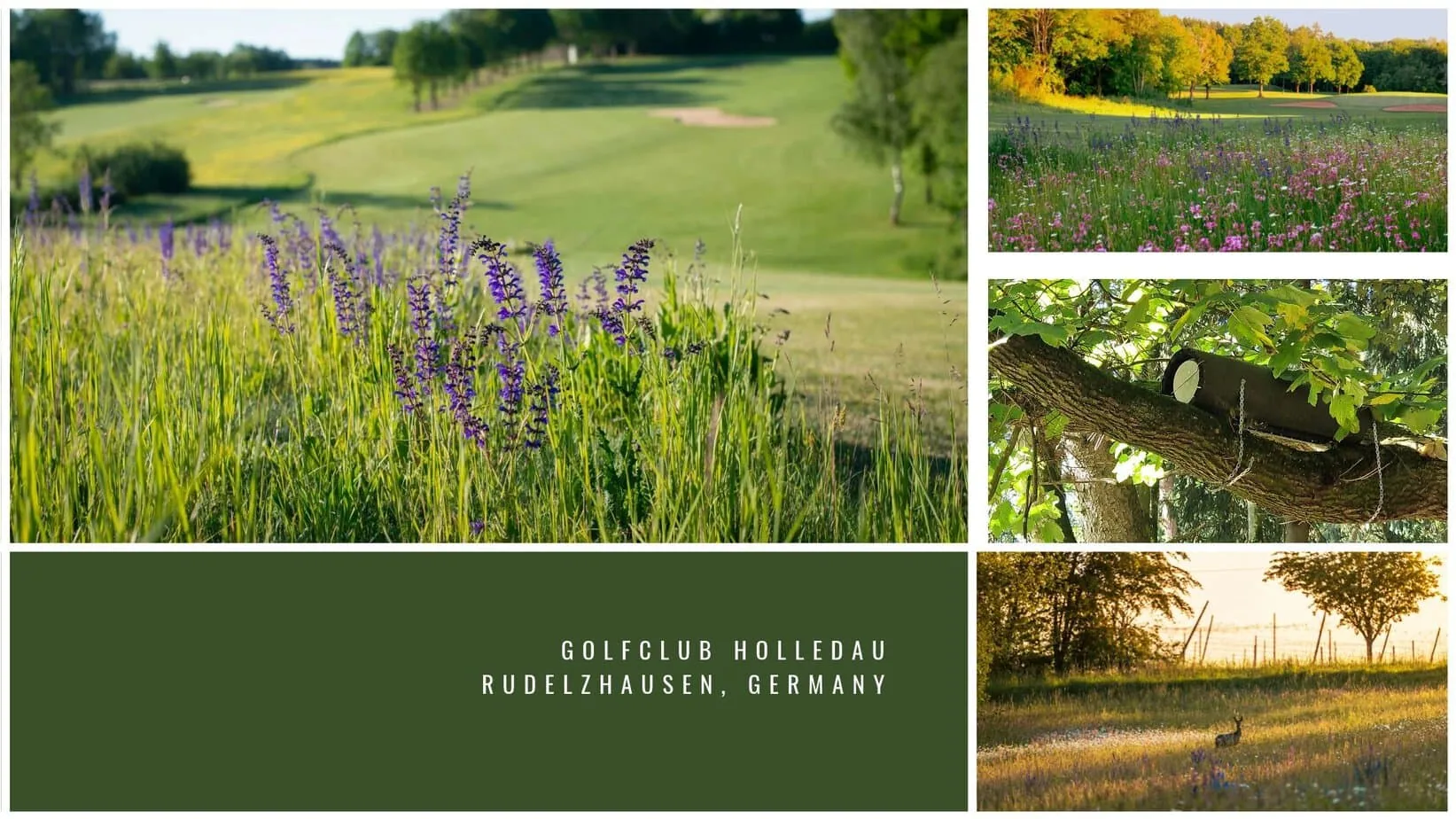
Anyone looking for the flagship biodiversity project at Golfclub Holledau is spoiled for choice. The 27-hole facility in the Holledau has a great deal to offer when it comes to environmental and nature conservation. Thanks to participation in the Golf and Nature Environmental Certificate, the Bavarian Environment Ministry’s Blühpakt Bayern, and the Golf Biodivers research project, visitors to the golf facilities in the heart of the Bavarian Hallertau repeatedly come across projects designed to promote typical local fauna & flora.
For now, the trees in the traditional orchard meadow are still small and thin, but even so this is a real showcase project created in collaboration with staff from TU Munich as part of Golf Biodivers. Twelve regionally typical orchard trees have been perfectly planted, signposted and protected from browsing in a rough area. They are part of an overall concept that also includes creating new meadows, planting along the banks, and newly installed nest boxes in the woodland areas. These enhancement measures are intended to improve habitat for insects, butterflies, as well as small mammals and birds. In fact, the club already has plenty to offer, including the little owl, which is usually found beyond hole 5. Now, however, nest boxes for hoopoe and wryneck have been added as well. Both will find food in the many newly created meadows. Josef Schauer, the facility’s Head Greenkeeper, is pleased with the new areas. “They’ve actually come along quite well,” is his self-critical assessment.
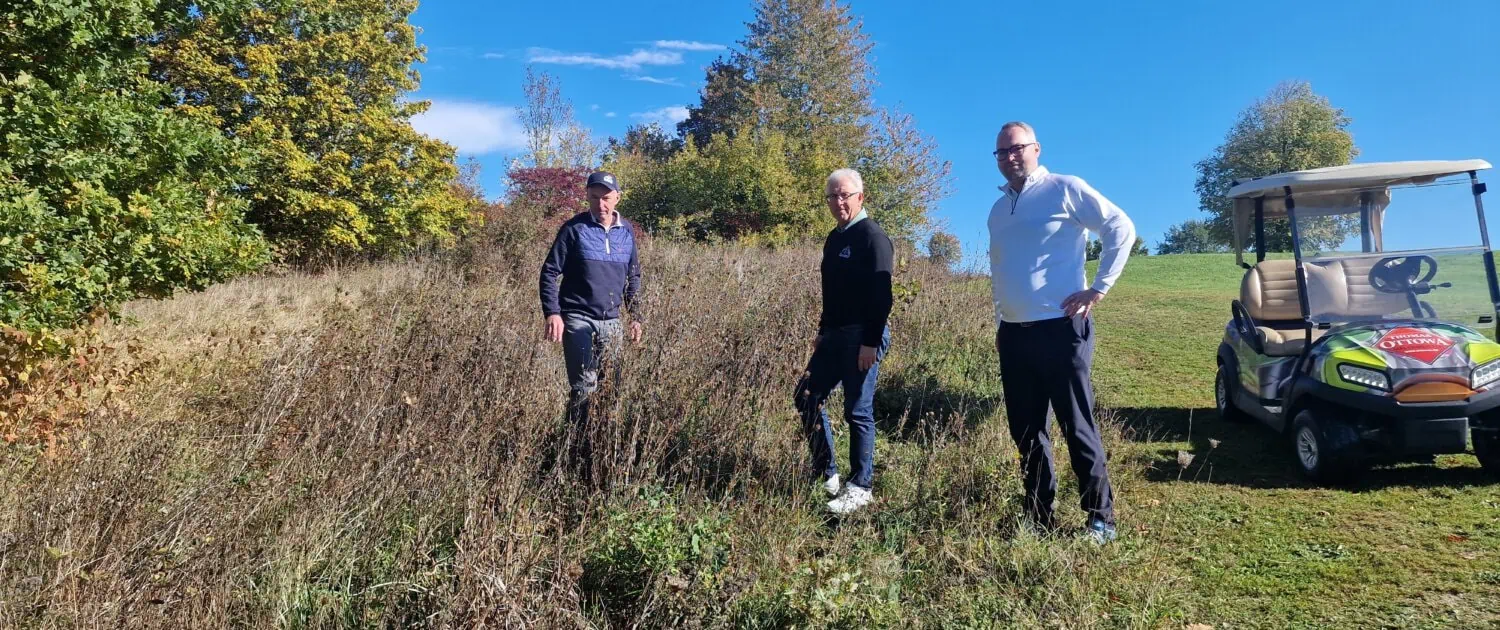
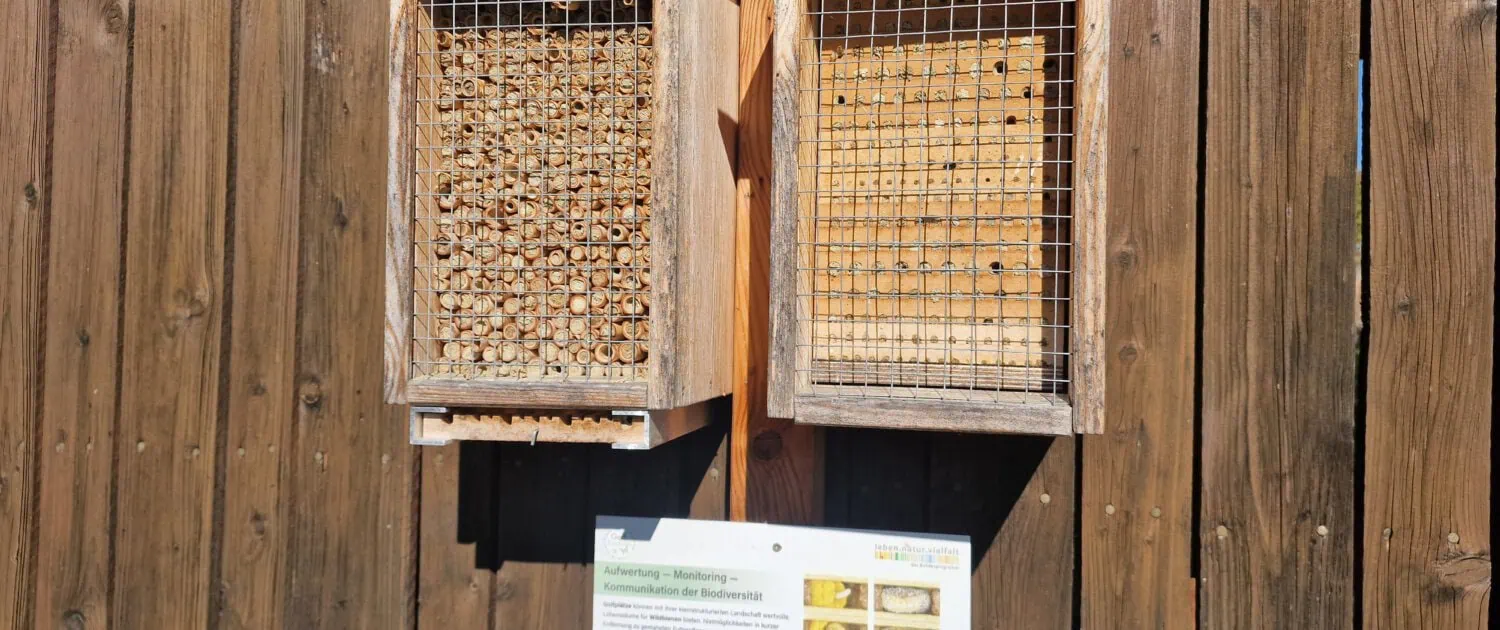
The Head Greenkeeper, originally trained as a farmer, has begun to see the golf course with different eyes as part of the various biodiversity projects. “We were already doing a lot for nature before, but the experts’ input means you simply see it differently now,” he notes. “Now the club is also using that in its external communications,” adds Managing Director Andreas Zeising. “Before we took part in the Blühpakt, for example, there was no monitoring or reporting.” That has changed: golfers along the edges of the fairways now repeatedly come across numerous information boards about wildflower areas and enhancement measures.
Green classroom and open day
However, the communication extends well beyond golfers themselves: as part of an outing to GC Holledau, a school class not only got a first impression of the game of golf, but also experienced nature up close. Catching one of the many butterflies that flit about here with a net is more complicated than expected. The response from local visitors to the large meadow and wildflower areas was also quite positive at the taster day held to mark the club’s 40th anniversary. “People’s expectation is simply that everything is mown,” Zeising notes.
In fact, the idea of a perfect golf course has also changed within the club itself—both in management and among the membership. “At the beginning we mowed much more than we do now; we’ve reduced the mowing areas in many places,” explains Head Greenkeeper Schauer. The members’ response to the projects in favour of nature—also presented in the first-class club magazine Hopfengolfer—“is overwhelmingly positive,” says Club Manager Dietmar Strunz. Above all because, during specially organised nature walks, one or two distinctive features of the golf course become particularly clear once again.
No mulching
The commitment to biodiversity has a lot to do with learning by doing, an interest in practical work, and curiosity about new approaches. Meadow mowing, for example, now works very differently than it did in the early days of the golf facility. “We don’t start mowing until early September, and we have a farmer who removes the cuttings,” explains Schauer. This reduces nutrient input into the soil, and biodiversity in the meadows increases. Leaving individual edge strips standing—giving insects more opportunities to overwinter—has also only become established in recent years. The feeling of sending a “neat and completely mown golf course” into winter has given way to the knowledge that greater biodiversity also requires more habitat.
The large sandarium, being created in a particularly sunny spot on hole seven, is not yet quite finished, protected in the background by a broad hedge and woodland edge. Josef Schauer is working on it together with a club member who drew up the plans for the structure, where small lizards and amphibians are expected to settle. Creating it is not quite so straightforward. It is a first for him, too. He first did some online research and, together with LBV advisor Dagmar Blacha as part of the Blühpakt, considered the perfect location. The sandarium is due to be completed this winter. To golfers it may look unspectacular at first glance, but it adds yet another habitat to the golf facility’s natural areas.