
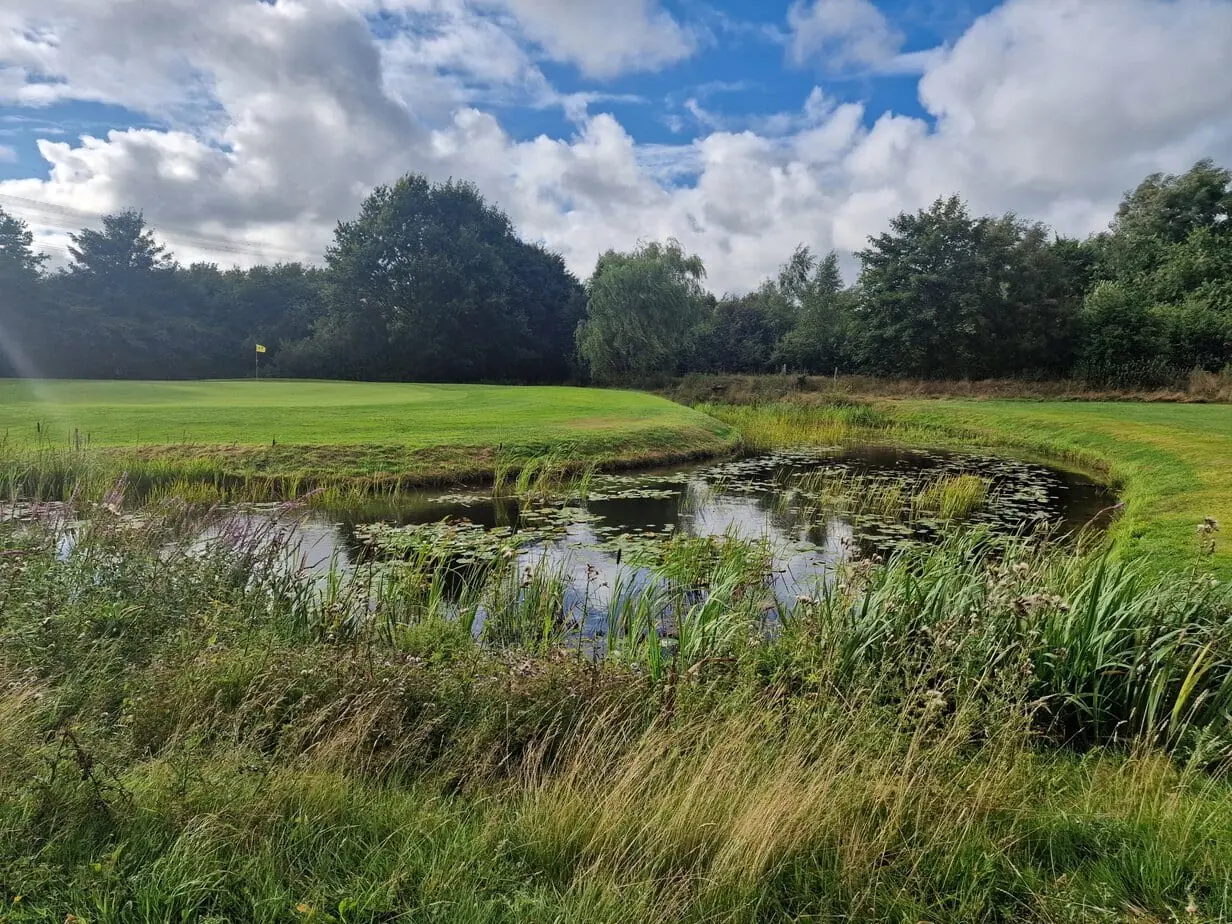
“It has to be done. There is no alternative.” At GC Husumer Bucht, the next major project is underway: “The energy transition is priority number one,” explains Course Manager Holger Schäfer. “We absolutely have to move away from oil heating here.” At GC Husumer Bucht—which, with its 18-hole Storm Course in Schwesing, is located not far from the North Sea coast and enjoys an excellent reputation among camping golfers and vacationers—efforts have been underway for years to establish a sustainable economic foundation for the club. The transition of the energy supply is now being implemented in a three-stage concept.
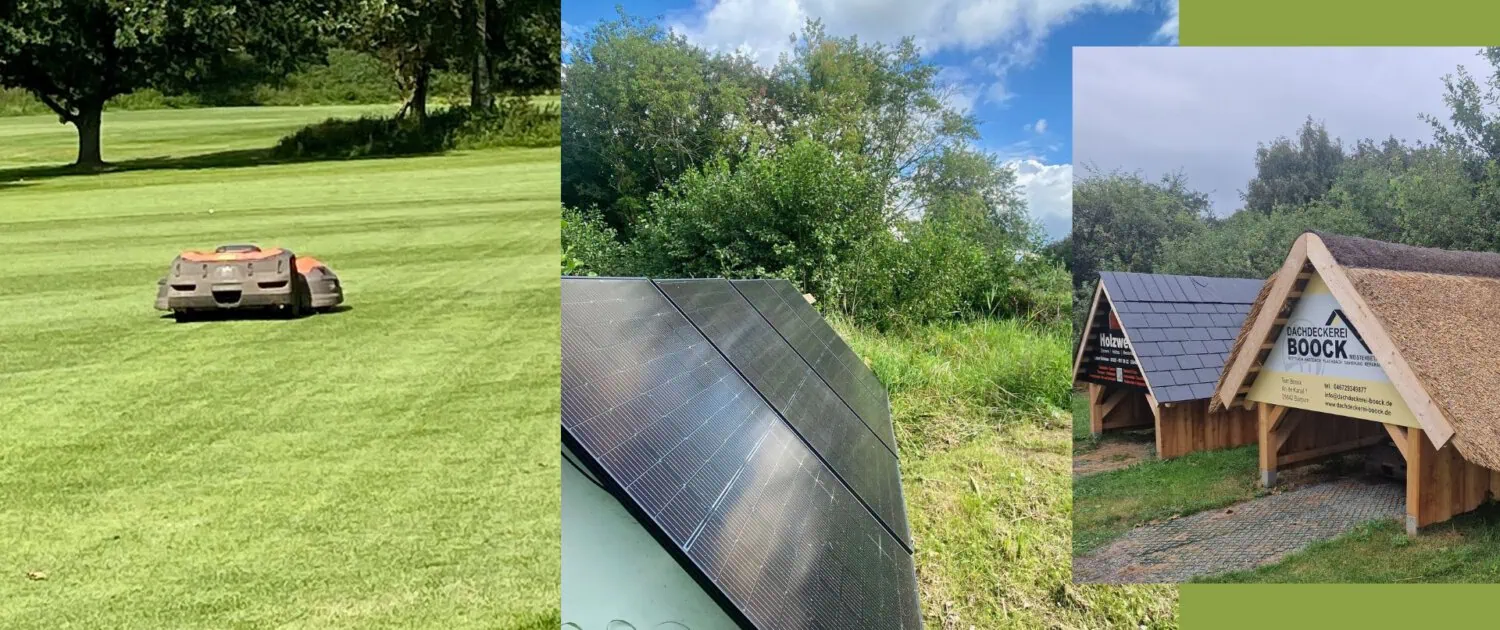
The foundation for this is the resolution of a problem that had preoccupied the club for years: an undersized power connection is now a thing of the past. A new power line opens up completely new options for energy supply. Renewable energy has always been a high priority at the club, which has around 600 members: solar energy on the driving range and to operate autonomous mowers has been used here for years, even though conditions within the existing infrastructure were not easy. Here, the drive of management and Head Greenkeeper Marten Schurig made itself felt once again. “We always manage to work it out somehow,” Schurig explains with a laugh. Indeed, GC Husumer Bucht is a prime example of how sustainable facility management can be achieved with modest resources, high dedication, and a strong willingness to innovate.
Like so many other golf courses with around 40 years of club history, GC Husumer Bucht is in a phase of transformation: climatic changes in Schleswig-Holstein brought the facility an unusually hot summer with little rainfall in 2026, even if northern Germany was still comparatively less affected by drought and heat days over 40 degrees than other regions.
Low Water Consumption and a New Mowing Concept
Saving water is mandatory on the Storm Course. “We don’t irrigate the fairways anyway,” Schurig sums up; ever since its founding, the golf course has managed without fairway irrigation, which is why water consumption remains well below the German Golf Association’s frequently cited recommended benchmark of around 44,000 cubic meters of water for an 18-hole golf facility.
At the same time, GC Husumer Bucht also benefits visually in many places from a revised mowing concept that omits areas adjacent to and behind tee boxes, as well as between fairways. As a participant in the DGV environmental certification program Golf & Nature, GC Husumer Bucht places great emphasis on allowing species-rich meadows to thrive, particularly in out-of-play areas. A glance at the wide fairways makes it clear: there is plenty of room for extensive rough areas that are mown only once a year. Anyone landing in these roughs has pushed or pulled their shot considerably.
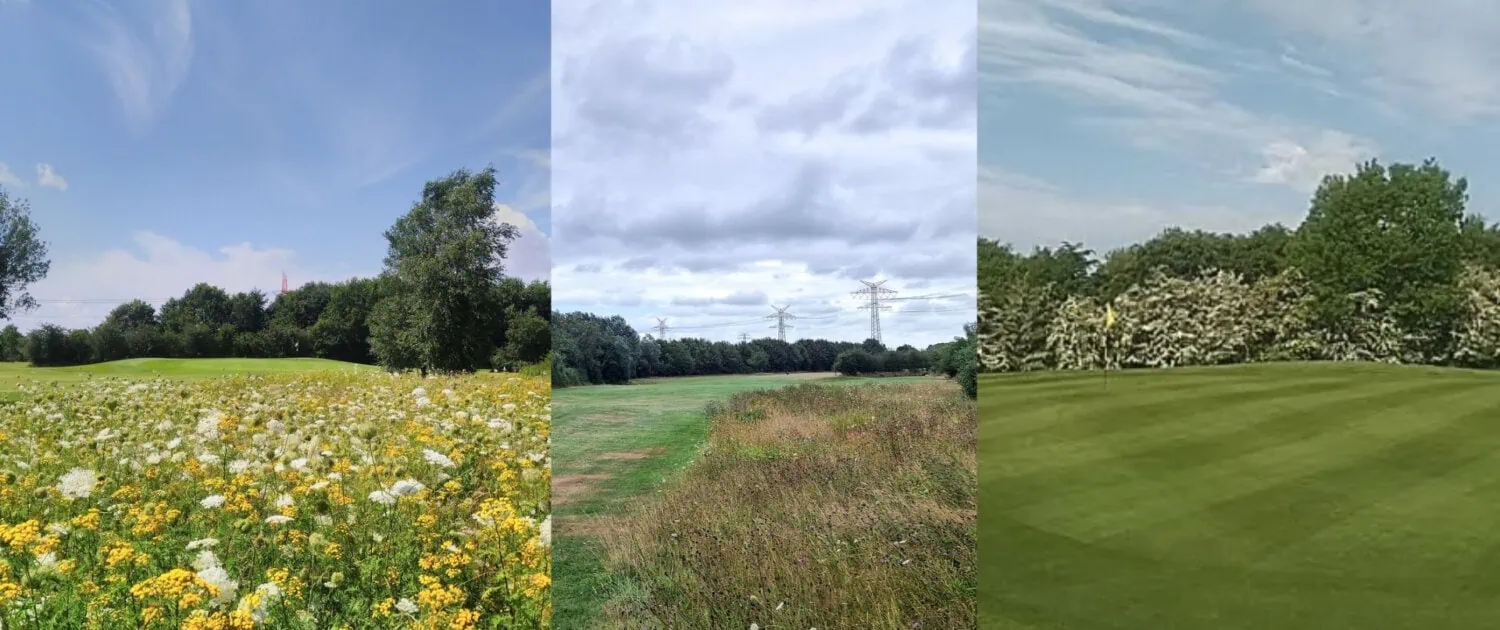
With the newly designated rough areas, the visual appearance of the course has also improved noticeably. Grasses, perennials, plants, and herbs provide insects, birds, small amphibians, and rodents with plenty of space for nesting and foraging. The areas are mown at most twice a year. “Germany’s golf courses have implemented an important shift regarding roughs in recent years,” explains Dr. Gunther Hardt, head of the Biodiversity Working Group of the German Golf Association. “Fully mown fairway areas no longer reflect the state of the art in course maintenance. What matters is a well-structured balance between playing surfaces and rough areas that are mown once or twice a year.” According to Hardt, this concept has become an international standard and is pursued by world-class facilities as well.
This year, GC Husumer Bucht has recorded significant growth, especially among younger members, who show great interest in the combination of sport, nature, and sustainability. For Schäfer and Schurig, this is confirmation of the board’s strategic vision: golf without major barriers, with low resource consumption and a forward-looking orientation—clearly a recipe for success for GC Husumer Bucht.