
Relief from England’s Record-Breaking Drought at the Husqvarna British Masters
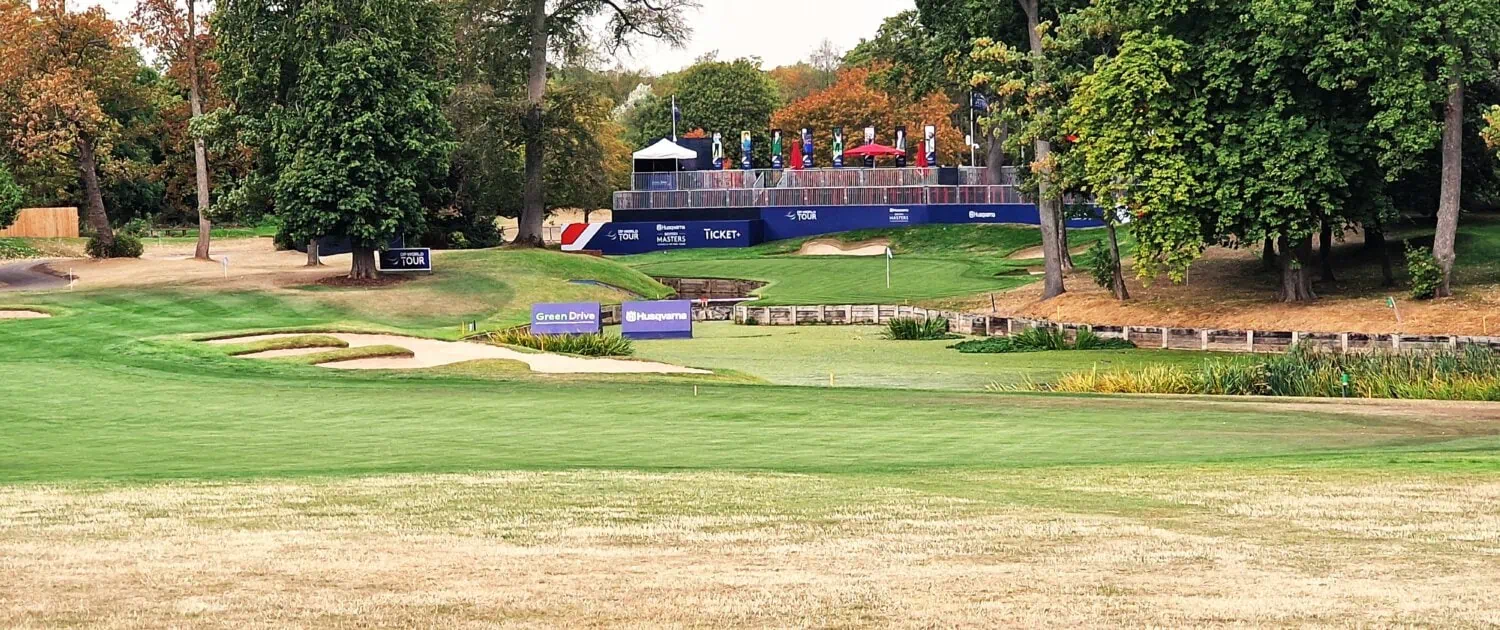
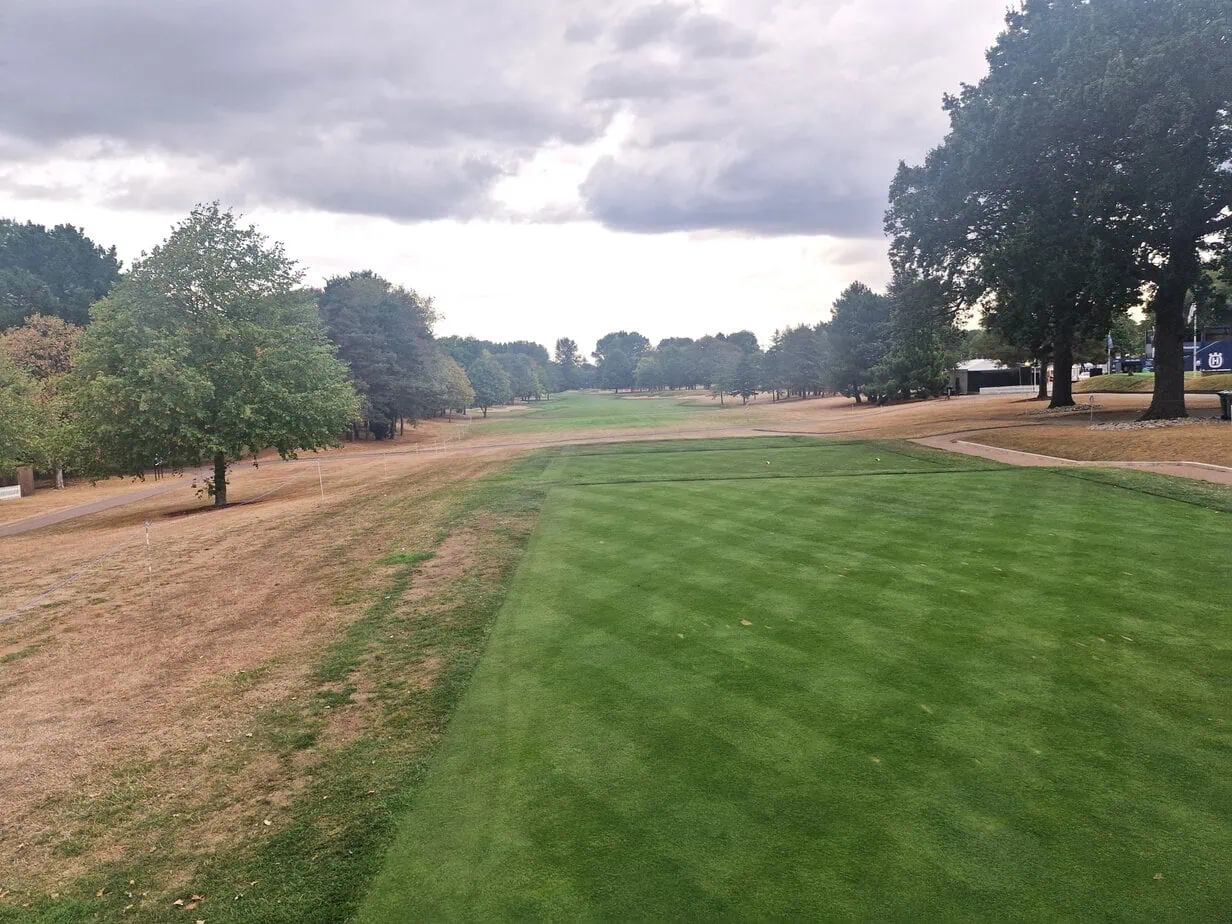
Thunderstorms and heavy rain, with play temporarily suspended at the Husqvarna British Masters at The Belfry in Birmingham, England: Such interruptions are actually quite normal on the DP World Tour. But looking at all the brown grass on the Brabazon Course—which begins right behind the boundaries of the fairways, greens, and tees—you realize that this rain is putting an end to the drought of a summer that was exceptionally hot and dry.
Record-breaking heat meets record-breaking drought
For the first time in British weather records, temperatures reached at least 35 degrees in May, June, and July. At the same time, July was the driest on record in England since rainfall records began. Record-breaking heat coincided with record-breaking drought this summer. From June 1 until the start of the Husqvarna British Masters, the weather station in Sutton Coldfield recorded only about 130 mm of precipitation. On August 10, 2026, 71.3 percent of England was officially designated as a drought area. By mid-August, over 27 million people were affected by water restrictions.
For England’s golf industry, this summer was a wake-up call: “It made people realize that climate change is real,” sums up Jim Croxton, CEO of the British and International Golf Greenkeepers’ Association. “We’re not getting any snow anymore, and we have to accept that these hot, dry summers—or, conversely, extremely wet winters—are the new normal,” he says, explaining the epiphany within the British golf industry. The issue of water management has come into sharp focus at numerous golf clubs because extreme weather has highlighted existing problems.
Outdated irrigation infrastructure is the number one problem. “Many irrigation systems are 30 to 40 years old and have simply been patched up and repaired over the years,” Croxton sums up. New irrigation systems, however, require significant investment; costs of 600,000 pounds or more for an 18-hole course are not uncommon for modern systems.
A high-end irrigation system boosts efficiency. Instead of using 360-degree sprinklers to water hedges behind the green, rough areas along the fairways, and possibly even paved areas in the surrounding area, precise irrigation of the playing surfaces is now the gold standard.
The Belfry Relys on Reclaimed Water
At The Belfry, one of the UK’s top courses and a former Ryder Cup venue, they’ve long since tackled this issue. With just a tap on his cell phone, Course Director Angus Macleod can view his irrigation data on a dashboard. Rainfall in millimetres, evapotranspiration, wet and dry spots—water management here is no longer based on guesswork, but on data.
Macleod doesn’t have too many concerns about water anyway. The irrigation system for the Brabazon Course, where the Husqvarna British Masters is held, uses filtered wastewater from the resort’s hotel operations. This results in a sustainable irrigation system that ensures lush playing surfaces, at least on the Brabazon Course.
However, priorities must also be set at The Belfry. There isn’t enough water to cover all three 18-hole courses, which is why the finalists of the Faldo Junior Series—who are teeing off at the same time as the DP World Tour’s British Masters—find themselves on tees and fairways that are significantly browner than those of the pros.
In England, top-tier facilities often have sufficiently large reservoirs, such as Woburn, where a 110,000 m³ pond was built years ago. However, smaller clubs in particular often fail to keep long-term water security planning in mind. “The majority of golf clubs in the UK are run by committees and members,” explains Croxton. “There’s a tendency to think that the next committee can handle this major problem, because it’s usually a very large investment. The current committee doesn’t want to tell members that they’ll have to pay an extra 2,000 pounds each year for the next two years to be covered in ten years’ time.”
English Clubs in Transition
In the wake of the extremely hot and dry summer of 2026, many clubs in England now want to address the issue of longer dry spells. “We’re currently installing a new irrigation system and hope to reduce water consumption by about 30 percent,” explains Chris Bell, superintendent of Hillside Golf Club, which, like Woburn, is one of the country’s pioneers in sustainable strategies.
Conserving water and collecting it when it’s available. These are the two approaches England’s golf industry must adopt to prepare for long-term dry spells. The use of tap water—which is extremely high in England compared to the rest of Europe—is hardly accepted by the public anymore and, on top of that, is expensive. During droughts, authorities may restrict the extraction of groundwater or surface water. Irrigation with graywater, as is done at The Belfry, is the exception in England—unlike in California, for example.
No matter what type of irrigation is involved, one thing is clear to Croxton: “There needs to be a general shift in thinking: When it’s dry, we should only do enough to keep the plant alive—we shouldn’t obsessively try to keep it green.” When the rain comes, the colour returns anyway. Just like it has these past few days at The Belfry. There, the rainfall on Thursday and Friday now accounts for a quarter of the total precipitation that Sutton Coldfield has received in the nearly three months since early June. The weather is simply becoming increasingly unpredictable.