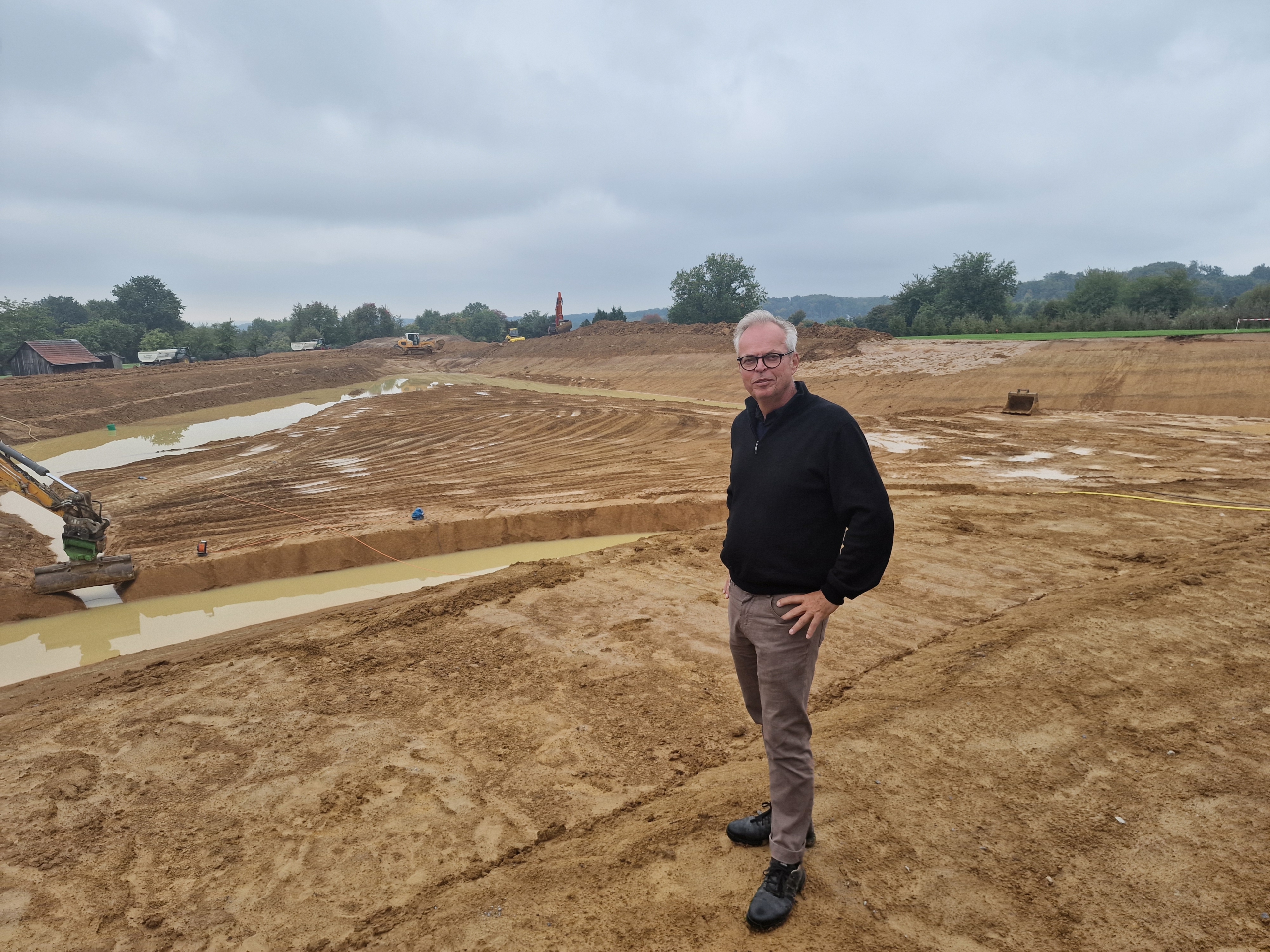
How does golf course architecture address the issue of water? One thing is certain—conserving water has long since become a central consideration in golf course design. However, while the issue of water has only recently become a hotly debated topic in Germany, Switzerland, Austria, and other countries in continental Europe, it has long been a key consideration in international golf course design.
Above all, storage ponds are increasingly coming into focus because they allow water to be stored temporarily during winter or periods of heavy rainfall. The collected water can then be used during dry periods.
Size and Cost
How big should the storage pond be? “Of course, the water consumption of each system depends heavily on individual factors such as soil conditions and irrigation plans, etc.,” explains the Munich-based Golf Course Designer Thomas Himmel, who has already built numerous storage ponds. “But 5,000 m³ of water can easily evaporate in ten to twelve days, which is why it makes sense to think big when it comes to ponds. A usable volume of 10,000 m³ isn’t too much if you’re using it as a reserve storage facility.” With smaller ponds, Himmel explains, the water evaporates more quickly, the usable capacity is significantly lower, and connecting the individual storage ponds is often complicated.” Storage ponds with a volume of 40,000 m³ or more are therefore not uncommon in dry regions.
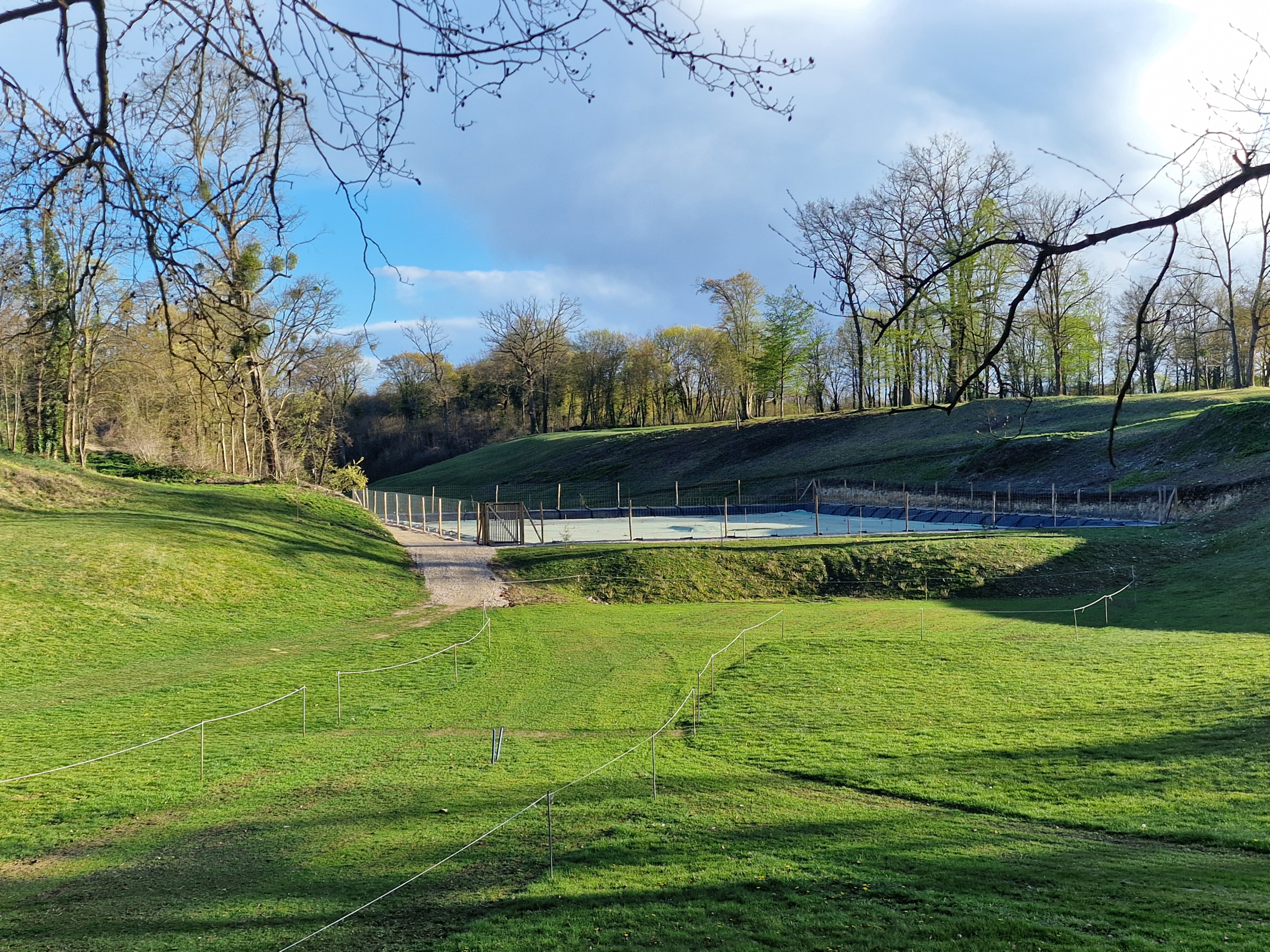
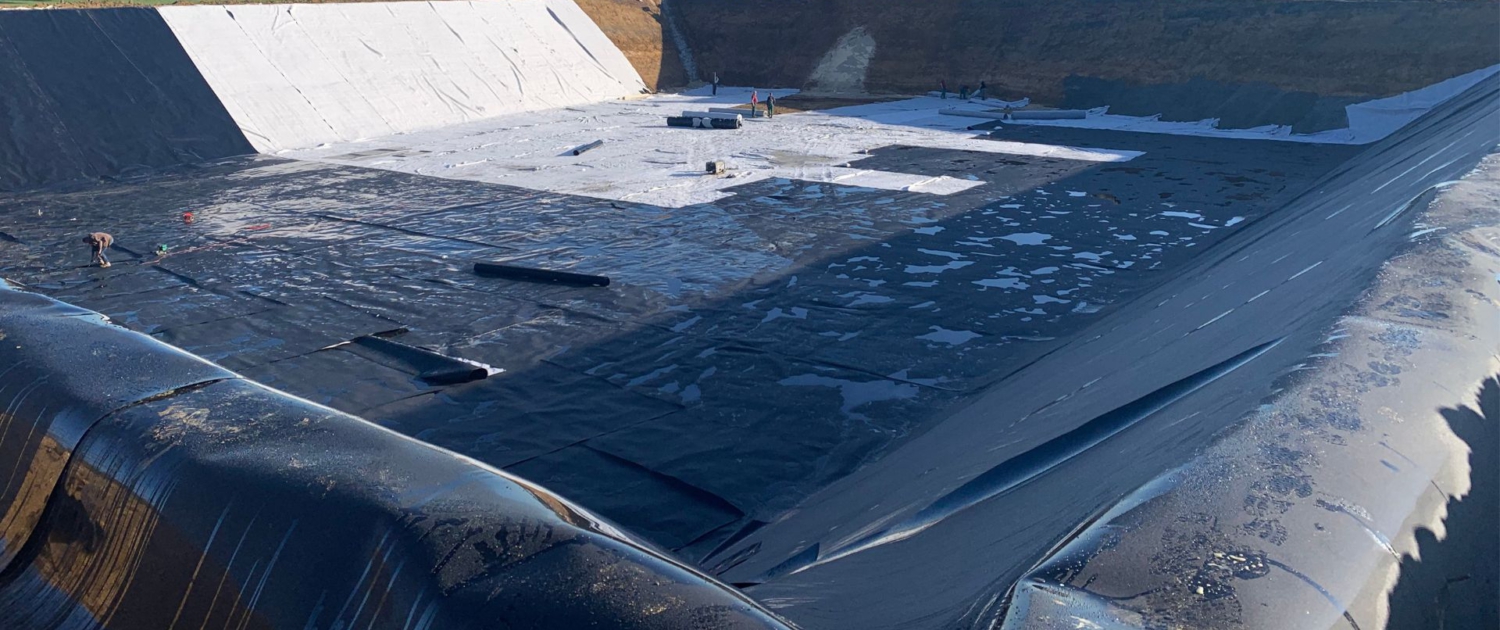
However, as the size increases, costs rise significantly. “In the past two years alone, the cost of a retention pond has risen by up to 15 %. Because of the varying on-site conditions, it’s not possible to specify a standard price per cubic meter, but depending on the size, you should definitely budget between 200,000 and 500,000 euros.” Another factor, for example, is whether a liner is installed to retain the water or whether the soil—which is high in clay—naturally retains a significant amount of water.
Covering storage ponds also has cost implications. If the goal is to minimise evaporation, floating covers for ponds that resemble open cisterns may be the solution. However, there are now also examples worldwide of pond systems covered with solar panels, which generate electricity while also minimising evaporation.
Engineered ponds
According to Himmel, there is also the option of building significantly larger and, above all, deeper retention ponds away from the fairways in order to keep the evaporation area small. “In these cases, there’s no need to take aesthetic or gameplay considerations into account, and the visibility of the liner as the water level drops isn’t an aesthetic issue either. However, many golf courses don’t have enough land available for this.”
Use the excavated material
To account for future restrictions on groundwater extraction during dry periods, golf course designer Himmel recommends using the excavated material from the pond immediately to enhance the golf course. “Here, water from extreme rainfall can be diverted into a pond via drains so that it isn’t wasted. At the same time, the excavated material can, of course, also be used to make improvements to individual fairways.”
After all, the fine art of designing a good retention pond goes beyond mere functionality: “Ideally, as long as it’s on the course, a retention pond should also serve as a recreational feature. That means it’s visually appealing and also serves a strategic purpose,” explains golf course designer Thomas Himmel, who is currently building a retention pond for the Achensee Golf Club.
Benefits for biodiversity
Depending on the type of pond you choose, there may also be additional benefits for the site’s biodiversity. “Ponds combined with shallow-water zones are a typical example of designs that also promote biodiversity.” Appropriate shoreline planting also enhances the water features.
One topic—many facets
One thing is certain: while storage ponds provide a solution to the irrigation problems faced by many golf courses, their implementation must be precisely tailored to the needs of each individual course and planned accordingly. Only then will the end result truly make sense.