
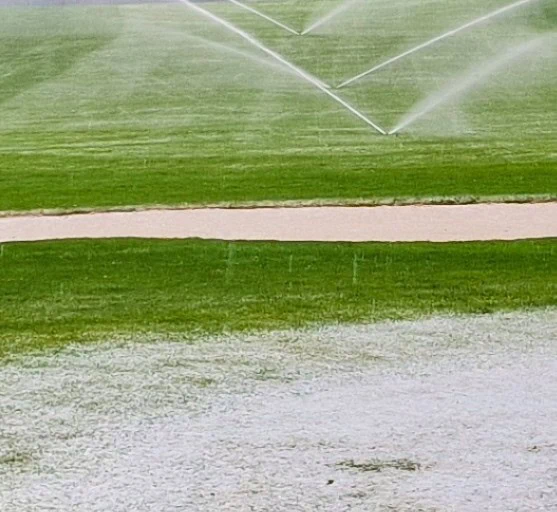
Expert Tips: Watering Mistakes You Need to Avoid
Low rainfall, extreme heat, and restrictions on water withdrawal for golf course irrigation: Many golf courses across Europe have been in a state of crisis for weeks. Even in the Netherlands—a country that is essentially a world champion when it comes to drainage—greenkeepers are now complaining about water shortages.
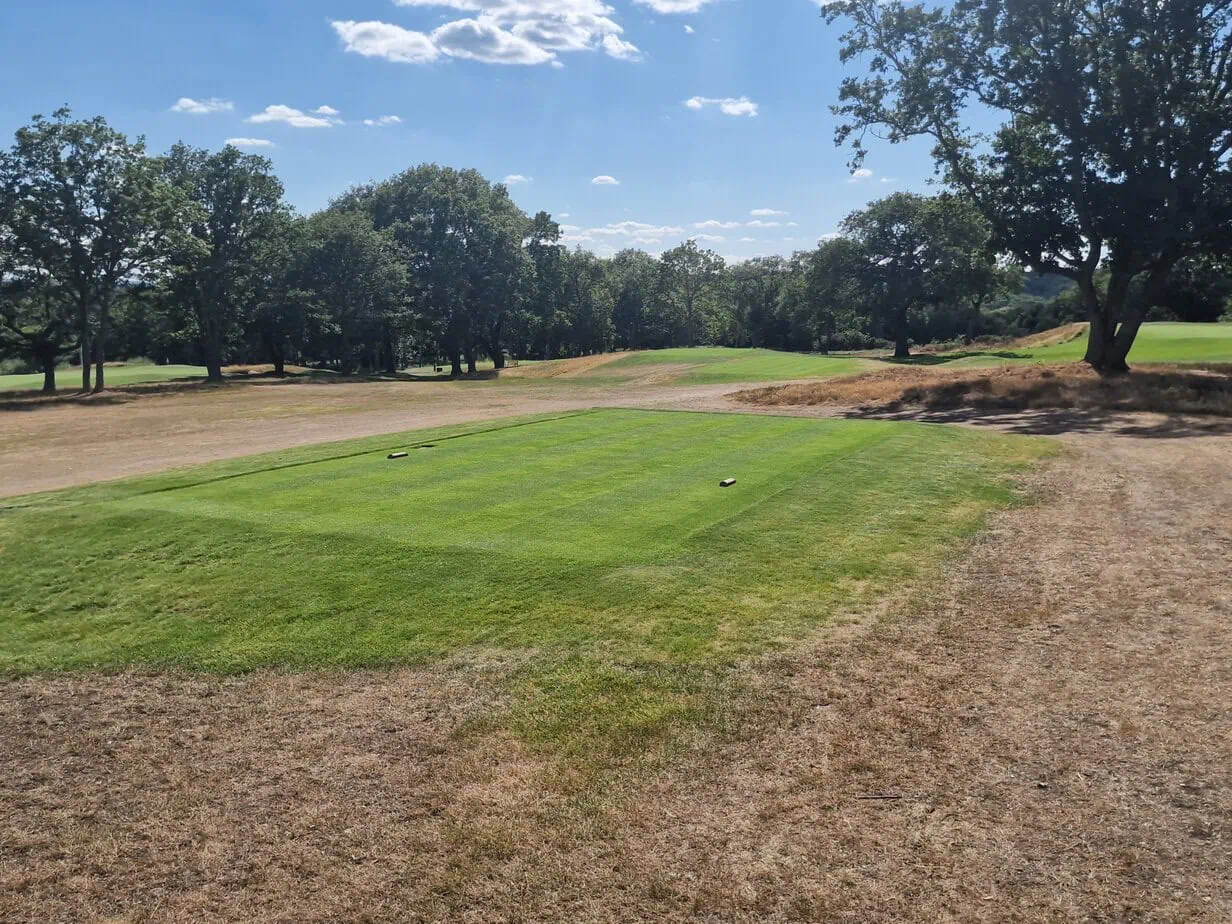
While golf course operators were often able to justify the slightly brownish fairways in the first few weeks by citing the need for sustainable water conservation, it is now becoming clear: Areas that can no longer be irrigated at all and receive too little or no rainfall not only turn brown but, under the strain of play, often become dusty patches overrun with weeds—or require a complete, costly reseeding.
In conversations with experts, it becomes clear that when it comes to irrigation during a period of heat and drought—such as the one currently affecting large parts of Europe—several problems are coming to light, some of which occur in combination at golf courses.
- The club’s water supply is generally not secured for the long term, even during periods of drought. This means that the golf course does not have enough water to ensure emergency irrigation of its most important areas for six to eight weeks using its own reserves.
- Although the water supply is secure, the irrigation system is too old or outdated to deliver the necessary amounts within a specific time frame.
- Although the irrigation system is modern, its coverage area has not yet been adapted to current needs. For example, sprinklers are not installed at all in certain areas of the fairways because it is assumed that “it always rains from time to time.”
- Staffing levels are kept so low that there is no time to deal with the sprinkler system in detail.
- The staff has not received sufficient training in irrigation technology.
- Due to communication issues in the past, golfers’ expectations at a course do not align with the availability of water.

Many of the problems mentioned above cannot be resolved in the short term—within the next few days or weeks. However, many small mistakes in day-to-day greenkeeping operations also result in water not being used efficiently or in golf courses not meeting the quality standards they could actually achieve.
Golf Sustainable therefore asked five German irrigation experts who deal with the topic of golf course irrigation on a daily basis. They all agree on one point: There is no one-size-fits-all solution that applies to every golf course: Soil conditions vary, irrigation systems differ from place to place, local regulations vary, and on top of that, each golf course has its own specific water allocation. This means that only an irrigation audit can truly provide a customized solution for each course.
Regardless of that, however, the five irrigation experts also say that mistakes can be avoided and, in some cases, lead to immediate water savings and/or improvements in water quality. Here is a selection of issues that should be addressed promptly.
Tobias Bareiß, Training Coordinator and Distribution Manager, TORO Germany:
- The irrigation system will simply continue to run without regular monitoring and adjustment. The initial settings configured during system startup will remain in effect and will not be adjusted to account for new conditions.
- If dry spots or overly wet areas appear, only the watering time is adjusted, without actually identifying the cause.
Thomas Himmel, golf course designer, Himmel Golf Design:
- The collection of rainwater and drainage water must be taken into account as early as the planning stage of a golf course or during renovation work. For existing facilities, retention ponds can also be constructed while the course remains in operation.
- The right grasses help reduce water consumption. Overseeding with varieties that are more heat-tolerant and require less water can be incorporated into normal greenkeeping operations.
Christian Steinhauser, President of the German Greenkeepers Association:
- One common mistake is to water frequently and superficially instead of deeply and as needed. Infrequent but thorough watering promotes deep root growth and makes the lawn more resistant to drought stress. In contrast, short daily waterings often lead to shallow roots and increased susceptibility to disease.
- Time and again, irrigation is based on calendar days rather than actual need. Soil moisture, weather forecasts, and the specific requirements of each playing surface should form the basis for every irrigation decision. Modern soil moisture sensors or simple moisture measurements help ensure that water is used in a targeted and efficient manner.
Sven Weinberger, Area Sales Manager, Rainbird:
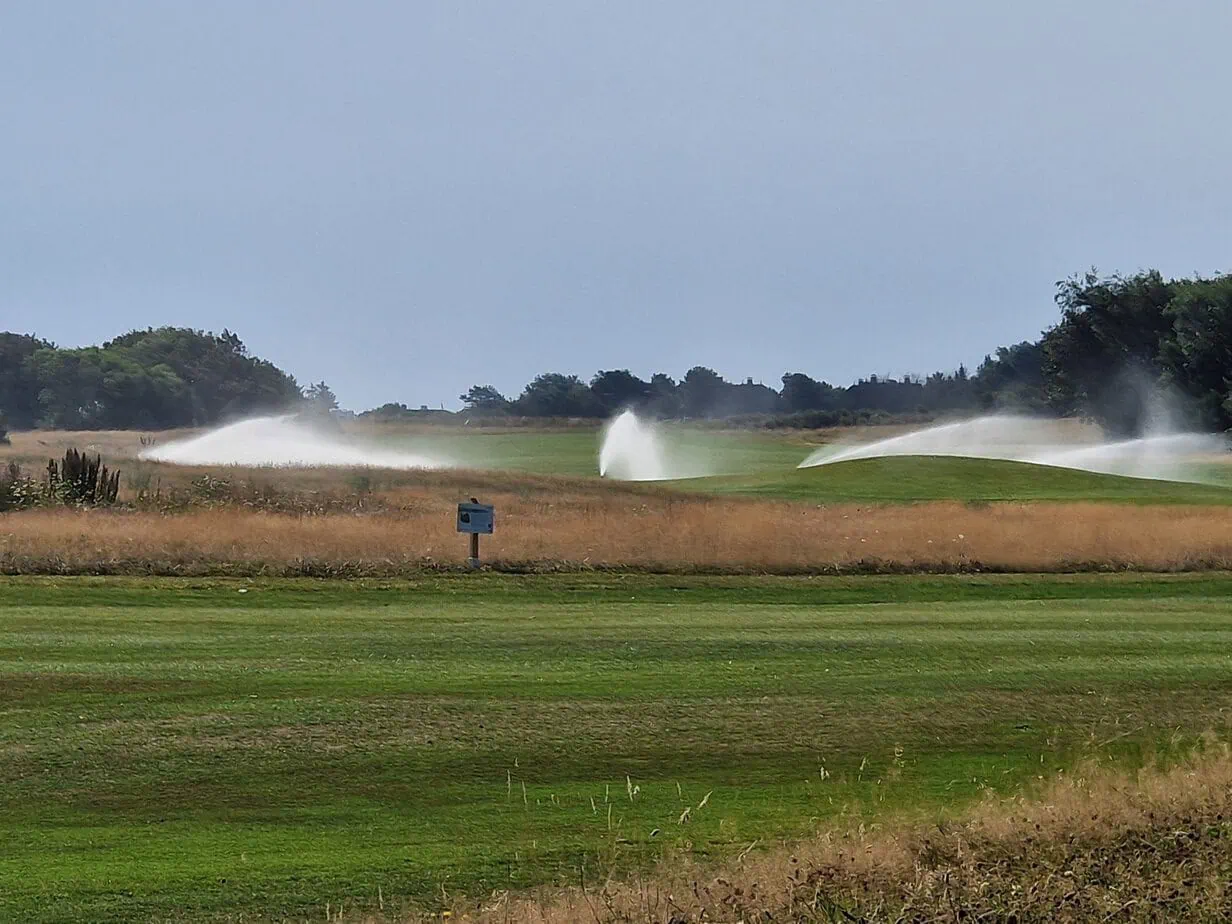
- Routine inspections of the existing system are not performed often enough. You should take a close look at the system once a week.
- The existing technology is not being used efficiently enough, and areas are not being prioritized. Here’s an example: When the approved water volume is nearly used up, I can adjust the sector sprinklers so that they only irrigate the areas that absolutely must be irrigated. Even on the fairway, the first hundred meters after the tee box can possibly be excluded from irrigation.
Sven Wenzel, Head of the Irrigation Division, Sommerfeld AG
- At many golf courses, the irrigation system is not modernized until acute problems arise. Regular investments are often neglected, as visible improvements to the course are frequently given higher priority.
- The actual water needs of a golf course are often not calculated in detail. Without sound demand planning, supply shortages can occur, particularly during dry summer months.
Conclusion: Irrigation is a complex issue, but it is vital to the survival of a golf course—even in Central and Northern Europe. Due to the effects of climate change, Europe is warming faster than any other continent. This also means that irrigation systems and technology are becoming increasingly important if a golf course is to maintain a high standard of quality in the long term. Golf courses in Spain, California, and the United Arab Emirates—where first-class playing conditions are largely achieved using treated reclaimed water—prove that this is possible, even if it often requires greater investment and, consequently, higher costs.
INSERT_STEADY_NEWSLETTER_SIGNUP_HERE