With temperatures reaching 33 degrees, the golf industry in Central Europe is breaking a sweat. The summer of 2026 is demonstrating in countries such as the United Kingdom, Germany, and France just how multifaceted the issue of heat is, even beyond the familiar greenkeeping topics like irrigation and turf maintenance. The issue of extreme heat is directly linked to two other issues: customer service and occupational safety. On the one hand, a playing environment must be created that continues to encourage guests to play golf; on the other hand, a work environment must be provided in which employees can continue to work without compromising their health.
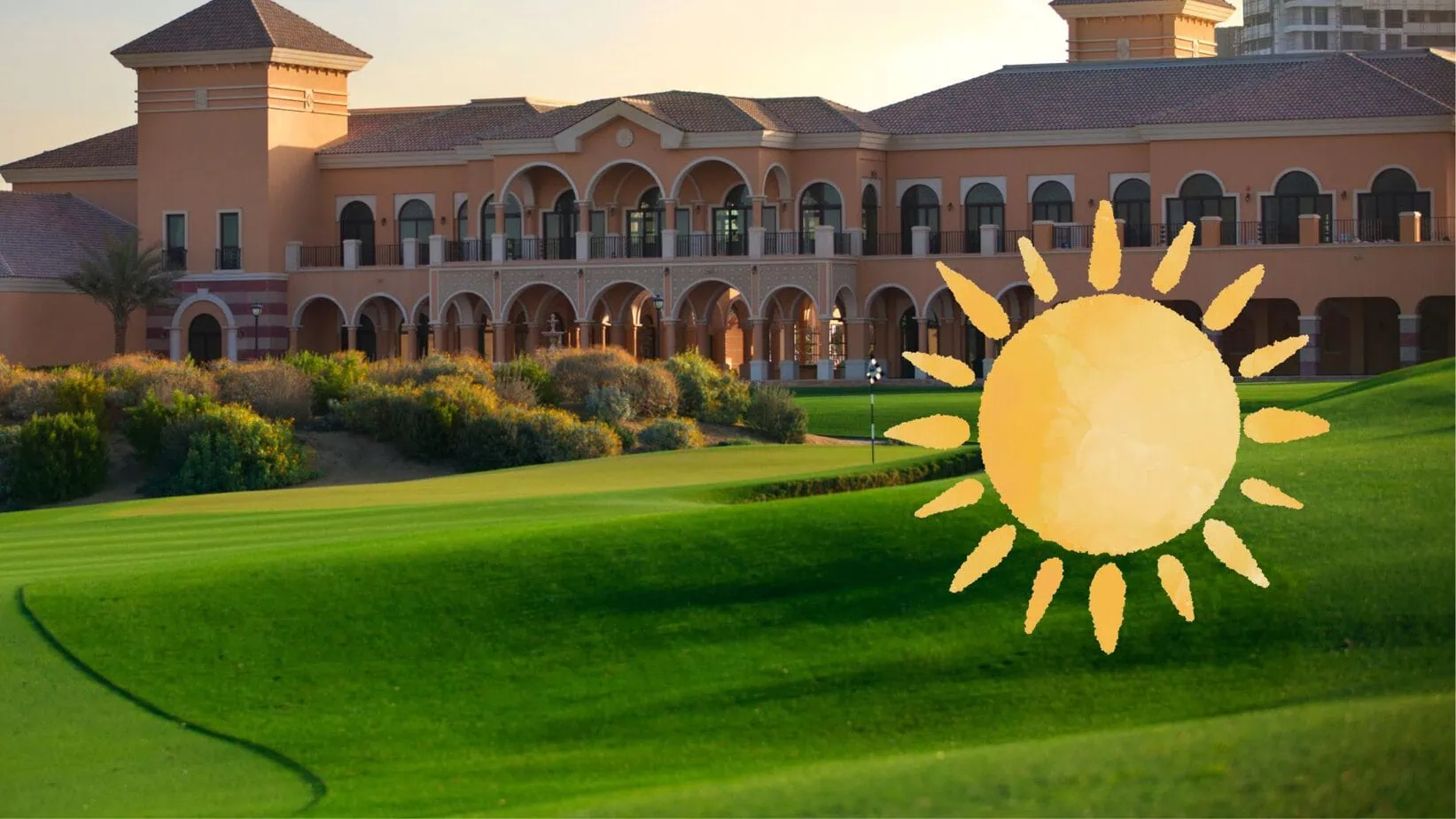
We wanted to know from experts on the subject of heat how this works. Tom Rourke, General Manager at The Els Club in Dubai, deals with extreme heat on a daily basis. “After living in the UAE for more than 20 years, temperatures between 25°C and 35°C become very normal and comfortable,” he explains, describing his daily routine at the golf course, which is managed by Troon, the world’s largest golf course management service provider. “The UAE’s climate is characterised by a dry heat, which many people find more tolerable than the humid conditions experienced in other parts of the world. Our members and guests play golf in temperatures ranging from around 8°C on the coolest winter mornings to approximately 45°C during July and August.”
What can guests expect when it’s hot?
As temperatures rise, the entire guest experience changes. Anyone who wants to successfully operate a golf course today must ask themselves: How can we still create an enjoyable day of golf even when temperatures reach 35 degrees or higher?
At the Els Club Dubai, Tom Rourke has noticed, first and foremost, a change in playing habits. “Starting at around 38 to 40 degrees Celsius, tee times shift significantly,” he reports. During the week, rounds are concentrated in the early morning hours between 6:00 and 9:00 a.m. and in the late afternoon. The hottest hours of the day become less popular. Weekends, however, are an exception—demand remains surprisingly high there despite extreme temperatures.
For golf courses, this leads to an important insight: It is not temperature alone that determines occupancy rates, but rather the ability to provide guests with a pleasant experience despite the heat. Comfort is thus becoming a competitive factor.

Best Practices: What golfers can expect in today’s heat
Many measures that have long been standard practice at golf destinations in the Middle East are likely to become more common in Europe as well. Tom Rourke, for one, can list a whole range of services that are part of everyday life at the Els Club in Dubai.
- Early start times as early as 6 a.m. to take advantage of the most pleasant temperatures.
- Extend the clubhouse’s hours so that breakfast and coffee are available before the first tee time.
- Additional drinking water and hydration stations throughout the facility.
- Golf carts equipped with coolers and ice to keep drinks cold throughout the round.
- USB ports on the golf carts that can be used to power portable fans.
- Chilled towels provide a small but effective way to cool off during the round.
- Free ice cream or fresh snacks to cool off quickly.
- More shaded areas and places to relax, especially at the halfway houses and on the terraces.
- Player assistants or beverage carts that actively deliver chilled drinks and refreshments onto the course.
At first glance, many of these measures may seem unspectacular. Taken together, however, they determine whether a round of golf in intense heat feels like a burden or a positive experience. Especially in Central Europe, where heat waves are becoming more frequent and longer-lasting, this aspect is likely to become significantly more important in the future.
Occupational safety is becoming a strategic management issue
The impact of the heat is even greater behind the scenes. While golfers can choose their tee times flexibly, greenkeepers, marshals, and service staff have limited flexibility. For them, workplace safety is increasingly becoming one of the key management priorities.
For an international operator like Troon, which manages numerous facilities in countries across the Middle East as well as in U.S. states such as Arizona, California, and Nevada, occupational safety standards for working in hot weather are therefore essential. The goal is to consistently reduce health risks without compromising the quality of course maintenance. Government regulations already ensure that workers are protected from the heat.
“In the UAE, the official midday work ban during the summer applies every year from June 15 to September 15, in accordance with the regulations established by the Ministry of Human Resources and Emiratization,” explains Clinton Norris, Director of Sales & Marketing at Troon International. “Similar regulations also exist in Oman, though with slightly different dates.”
Best Practice: How Troon organises heat protection for employees
The most important measures include:
- Work begins as early as 4 a.m. so that as much work as possible can be completed during the cool morning hours.
- Adjustment of working hours and additional rest breaks during periods of extreme heat.
- Mandatory training on recognizing heat-related illnesses and knowing how to respond in an emergency.
- Reusable water bottles and additional water stations throughout the facility.
- Electrolytes and high-energy snacks to help maintain fluid and mineral balance.
- Shaded workstations and portable fans for outdoor work.
- Clear emergency protocols to be followed as soon as the first signs of heat stress appear.
It is noteworthy that this knowledge is now finding its way back to Europe. Troon is now applying the lessons learned in the United Arab Emirates to golf courses in the United Kingdom as well. There, during heat waves, additional drinking water stations are set up, work procedures are adjusted, earlier tee times are recommended, and additional shade and cooling options are provided.
The message behind this extends far beyond individual measures: heat management is evolving into a new management discipline at golf courses. Those who adapt to this early on not only improve the safety of their employees but also enhance service quality, customer satisfaction, and financial stability. The summers of 2025 and 2026 have shown that this trend is no longer limited to golf courses in Dubai.