Bois d’Arlon: Europe’s future laboratory for top resorts
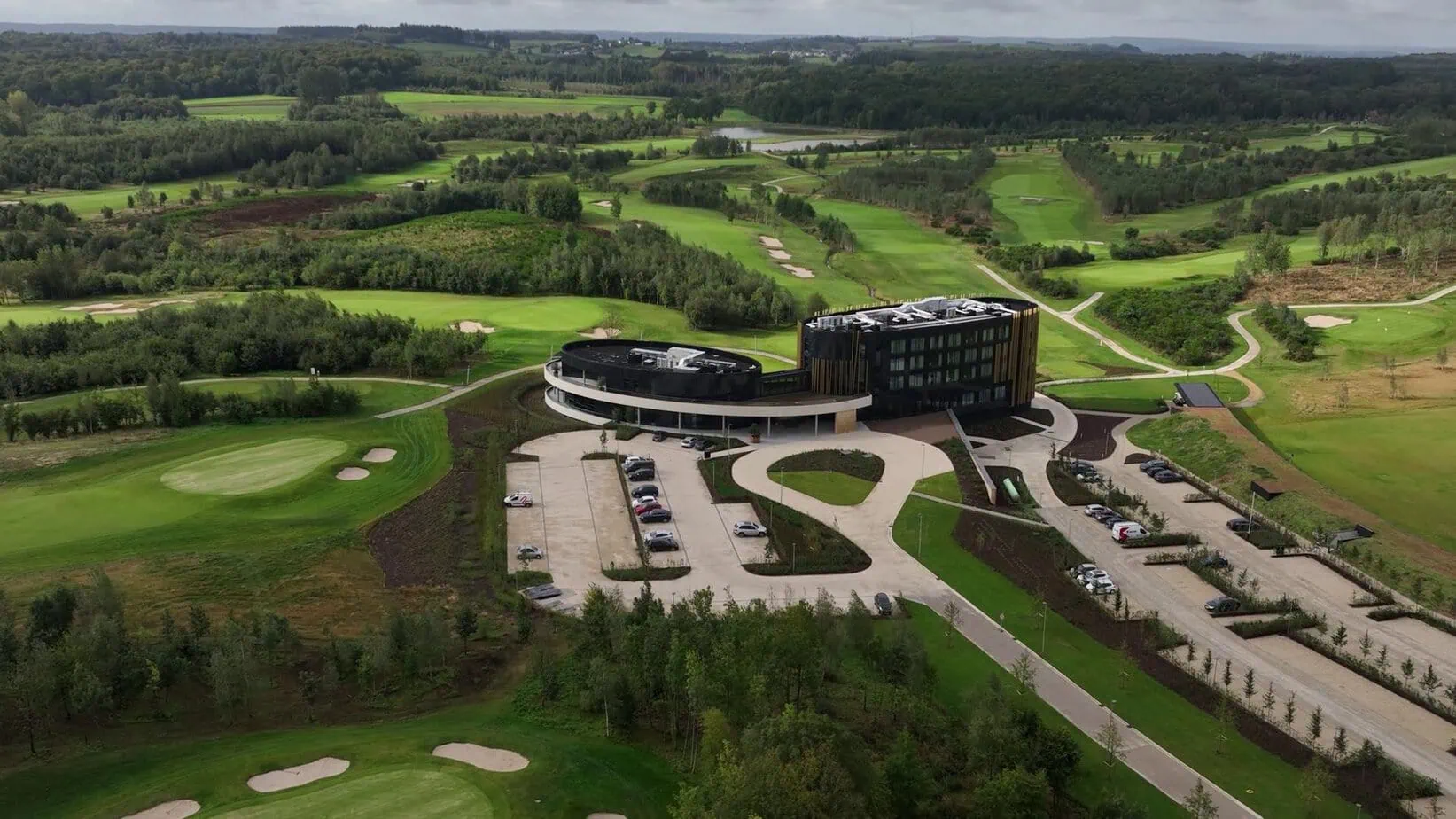
Where in Europe can you get a glimpse into the future of the golf industry? Here in the Belgian golf resort Bois d’Arlon, about 20 minutes from Luxembourg, is such a place. You wouldn’t know it at first glance – after driving through the impressive avenue of beech trees, your gaze falls on a state-of-the-art hotel complex with 64 rooms, next to the foothills of the 27-hole golf course, which will open in 2024 and is already being touted as a venue for major international tournaments.
You can catch a glimpse of the future if you take a look at the regulations and nature conservation requirements that investor Robert Schintgen is grappling with as he implements his vision of creating a sustainable premium golf resort.
In the Belgian region of Wallonia, the authorities have been pursuing a strict zero-phyto policy since 2018, i.e. the goal of pesticide-free public spaces. “We have nothing,” sums up Gaëtan Lits, the Head Greenkeeper. He is a top man in the greenkeeping industry and was voted Greenkeeper of the Year in Belgium in 2024.
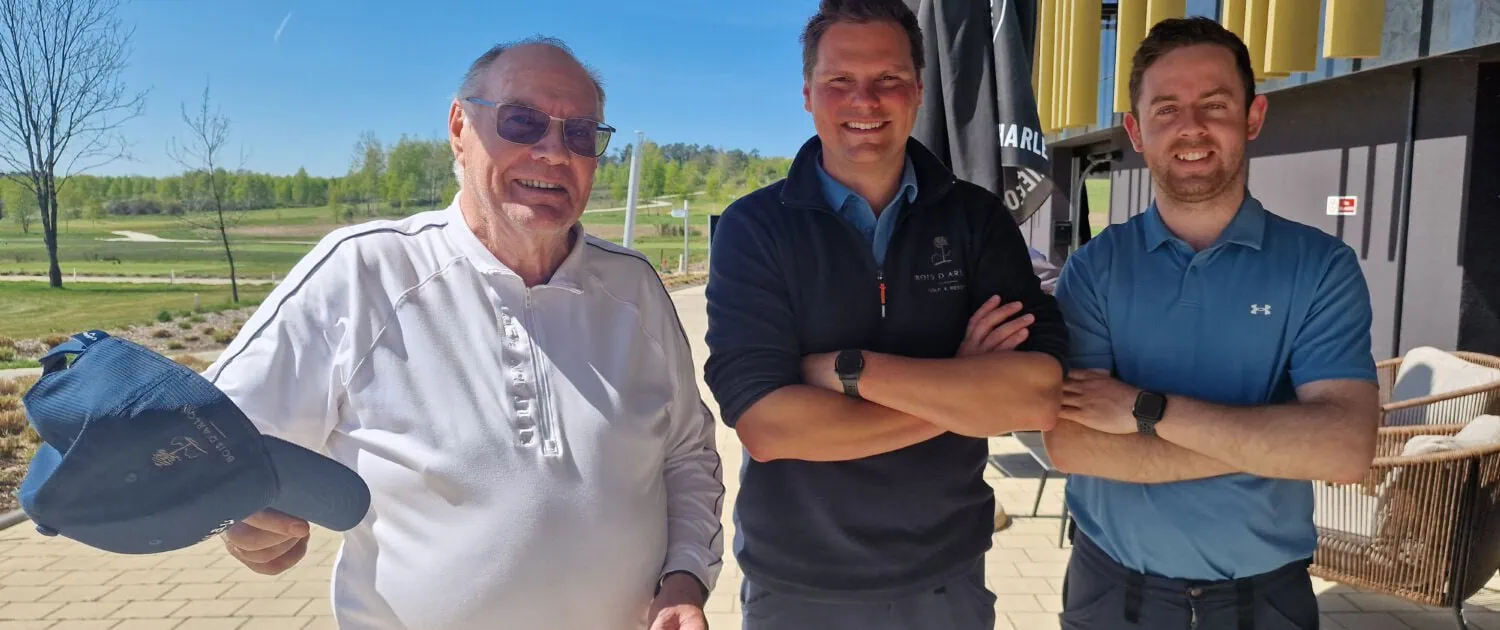
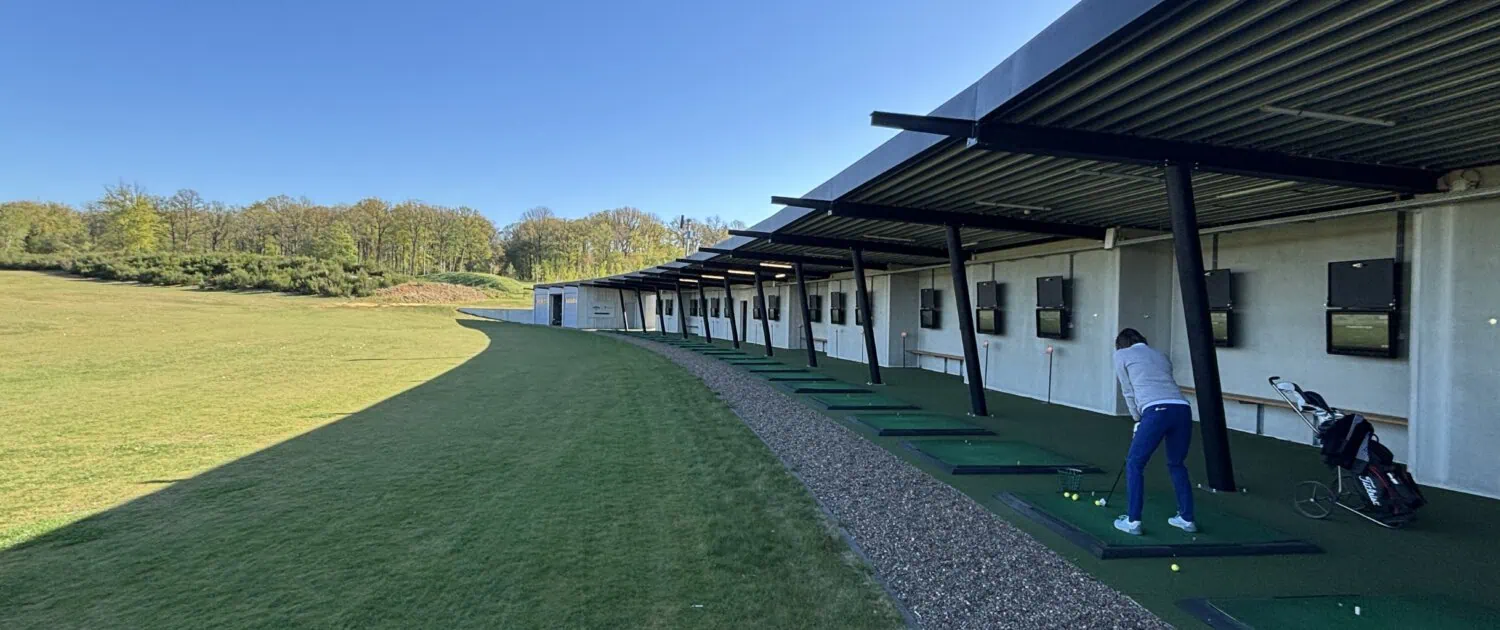
Together with his deputy Ollie Campbell, he stands in front of the large putting green, which adjoins a state-of-the-art driving range and the hotel complex. Lits has been on site since the golf course was built and has seen the 27 holes grow. Together with Orwell and her greenkeeping team, her daily mission is to develop a first-class and sustainable golf course that complies with current legislation.
It takes a vision to realize a new golf resort under such difficult starting conditions. Robert Schintgen comes from the real estate sector, and the approval period of almost ten years for the golf resort has not taken away his motivation. He is familiar with this from building construction in Luxembourg. He is attached to the golf resort “because, unlike pure real estate projects, it has something to do with nature and I can leave something positive for posterity.” He is creating greenery where there was none. The approximately 220-hectare site with a castle was largely used as a forestry operation by the previous owner, the forest was cleared and sold. “There weren’t any trees left, we’ve already planted so many new ones. We will plant many more trees, ones that are even better suited to nature and can cope with climate change.”
The effects of climate change in Central Europe, the enormous regulatory requirements, the high expectations of members and guests all come together here and make there no alternative to the most sustainable approach possible.
Water management
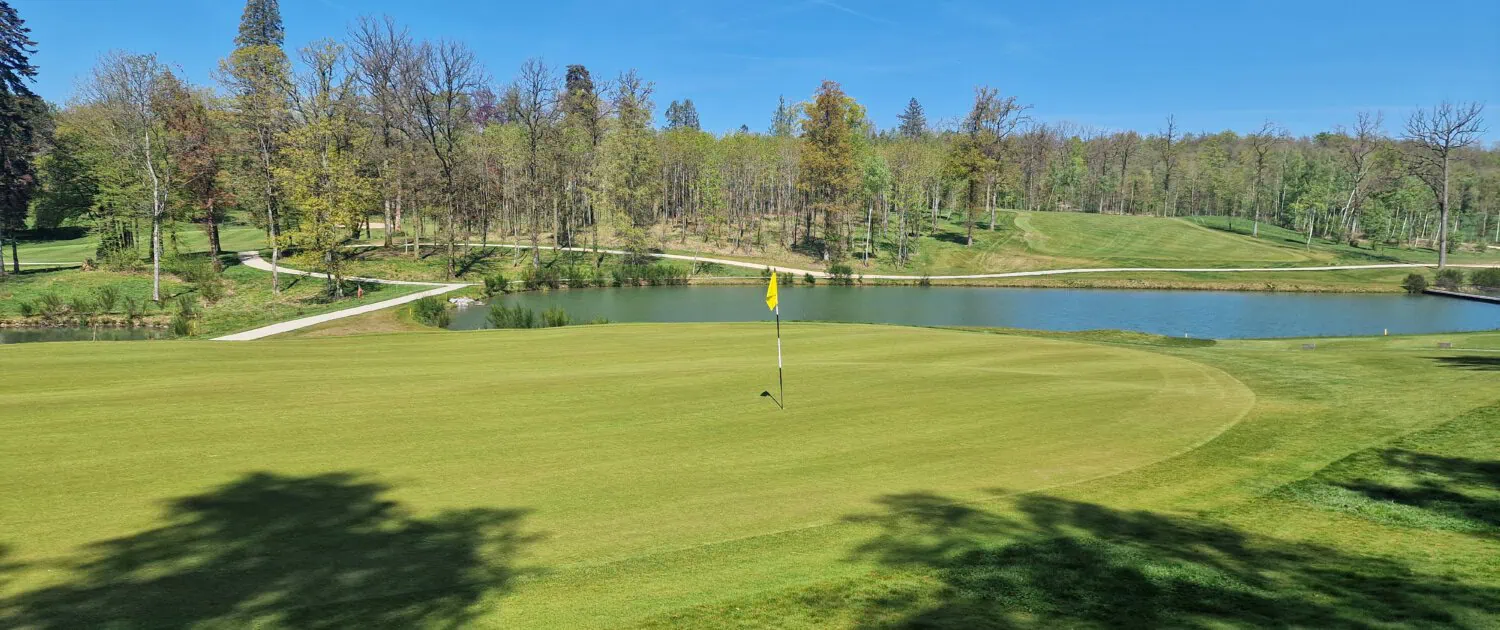
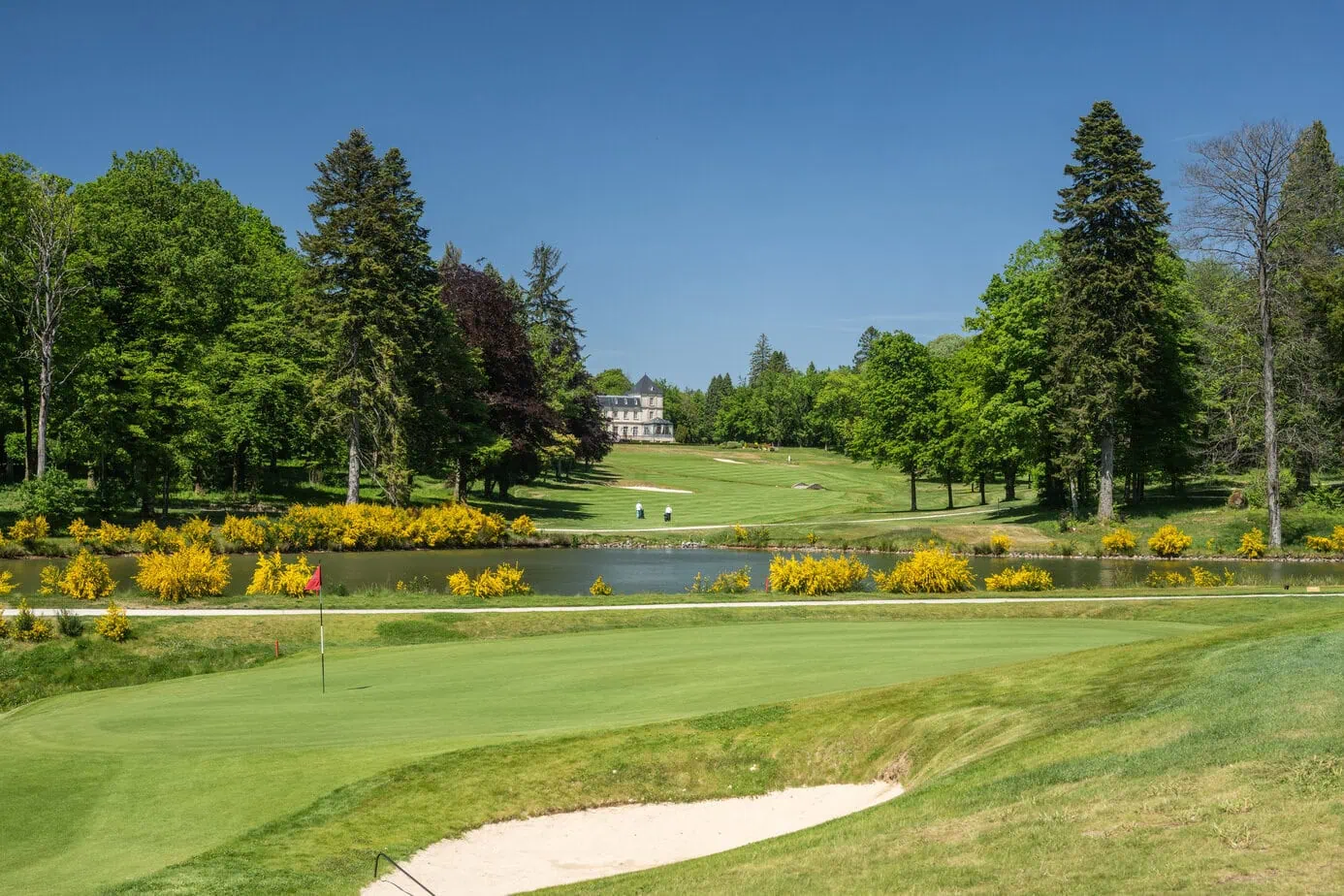
The service water from the hotel flows into a large recycling plant, well hidden in the ground next to the driving range. From there, it is pumped into one of the three large storage ponds, which hold a total of 120,000 m³ of water. A large part of the water comes from almost 35 kilometers of drainage pipes that run across the course. This 27-hole facility operates entirely without drinking water or groundwater and does not tap into any lakes or rivers. It works with rainwater and process water. Anyone talking about resilient water management of the future can see it here.
The grasses and the weather
The grass of choice for the client was Festuca: robust, drought-resistant, disease-resistant. What sounds unproblematic at first has its pitfalls in reality. “When we were in the middle of the growth phase in June 2022, we had to cope with quite a drought,” recalls Gaëtan Lits. Since then, there have been several more dry spells like this. “We’ve actually always been on the defensive since day one” – he says this with a facial expression that betrays reflection and yet optimism. The two greenkeepers in charge know that their situation is anything but easy. “But in the end, it’s all about reducing the stress on the grass, controlling the amount of fertilizer and dealing with the weeds that like to spread.” When asked about the reaction of their European colleagues to their experience reports, they both laugh: “A lot of countries don’t even know what lies ahead for them,” Orwell concludes. He studied agronomy in the USA and worked in Canada. He is aware of how relaxed the pesticide regulations are there compared to Wallonia.
The competition in the area
And then there is the question of profitability: in Bois d’Arlon, too, hotel rooms are to be filled, tee times booked and memberships sold. The location of the facility, its orientation as a top resort, makes many things easier. At the same time, it is the lack of pesticides in use that sometimes gives facilities in the surrounding area an advantage. “Most of the time, it’s a question of aesthetics,” summarizes Lits. Is the daisy on the fairway, yes or no? But with competition from golf courses in Luxembourg or even outside Wallonia, customers or business partners occasionally ask why this sustainable practice is being maintained.
A permanent learning process
“We are constantly trying to adapt and improve,” is the greenkeepers’ answer. Looking at the greens, it’s fair to say that the team is extremely successful. The surfaces are perfect. Gaëtan Lits can now bring his experience with the Bois d’Arlon project to bear at national level. The Belgian Golf Association now has a board member of the greenkeepers’ association on its executive committee – and that is Lits. This creates a direct exchange on topics such as quality, legislation and greenkeeping.
Bois d’Arlon is therefore a kind of laboratory for the future in many respects. Europe’s golf industry should take a close look at the laboratory results. They tell us a lot about what resources, knowledge and investment will be needed in the future to achieve top quality.
INSERT_STEADY_NEWSLETTER_SIGNUP_HERE