All you need to know: Red List and golf
Founded in 1963, the Red List of Threatened Species is compiled by the International Union for Conservation of Nature (IUCN) and is an important indicator of the state of biodiversity. It is the world’s most comprehensive source of information on the global extinction risk status of animal, fungal and plant species.
The lists are updated on an ongoing basis. According to the current status, there are currently 172,620 assessed species and of these, 48,646 species have been classified in threat categories. These include 41% of amphibians, 21% of reptiles, 36% of reef-building corals, 38% of trees, 27% of mammals and 11% of birds.
The Red List provides information on distribution range, population size, habitat and ecology, utilization and/or trade, threats and conservation measures that help to make necessary conservation decisions. The IUCN’s goal is to assess at least 160,000 species. Some experts are critical of the Red List due to the fact that the species groups recorded so far are only geared towards terrestrial ecosystems, especially forest ecosystems.
When is a species endangered?
The International Red List is based on scientific criteria and is therefore the most reliable and renowned source on the state of biodiversity. How endangered a species is depends not only on how many animals or plants are still around. The habitat also plays an important role.
“It makes a big difference whether a species is widespread across half of East Africa or only occurs in a small volcanic cone in Kenya,” explains Arnulf Köhncke from the World Wide Fund For Nature (WWF) Germany. “If an area is very small, there may still be 5,000 animals here – but the species can still be severely threatened if the area is destroyed.” The experts also check the reproduction rate of each species and closely monitor how its population is developing.
Classification into three categories
The list is divided into different categories. The categories “criticallyendangered” (CR), “endangered” (EN) and “vulnerable” (VU) are combined to indicate the number of “endangered” species (threatened). The development of the number of species in the endangerment categories (CR, EN, VU) from 1996 to 2025 is enormous.
The Red List data forms the basis for the indicators needed to measure progress towards the 2030 targets of the Convention on Biological Diversity (CBD), the Kunming-Montreal Global Biodiversity Framework (GBF). The same applies to the goals of the United Nations (UN) 2030 Agenda with its 17 Sustainable Development Goals (SDGs), in particular Goal 15.
There is also a problem with introduced (invasive) species. The latest report by the World Biodiversity Council (IPBES) from September 2023 puts the number of alien species worldwide at more than 37,000, of which more than 3,500 are invasive. The latter are capable of displacing species and, in the worst case, toppling entire ecosystems. The global economic damage caused by invasive species now amounts to over 324 billion US dollars per year.
The human factor
According to the WWF, the latest surveys assume that the extinction rate has now increased by a factor of 100 to 1,000 compared to the natural rate due to human influences. Habitat loss and the massive overexploitation of natural resources, for example through overfishing or poaching, are among the most important threats to biodiversity worldwide. Added to this are environmental pollution, the climate crisis and the displacement of native flora and fauna by invasive species.
According to the WWF, the extinction of a species is irreversible and creates incalculable risks. In addition to their intrinsic value, animals and plants have a function in the ecosystem. If this is disrupted by species extinction, this will also have consequences for humans. In many parts of the world, food, water and medicine depend directly on a functioning and healthy ecosystem with a high level of biodiversity. If this ecosystem is destroyed through the loss of species, the livelihood of a large part of the world’s population will also be directly threatened.
National and regional red lists
Red Lists published by states or federal states for their territory have a regional reference and therefore a different meaning than the international Red Lists of the IUCN. They can respond to geographical particularities and enable a more comprehensive presentation of species protection on site.
In Germany, the national Red Lists are published by the Federal Agency for Nature Conservation (BfN) in Bonn. Here you can download the current Red List for each species. Since 2019, the overall coordination and editing of the German Red Lists has been in the hands of the Red List Center, which also provides lists for download on its website.
The new Red List of Mammals, the Red List of Freshwater Fish and Lampreys, the Red List of Amphibians, the Red List of Reptiles and the Red List of Phytoparasitic Fungi are available here as electronic publications. In addition, the Red List data for these and other groups of organisms can be accessed in the download areas of the website: Vertebrates, Invertebrates, Plants, Fungi and Lichens.
The role of international golf courses and associations
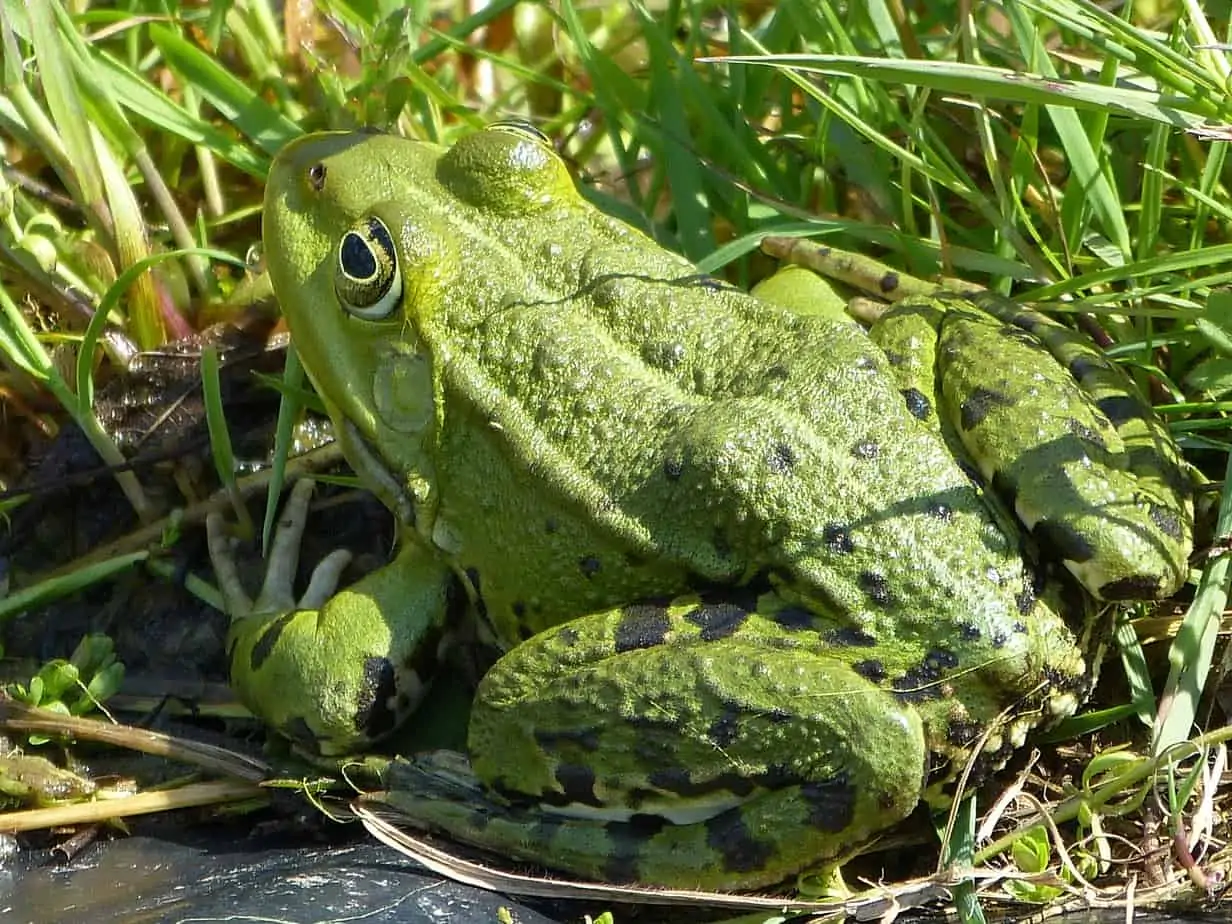
Golf courses can help to actively counteract species extinction and protect endangered species. From bees and bats to insects and plants, the fairways are home to numerous animals, fungi and plants that are worth protecting. Golf courses are home to the rarest internationally protected wildlife, including all species of bat and natterjack toad. Declining species such as the brown hare, otter and all reptiles also make golf courses their home.
In England, for example, over 98 percent of all lizard orchids can be found at Royal St George’s Golf Club. The Open venue is not only an oasis for these species, but also helps them as a nucleus to spread and enter the immediate landscape. Certain breeds of sheep are frequently found on the squares, especially in Great Britain. The R&A has a long-standing relationship with the conservation organization RSPB. This will help to improve the habitat management and wildlife value of golf courses and help golf promote its good work to the environmental lobby and government.
In France, the French Golf Federation maintains partnerships with the National Museum of Natural History(www.golfpourlabiodiversite.org) on the subject of biodiversity or is involved in endowment funds(www.ffgreen.org). The Golf de Touraine is the first French golf club to be awarded under the “Golf for Biodiversity” program, which lists and protects biodiversity on its own course.
In the United States, the Endangered Species Act (ESA) of 1973 established a framework for the conservation and recovery of endangered species of fish, wildlife, plants, and for other purposes. The law requires federal authorities to ensure that their actions cannot jeopardize the existence of listed species. The Florida panther, Florida manatee, California condor, loggerhead sea turtle, Mississippi ground squirrel frog and Franklin’s bumblebee, for example, are currently among the most endangered species. The USGA, as the US golf association, invests in corresponding research projects as part of its USGA sustainability program and also focuses on sustainability practices at its USGA campus in New Jersey.
The non-profit organization GEO Foundation for Sustainable Golf is based in Scotland and operates the world’s leading sustainability system for golf. The German Golf Association (DGV) offers numerous projects on the subject of biodiversity, such as GolfBiodivers, and provides important information for golf course operators in the factsheet Biodiversity on the Golf Course or within the DGV Toolbox Environment & Course Maintenance. There are also collaborations such as with the German Wildlife Foundation or the Golf Biodivers research project.