Semlin Golf Resort: 30 Years of Golf Creating Habitats
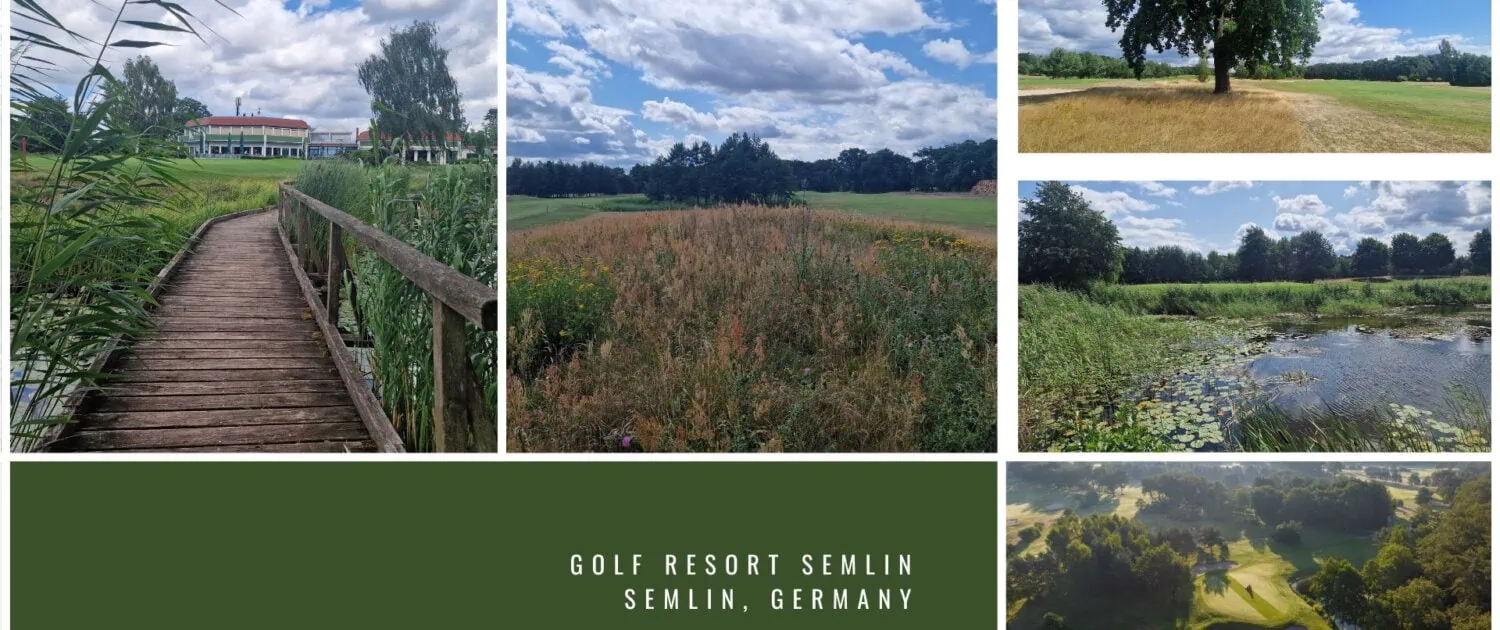
Very close to Berlin, but it feels like you’re far, far away. Here at the Semlin Golf Resort, nature is the first thing you notice. The Havelland Nature and Star Park, home to the 27-hole resort and the 72-room hotel, is part of a landscape conservation area that stretches across what was once fallow state-owned land in Brandenburg.
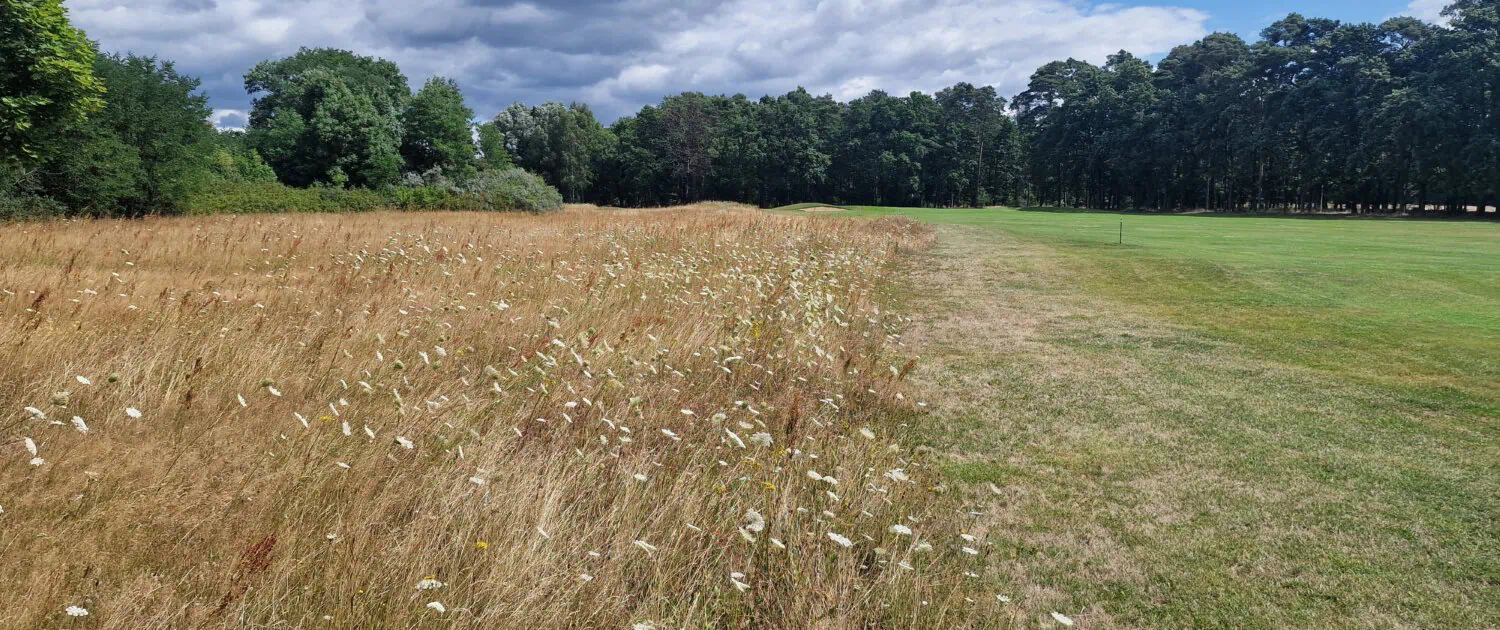
Over the 34 years since planning began, a golf course has taken shape that serves as a prime example of the oft-repeated saying, “Golf is good for nature.” The diversity of habitats is what makes the landscape so appealing—it is expansive and unspoiled. Scant meadows, commonly found on sandy links courses, are abundant here. The poor soil, combined with proper maintenance, has led to the growth of sparse grasses and herbs in the rough areas, from which golfers can easily play their shots. The decision not to mulch—that is, to leave the clippings on the ground—has had a positive effect here.
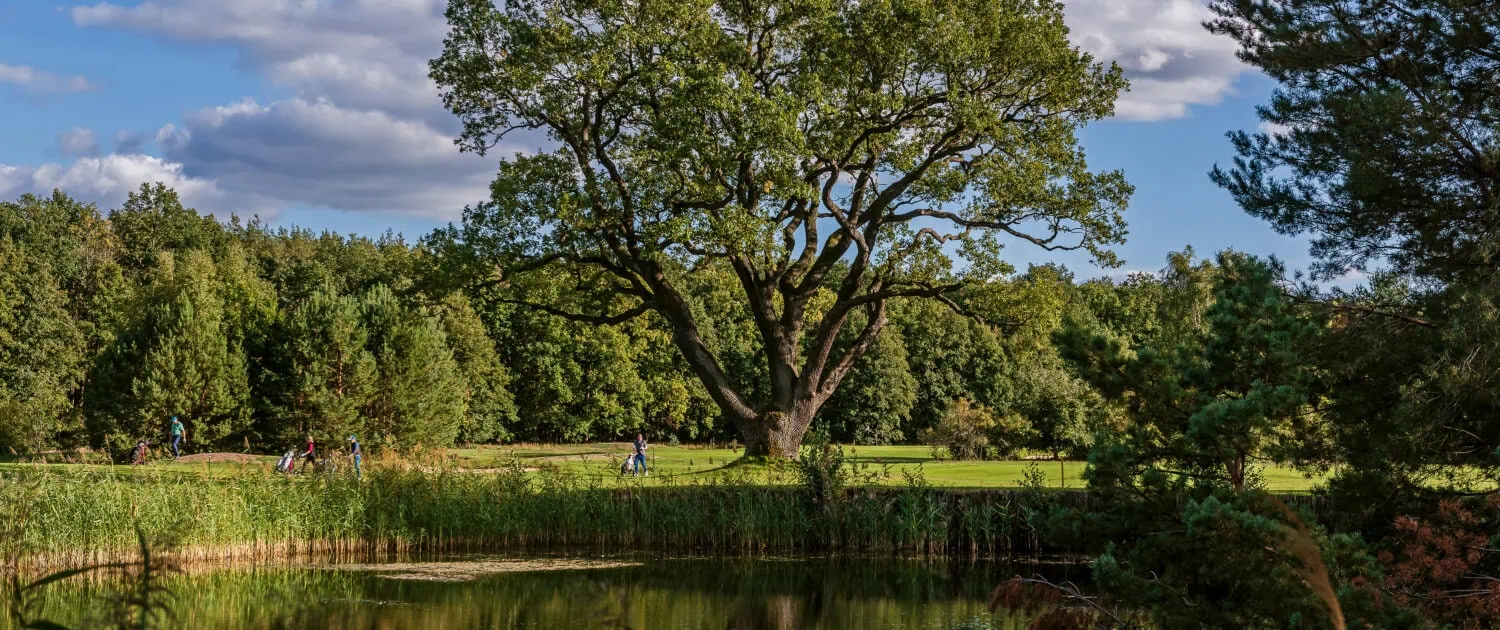
If you walk through a small wooded area at the end of course C, you’ll come across an extensive area of deadwood. This area is managed as a swamp forest, which supports insects, amphibians, and fungi while also helping to retain moisture in the soil. In addition, over a dozen small bodies of water serve as biotopes. Experts in landscape and nature conservation regularly provide input on maintaining the various habitats on the golf course.
The resort’s ecological significance is underscored by detailed habitat mapping and regular flora and fauna reports. The range of species on the property is impressive: in addition to amphibians and various insects, beavers, otters, white-tailed eagles, and red kites are native to the area. Even the rare great bustard finds refuge in the lake’s nearby reed beds. The bird, which to the untrained eye resembles a turkey, has its largest population in Germany here near the golf course. You won’t get to see it, though—it’s extremely shy.
Monitoring and Reporting
When it comes to course maintenance, the focus is consistently on minimizing the use of chemicals—a approach that clearly does not compromise the impeccable condition of the greens. Instead, natural products are the preferred choice for maintenance. The course’s location within a nature reserve already entails rigorous oversight by the authorities. Meetings with external experts and representatives of the Nature Conservation Union are held twice a year. Data collection is standard practice, particularly regarding water and its quality. “We have to constantly sample the water bodies and submit the results to the authorities,” summarizes Bernd Eulitz, the course’s general manager, who quickly made water a priority when he took office ten years ago.
At the Semlin Golf Resort, this had the potential to become a problem. The course’s irrigation system relied on water drawn from the neighbouring Lake Hohennauener, which in turn is part of a large water system that includes the Havel and Spree rivers. Since water levels in the Spree are expected to decline in the medium term—partly due to the phase-out of coal mining in Lusatia—it was foreseeable that the inflow into Lake Hohennauener from the Havel would also decrease in Semlin. “Resolving the water issue was extremely important to us. We’ve succeeded in securing irrigation for the facility through three wells,” says Eulitz, pointing to the water security that has been in place for six years now—a crucial factor given the increase in hot days and dry spells. The natural groundwater ponds—which can be seen, for example, from the clubhouse terrace—play no role whatsoever in the irrigation system.
Floodplain Provides Protection for the Village
To that end, the Semlin Golf Resort plays a key role in the region’s “sponge city” concept. As a floodplain of the Havel River, it serves as a buffer designed to protect homes in the neighboring town of Semlin from flooding. Although Eulitz has never actually experienced such a flood, the golf course is fundamentally an essential component of the area’s flood protection system. This is evident from one or two of the greens, which are situated on elevated ground. Due to the risk of flooding, this design was necessary to protect the putting surfaces.
The Star Park and Architectural Highlights
The Semlin Golf Resort is a favorite spot, especially for stargazers. They meet here regularly to observe the Milky Way, for example, in Germany’s first official star park. Yet for most visitors, the term “star park” itself requires some explanation. Here in the Havelland region, the night sky is so dark that the Milky Way is much more clearly visible than in other parts of Germany. To preserve these conditions, the resort in Semlin is subject to strict lighting regulations designed to prevent light pollution. This not only saves energy but also protects nocturnal insects and is particularly appreciated by guests during stargazing sessions.
When the golf course was founded exactly 30 years ago, no one would have imagined it would be used in so many different ways. Golf alone was the purpose of the project. Thirty years later, it’s clear that not only is this a wonderful place to play golf, but nature has also benefited from the resort’s construction.