
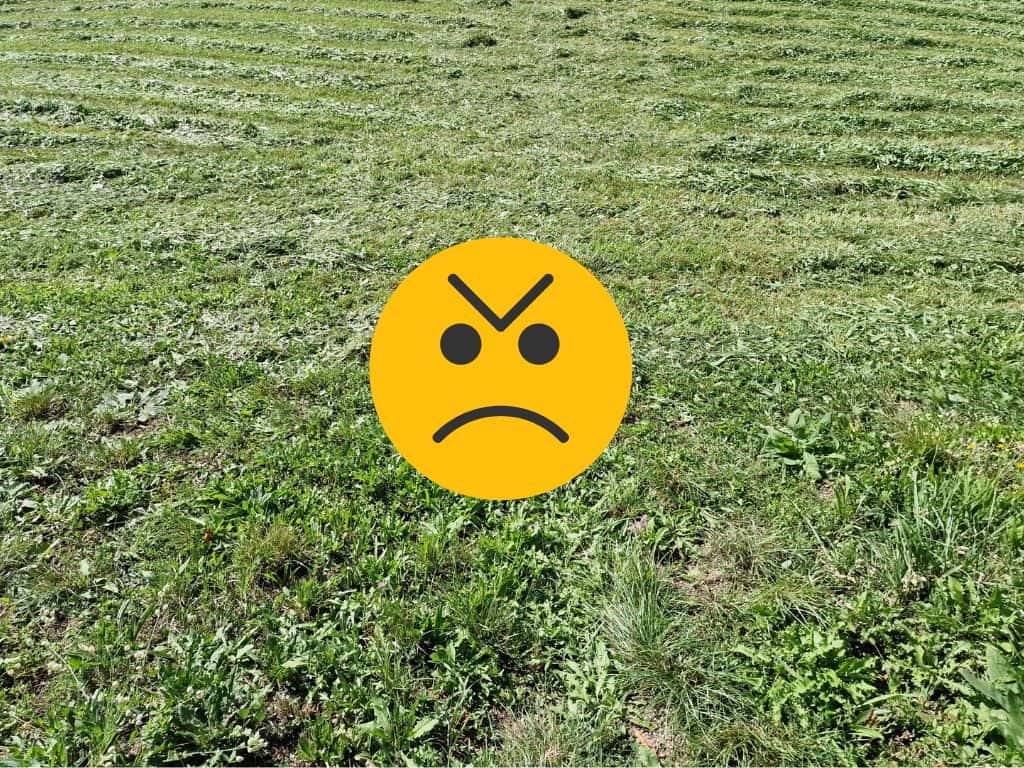
Red card for mulching
Mulching – many golfers are familiar with this term from the beds in their home garden. It refers to the use of organic material to cover the soil in order to improve its quality or prevent the emergence of weeds. A term that has positive connotations. The situation on the golf course is different. When it comes to mowing the hard surface of golf courses, mulching is actually taboo.
The reason: mulching can often be detrimental to biodiversity, especially when it comes to near-natural or species-rich meadows or areas whose biodiversity is to be further increased. The message from experts is clear. “We want to avoid mulching as much as possible because it is bad for biodiversity,” explains Gunther Hardt, Head of the Biodiversity Working Group at the German Golf Association. And mulching is also undesirable for representatives of the Landesbund für Vogelschutz in Bavaria, who are responsible for advising and assessing hardroots on golf courses as part of the Blühpakt Bayern.
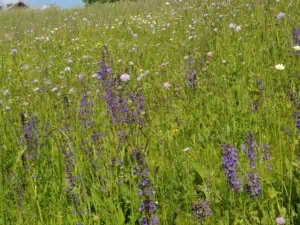
There are many reasons for this:
- Biodiversity is reduced: mulching shreds the biomass of the plants and spreads it over the surface of the meadow. This layer of organic material prevents light from reaching the soil, making it harder for less competitive plant species and seedlings to establish. Species that depend on open patches of soil, such as many wildflowers or herbs, gradually disappear.
- The soil is over-enriched with nutrients: Mulch often leads to additional nutrient enrichment of the soil, primarily through the decomposition of organic material. This encourages nutrient-loving species, while nutrient-poor, often rarer plant species are crowded out. This can lead to a monoculture of dominant grasses.
- Habitats are lost: mulching destroys the habitat for many insect species, spiders, amphibians and ground-nesting birds. These organisms depend on undisturbed, structurally rich meadows. Mulch material can close off habitats and hinder access to food or hiding places.
- Insect populations are suppressed: mulching can directly kill or drive away insects that live in the vegetation. Pollinators such as butterflies, bees and beetles in particular suffer from the destruction of their food sources and habitats. This has a negative impact on the entire ecosystem, as insects play an important role in pollination and as a food source for other animals.
- The soil fauna becomes poorer: the mulch layer often makes the soil impermeable to air and damp, which changes the soil’s microclimate. This can have a negative impact on soil organisms such as earthworms and other soil animals, which are crucial for soil structure and nutrient cycling.
- Invasive species are encouraged: Mulching can also encourage the growth of invasive plant species that are adapted to more nutrient-rich or disturbed sites. These plants can spread quickly and displace native species, further reducing biodiversity.
Conclusion: Over time, the meadow becomes increasingly species-poor, often characterized by stinging nettles and densely overgrown grass.
Most greenkeepers in Germany are aware of these facts because they are taught as part of their training. Nevertheless, it is not only the experts from the Bavarian State Association for the Protection of Birds who, when inspecting the site, note that there are comparatively many sites that do not remove their mown material. Gunther Hardt also notes this. “Many golf clubs either lack the necessary machinery, sufficient staff or they don’t have the budget to dispose of the cuttings.” This often costs money in Germany, even if the cuttings are turned into biogas or compost.
“It should also not be overlooked that golf clubs are often even required to dispose of the clippings in the landscape conservation plan,” Hardt points out. “The knowledge of this requirement is often lost with the change of greenkeeping staff or board members.”
At first glance, leaving it lying around and doing nothing is the simplest and most cost-effective solution. After all, the clippings rot over time. The alternatives are initially more complex: if you are looking for a farmer to mow the meadows and use the cuttings for yourself, you have to coordinate with him and sometimes even pay him. If you collect the clippings yourself, you need the right machines and then either have to store the clippings on your own premises on a suitable, paved surface or drive them away. And if you also want to mow properly, you should have a double-blade cutter bar or at least a rotary mower.
The success: species-rich meadows
It turns out that mowing the hardrough is a fine art. Nevertheless, numerous golf courses in Germany manage it because the issue of biodiversity is important to them. Golf clubs that receive awards as part of the Bavarian Flowering Pact – a cooperation between the Bavarian Ministry of the Environment and the Bavarian Golf Association – are obliged to refrain from mulching anyway. The same applies to award-winning courses in the Habitat for Golf Courses project in Baden-Württemberg, Hesse and Rhineland-Palatinate. Many golf courses in numerous other federal states have also long since opted for this mowing option, even though it is more costly.
“If you want species-rich stands, you have to do without mulching,” Hardt explains firmly. After all, those who follow this motto for several years are rewarded. Instead of monotonous, greasy grass interspersed with stinging nettles, meadows with herbs and flowers develop. The diversity attracts insects and meadow breeders. The meadow is alive.




 Maria Strandberg (Foto: privat)