
“If you’re bad at CO₂, you’ll have worse cards in the competition in the long run.” For Olaf Henningsen, President of GC Kitzeberg near Kiel, this is still a future scenario – but one that those responsible for the 18-hole course are dealing with constructively.
CO₂ reporting clearly highlights hotspots
The traditional club is one of the few facilities in Germany to have commissioned a specialist company to compile a CO₂ report. The result: the golf course emitted a total of 249.26 tons of CO₂ in 2023. 59% is attributable to Scope 3, 15% to Scope 2 and 26% to Scope 1. Behind the sober figures are the following facts, which incidentally are very similar to those of other German golf clubs when it comes to CO₂:
– The club is not climate-neutral.
– The biggest CO₂ polluter is mobility.
– Other major factors are electricity, heating and greenkeeping machines
– Fertilizer is the number one CO₂ driver when it comes to consumables
Henningsen takes a relaxed view of these figures. After all, the balance sheet is important to him and his executive committee primarily because it helps those responsible to make investments in the development of the plant in the future in such a way that they reduce CO₂ emissions. In his view, there is no way around this: “Germany wants to become climate-neutral, so we have to do better”.
“Greenwashing” is not an option for GC Kitzeberg
With this goal in mind, it therefore made no sense for the club’s executive committee to leave out the tricky Scope 3 issue of mobility, which is an optional calculation in CO2 reporting. After all, greenwashing is not possible with the GC Kitzeberg. “For us, it’s about getting better and better in small steps and taking our members with us on this journey.”
Promoting carpooling
The teams are leading by example when it comes to mobility: carpooling is now almost standard practice. During a training trip, trolleys were borrowed locally so that four people could always be safely transported in each car. “It’s more fun with four people on the journey anyway,” says Henningsen, immediately looking for the positive aspect of the measure – as with all his other sustainability projects.
INSERT_STEADY_NEWSLETTER_SIGNUP_HERE
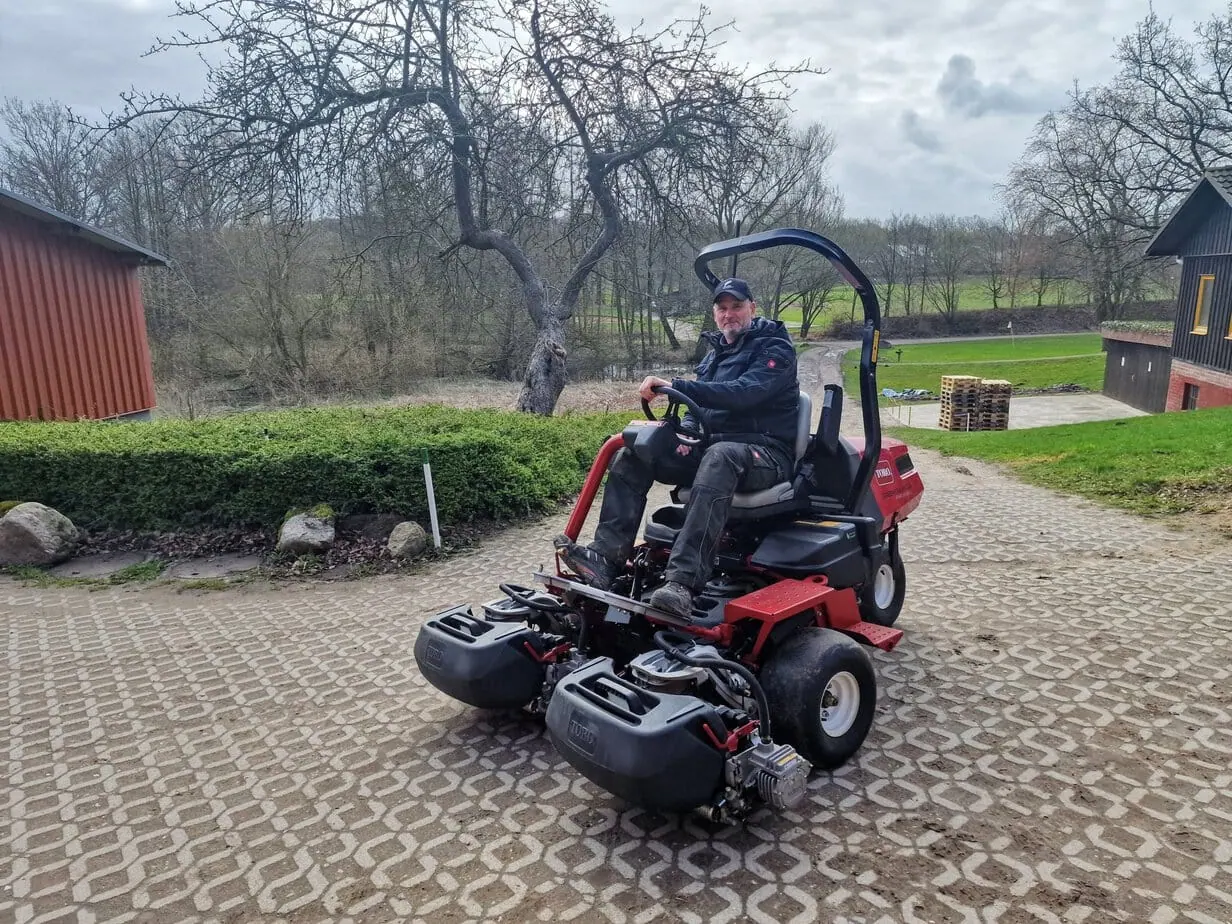
The autonomous fairway mowers are now well established at the club: “The quality of our fairways is better and this is well received by the members.” The club has now switched to the electric version of a new green mower. Head greenkeeper Wojciech Listopadzki also appreciates the fact that the electric models are significantly quieter than diesel-powered vehicles. At a club like Kitzeberg, which is close to the city, this significantly reduces discussions about noise.
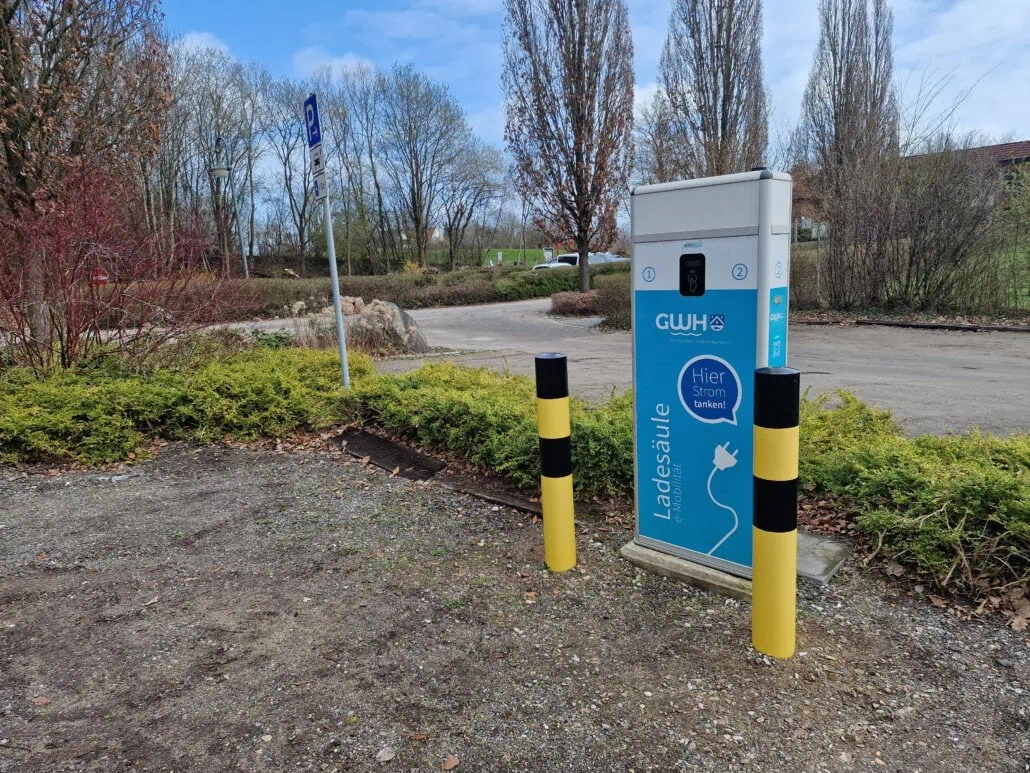
The electricity for the mowers does not yet come from the club’s own PV system. The investment in converting greenkeeping and the clubhouse to renewable energy alone requires considerable investment, which has to be made step by step. “But the roofs of all our new buildings are already designed so that PV can be installed,” says the President, pointing out the need for a long-term transformation strategy.
Other projects can be implemented quickly: The elimination of plastic bottle sales at the club, for example. In Kitzeberg, there are now filling stations for drinking bottles at various points on the golf course.
The entire process of reducing CO₂ emissions is characterized by a constant process of weighing up the options: when it comes to reducing fertilizers and potentially dispensing with pesticides, a very good quality of play is important to the executive committee. “We do everything we can to minimize the risk factors,” summarizes Henningsen. “But when it comes to fungal infestation, we can’t do without chemicals yet.”
“Doing the doable” is therefore also the motto of the CO₂ report for GC Kitzeberg. Climate neutrality at the golf club cannot be achieved overnight. It happens in small steps. Continuity is important – just like at GC Kitzeberg.