
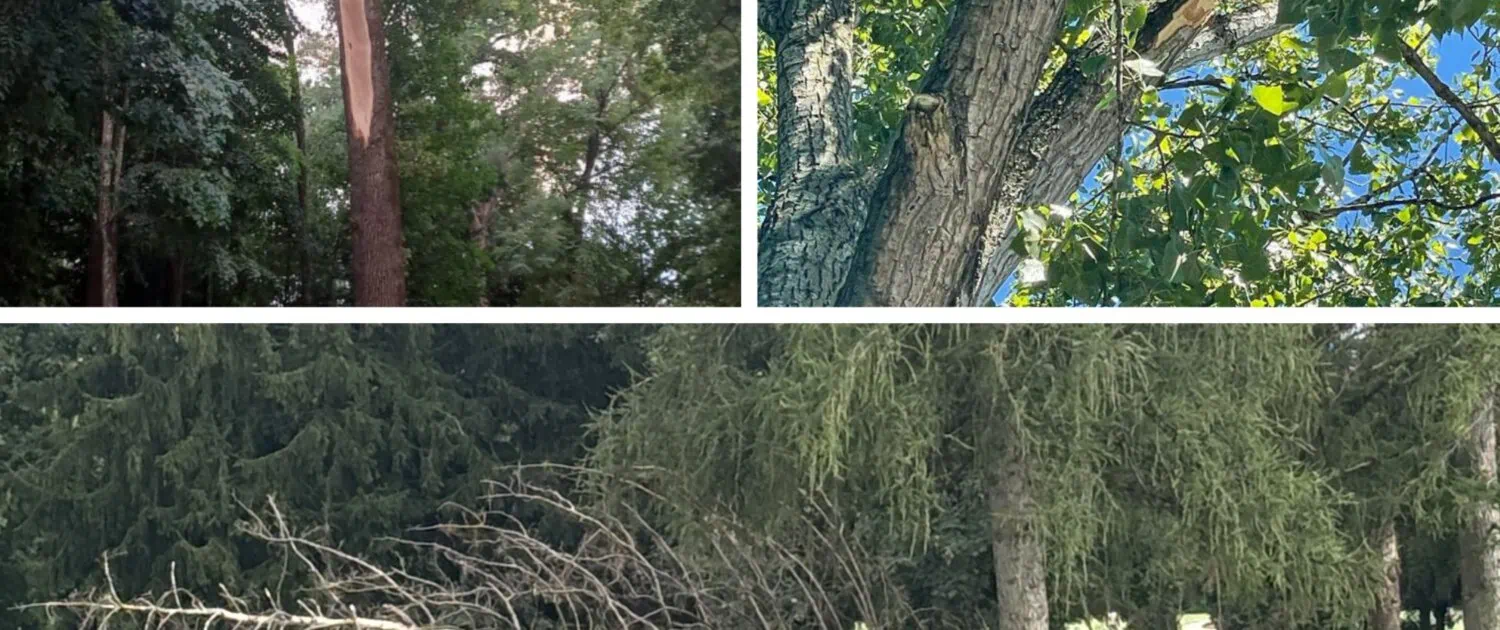
Caution: Branch
There’s a loud crash, and suddenly the branch is lying not far from the ball. One look at the branch’s considerable diameter makes it clear: this is not a harmless situation.
Golf courses now have to deal with two types of falling wood: first, dead wood from trees, which can be easily identified by peeling bark, a gray color, or a lack of foliage. Dead and bare branches fall to the ground.
“Green branch breakage” is the name given to the second phenomenon, which intensifies during particularly dry periods and is therefore currently becoming a problem on golf courses with dense tree cover, as the trees are under increasing stress due to drought and heat. They are struggling with dry soil that no longer provides the tree with enough moisture to adequately supply all parts of the crown, leaves, and side branches. As a result, the cell pressure inside the tree drops, and the internal tension that normally stabilizes a branch suddenly disappears. Added to this is the problem of rising temperatures. The breaking strength of wood decreases significantly.
If there are golfers in the immediate vicinity at that moment, this is a problem. After all, large branches falling on a player can cause serious injuries. In this case, the responsibility lies with the golf club: it is responsible for ensuring that people can move about safely on its grounds. Regular inspection and maintenance of the trees is therefore important, even though experts themselves find it difficult to assess the risk of branches breaking off, since the trees appear healthy at first glance.
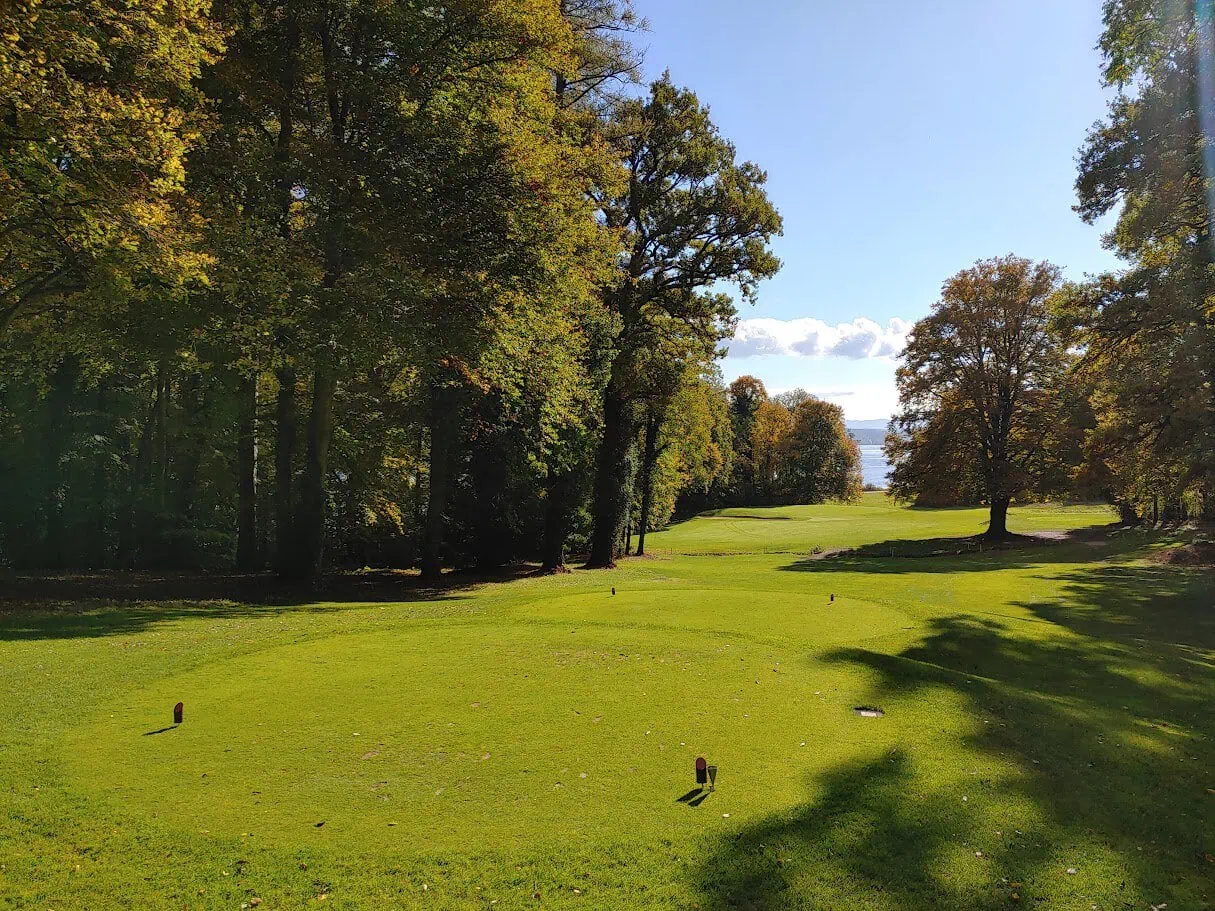
At the Wittelsbacher Golf Club in Neuburg an der Donau and the GC Feldafing on Lake Starnberg, they are very familiar with this issue: Both courses have an exceptionally large number of old and large trees. They have not yet recorded any broken branches in the summer of 2026, nor do they have any issues with the risks posed by deadwood, as they prioritize prevention. For both Korbinian Kofler, managing director of the Wittelsbacher GC, and Florian Kohlhuber, club manager in Feldafing, ongoing collaboration with arborists and tree experts is a matter of course. In Feldafing, where special regulations from the Palaces and Lakes Administration apply due to the course’s location in Lenné Park, there is now an ongoing dialogue with the Bavarian Center for Tree Expertise. “All of our trees are mapped,” explains Kohlhuber. “Twice a year, the experts come and inspect the park. Afterward, we receive an entire binder listing every single tree that needs to be pruned or felled. Deadwood is also removed.”
In this way—as Korbinian Kofler has also found—dangerous situations can be effectively avoided. “Thanks to our biannual tree inspections, we haven’t had any problems so far,” the managing director summarized during the heat wave in early August 2026. “Unfortunately, however, we’ve noticed that during strong gusts of wind, the heavy young shoots at the ends of the branches—especially on oak trees—break off, which of course halts the trees’ growth.”
The biannual inspections at both Bavarian clubs are not standard practice in the golf world. Tree maintenance is often time-consuming and costly. . In addition, trees affected by green breakage often appear healthy at first glance. Their crowns are often full of leaves—there are no visible signs of fungus, cracks, or rot. As a result, golf courses see no need to take action.
As heat and drought intensify, it is becoming increasingly important to maintain and inspect the trees on the grounds. While poplars used to be the trees most affected by green branch breakage, willows, beeches, maples, oaks, ash trees, and horse chestnuts are now also considered at risk. Breaking branches will continue to be a common occurrence in the future.
In Germany, the SAG Baumstatik e.V. association is conducting research on tree branch breakage as part of a project. Cases of tree branch breakage can be reported here to facilitate the collection of comprehensive data.
INSERT_STEADY_NEWSLETTER_SIGNUP_HERE





 Foto: Petra Himmel
 Images: Hotel Die Krone 1280, GC Schloss Langenstein