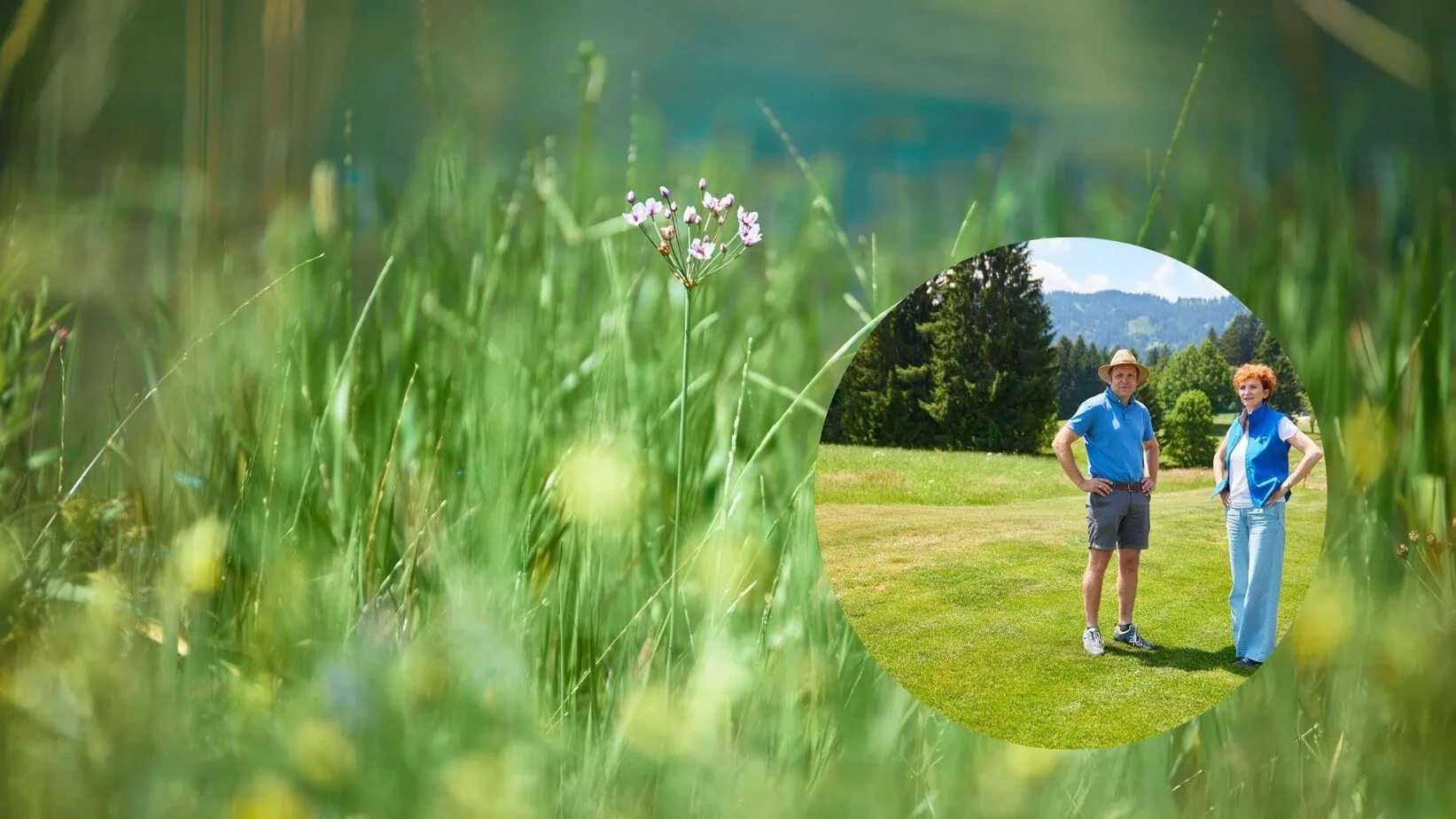
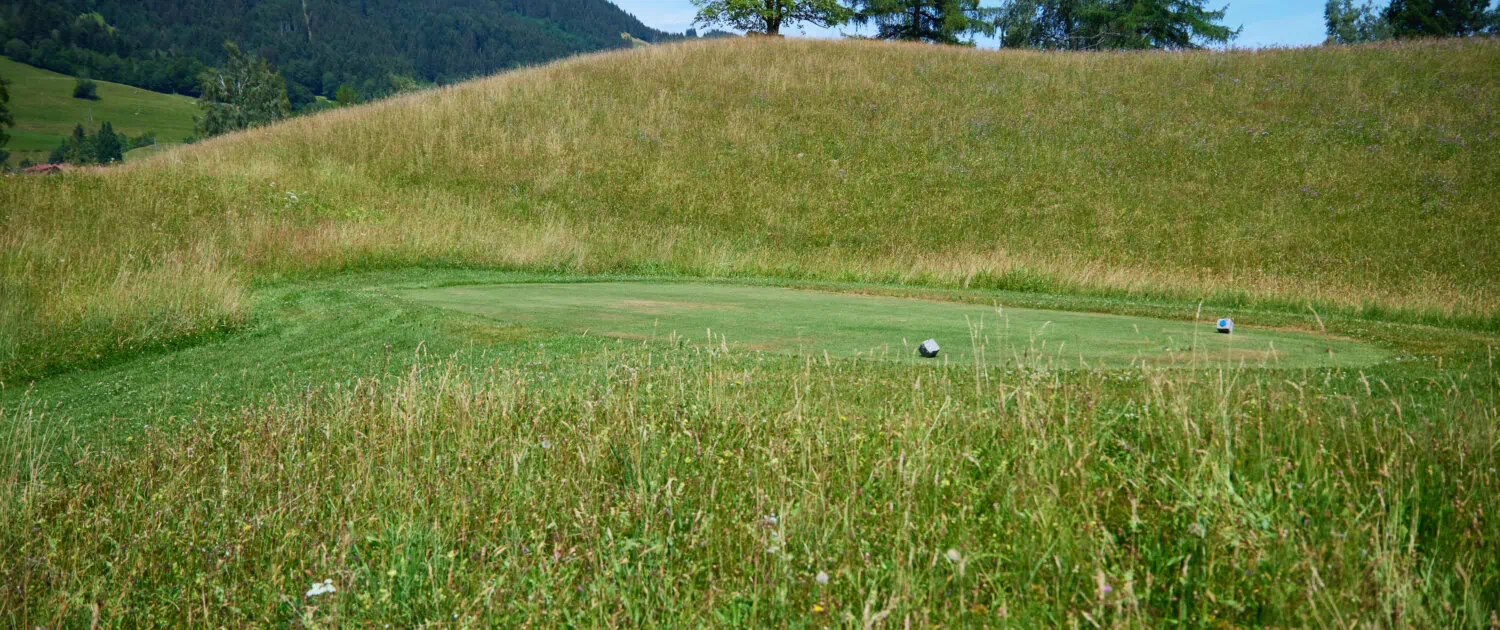
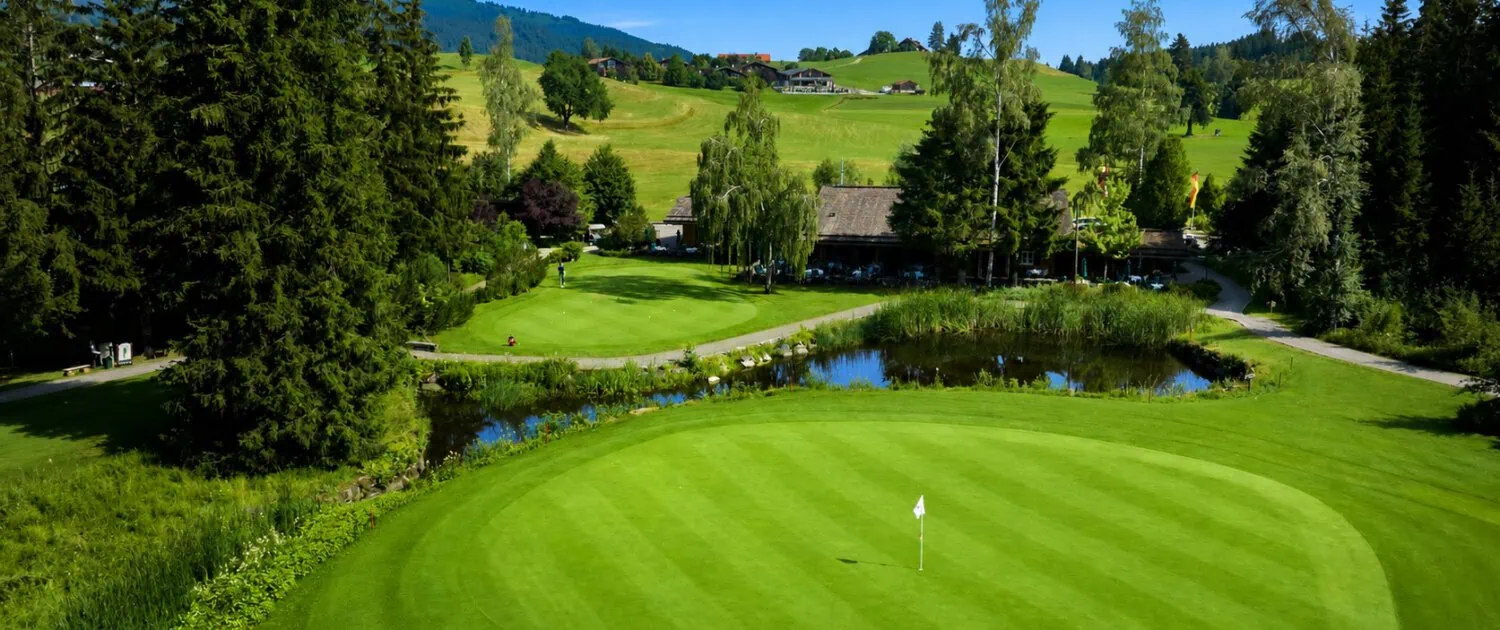
Young coots in the pond, a tee surrounded by flowering meadows, dragonflies hovering over the plants by the lake, and—at the very end of the hole—an attractive island green—if you’re looking for the perfect combination of golf and nature, you’ve found a hotspot here. We’re standing on hole 13 of the Sonnenalp course in the Allgäu, and Dagmar Blacha is thrilled. “Isn’t this a wonderful meadow?” says the landscape ecologist, who provides free consulting on golf courses for the Bavarian State Association for Bird Protection. How can you increase biodiversity on golf courses with limited resources? How can you boost insect populations, and why do birds actually need nesting aids even though there are so many trees on the golf course?
Dagmar Blacha has plenty of practical tips to share today. She has traveled to the Sonnenalp Resort in Ofterschwang in the Allgäu region, where the 18-hole Sonnenalp Course is operated near the 5-star hotel and the second 18-hole golf course, Oberallgäu, is located a short distance away. Today, Blacha is focusing on the Sonnenalp Course—which was built in 1975—alongside representatives from the groundskeeping team led by Head Greenkeeper Andreas Wolf. What’s interesting about the course is that, since its construction, most of the compensation areas have been maintained as meadows by Allgäu farmers, just as they were before. There was no reseeding and no soil replacement. The result is impressive: The meadows are rich in biodiversity and of high quality; more than two-thirds of the hay harvested here can be used as horse feed.
The collaboration between the Bavarian Golf Association and the Bavarian Ministry of the Environment as part of the Bavarian Flower Pact includes free consulting services provided by the LBV. This program allows for the individual characteristics of each course to be addressed. At the Sonnenalp course, it quickly becomes clear that there are already a great many high-quality habitats here. “We strive not only to provide first-class playing surfaces but also to make recreation in nature possible,” says Head Greenkeeper Andreas Wolf, explaining the objective. Sonnenalp owner Michael Fässler adds that the nature experience is also a key factor for hotel guests and is therefore always incorporated into the experience.
Nevertheless, the LBV expert still has some useful tips to offer in this case as well:
- Hedges, for example, should be pruned more heavily from time to time, depending on the species.
- Wild bees need significantly more support than honeybees. If there are too many honeybees on the golf course, they take food away from the wild bees.
- Birdhouses are a good idea even when there are plenty of trees. Ideally, you should partner with a local LBV to select and hang the right birdhouses.
- About 20 to 30 percent of the flower strips should be left standing over the winter to ensure the survival of the next generation of insects.
- Public relations are important for raising awareness of this issue among golfers, local residents, and tourists.
- We need to keep an eye on invasive species. For example, impatiens and ragwort must not be allowed to take over.
“Golf often has a bad reputation,” sums up Dagmar Blacha, who has already advised numerous Bavarian golf courses. She believes this is unfair: “If every citizen cared as much about the environment as golf courses do, we’d be better off as a society.” As an expert with the Bavarian Association for Bird Protection, she was actually surprised by the golf courses’ achievements in this area. Nevertheless, she concludes, there is always room for improvement, which golf courses can now tap into with the help of the Bavarian Flowering Pact.
For Head Greenkeeper Wolf, the exchange with Blacha has already paid off. “We’ve learned that we’re already doing a lot of things right here, but that we can still improve.” Together with Blacha and his two greenkeepers, Peter Haberstock and Hieronimus Goebl, he has already assessed areas that don’t need to be mowed completely. Together with Dagmar Blacha, they got to see the Sonnenalp golf course—which they actually know so well—from a new perspective that day. And that was definitely helpful.