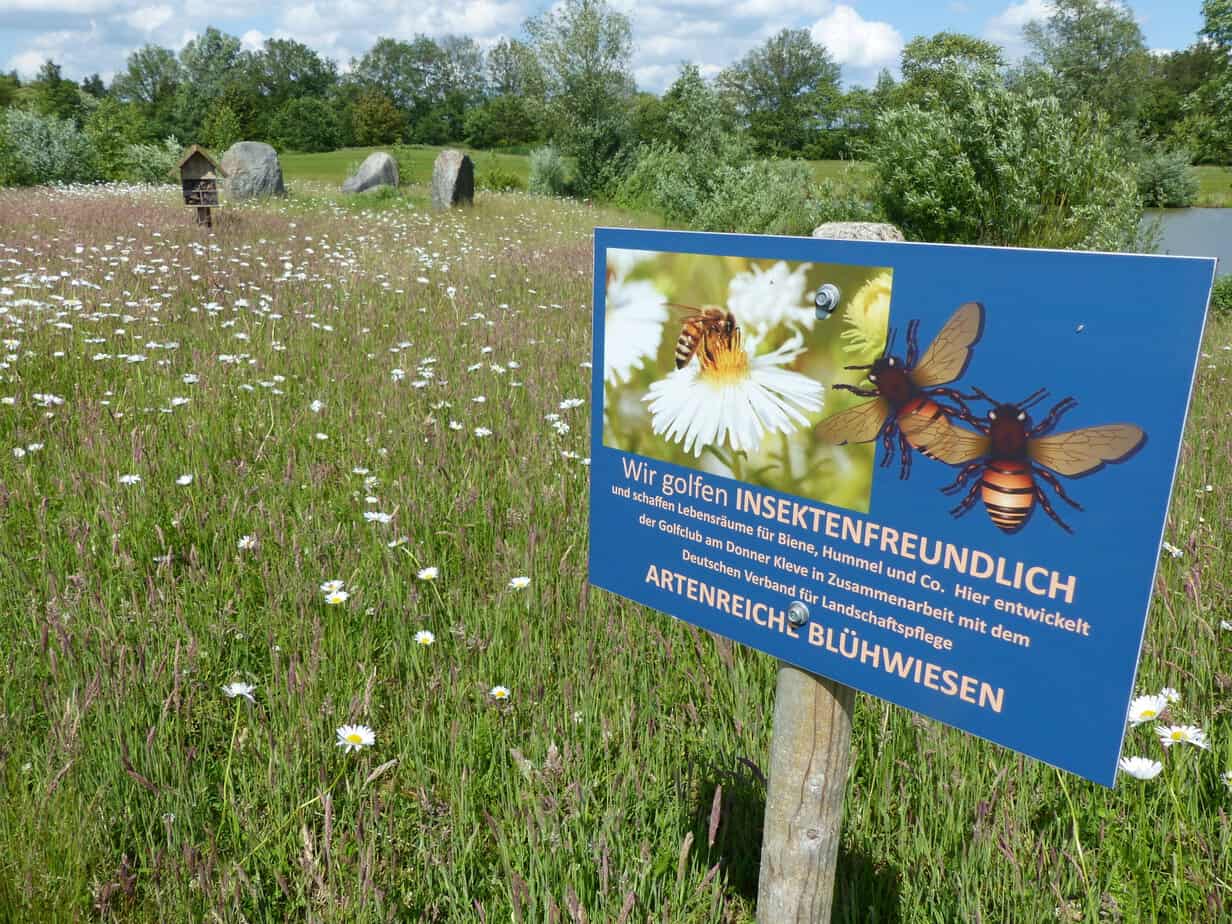
The heather sand bee is picky. It is dependent on heather. If this does not exist, it will not show its face either. This wild bee is at home on the Donner Kleve golf course in Schleswig-Holstein, although it is considered an endangered species according to the Red List. Its colleague Lasioglossum pauxillum, another wild bee, is also on the extensive areas of the golf course. Very surprising, as scientists discovered during monitoring on the Donner Kleve golf course. Although this species is widespread throughout Germany, it is considered threatened with extinction in Schleswig-Holstein.
Flowering insect kingdom promotes insect diversity
Golf courses are often a lifeline for those wild bees that are dependent on individual plant species or a specific genus of plants. With more and more sealed surfaces or large agricultural areas, the relevant wild bee species are disappearing along with individual plant species. The importance of golf courses in this context can be seen in the wild bee report of recent years, which was compiled as part of the “Blütenbunt-Insektenreich” project.
The DonnerKleve golf course was the pioneer of this initiative in Schleswig-Holstein, which started in 2020 and ended in April 2026. The joint project of the Schleswig-Holstein Nature Conservation Foundation, the German Association for Landscape Conservation and the Leibniz Institute at Kiel University aimed to systematically promote insect diversity in Schleswig-Holstein.
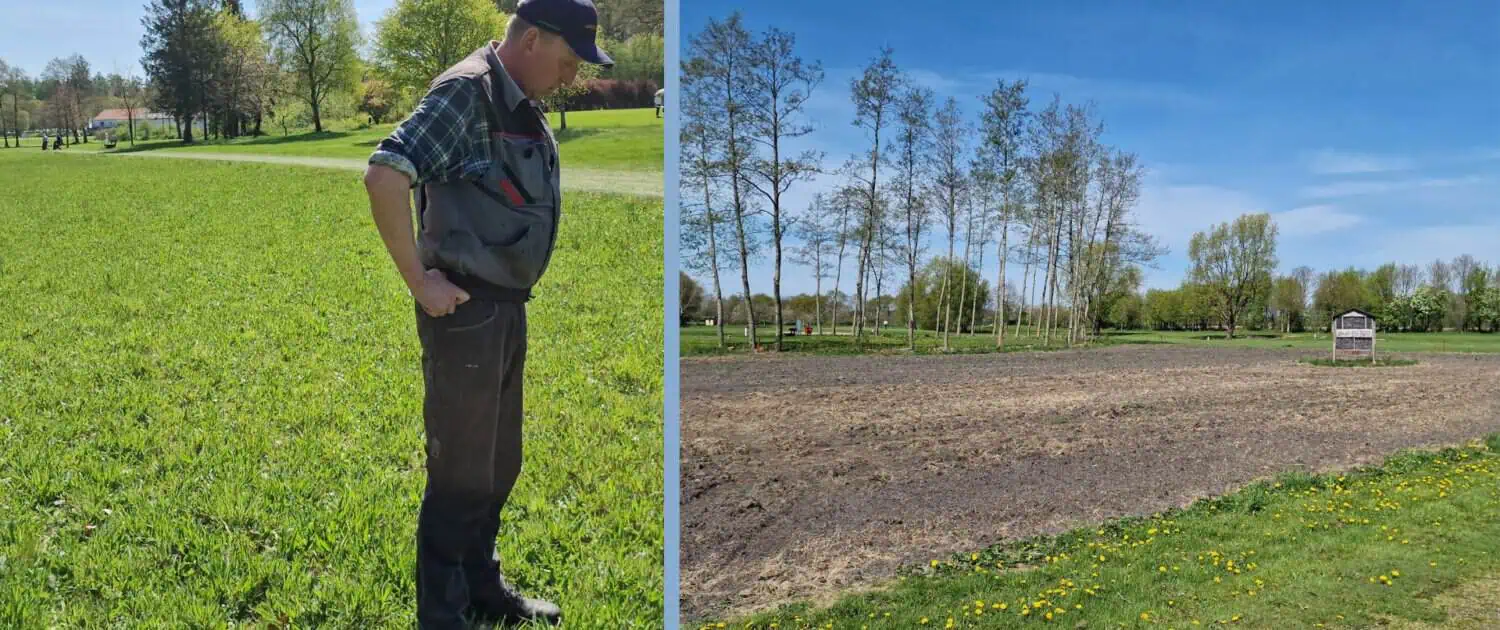
“At the beginning, we didn’t really have the golf courses on our radar,” says Norma Kujath, who managed the project at the Schleswig-Holstein Landscape Conservation Association. “But these are large areas. That’s really brilliant. We discovered them for ourselves. It’s enormous how much you can do for biodiversity.” Otherwise, says Kujath, local authorities usually only have the option of converting smaller areas of a few hundred square meters. “Here we’re talking about hectares”.
A total of six golf courses joined the project: In addition to the GC Donner Kleve, the golf clubs Gut Grambek, GC Hof Berg, Apeldör, Altenhof, Uhlenhorst and the Mittelholstein GC Aukrug were also involved. They all received free organic seed, expert advice and scientific support.
43 wild bee species detected
The wild bee reports that have been compiled on the Donner Kleve golf course in various years show how important golf courses can be for insects whose populations are endangered. 43 wild bee species have been recorded on the golf course over the past three years, ten of which are considered particularly worthy of protection. “You can’t say that the number of wild bee species automatically increases every year,” explains Kujath. “The weather plays just as much a role as the timing of the monitoring. Species numbers often fall in particularly wet years.
The variety of habitats is particularly positive for wild bees that settle on golf courses. “We can see from the example of Donner Kleve that it’s not just about the enhanced area, but also about what else is on the golf course.” The interplay of heathland, sandy nesting opportunities in the soil, raw soil sites or herb meadows is what makes the quality of the site. In short, if a meadow is located in a species-poor, flat environment consisting exclusively of flat-mown grass, biodiversity suffers here too.
And now? What happens to the areas that cannot be used for any other purpose for five years after seeding? “We hope that the golf courses will maintain the maintenance measures, inform the members accordingly and stay on the ball. Of course, we can’t force anyone,” Kujath notes. After five years, the upgraded meadows can theoretically be converted again.
Two other factors play an important role here. “The golfers have to accept it, they have to like the areas,” Kujath has learned in recent years. The second factor is manpower: “Areas must also be cleared of bushes so that the valuable species are not completely overgrown by other plants,” advises the expert. If the golf club lacks the manpower to do this, the areas lose value again. The preservation of species-rich meadows is an ongoing project.