
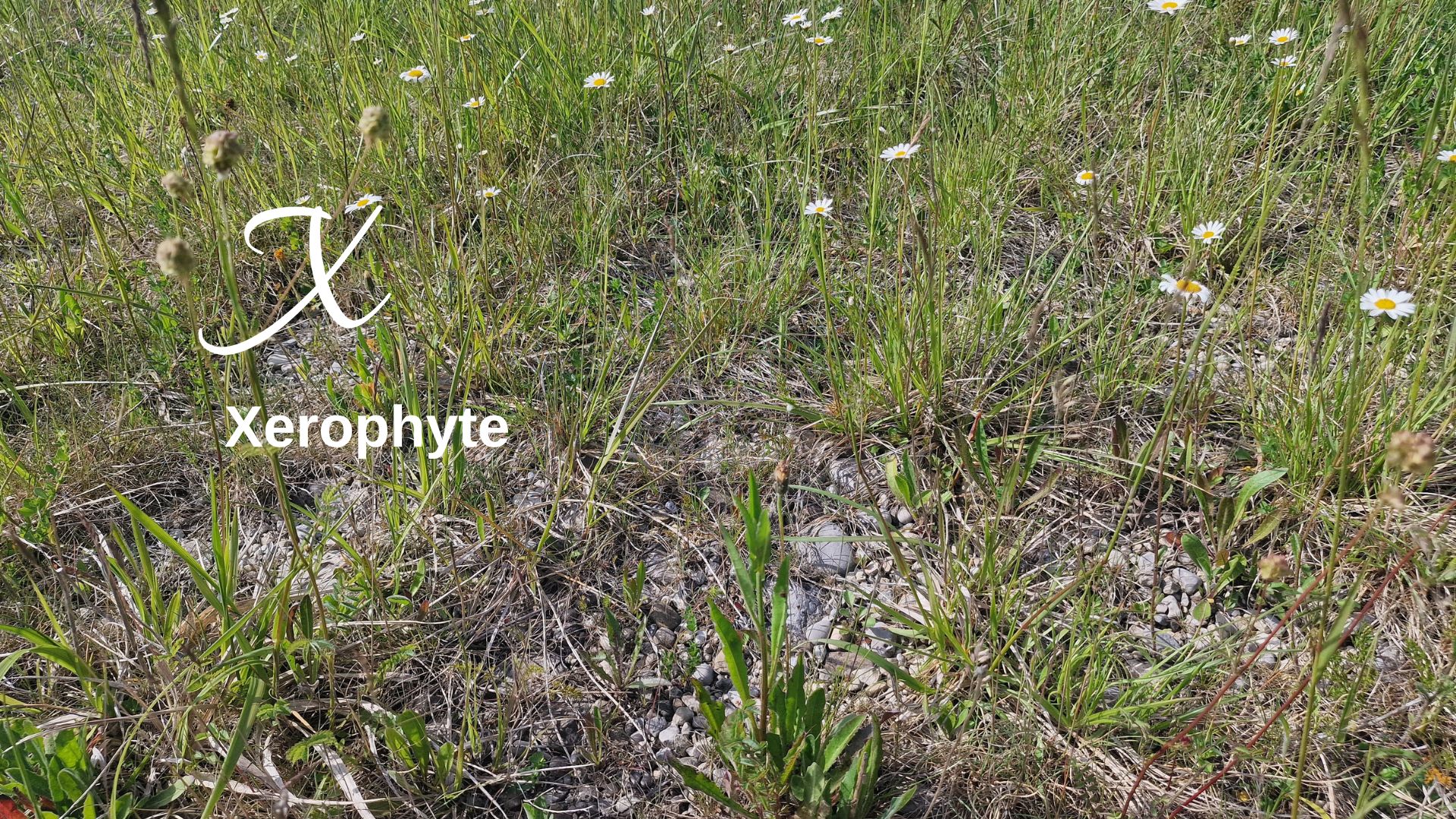
Biodiversity Encyclopedia: X for Xerophyte
Xerophytes are plants adapted to dry conditions—making them an attractive option for golf courses. In areas of a golf course where water is scarce, drought-tolerant plants can help preserve biodiverse habitats without requiring regular irrigation. This applies as much to rough areas as to the area around the clubhouse terrace or the entrance. Anywhere where plants would otherwise require extensive watering to survive heat and drought, xerophytes are a good choice.
The term xerophyte derives from the Greek words xeros, meaning dry, and phyton, meaning plant. It refers to plants adapted to low water availability. Their adaptations are diverse. Some possess particularly deep or far-reaching roots, while others reduce evaporation through small leaves, a thick waxy coating, or a hairy leaf surface. Succulent species such as houseleek or stonecrop can store water in their leaves.
For golf courses, xerophytes are particularly useful on sparse roughs, slopes, sandy areas, rocky areas, and rarely used peripheral areas. These areas do not need to be treated the same way as intensively used playing surfaces. If they are mowed only sporadically and neither fertilized nor irrigated, plant communities can develop that can cope with dry conditions while also providing habitat for numerous insects.
Creating Nutrient-Poor Grasslands
A good example is dry and nutrient-poor grasslands. They are among Europe’s most species-rich habitats. Their plants are adapted to plenty of sunlight, limited water availability, and mostly nutrient-poor soils. It is precisely their low productivity that is an advantage: where few nutrients are available, non-competitive and specialised species can coexist alongside grasses.
Examples of drought-adapted plants found in Europe include sand thyme (Thymus serpyllum), common viper’s bugloss (Echium vulgare), field mugwort (Artemisia campestris), silver thistle (Carlina acaulis), houseleek (Sempervivum), and various stonecrop and sedum species (Sedum/Hylotelephium). Many of these plants are also important food sources for wild bees, butterflies, and other insects.
The location is always the key factor when choosing plants. Different species may be suitable for a sandy, sunny rough than for a dry, limestone-rich slope. And a plant that can cope with summer drought in the Mediterranean region is not necessarily adapted to a German winter. For biodiversity areas, therefore, use native and regionally typical species whenever possible.
In that case, nutrient-poor, sunny locations also score points for biodiversity. From an ecological perspective, a nutrient-poor grassland with native drought-tolerant plants is significantly more valuable than an artificially planted flower bed with ornamental plants that are not native to the region.