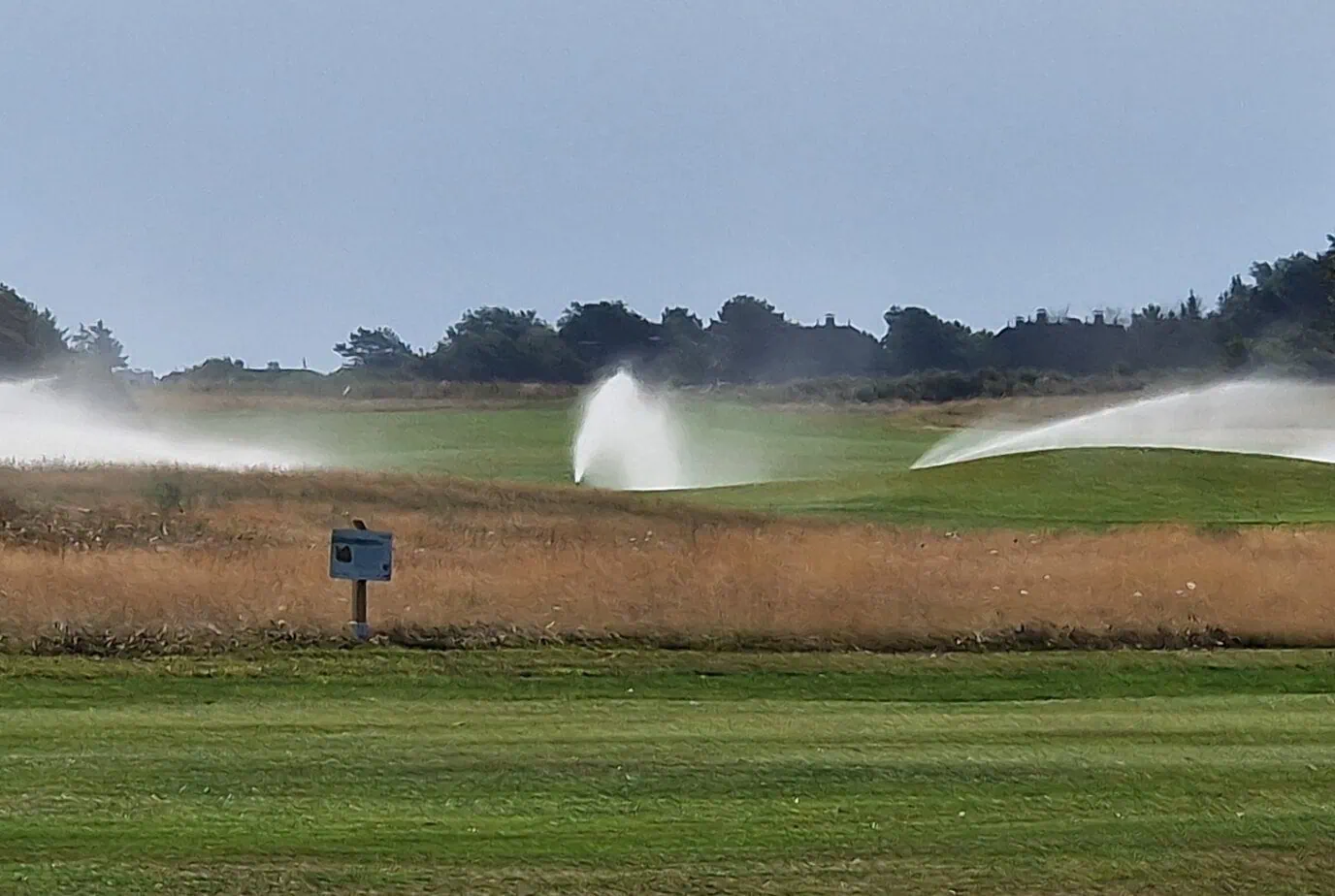
Germany’s Conference of Environment Ministers adopted guidelines on managing water scarcity in Bad Schandau on November 27. They are intended to guide water authorities nationwide during dry periods when competing demands arise, for example from drinking water supply, agriculture or the irrigation of green spaces. For golf facilities, this means that their water use is generally among the last to be considered during acute water scarcity. However, this does not automatically lead to restrictions on irrigation.
Focus on drinking water supply
The recommendations for the federal states were drawn up by the Federal/State Working Group on Water (LAWA). Their primary focus is safeguarding the public drinking water supply, which generally takes precedence over all other water uses. There is no universal order of priority for other uses. Instead, water authorities are to decide how to allocate available water resources and, where necessary, restrict withdrawals based on regional and local conditions. “A fair and transparent assessment that takes account of local conditions is needed,” said Federal Environment Minister Carsten Schneider. The guidelines are recommendations for the federal states, but the states can make their application binding on water authorities through appropriate regulations.
Traffic-light risk indicator: Three stages of water scarcity
A key element of the guidelines is a three-stage traffic-light risk indicator:
Green: The groundwater utilisation rate is no more than 80%. For surface waters, the flow is above the hydrologically determined early warning threshold. No special measures are required at this stage.
Yellow – risk of water scarcity: This stage begins when the groundwater utilisation rate exceeds 80%. For surface waters, the flow reaches or falls below the hydrological early warning threshold. Water authorities should now scrutinise new applications for water withdrawals and, where necessary, adjust existing permits.
Red – acute water scarcity: Water demand exceeds the available supply. The guidelines identify a groundwater utilisation rate of at least 100% and a flow below the ecological minimum for surface waters under Section 33 of the German Federal Water Act as indicators. Water authorities must now assess and implement measures to avert danger.
Four priority categories
For the red stage, the guidelines provide guidance based on four priority categories. The public drinking water supply comes first. This is followed by critical infrastructure facilities covered by the Critical Infrastructure Umbrella Act in the energy, transport and traffic, health care and food sectors. Third is the public supply of water for non-potable use from the public distribution network. The fourth group comprises all other uses.
Golf facilities are not explicitly listed in this last group. However, their irrigation is generally classified as one of the other uses, unless it falls into another category. Under the guidelines, golf courses therefore rank behind the three groups mentioned above during acute water scarcity. This classification does not, however, constitute an automatically applicable order of priority. Water authorities must continue to base their decisions on regional and local conditions.
No automatic restrictions on golf course irrigation
For golf facilities, the decision does not initially change existing water rights or irrigation permits. The guidelines do not automatically impose restrictions. Under existing water law, the responsible authorities already have various options for limiting withdrawals or adjusting permits.
What is new, however, is that authorities now have nationally coordinated guidance that provides clearer direction on managing acute water scarcity. For golf facilities, it therefore remains essential to consider the sources of their irrigation water, the permits in place and how regional water availability develops. Withdrawals from groundwater, rivers, streams, lakes or ponds may each be subject to different legal requirements.