
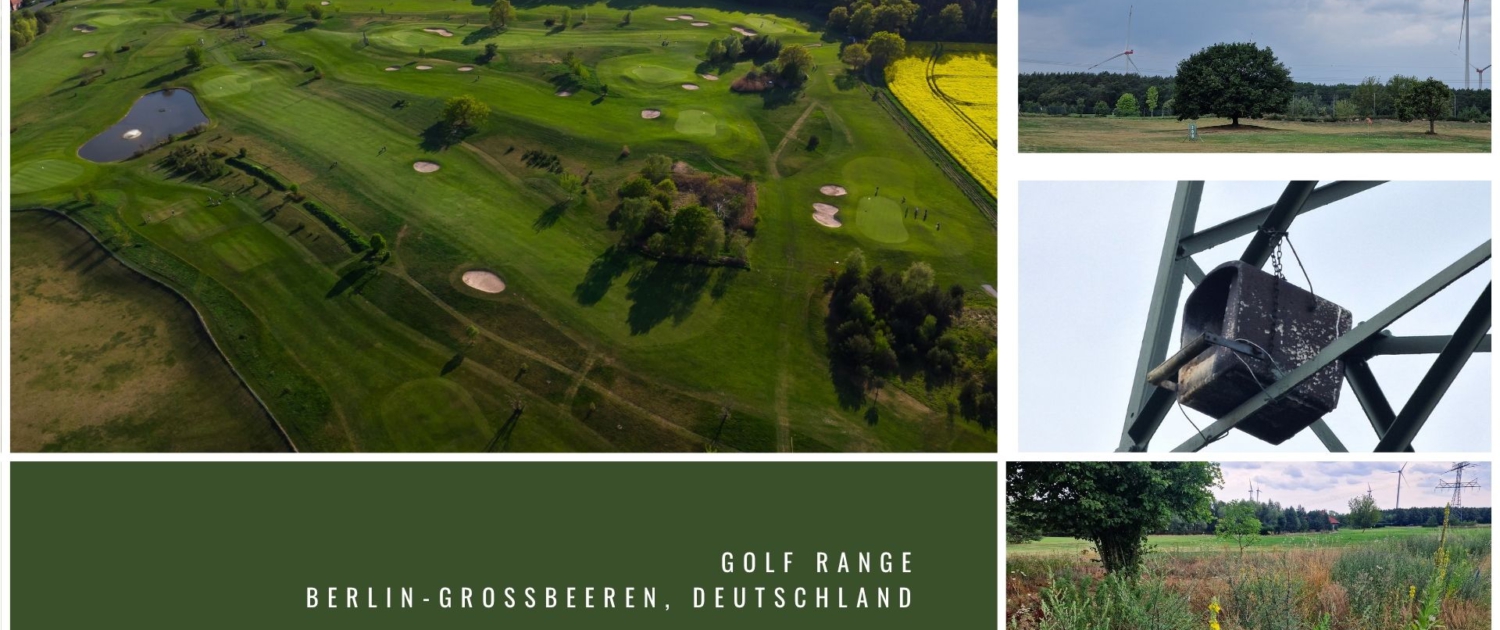
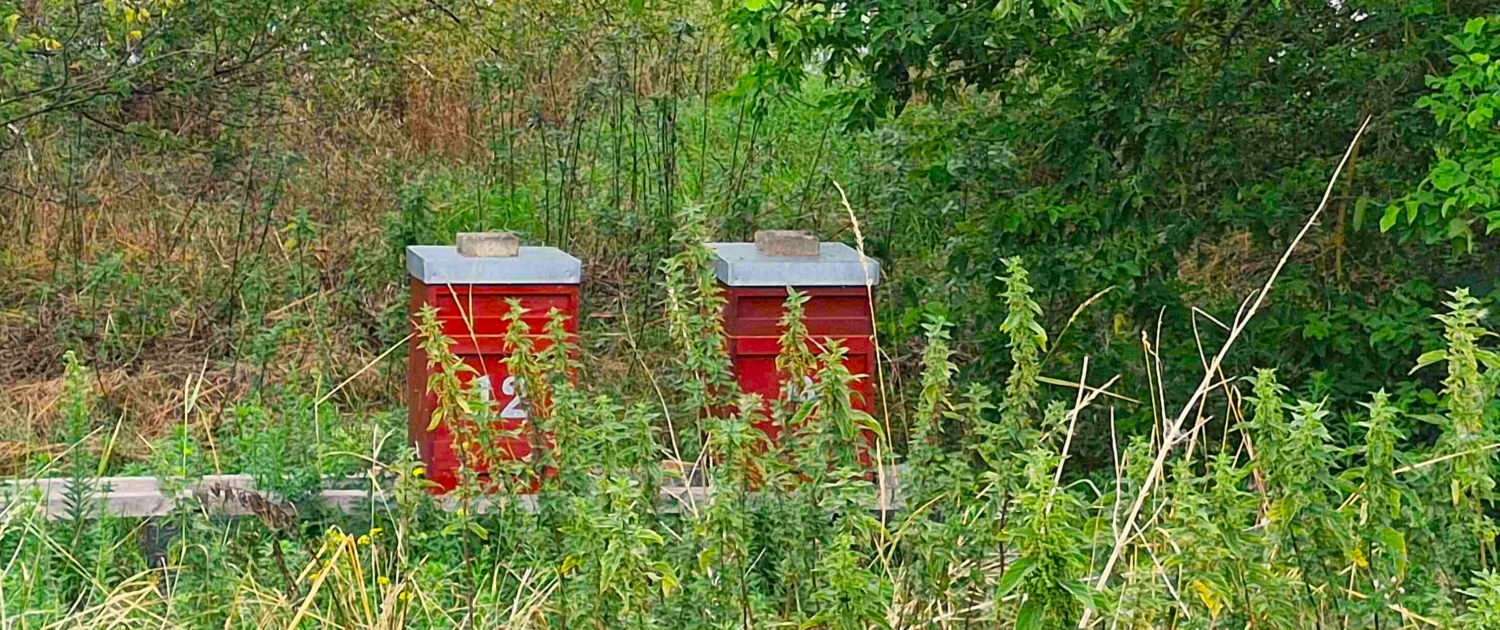
Many small pieces come together to form a big picture: At the Golf Range Berlin-Großbeeren, space is limited given the 24-hectare 9-hole facility. Even so, facility manager Sven Geißler, together with the course’s greenkeeping team, has found room to create biodiverse areas. Sometimes mowing of the rough between holes is skipped; sometimes a strip of flowers lines the sides of the fairways. A beekeeper keeps hives well hidden behind grass and tall bushes; a kestrel nests in a nesting aid on the high-voltage line. And if you look closely, you’ll even find the occasional native orchid in the low-intensity areas.
The right maintenance makes it possible to develop high-quality meadows, no matter their size. “We only mow these areas once a year,” Geißler explains. The cuttings are removed so that not too many new nutrients are introduced into the soil. Fertiliser use has also been significantly reduced, in line with the international trend.
On the one hand, there is conserving resources; on the other, operating a 9-hole facility that sees heavy play and is a popular destination for golfers of all ages. But the experience of nature, says Geißler, is important to visitors. Golf Range Berlin-Großbeeren makes this possible on what used to be fallow land. In the fairway margins, around scattered mature trees and a biotope in the middle of the course, as well as along a strip of woodland, a faunal survey discovered numerous breeding-bird territories.
In particular, the red-backed shrike, which is listed on the Brandenburg Red List, clearly feels at home among the golfers. It seeks woodland edges, hedges and rows of trees as habitat—features Golf Range Großbeeren provides. But species such as the common whitethroat, European stonechat, common pheasant, corn bunting and great reed warbler have also now settled on the course grounds.
Buildings on golf facilities, which are repeatedly used by a wide range of species such as bats, hornets or swifts, are also an underestimated habitat. At Golf Range Großbeeren, the house sparrow, black redstart and white wagtail have built nesting sites in buildings.
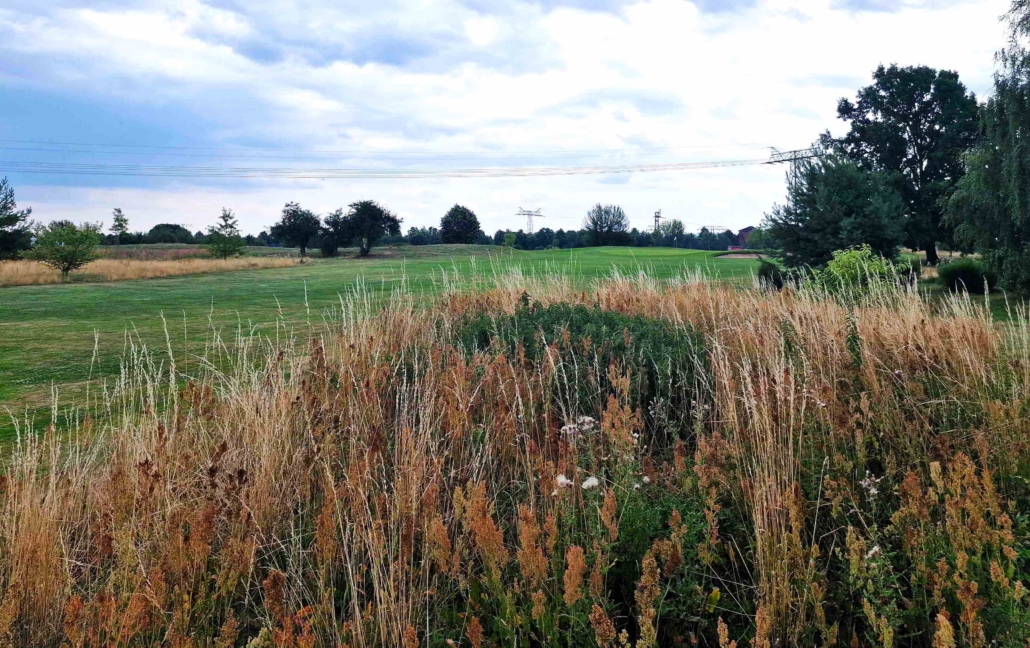
For Gunther Hardt, head of the Biodiversity Working Group at the German Golf Association, this kind of symbiosis between golf and biodiversity is important. “People often underestimate the opportunities golf facilities offer—even those with smaller areas—for birds and insects to settle, and for rare plant species to become established.” What matters, Hardt says, is not the size of the area, but how it is managed. “Anyone who mows only once a year between the holes or in areas that rarely come into play, doesn’t fertilise, and removes the cuttings, increases biodiversity and creates habitats,” the biodiversity expert explains.
It’s quite possible that the number of habitats at Golf Range Großbeeren will increase further in the future. An expansion to 18 holes is currently being planned. An adjacent agricultural area is to be used to build another nine holes. Here, too, Geißler’s objective is clear: No matter how large the area is—there is always room for a piece of nature alongside the holes.
INSERT_STEADY_NEWSLETTER_SIGNUP_HERE