
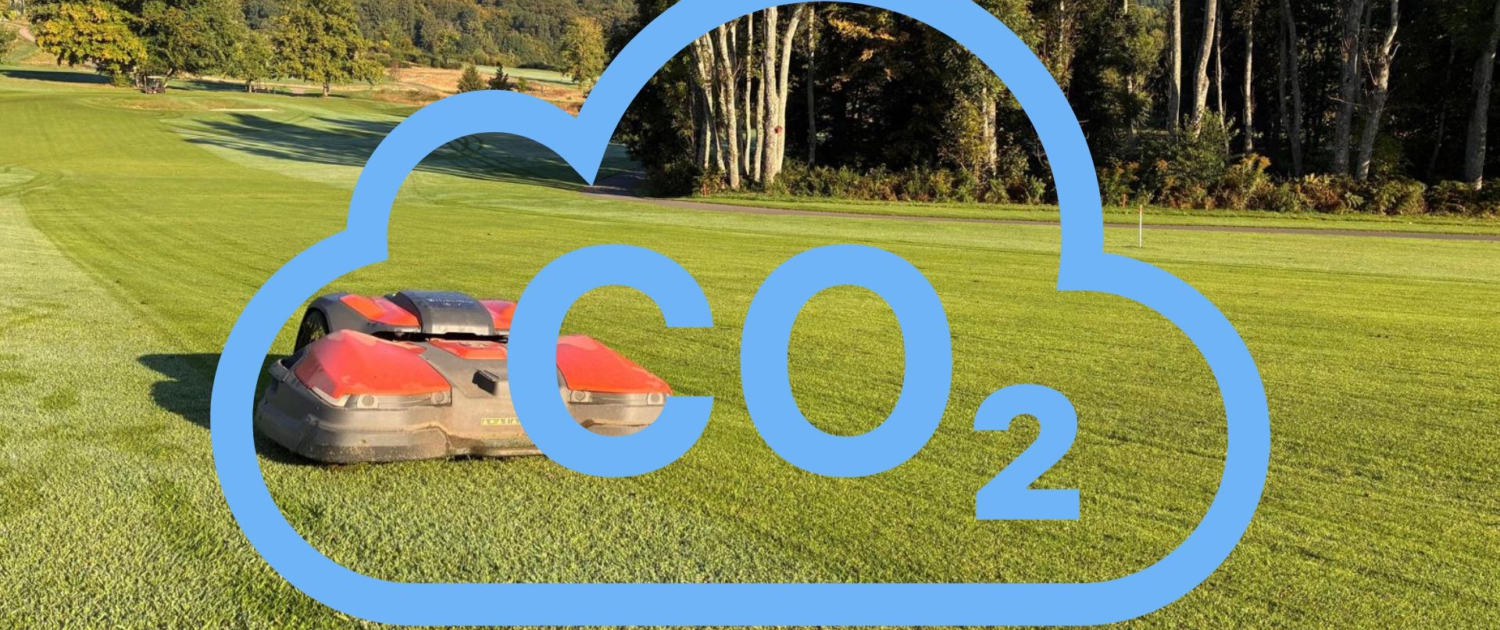
CO2 Emissions from E-Mowers: Field Test Brings Over 50% Reduction
What you don’t see is often difficult to grasp. This is especially true for CO2 emissions from mowing machines on a golf course. CO2 calculators for golf courses make it easy to see that greenkeeping, particularly diesel consumption by mowers, transporters, and handheld devices, is a key part of a golf operation’s CO2 balance. In the past five years, however, greenkeeping has changed significantly; electric mowers, whether autonomous robots or classic driver-operated models, are on the rise. The Swedish company Husqvarna alone reported in 2026, during the Husqvarna British Masters, that its electric mowers were active on over 2,000 golf courses worldwide. Established companies like TORO are also increasingly bringing electric mowers to the market. The Links Trust in St. Andrews has been mowing even the famous Old Course with electric TORO mowers for quite some time.
How much CO2 do electric mowers save?
This transformation goes hand in hand with a move away from fossil fuels and, at the same time, reduces CO2 emissions in greenkeeping. The exciting question is: How much CO2 do electric mowers actually save? However, research on this topic is scarce. Only the study “Autonomous and reel mowers in golf course fairway maintenance: A case study in Italy from the Italian golf course Montecchia” (2025) currently highlights the potential of electric mowers from a scientific perspective regarding CO2 emission savings.
The study results
The relative reduction in CO2 emissions from mowing the fairways of the 27-hole course was 66.2 %; the absolute saving was 9.24 t CO2/year. A total of 10.69 hectares of fairways were mowed. Six autonomous, battery-powered Husqvarna CEORA mowers were compared with conventional, diesel-powered reel mowers from TORO. CO₂ values were calculated based on fuel and electricity consumption. CO₂ consumption with Toro 5510-D diesel mowers was 1305 kg/hectare, while the Husqvarna Ceora model reduced it to 441 kg/hectare. This corresponds to the annual CO₂ emissions of about 2.6 people in Sweden, or almost two-thirds of an American’s annual CO₂ emissions.
It is also important what type of electricity powers an electric mower. Using self-generated solar power makes the balance even better than green electricity from the grid or a mix of electricity sources. The scientists from the participating Italian universities therefore set an emission factor of 0.53 kg CO2 per kWh of electricity, which can vary depending on the power grid and region.
Best Practice: 27 holes, 25 mowers
From theory to practice: Initial data on real savings in normal golf course operation can be obtained from facilities that have already completed a full season with new mowers and have complete data for both diesel mowers and electric mowers. One such facility is the 27-hole golf course Golfpark Weiherhof in Germany. Here, only the greens are still mowed with diesel mowers, while tees, fairways, and semi-roughs are mowed with autonomous electric mowers. The facility uses seven Husqvarna Ceora, seven Husqvarna Automower 535, and eleven Husqvarna Automower 580L.
Emission reduction of more than 50%
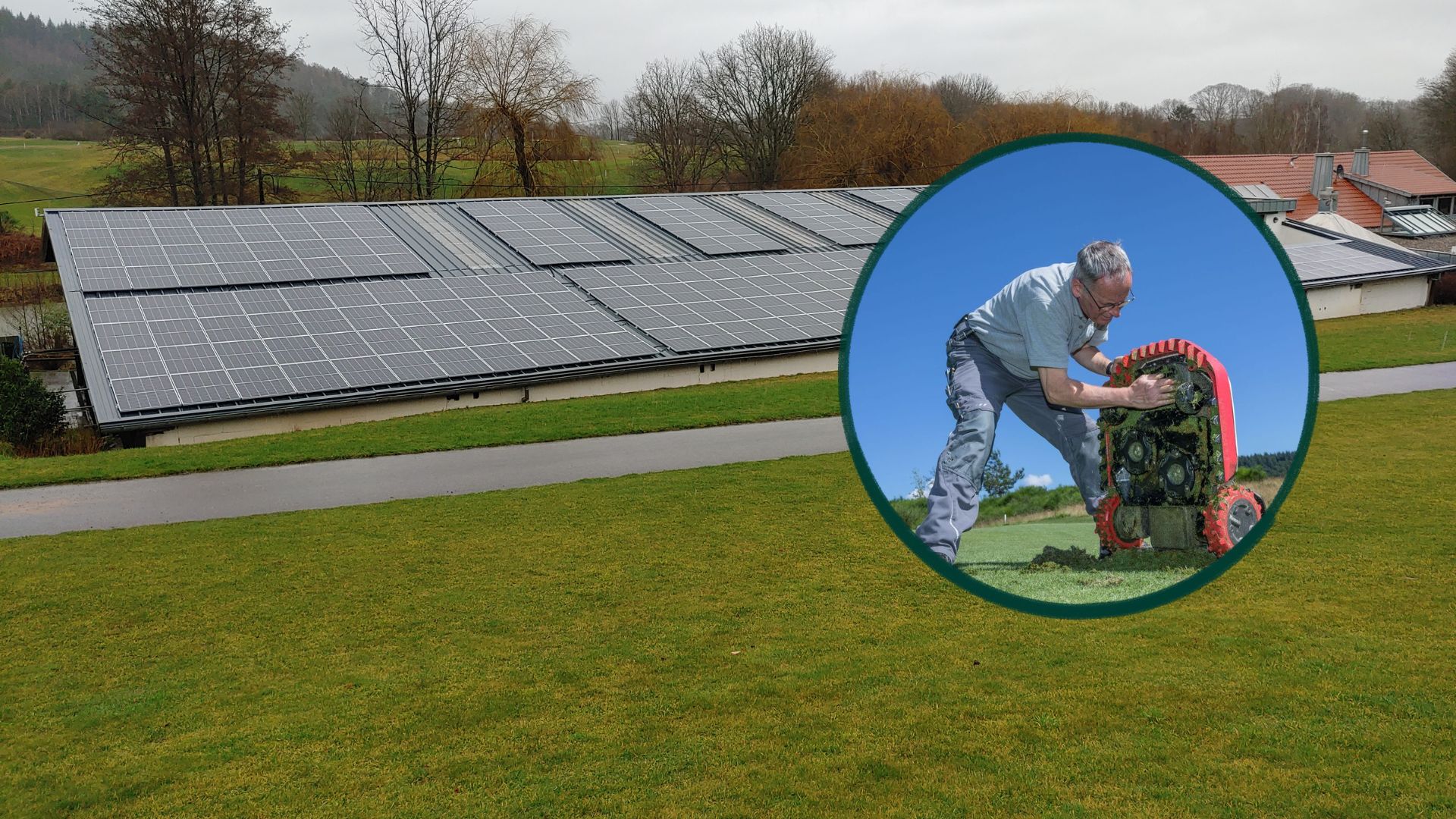
Here, emissions were reduced by more than 50 % through the use of electric mowers. The mowing area was 33.13 hectares and 27 holes. “We have massively reduced our diesel consumption,” says Head Greenkeeper Jürgen Magar, pleased. In addition, the facility has a 100 kWh solar system on the roof of an operations building. “That works great because the mowers charge during the day, which is exactly when the electricity is generated,” summarizes Horst-Wintrich, co-owner of the facility, contentedly. Instead of 18,180 litres of diesel in 2024, consumption for the remaining areas in 2025 was only 8,683 litres. Converted into CO2 (emission factor 2.65 kg), this results in emissions of 23.01 tons. With purely diesel consumption, they were just over 48 tons.
This clearly shows the great potential in greenkeeping for saving CO2 simply by electrifying mowing machines – even if the data listed are still individual cases. They can vary depending on the brand and type of mower, electricity, and terrain. The so-called life cycle assessment, which also considers CO2 emissions from the production and supply chains of the mowers, is also still missing. However, none of this changes the realization that the potential for reducing emissions on golf courses is enormous and can apparently be realized relatively easily in greenkeeping.
How important is the CO2 balance for buyers?
To what extent, however, is this truly clear to the consumer? While discussions about electric mowers and robots often focus on noise reduction or machine reliability, manufacturers rarely promote CO2 emissions reductions in their advertisements or PR articles. This may also be because no large-scale scientific studies exist on the subject. Marketing based on individual cases quickly invites accusations of greenwashing.
According to Maria Viking, Marketing Manager, Sport and Golf at Husqvarna, sustainability matters to the company’s customers. In this year’s customer survey, the statement “Robotic mowing improves the sustainability of our turf management practices” received the highest approval rating of any question in the agronomy section, with 4.6 out of 5 points. The survey included 80 course managers from ten European markets.
Even if the data on electric mowers is still limited, it clearly shows that their existing success story could grow further through the reduction of CO2 emissions.





 Fotos: GolfRange Berlin Großbeeren, Petra Himmel