
World Bank report: How can Mauritius tourism become sustainable?
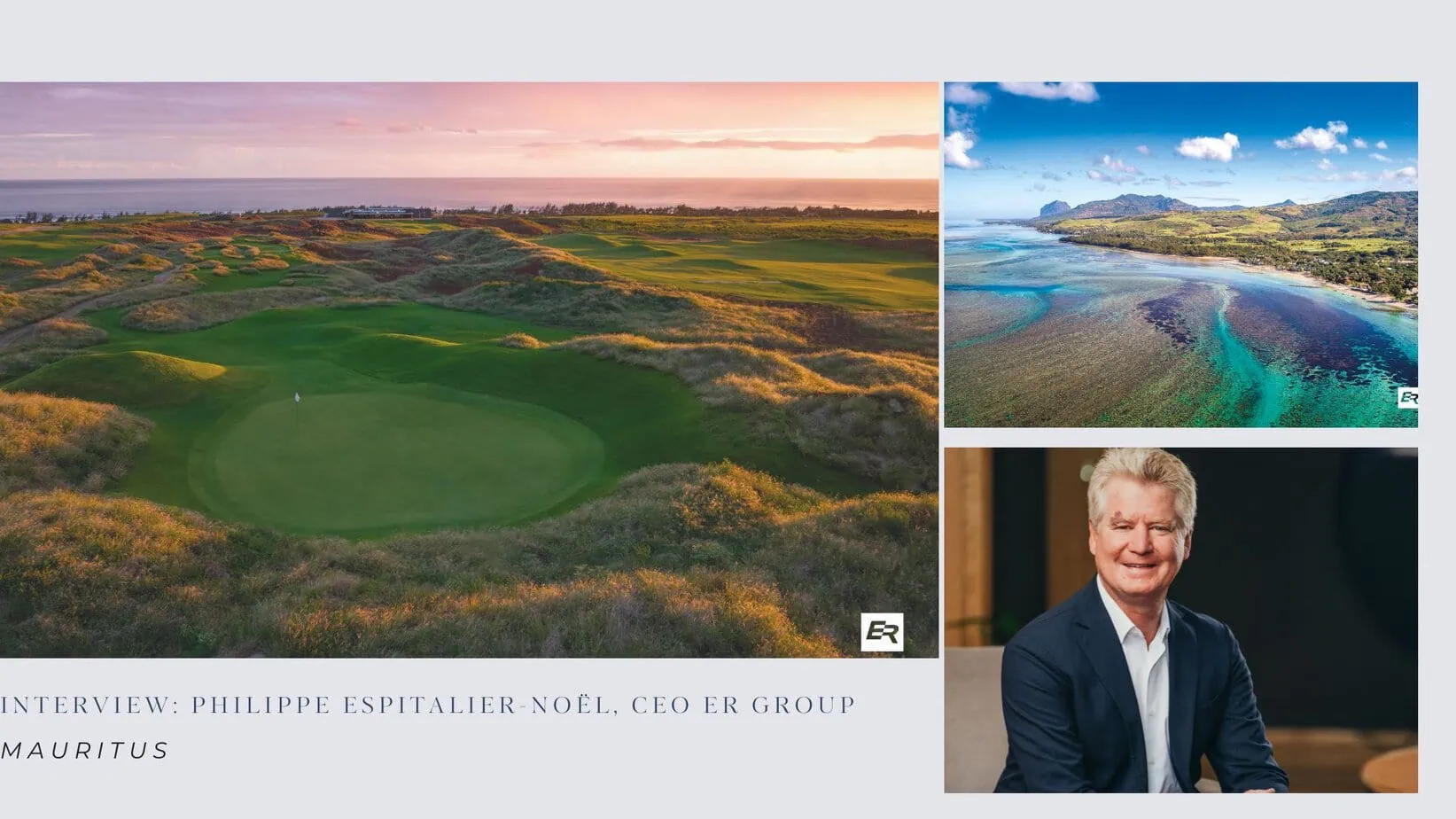
Mauritius, the island in the Indian Ocean, is first and foremost a dream destination for many golfers. For Philippe Espitalier-Noël,CEO at the ER Group, this dream destination is facing major challenges. Following a recent report by the World Bank Group on climate and development on the island of Mauritius entitled CCDR, he is calling for a faster shift towards sustainable tourism.
The World Bank report warns of a decline in tourism revenue in Mauritius of up to 11%. In your opinion, has this scenario already been taken into account in the current investment plans of tourism companies on the island?
Philippe Espitalier-Noël: The warning should be taken seriously. An 11% drop in tourism revenue by 2050 in a business-as-usual scenario is a direct signal that the model on which Mauritian tourism has grown for decades needs to adapt more quickly.
Awareness of this is stronger today than it was a few years ago. The more difficult question is whether this awareness is actually influencing investment decisions. My honest assessment is that progress is uneven across the industry. Many operators now recognize the risk. Very few have translated this awareness into capital allocation, product design and infrastructure decisions.
At the ER Group, we take a longer-term perspective. Sustainability must determine how we build, operate and invest. However, the adjustments and investments required are considerable and the amortization horizons are long. The problem is not aligning priorities. It is the implementation. We need to drastically improve our ratio of words to deeds.
How would you describe the general awareness of the potential economic risks of climate change within the tourism industry on the island, but also among important customers from abroad?
Philippe Espitalier-Noël: Awareness has improved. We are now having conversations at the highest levels of government and the private sector that were unthinkable just a few years ago. Within the tourism industry, it is the operators who have seriously invested in sustainability who are most aware of the economic risks. Others continue to focus on short-term occupancy and margins. This is understandable as the solutions, although not sustainable, are not easy to implement. Take commercial aviation. It is the lifeline that connects small island states like Mauritius to the world. Its decarbonization is one of the most complex unanswered questions in the sector, and there is no credible answer yet.
International customers are also changing, although perhaps not as quickly as we sometimes assume. Many premium travelers are now asking more critical questions about environmental footprint, local sourcing and CO₂ impact. But the proportion of those who are willing to pay a premium is still very low. This is where our responsibility comes into play. We need to make this connection visible
To what extent is Mauritius – and the tourism industry in particular – already working on resilience, or would you say that in many cases these are more cosmetic sustainability projects?
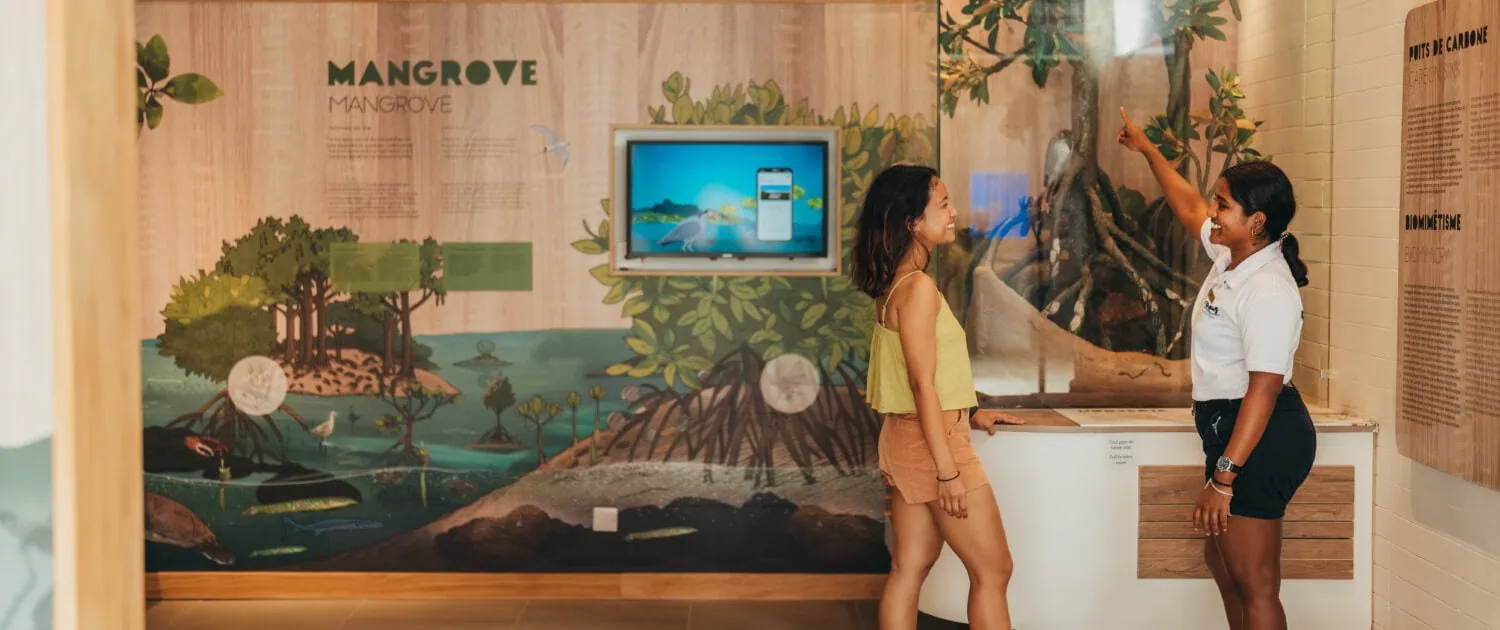
Philippe Espitalier-Noël: Both are true. Where resilience is taken seriously, capital, expertise and long-term commitment are required. In Bel Ombre, for example, we have developed many initiatives in the field of education. We have also installed breakwaters and groynes in the lagoon, set up a coral breeding station together with Reef Conservation, obtained UNESCO recognition for “Man and the Biosphere” and achieved GEO certification for sustainability for the La Reserve golf course. These are operational decisions supported by sustainable investments with a positive impact. They are not symbolic gestures.
At the same time, sustainability has become a popular buzzword. The industry needs to be honest about this. The CCDR’s call for an additional 5.6 billion dollars of investment over the next 25 years makes it clear that the sums involved are considerable. Resilience starts where operations, infrastructure and development decisions are designed for the shocks we know are coming. Everything else remains incomplete.
By 2050, the coastline could recede by up to 50 meters. Many hotels live from their proximity to the beach. To what extent are there already plans for a controlled retreat inland?
Philippe Espitalier-Noël: This is one of the most difficult issues facing the industry and it needs a more open discussion. The fact is that 90% of hotels in Mauritius are located directly on the beach. Some beaches on the island have already lost more than 10 meters in length in the last ten years. As erosion continues, the pressure on beachfront properties will only increase.
At Heritage Resorts, we have invested in protection measures in the Bel Ombre lagoon, based on scientific evidence and monitoring. This is necessary for an existing site, but not an answer to a coastline that has fundamentally shifted.
A controlled withdrawal is complex. It involves not only private operators, but also the government, communities and the legal framework for coastal development. What Mauritius needs is integrated, holistic coastal management that balances environmental protection, economic interests and community resilience. Technological solutions have a role to play, but fortification measures alone are not the answer.
The CCDR’s recommendation to diversify inland tourism points in the right direction. The more the inland destination develops in terms of culture and experiences, the less it is dependent on a single coastal promise. This is one reason why the Bel Ombre model is important. It creates value around nature, heritage, culture, agriculture and golf, not just around the beach theme.
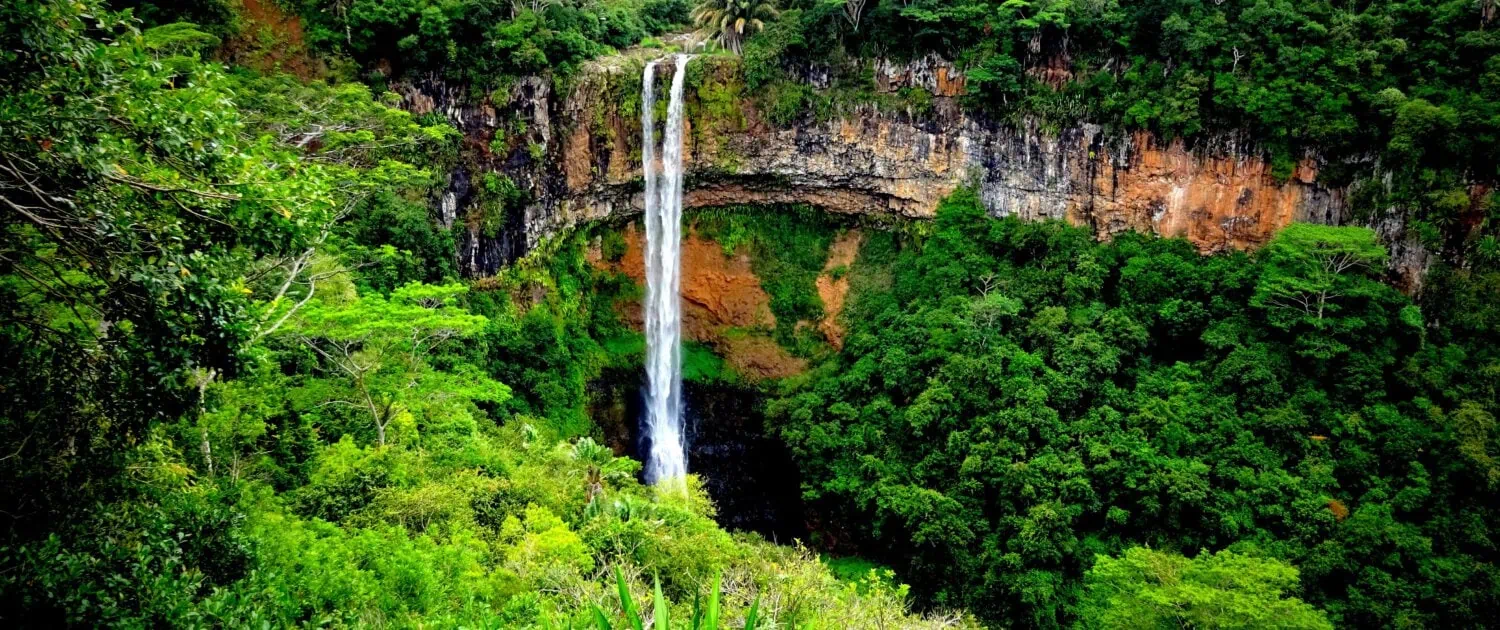
According to the World Bank report, 61% of rainfall in Mauritius is lost before it reaches the consumer. Vacation resorts consume enormous amounts of water. Can the water problem be solved and tourism maintained without the local population suffering from water shortages?
Philippe Espitalier-Noël: Yes, but only if water is treated as a shared national priority and managed accordingly. As only 8% of precipitation is currently captured, there is considerable scope for action here. What is needed is a reformed national approach: better water harvesting and storage, updated pricing mechanisms that create real incentives to save, and serious investment in distribution infrastructure.
The 25% decline in fishing potential has an impact on local supply and the culinary offer for tourists. Should the tourism sector be much more committed to marine protected areas?
Philippe Espitalier-Noël: Yes, the sector should speak out more clearly and act more decisively on this issue. Marine ecosystems are not secondary to the tourism offer in Mauritius. When fish stocks decline, reefs deteriorate and lagoons are weakened, the impact goes far beyond biodiversity. They affect communities, food culture and the quality of the visitor experience.
At ER Group, we have been working with Reef Conservation since 2015, supporting coral restoration, marine research and awareness, and lagoon protection through motor-free zones and seagrass projects through our Marine Conservation Centre. These efforts reflect a simple realization: if the ecosystem deteriorates, the destination loses substance.
As for marine protected areas, the industry should be vocal about them, not reluctant to accept them. If restrictions on certain activities in certain zones are created and implemented well, it creates the conditions for wealth. Guests who understand this are not disappointed by a zone where fishing is prohibited or motorized boats are not allowed. They have the certainty that the experience they came for will still be there when they return. The tourism sector has historically been passive on this issue. This needs to change, through a holistic approach that looks at the wider medium to long-term interests of the island.
Tourism in Mauritius thrives on the illusion of an untouched paradise. Do you risk fewer guests in the short term if you demand honesty with regard to storm risk and erosion, or is this transparency the only chance for long-term trust?
Philippe Espitalier-Noël: Transparency is the only way to be taken seriously. Today’s travelers, especially in the premium segment, are informed and connected. They read the IPCC reports. They notice when a beach is narrower than it looked in the brochure. What damages trust is not the truth, it is denial. When transparency is backed up by visible measures, it can strengthen the relationship with guests. It shows seriousness, responsibility and respect.
The more difficult question is whether the industry can have an honest conversation about which parts of the coast may not look the same in twenty years’ time and what that means for adaptation measures and development decisions today. This conversation involves governments, banks, insurers and communities. But it is necessary, because the alternative would be to continue to promote an asset that is being quietly depleted. I am convinced that a value-driven yet inclusive approach can be implemented in Mauritius.

If airfares rise due to carbon taxes and local costs for climate adaptation explode, will tourism in Mauritius become an exclusive product for the top 0.1% in order to remain profitable?
Philippe Espitalier-Noël: Economic developments are indeed moving in this direction. Mauritius is already positioning itself in the premium segment, and there is a vision of the future in which the island serves fewer visitors at significantly higher prices. A destination that truly invests in its ecosystems, diversifies its offer beyond sea and sand and has maintained a meaningful link between visitor spend and community wellbeing can enforce and sustain a premium price. The CCDR’s recommendation to move to higher value, sustainable tourism models is conclusive for this very reason.
Mauritius has already shown what this looks like in practice. La Réserve Golf Links, which was recently ranked 28th in Golfweek’s prestigious international ranking, is one of the best examples. A golf course of this caliber on a small island in the Indian Ocean is not just a tourist asset.
What I reject, however, is the idea that this is solely a problem for the tourism industry. Aviation emissions, carbon pricing and the economics of long-haul travel are global policy issues that Mauritius, which accounts for 0.01% of global emissions, cannot solve alone. What we can do is develop a product that is so compelling, so clearly differentiated in quality and environmental integrity, that the premium is justified.
Over the last 20 years, a large number of new hotels and resorts have been built on the island. Given the strain on resources, should many new projects be rigorously abandoned?
Philippe Espitalier-Noël: The question should not be whether development should be stopped, but what kind of development deserves to continue. Mauritius needs a much more sophisticated and sophisticated assessment framework. Climate risks, water stress, coastal vulnerability, carrying capacity and the preservation of the island’s natural beauty should be treated as hard targets, not technical considerations that can be regulated later.
Mauritius has a land drainage master plan, a national climate change adaptation strategy and a commitment to use 60% renewable energy by 2030. The country already has much of the necessary policy framework in place.what has been lacking is a willingness to reject projects that cannot meet a clearly defined standard. Developments that are poorly located, resource intensive and indifferent to their environmental context will face impairment risks, insurance problems and reputational risks – factors that did not matter a decade ago.
The ER Group has been working on sustainable development in tourism for years. In your experience, what is the biggest obstacle?
Philippe Espitalier-Noël: We have the framework, the commitments, the talent and the intentions. The most difficult thing has always been to translate this ambition into consistent action – in every operational process, in every decision, every day.
The second obstacle is systemic. The pace of public infrastructure and regulation does not match the urgency of the challenge. For example, we can optimize our water consumption, but we can’t fix the national distribution network.
The third obstacle is time horizons. The investments that will determine the resilience of Mauritius over the next 30 years are competing with quarterly reporting cycles and short-term utilization pressures. Boards and investors are increasingly savvy in this regard, but incentive structures are not yet fully aligned with the pace of action required.
My dream is to make the tourism sector in Mauritius more sustainable. What gives me confidence is that the challenges are no longer deniable and the country by and large is signaling a strong willingness. Climate change, biodiversity loss, geopolitical risks, rising energy costs, inequality – these are not distant threats. They are today’s realities and the daily concerns of all Mauritians.
The question is not whether we need to act. The question is whether we can act with the clarity, courage and speed that the moment demands.