Biodiversity Encyclopedia: W for Wild Bee
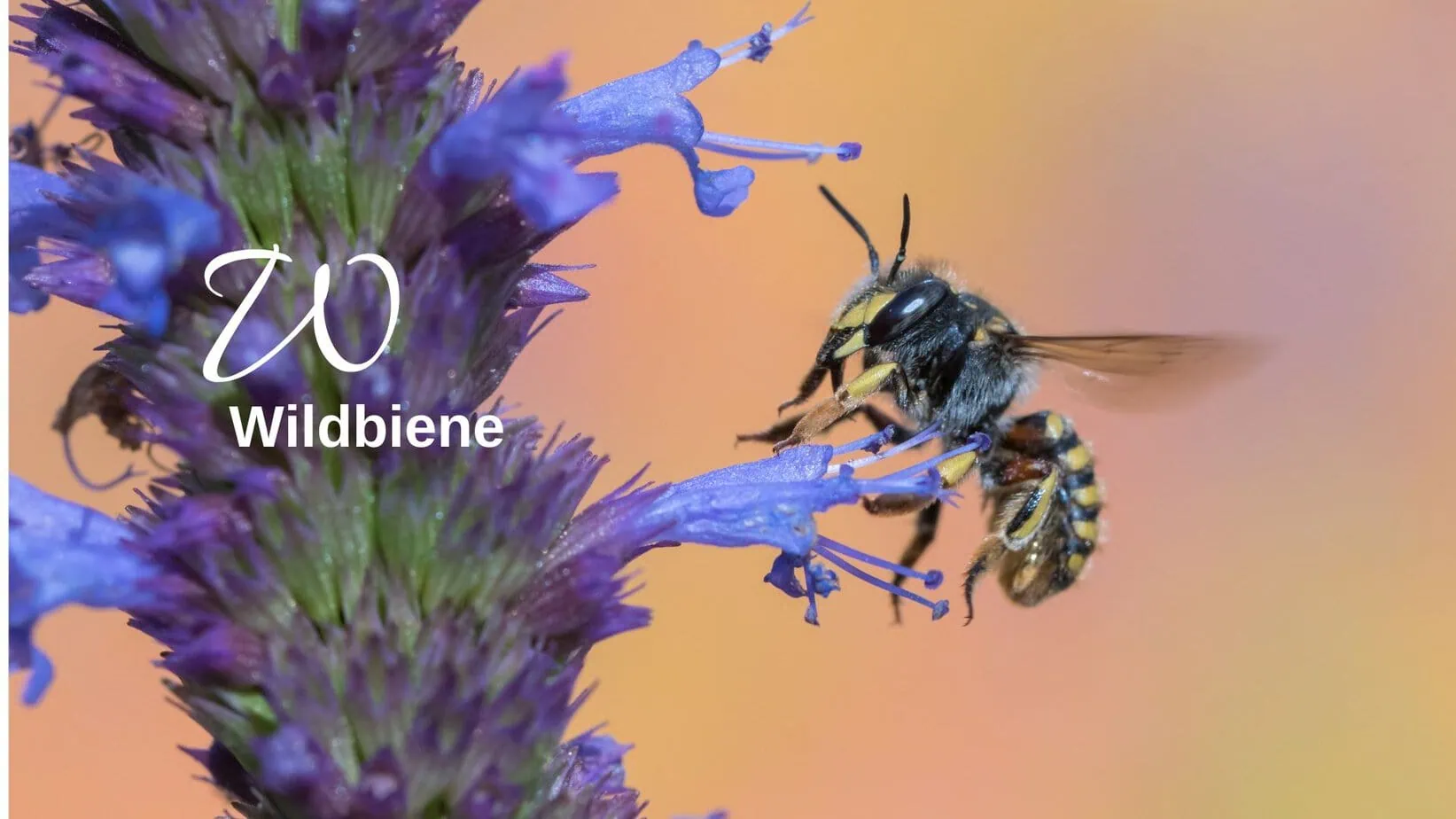
Everyone is talking about bees—but most golfers aren’t aware of wild bees and their importance. Wild bees are among the most important players in the network of biological diversity. They pollinate wild and cultivated plants, ensure the reproduction of numerous plant species, and are thus an indispensable part of functioning ecosystems. Unlike the honeybee, which is kept by humans as a domesticated species, most of the world’s known wild bee species live independently: Each female builds and tends to her own nest. More than 20,000 bee species are known worldwide, the vast majority of which are wild bees. In Europe alone, there are around 2,000 species of wild bees; many of these species are highly specialized and are therefore particularly sensitive to changes in their habitats.
The great diversity of wild bees is closely linked to their specialization. While some species feed on a wide range of flowers, others are closely tied to specific plant families or even individual plant species. These so-called oligolectic wild bees collect pollen exclusively from certain groups of plants. The willow sand bee, for example, specializes in willow pollen in the spring, while other species feed only on pollen from bellflowers, asteraceae, or papilionaceae.
This close connection between wild bees and plants illustrates just how complex ecological relationships are. If a particular plant species disappears from a landscape, this can have dramatic consequences for specialized wild bees. At the same time, plants also benefit from these specialized pollinators, as some flower shapes are optimally adapted to specific bee species.
In addition to suitable food sources, wild bees need appropriate nesting sites. A large proportion of European wild bee species nest in the ground. They prefer open, sunny areas with sparse vegetation and sandy or loamy soil. Other species use dead wood, hollow plant stems, or existing cavities in walls and piles of stones. A diverse range of different structures is therefore crucial for preserving biodiversity. This is where golf courses come into play as important habitats. They offer bare soil, deadwood, piles of stones, flowers, reeds, and much more that wild bees can use.
The greatest threat to wild bees is the loss of suitable habitats. In Europe, the intensification of agriculture, the decline of species-rich meadows, the removal of small-scale structures such as hedges and field margins, and the use of pesticides have placed considerable pressure on many wild bee populations.
Specialized species are particularly affected. While some adaptable wild bees can survive even in urban areas or gardens, more demanding species disappear when certain plants or nesting sites are lacking. Studies show that a significant proportion of European wild bee species are classified as endangered or are experiencing significant population declines. Added to this are other stress factors such as climate change. Changes in flowering times can disrupt the timing of interactions between bees and their food plants. Species with tight life cycles and specific dietary preferences are particularly affected by this.
Protecting wild bees, therefore, means more than simply setting up so-called “insect hotels.” Such nesting aids can only help a small fraction of the species. What is crucial is the restoration of diverse habitats that provide a continuous supply of food and suitable nesting sites.
Golf Courses as Habitats
Golf courses can play an important role in preserving biodiversity in intensively used landscapes across Europe. Their unique structure, featuring a variety of areas—from bare soil sites to roughs and forest edges, as well as water bodies, sandy areas, and extensively managed peripheral zones—offers significant potential for diverse habitats. Flowering areas with native wildflowers, species-rich meadows, nutrient-poor sandy sites, or undisturbed edges provide food sources for various species of wild bees. Plant communities that bloom over many months—providing pollen and nectar from early spring through fall—are particularly valuable.
Biodiversity-oriented golf course management can therefore make an important contribution: through adapted mowing practices, the preservation of old grass and edge structures, the promotion of native plant species, and the avoidance of unnecessary interference with valuable habitats. A key factor here is differentiated maintenance—not every area needs to look “neat.” Undisturbed, near-natural areas are often the most valuable.
INSERT_STEADY_NEWSLETTER_SIGNUP_HERE