STERF:”Key goal is deeper international collaboration”
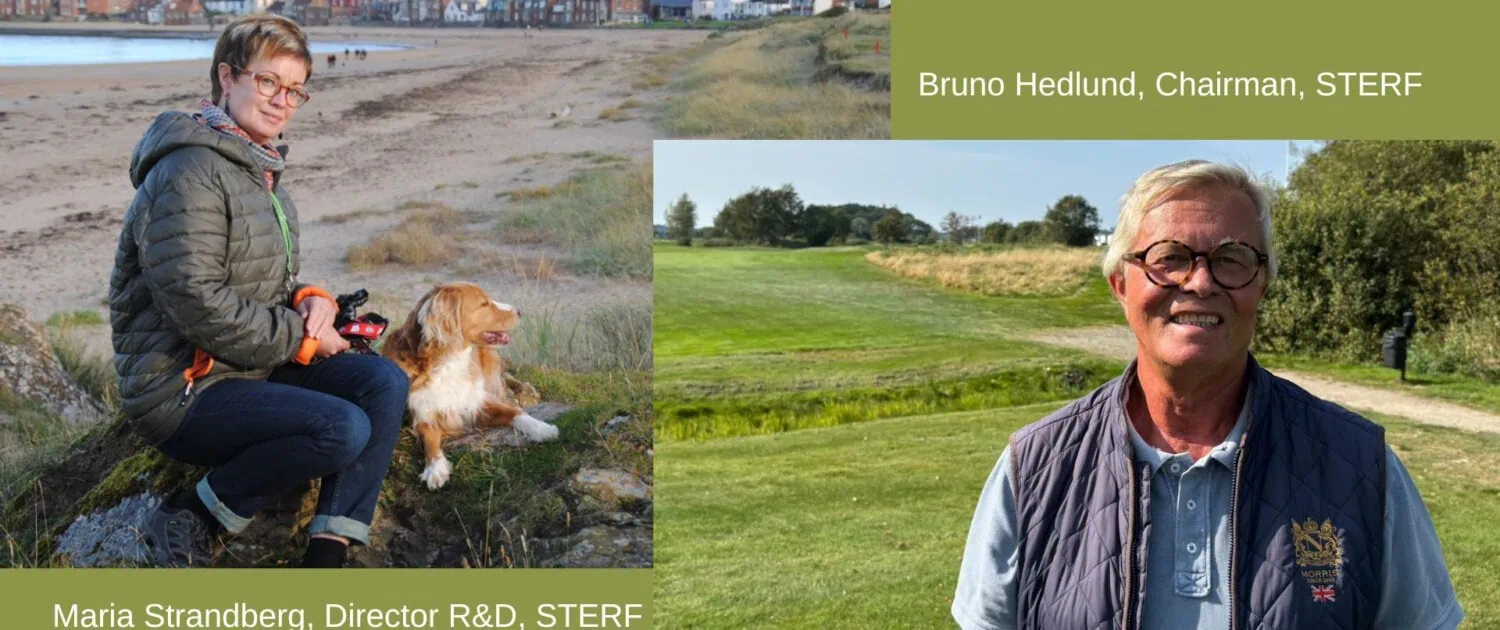
20 years after it was founded, STERF, the Scandinavian Turfgrass and Environment Research Foundation, is Europe’s most important research institution dealing with turf and the sport of golf. The Nordic research centre has long acted as an important scientific point of contact between EU authorities and golf associations. There are no other comparable scientific institutions in Europe with such a high reputation in the field of golf and turf. Petra Himmel, founder of Golf Sustainable, spoke to Maria Strandberg, Director of Research and Development, and Chairman Brudo Hedlund about the reasons for the positive development and the objectives for the future.
When you look back at your original goals – have you achieved what you set out to do?
Bruno Hedlund: This may sound a bit presumptuous, but we really did a very thorough review when we started. We created a long-term strategic plan—25 years—and and we have worked with a clear focus on our goals and what we can see now is that we’ve achieved all the goals we set – and an additional amount of them that we’ve been picking up during the time. Honestly, in my professional life, I’ve never experienced a plan that has been so good and successful.
How were those goals originally defined?
Maria Strandberg: In the beginning, it was mainly the two of us designing a draft of the goals. But then we travelled extensively across the Nordic countries—meeting federations and regional golf organisations and discussed the goals. And finally the goals could be set based on agreement by almost everyone.
Was there anything you underestimated at the beginning?
Bruno Hedlund: We thought that the hard point would be to get finances… but we were stunned—it just went so smooth. We started with a Euro per member of the golf federations in all the Scandinavian countries, but then we went down because we got so much additional match-funding. So now the contribution is 0.50 Euros per golfer. And we have about one million golfers in the Nordic countries.
Maria Strandberg: But what we really underestimated was the time it takes to build trust and realize the need of new knowledge to meet the challenges we have to face
Bruno Hedlund: It was really hard to gain interest from the greenkeepers. It took a while until they really saw that research can give them valuable information on how to get a good golf course.
What were the key topics in those early years?
Maria Strandberg: Snow mould was a major issue—winter disease that caused sever damages. Demand-driven fertilisation was also important— creating good playing quality and saving money by fertilizing according to this concept. Identifying the right grass for Nordic conditions was also a big topic. At that time, we had this Penn A4, which was very popular in the United States, but there were not enough resources at Nordic golf clubs for the very intensive maintenance that A4 requires.
Bruno Hedlund: And there were already discussions about banning pesticides, which worried many people.
How did you try to implement projects from the beginning?
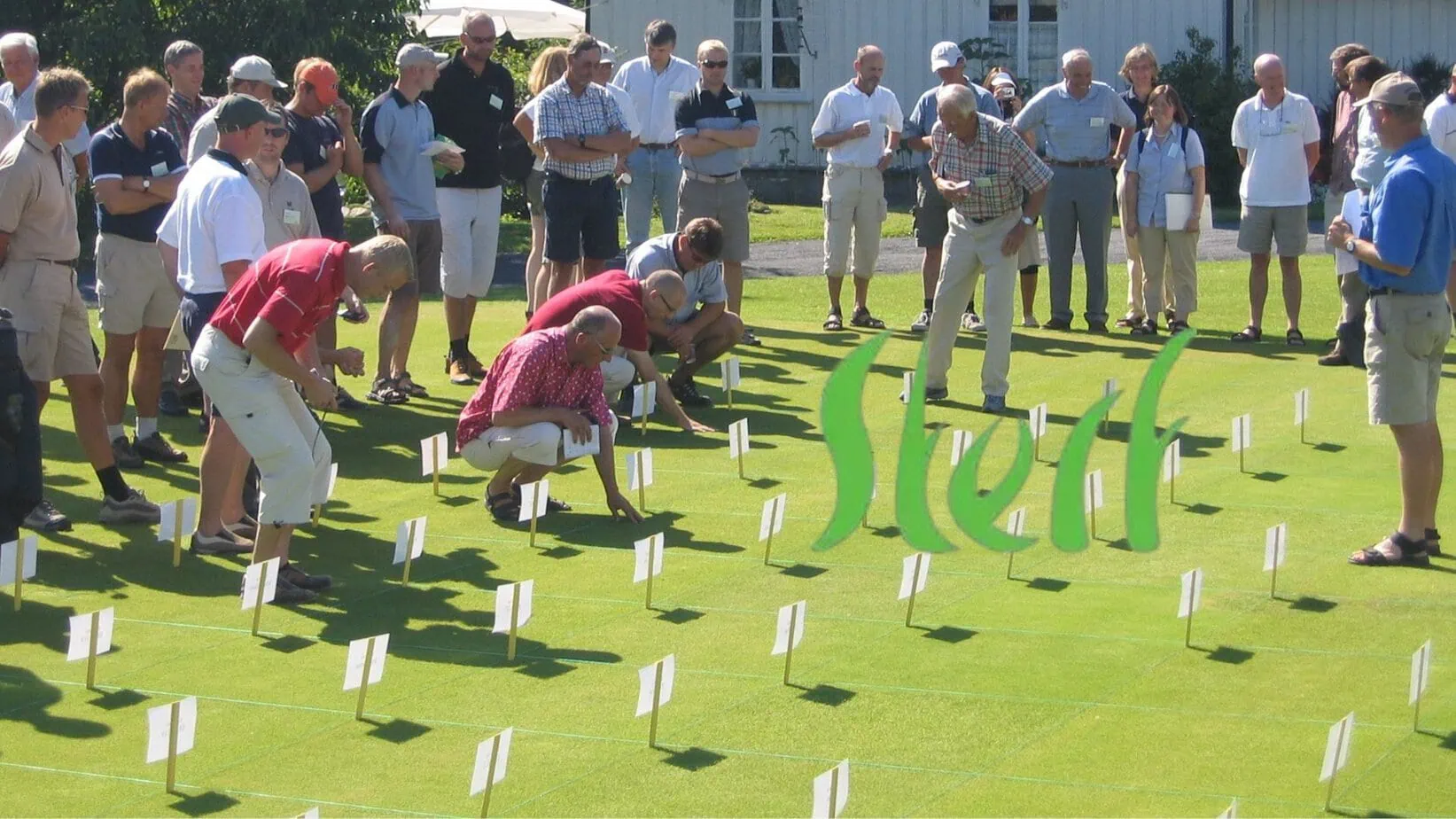
Bruno Hedlund: We said first of all, we must be 100% sure that the green staff thinks that this is a problem, so that we are working on the right issues. The second important thing was to produce ready-to-use results. And we were working on a tight schedule and looking for short-term results in addition to the long-term results. For scientists, a short time could be two years. That helped to address the “ivory tower” perception of science.
Would you say that working closely with practitioners is one of the key success factors of STERF research?
Maria Strandberg: Yes. We require that researchers involve practitioners in the design and execution of their projects. In each project, we have already prepared for implementation from the beginning, since good superintendents are already involved as ambassadors. And we also involve them in the review committees for reviewing new proposals so that they can help to prioritise their actions. Everything we do is based on the needs of the golf clubs and the needs of the practitioners, identified in questionnaires sent to all Nordic golf clubs.
It took time for clubs to recognise the value of your research?
Bruno Hedlund: Yes. That has been the hardest part for us. Especially in the beginning. Some clubs and consultants were more influenced by practices from the US and other countries outside Scandinavia. It was a barrier because they really liked to listen to a famous greenkeeper and consultants from other countries, such as the United States, saying you could use this and that, but it didn’t work out with European regulations and Nordic climatic conditions.
Would you say that has changed today?
Maria Strandberg: I think many superintendents and consultants in the Nordic countries are proud of the maintenance philosophy we have and the research we are doing here since they realised that the strategy we have is sustainable and needed to fulfil European and Nordic regulations. They are also proud that our research and strategy today receive significant international attention and appreciation.
How did sustainability and climate become such central topics?
Bruno Hedlund: We have very early foreseen the climate effects. Already from the beginning, clubs saw more winter damage and disease pressure. And later, when extreme weather hit other parts of Europe, interest increased.
How difficult is it to transfer this awareness to other regions?
Maria Strandberg: At first, our focus was purely Nordic. But interest has grown internationally and has expanded beyond the Nordic region.
Bruno Hedlund: Now there is a huge interest… it doesn’t matter if it’s in China or in Europe or in the States. Part of the strategy from the beginning has been to look for a sustainable future, but we must also talk about economics. Clubs and federations see that we approach essential problems.
Is there a possibility of expanding STERF across Europe?
Maria Strandberg: No, that has never been our strategy. But an important strategy for us is also international collaboration. We are happy to collaborate with universities and organizations all over the world if they have their own substantial and long-term investment in research and development. Partner organisations must have their own solid research and development programmes and activities. We have a number of successful examples of collaboration on a project level, for example, the IPM project, a project jointly funded and coordinated by STERF and TheR&A, which finished about two years ago. There were over 25 partners from the whole of Europe participating.
One main research topic in your latest collaboration project with the R&A and the USGA concerns carbon emissions. Carbon emissions in golf is a topic which is hardly addressed. Why did you decide on this research project?
Bruno Hedlund: We saw that we cannot omit and leave out carbon balance problems because what we need to do is to set the floor for how the golf industry is performing. We have to know more about the golf industrys carbon balance and how can we contribute in one or another way on the long run. We must know, what we are talking about.
Maria Strandberg: It is mainly about understanding carbon balance in turf grass management and about making climate-smart decisions after we have the results.
Climate change and carbon emissions are a difficult topic in the US right now. Working together with the USGA – how much was the decision for this project influenced by the political situation in the US?
Maria Strandberg: There was no problem at all. We think our American partners clearly recognize that this is a major and important challenge for golf globally.
Bruno Hedlund: Everyone is now starting to look at the sustainable approach to taking care of the golf course. We have the most beautiful stadium in all sports. Everyone is now really thinking that, yes, I must work with nature; otherwise, I can’t keep this. Plus, we have drastic changes like heavy rainstorms, droughts and heavy outbreaks from pesticide effects – I think everybody is shaken up.
Is data sharing a challenge in your projects?
Maria Strandberg: In the Nordic countries, clubs and greenkeepers are relatively open, and data collection at golf clubs is often managed in collaboration with golf federation´s consultants.
Looking back at all your projects, was there one that stood out for its impact?
Maria Strandberg: There are several. Integrated Pest Management projects have been very effective—especially practical advice and recommendations in the 31 fact sheets. The concept of multifunctional golf courses, created in collaboration with the Nordic Council of Ministers, has had a significant positive impact on authorities and organisations outside golf.
Bruno Hedlund: And demand-driven fertilisation — that really caused a lot of turbulence within the industry.”
What are your main goals for the next 20 years?
Maria Strandberg: One key goal is deeper international collaboration to meet the global challenges we have to face ans and create solutions we need the best expertise in all countries; joint research funding; big enough volume of the research projects to have impact; Joint efforts means that we can reach out to many more end-users in less time. Another goal is increased insight of golf courses societal benefits which will strenghten the industry.
Bruno Hedlund: We would like to work up trust with authorities and lawmakers and try to show that what we are doing is perhaps almost ahead of what you are trying to put in as a legislation. And if you earn that confidence and reputation, you can also work out solutions that perhaps will focus better. So plan ahead, make trust and then work out together good solutions. Solutions that are good for the sustainable development, that are good for the authorities, but that also allow golf courses to survive. We also want to focus more on resilience. I think it’s popular with those who run the golf courses. Resilience means sustainability in the long run, and we would also like to integrate economic aspects.
Maria Strandberg: The golf and other turf sports are dependent on robust and resilient ecosystems to function, so we have shifted from focusing on sustainability to focusing on building resilience, which is more “hands on”. Resilience for example to rainstorms, dry weather but also resilience to lack of natural resources – sand. Control of diseases weed and insects also require a robust and resilient grass and soil ecosystem.