
• Home
  • Newsletter abonnieren
  • Das Team
  • Ziele
  • Deutsch Deutsch Deutsch de
  • English English Englisch en
Golf Sustainable
  • News
    • Club-News
  • Klimawandel
  • Wasser
  • Biodiversität
  • CO₂
  • Greenkeeping
  • Tourismus
  • Weitere Themen
    • Industrie & Equipment
    • Best Practice
    • Science
  • Click to open the search input field Click to open the search input field Suche
  • Menü Menü
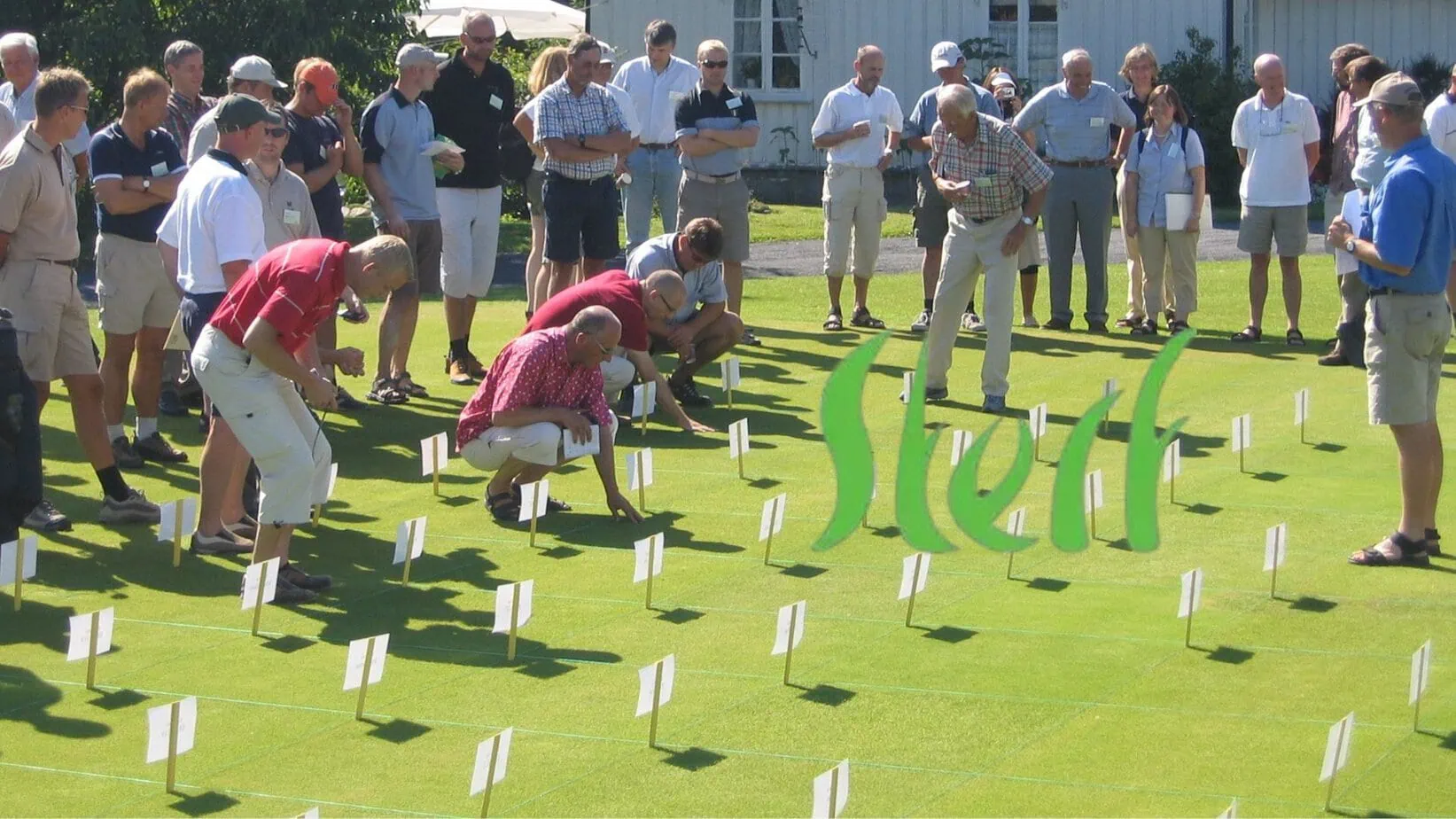
20th anniversary STERF
Fotos: STERF

STERF formuliert zum Jubiläum internationale Kooperation als großes Ziel

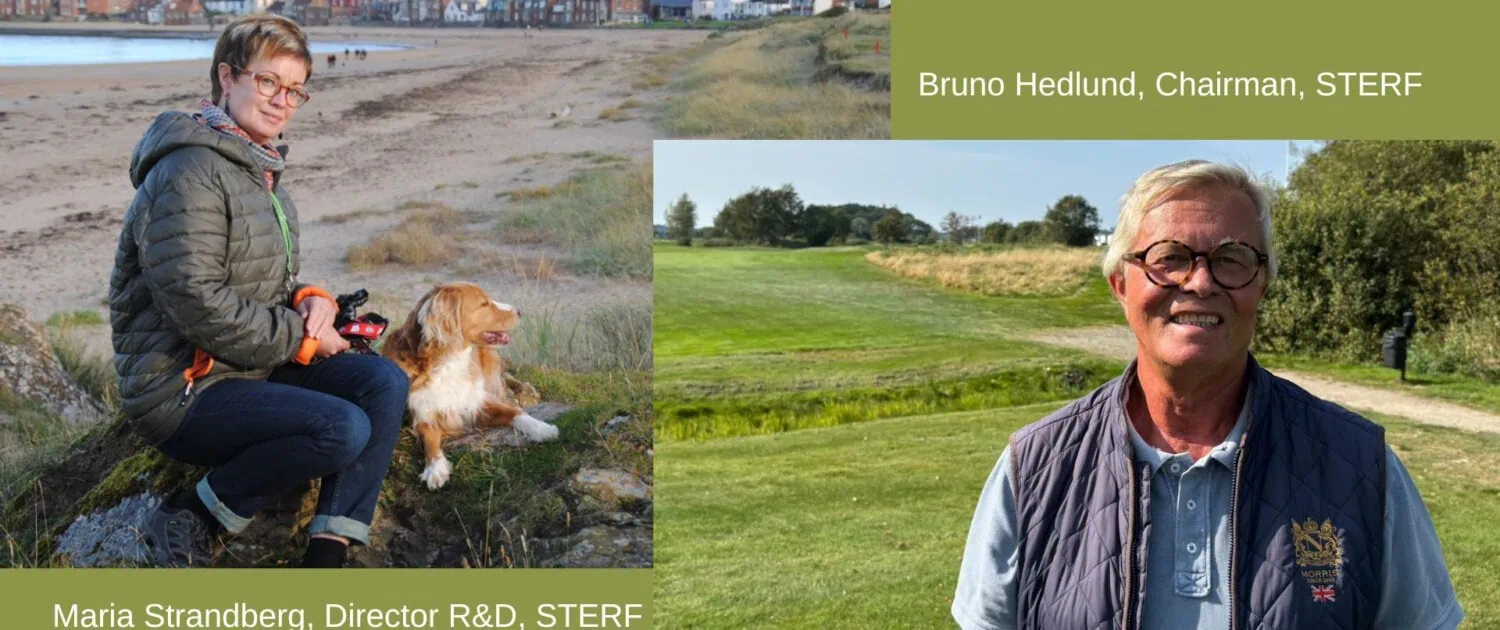
20 Jahre nach seiner Gründung ist STERF, die Scandinavian Turfgrass and Environment Research Foundation, Europas wichtigste Forschungseinrichtung, die sich mit Rasen und dem Golfsport befasst. Längst agiert die nordische Forschungsstelle auch an der Schnittstelle zwischen Behörden der EU und Golf-Verbänden als wichtiger wissenschaftlicher Ansprechpartner. Vergleichbare wissenschaftliche Einrichtungen, die über ein derartiges Ansehen in Sachen Golf & Rasen verfügen, gibt es ansonsten in Europa nicht. Petra Himmel, Gründerin von Golf Sustainable, sprach mit Maria Strandberg, Direktorin für Forschung und Entwicklung, sowie mit Chairman Brudo Hedlund über die Gründe für die positive Entwicklung sowie die Zielsetzungen der Zukunft.

Wenn Sie auf Ihre ursprünglichen Ziele zurückblicken – haben Sie erreicht, was Sie sich vorgenommen hatten?
Bruno Hedlund: Das mag vielleicht etwas anmaßend klingen, aber wir haben zu Beginn wirklich eine sehr gründliche Bestandsaufnahme durchgeführt. Wir haben einen langfristigen Strategieplan – für 25 Jahre – erstellt und mit klarem Fokus auf unsere Ziele gearbeitet. Und was wir jetzt sehen, ist, dass wir alle Ziele erreicht haben, die wir uns gesetzt hatten, plus einige weitere, die wir im Laufe der Zeit hinzugefügt haben. Und ehrlich gesagt habe ich in meinem Berufsleben noch nie erlebt, dass ein Plan so gut und erfolgreich war.

Wie wurden diese Ziele ursprünglich definiert?
Maria Strandberg: Am Anfang waren es hauptsächlich wir beide, die Ziele entwarfen. Aber dann reisten wir ausgiebig durch die nordischen Länder – trafen uns mit Verbänden und regionalen Golforganisationen und diskutierten die Ziele. Und schließlich  konnten die Ziele auf der Grundlage einer Einigung fast aller festgelegt werden.

Gab es etwas, das Sie am Anfang unterschätzt haben?
Bruno Hedlund: Wir dachten, die größte Hürde wäre die Finanzierung ….aber wir waren verblüfft – es lief einfach so reibungslos. Wir begannen mit einem Euro pro Mitglied der Golfverbände in allen skandinavischen Ländern, senkten den Beitrag dann aber, weil wir so viel zusätzliche Kofinanzierung erhielten. Jetzt beträgt der Beitrag 0,50 Euro pro Golfer. Und wir haben etwa eine Million Golfer in den nordischen Ländern.

Maria Strandberg: Was wir jedoch wirklich unterschätzt haben, war die Zeit, die es braucht, um Vertrauen aufzubauen und zu erkennen, dass wir neues Wissen benötigen, um die Herausforderungen zu meistern, denen wir gegenüberstehen.
Bruno Hedlund: Es war wirklich schwer, das Interesse der Greenkeeper zu wecken. Es dauerte eine Weile, bis sie wirklich erkannten, dass die Forschung ihnen wertvolle Informationen darüber liefern kann, wie man einen guten Golfplatz erhält.
Fotos: STERF

Was waren die wichtigsten Themen in diesen ersten Jahren?
Maria Strandberg: Schneeschimmel war ein großes Problem – eine Winterkrankheit, die schwere Schäden verursachte. Auch die bedarfsgerechte Düngung war wichtig – sie sorgt für eine gute Spielqualität und spart Geld, wenn man nach diesem Konzept düngt. Die Ermittlung des richtigen Rasens für nordische Bedingungen war ebenfalls ein großes Thema. Damals hatten wir diese Sorte Penn A4, die in den Vereinigten Staaten sehr beliebt war, aber in den nordischen Golfclubs standen nicht genügend Ressourcen für die sehr intensive Pflege zur Verfügung, die A4 erfordert.
Bruno Hedlund: Und es gab bereits Diskussionen über ein Verbot von Pestiziden, was viele Menschen beunruhigte.

Wie haben Sie von Anfang an versucht, Forschungsprojekte umzusetzen?
Bruno Hedlund: Wir haben uns zunächst gesagt, dass wir zu 100 % sicher sein müssen, dass das Greenkeeping-Team ein Thema als Problem ansieht. Nur so konnten wir sicher sein, an den richtigen Themen zu arbeiten. Der zweite wichtige Punkt war, direkt implementierbare Ergebnisse zu liefern. Außerdem arbeiteten wir nach einem engen Zeitplan und strebten neben den langfristigen auch kurzfristige Ergebnisse an. Für Wissenschaftler kann „kurzfristig“ schon zwei Jahre bedeuten. Das hat dazu beigetragen, dem Image von  Wissenschaft als „Elfenbeinturm ohne Bezug zur Realität“ entgegenzuwirken.

Würden Sie sagen, dass die enge Zusammenarbeit mit Praktikern einer der wichtigsten Erfolgsfaktoren der STERF-Forschung ist?
Maria Strandberg: Ja. Wir verlangen von den Forschern, dass sie Praktiker einbeziehen, wenn sie ihre Projekte konzipieren und durchführen. Bei jedem Projekt ist die Umsetzung bereits vorbereitet, da die guten Headgreenkeeper bereits als Botschafter in die Projekte eingebunden sind. Und wir beziehen sie auch in die Prüfungsgremien für die Begutachtung neuer Vorschläge ein, damit sie bei der Priorisierung der Maßnahmen helfen können. Alles, was wir tun, basiert auf den Bedürfnissen der Golfclubs und jenen der Praktiker. Diese Bedürfnisse haben wir  in Fragebögen ermittelt, die an alle nordischen Golfclubs verschickt wurden.

Dollar Spot, Daten, Durchhaltevermögen – die 25-jährige Lernkurve von Bethpage

Wie lange hat es gedauert, bis die Clubs den Wert Ihrer Forschung erkannt haben?

Bruno Hedlund: Ja. Das war für uns der schwierigste Teil. Vor allem am Anfang. Einige Clubs und Berater ließen sich stärker von Praktiken aus den USA und anderen Ländern außerhalb Skandinaviens beeinflussen. Das stellte ein Hindernis dar, weil sie lieber auf bekannte Greenkeeper und Berater aus anderen Ländern, zum Beispiel aus den USA, hörten, die sagten, man könne dies und das verwenden. Aber das passte nicht zu den europäischen Vorschriften und den klimatischen Bedingungen in Skandinavien.

Hat sich das inzwischen geändert?
Maria Strandberg: Ich glaube, viele Headgreenkeeper und Berater in den nordischen Ländern sind stolz auf unsere Pflegephilosophie und die Forschung, die wir hier betreiben. Sie haben erkannt, dass unsere Strategie nachhaltig ist und notwendig, um die europäischen und nordischen Vorschriften zu erfüllen. Sie sind auch stolz darauf, dass unsere Forschung und Strategie heute internationale Aufmerksamkeit und Anerkennung finden.

Wann sind Nachhaltigkeit und Klima zu so zentralen Themen geworden?
Bruno Hedlund: Wir haben die Auswirkungen des Klimawandels sehr früh vorausgesehen. Schon von Anfang an stellten die Clubs vermehrt Winterschäden und Krankheitsdruck fest. Und später, als extremes Wetter andere Teile Europas traf, stieg das Interesse.

Wie schwierig ist es, dieses Bewusstsein auf andere Regionen zu übertragen?

Maria Strandberg: Zunächst lag unser Fokus rein auf Skandinavien. Aber das Interesse ist international gewachsen und hat sich über die nordische Region hinaus ausgeweitet.

Bruno Hedlund: Derzeit besteht ein enormes Interesse … ganz gleich, ob in China, in Europa oder in den USA. Teil unserer Strategie war von Anfang an, dass wir eine nachhaltige Zukunft anstreben, aber wir müssen auch über wirtschaftliche Aspekte sprechen. Vereine und Verbände erkennen, dass wir uns mit wesentlichen Problemen auseinandersetzen.

Gibt es eine Möglichkeit, STERF auf ganz Europa auszuweiten?
Maria Strandberg: Nein, das war nie unsere Strategie. Aber ein wichtiges Ziel für uns ist die internationale Zusammenarbeit. Wir arbeiten gerne mit Universitäten und Organisationen auf der ganzen Welt zusammen, wenn diese selbst substanzielle und langfristige Investitionen in Forschung und Entwicklung tätigen. Partnerorganisationen müssen über eigene solide Forschungs- und Entwicklungsprogramme sowie -aktivitäten verfügen.
Wir haben eine Reihe erfolgreicher Beispiele für die Zusammenarbeit auf Projektebene, zum Beispiel das IPM-Projekt, ein gemeinsam von STERF und The R&A finanziertes und koordiniertes Projekt, das vor etwa zwei Jahren abgeschlossen wurde. Daran waren über 25 Partner aus ganz Europa beteiligt.

ITRI-Projekte erforschen drei existentielle Branchen-Probleme

Ein zentrales Forschungsthema Ihres jüngsten Kooperationsprojekts mit der R&A und der USGA betrifft die CO₂-Emissionen. CO₂-Emissionen im Golfsport sind ein Thema, das kaum angesprochen wird. Warum haben Sie sich für dieses Forschungsprojekt entschieden?
Bruno Hedlund: Wir haben erkannt, dass wir die Probleme der CO₂-Bilanz nicht außer Acht lassen dürfen, denn wir müssen eine Grundlage dafür schaffen, wie sich die Golfbranche entwickelt. Wir müssen mehr über ihre CO₂-Bilanz wissen und darüber, wie wir langfristig auf die eine oder andere Weise dazu beitragen können, sie zu verbessern. Wir müssen wissen, wovon wir sprechen.
Maria Strandberg: Es geht vor allem darum, die CO₂-Bilanz im Rasenmanagement zu verstehen und klimafreundliche Entscheidungen zu treffen, sobald wir die Ergebnisse haben.

Klimawandel und CO₂-Emissionen sind derzeit in den USA ein heikles Thema. In Zusammenarbeit mit der USGA – inwieweit wurde die Entscheidung für dieses Projekt von der politischen Lage in den USA beeinflusst?
Maria Strandberg: Es gab überhaupt kein Problem. Wir glauben, dass unsere amerikanischen Partner klar erkennen, dass dies eine große und wichtige Herausforderung für den Golfsport weltweit ist.
Bruno Hedlund: Alle beginnen nun, sich mit der nachhaltigen Pflege des Golfplatzes zu befassen. Wir haben das schönste Stadion aller Sportarten. Jeder denkt jetzt wirklich: Ja, ich muss mit der Natur zusammenarbeiten, sonst kann ich das nicht erhalten. Hinzu kommen drastische Veränderungen wie heftige Regenfälle, Dürren und massive Ausbrüche aufgrund von Pestizidwirkungen – ich glaube, das hat alle erschüttert.

Ist der Datenaustausch eine Herausforderung bei Ihren Projekten?
Maria Strandberg: In den nordischen Ländern sind Clubs und Greenkeeper relativ offen, und die Datenerhebung in Golfclubs wird oft in Zusammenarbeit mit Beratern des Golfverbands durchgeführt.

Wenn Sie auf all Ihre Projekte zurückblicken, gab es eines, das sich hinsichtlich seiner Wirkung besonders hervorgetan hat?
Maria Strandberg: Da gibt es mehrere. Projekte zum integrierten Pflanzenschutz waren sehr effektiv – insbesondere die praktischen Ratschläge und Empfehlungen in den 31 Informationsblättern. Das Konzept der multifunktionalen Golfplätze, das in Zusammenarbeit mit dem Nordischen Ministerrat entwickelt wurde, hat einen bedeutenden positiven Einfluss auf Behörden und Organisationen außerhalb des Golfsports gehabt.

Bruno Hedlund: Und die bedarfsorientierte Düngung – das hat in der Branche wirklich für viel Aufruhr gesorgt.“

Was sind Ihre wichtigsten Ziele für die nächsten 20 Jahre?
Maria Strandberg: Ein wichtiges Ziel ist eine intensivere internationale Zusammenarbeit, um die globalen Herausforderungen zu bewältigen, denen wir gegenüberstehen, und Lösungen zu entwickeln, für die wir das beste Fachwissen aus allen Ländern benötigen; gemeinsame Forschungsfinanzierung; Forschungsprojekte in ausreichendem Umfang, um Wirkung zu erzielen; gemeinsame Anstrengungen bedeuten, dass wir in kürzerer Zeit viel mehr Endnutzer erreichen können. Ein weiteres Ziel ist ein besseres Verständnis für den gesellschaftlichen Nutzen von Golfplätzen, was die Branche stärken wird.
Bruno Hedlund: Wir möchten Vertrauen bei Behörden und Gesetzgebern aufbauen und versuchen zu zeigen, dass das, was wir tun, vielleicht sogar schon weiter ist als das, was Sie als Gesetzgebung einführen wollen. Und wenn man dieses Vertrauen und diesen Ruf gewinnt, kann man auch Lösungen erarbeiten, die vielleicht besser fokussiert sind. Also vorausschauend planen, Vertrauen aufbauen und dann gemeinsam gute Lösungen erarbeiten. Lösungen, die gut für die nachhaltige Entwicklung sind, die gut für die Behörden sind, aber die es auch den Golfplätzen ermöglichen, zu überleben.

Getrennt vom Netz – verbunden mit der Natur

Eintrag teilen
  • Teilen auf Facebook
  • Teilen auf X
  • Teilen auf WhatsApp
  • Teilen auf Pinterest
  • Teilen auf LinkedIn
  • Per E-Mail teilen

INSTAGRAM

golfsustainable

Golf Sustainable is an independent news platform, founded by Petra Himmel.

Which golf club knows its carbon footprint? In gen Which golf club knows its carbon footprint? In general, the topic of the golf industry's carbon footprint is difficult, as there are few published numbers and only a few event hosts, federations, or tour officials have developed strategies to reduce their emissions. 

GC Kitzeberg in Germany is a well-known but not very big club whose board members decided to act positively: They commissioned a report from a credible external consultancy, realised that "we have to become better," and started working on the first projects. Buying some new electric mowers is one of the steps. Communication with the membership was important, but successful. 

The journey isn't finished; many projects remain for the future. But what we like is the commitment to improve. Good luck for the next steps. 
#golf #greenkeeping #golfer #co2 #carbonemissions
☀️ Golf in extreme heat is becoming the new realit ☀️ Golf in extreme heat is becoming the new reality.
Yesterday, London recorded its hottest May day ever with temperatures reaching 34.8°C — a dramatic new heat record for the British capital.

For golfers, greenkeepers and wildlife on the course, rising heat means much more than just “summer weather”:
🏌️ Increased health risks for players
🌱 Heat stress and drought damage on turf
🐝 Pressure on biodiversity and ecosystems

Our latest article explores how climate change is already reshaping golf — and why adaptation is becoming essential for the future of the game.

Read more via Golf Sustainable

#Golf #ClimateChange #Sustainability #GolfCourseManagement #Heatwave #London #GolfSustainable #SportsAndClimate #Greenkeeping #ExtremeHeat #Biodiversity #SustainableGolf
One glance across the fairway, and it’s clear: Nat One glance across the fairway, and it’s clear: Nature thrives here! 🌿✨

GC Feldafing, situated in historic Lennè Park,  beautifully demonstrates that golf courses are far more than just sports venues—they are intricate mosaics of vital ecosystems. What looks like a pristine playing surface at first glance is actually a network of crucial habitats:

🪵 Deadwood providing shelter for insects & small mammals
🦅 Perches designed for birds of prey
🌸 Species-rich meadows bustling with pollinators
💧 Natural waterways serving as thriving aquatic habitats
🌳 And the ultimate highlight: A true natural monument – the majestic oak tree!

Today, sustainability and modern golf course management go hand in hand. Want to bring this expertise to your home club? The Golf Sustainable Academy offers webinars for free 🎓⛳️

🔗 Link to the Academy & website is waiting for you in our bio! (@golfsustainable)

What does your home course look like? Do you have designated eco-zones or natural monuments on your fairways? Let us know in the comments below! 👇

#golfsustainable #biodiversity #golfing #sustainability #greenkeeping #naturelovers #sustainablegolf #growthegame #ecoheritage #biotope #creatureconservation #gcfeldafing #reels
🌿✨ **Bois d’Arlon – Europe’s Living Lab for Next-G 🌿✨ **Bois d’Arlon – Europe’s Living Lab for Next-Gen Golf Resorts** ✨🌿

Nestled across 220 hectares of untouched nature in Belgian Luxembourg, the Bois d’Arlon Golf & Resort is more than just a golf destination – it is emerging as a future blueprint for sustainable, high-end golf resorts in Europe.

We visited the project, which was opened in 2024, to talk with the greenkeeping team and the investor Robert Schintgen about their vision of a high-end golf resort in Wallonie, where pesticides aren't allowed, and the rules for irrigation only allowed the use of collected rainwater and recycled water from the hotel. 

With two distinct courses – a challenging 18-hole Heathland layout and a scenic 9-hole Parkland course – the resort combines **world-class design, biodiversity-rich landscapes, and year-round playability on sandy soil**. The vision blends sport and nature seamlessly, creating an immersive experience for golfers of all levels. ⛳🌱 

But Bois d’Arlon goes far beyond golf. The 4-star château hotel with 64 rooms, spa, restaurant, and event spaces positions the estate as a **fully integrated luxury ecosystem** where hospitality, wellness, and outdoor sports meet. 🏨🌳

What makes it stand out is its positioning as a future laboratory for sustainable resort development – demonstrating how modern golf destinations can evolve with nature rather than against it, while still delivering premium guest experiences.

Bois d’Arlon isn’t just a resort. It’s a model for how European golf destinations can redefine luxury through sustainability, landscape design, and long-term environmental thinking.

📍 Belgium | Luxembourg province
⛳ Golf | 🌿 Nature | 🏨 Luxury | ♻️ Sustainability

#BoisDArlon #GolfSustainable #SustainableGolf #LuxuryResort #GolfArchitecture #EcoTourism #GolfCourseDesign #SustainableTourism #FutureOfGolf #BelgiumGolf #GreenResorts #HospitalityInnovation
What happens when a golf club completely stops usi What happens when a golf club completely stops using fungicides over the winter? 🚫🍄 The result might surprise you.
With pesticide regulations tightening across Europe (including strict bans in Switzerland, France, and Belgium), the question for greenkeepers is no longer if chemical restrictions are coming, but when.

Michael Scheffold, Head Greenkeeper at GC Wörthsee (Germany), decided to do a real-world test run. This past winter, he completely dispensed with fungicides on his greens to see how they would react.

The verdict? Better than expected! Despite a little more snow mold, the greens recovered beautifully and by mid-May, they were almost as good as usual. 🌿

This success didn't happen by accident. It is the result of years of prioritizing Integrated Pest Management (IPM) and mechanical measures to build robust, naturally resilient soil and grass. Supported fully by Club Managing Director Sven Hilgenberg, GC Wörthsee is actively future-proofing its course.

Proactive greenkeeping beats waiting for the ban! 📈⛳️

Call to Actions:
🔗 Read the full case study: Tap the link in our bio to read the detailed interview on Golf Sustainable.
🎓 Learn Sustainable Management: Want to implement pesticide-free strategies at your club? Explore our advanced courses at the Golf Sustainable Akademie (Link in Bio!).
📺 Subscribe for more insights: Check out our YouTube Channel for expert talks on the future of greenkeeping and eco-friendly golf operations!

Foto: Nicolas Martin Beaumont

#GolfSustainable #SustainableGolf #Greenkeeping #GCWörthsee #PesticideFree #IntegratedPest Management #GolfCourseManagement #EcoGolf #TurfManagement #SustainableTurf #GolfManager #GolfAkademie #GolfInspiration #GolfEnvironment #SnowMold #EcoFriendlySports
🚨 What does Donald Trump's new ballroom have to do 🚨 What does Donald Trump's new ballroom have to do with the environmental problems of East Potomac Golf Links? 

A growing environmental controversy is unfolding at East Potomac Golf Links: according to reports by the New York Times and the U.S. National Park Service, thousands of cubic meters of soil and construction debris from the demolition work at the White House East Wing were deposited on the public golf course — including material reportedly contaminated with lead, chromium, pesticides, and other hazardous substances. 

The site is planned to become part of a future championship golf course redevelopment. Environmental groups and local residents, however, are raising serious concerns about potential impacts on ecosystems, waterways, and public access to one of Washington’s most historic municipal golf facilities. 

What makes the case especially sensitive: the golf course sits directly along the Potomac River and has long served as an accessible public space for golfers, walkers, and families alike. Critics warn the project could come at a high environmental and social cost. 

💬 The story is another reminder of how closely golf, urban development, and environmental responsibility are connected — and why transparency and sustainable land management matter for the future of the game.

#GolfSustainable #Sustainability #Golf #Environment #GolfCourseManagement #EnvironmentalIssues #PublicGolf #Biodiversity #WashingtonDC
Mauritius, the island in the Indian Ocean, is firs Mauritius, the island in the Indian Ocean, is first and foremost a dream destination for many golfers. For Philippe Espitalier-Noël, who, as CEO of the ER Group, is also responsible for major golf destinations such as Beachcomber and Heritage Resorts, among others, this dream destination is extreme pressure. A recent report by the World Bank Group on climate and development on the island of Mauritius entitled CCDR has prompted him to call for significant changes in the direction of tourism on the island.

Read the whole interview on https://golfsustainable.com. Link in the first comment
Follow our You Tube channel https://www.youtube.com/@golfsustainable

#mauritius #golf #golftravel #tourism #sustainabletravel
Copernicus has published the European State of the Copernicus has published the European State of the Climate Report. The golf industry must learn from data and scientific research, as outdoors sports are challenged by the resulty of climate change.
New competition for Bavarian golf clubs 🌿🦋 The 'B New competition for Bavarian golf clubs 🌿🦋

The 'Blühpakt Bayern' has launched a new competition specifically for golf clubs, that have combined a biodiversity project with a successful communication idea.  This isn't just about aesthetics; it's a critical move to boost biodiversity and protect our essential insect populations on golf. 

Golf Sustainable founder, Petra Himmel:

"This competition is a great motivator. However, the real success lies in long-term strategy and understanding ecological systems. Communication is an important part of a successful biodiversity strategy. 

All information about the enrollment in the first comment. 

#SustainableGolf #GolfSustainable #BlühpaktBayern #Biodiversity #EcologicalGolf #GolfCourseManagement #PetraHimmel #GolfAkademie #Greenkeeping #EcoFriendlySports #GolfGermany
Burgenland in Austria is now the first region to b Burgenland in Austria is now the first region to be certified with the Austrian Environmental Label.
International Day of Orchards. There are so many o International Day of Orchards. There are so many orchards and fruit trees on golf courses. As an important habitat for insects, birds and even bats, they are so much more than just a wonderful aesthetic element for our sport. 
#golf #golfsustainable #biodiversity #orachards #streuobstwiese #
#Nature #Wildlife #Birdwatching #BeeEaters #Austri #Nature #Wildlife #Birdwatching #BeeEaters #Austria #Burgenland #Biodiversity #NaturePhotography #HiddenNature #Conservation #Golf
Yes, the Masters Tournament and Augusta National G Yes, the Masters Tournament and Augusta National Golf Club are all about exclusivity. But it is important to realise that the whole town of Augusta has to agree with this concept and tradition. 

There is a huge economic value that comes with the tournament week, but there are other soft factors that secure the acceptance of The Masters in the town. 

The renovation of the municipal course at The Patch, plus the opening of The Loop at The Patch, is good news for the local community. Affordable, good golf is important to grow the game. Here, the Masters Charity Funds, First Tee of Augusta, and Augusta Technical College have teamed up to finance this important project. 
#firsttee #golf #golfsustainable #golfforeverybody #themasters #augusta #growthegame
Instagram-Beitrag 18158981992431306 Instagram-Beitrag 18158981992431306
Golf without the use of #pesticides? This is the s Golf without the use of #pesticides? This is the scenario the Swiss golfing community will face from January 2027. Due to a new classification of land use, the use of herbicides will be completely banned, whilst other plant protection products will be subject to much stricter regulations. 
The issue of #health protection is becoming increasingly important on sports grounds. This development is also relevant for golf courses in Germany and Austria. Here too, plant protection products are often the last resort in combating fungal diseases on greens.
We have talked to experts in Switzerland. The good news: some agronomists also see positive consequences arising from the regulation. 
#golf #greenkeeping #turfgrass #nopesticides #golfmanagement #golfsustainable
#golfsustainable #golf #water #golfsustainable #golf #water
#energycrisis #saveenergy #golf #greenkeeper #ada #energycrisis  #saveenergy #golf #greenkeeper #adaptation #golfclubs #golfmanagement #golfsustainable
Another inspiring story of a woman in the golf ind Another inspiring story of a woman in the golf industry

“Getting up with the sunrise and getting going, I just love it” says Elin Foyle, 24-year-old Assistant Headgreenkeeper from Golf Club Chieming in Upper Bavaria, Germany. The 24-year-old is getting to know the world with her greenkeeping job: As one of the scholarship holders of the annual FEGGA program, she was allowed to work at the renowned Kristianstad’s Golf Club in Sweden for six months with six other scholarship holders.
At the DP World Tournament Betfred British Masters at The Belfry, she stood on the course early in the morning together with the other greenkeepers and prepared it for the tournament. Her next goal in the fall is the Solheim Cup at the Bernardus Golf Resort in the Netherlands. 
Read her story: Link in comments

#golfsustainable #golfinbayern #womeningolf #turfgrass #greenkeeper #fegga #youngcareer #femalecareer #golf #scholarships
Golf has no voice without data.📊⛳️ This was the w Golf has no voice without data.📊⛳️

This was the wake-up call at the recent @FEGGA (Federation of European Golf Greenkeepers Associations) General Assembly in Portugal. 

As the pressure from EU regulations on water usage and pesticide bans grows, the message for the industry is clear: We can no longer rely on "feeling" sustainable. We have to prove it.

Why does this matter for your club?
Policy Power: As Petra Himmel reports from FEGGA meeting, transparent data sets are the only way to persuade governments to grant exemptions or support.
Quality Control: Without chemical solutions for threats like *Dollar Spot*, data-driven greenkeeping is the only way to maintain the playing surfaces we love.
Social License: In a world competing for land and resources, golf must prove its added value to society—or risk losing its place.

At Golf Sustainable, we don’t just report the news; we analyze the strategies that will define the next decade of our sport. From the Dutch "Zero Pesticide" goal by 2032 to French resource management—we bring the global perspective to your screen.

How is your club handling the data challenge? Are you tracking every drop and gram, or is the transition to digital reporting still a hurdle? Let’s discuss in the comments! 👇

🔗 Read the full FEGGA report and deep-dive analysis at golfsustainable.com (Link in Bio).

📺 More Insights: Visit our YouTube channel for exclusive interviews with industry leaders. 

#GolfSustainable #FEGGA #Greenkeeping #DataInGolf #GolfIndustry #EcoFriendlyGolf #GolfCourseManagement #FutureOfGolf
Instagram-Beitrag 18065912153650013 Instagram-Beitrag 18065912153650013
Warum Design über Kosten und Impact Deines Golfpl Warum Design  über Kosten und Impact Deines Golfplatzes entscheidet! ⛳️📐

Wusstest du, dass ein Großteil der späteren Pflegekosten und des Ressourcenverbrauchs bereits beim Design eines Golfplatzes festgelegt werden?

Ein nachhaltiges Design ist kein Luxus, sondern die Antwort auf:
💧 Wasserknappheit und Extremwetter
🐝 Artensterben
📉 Steigende Instandhaltungskosten

In der Golf Sustainable Akademie zeigt die Nachhaltigkeits-Expertin Petra Himmel, wie modernes Redesign und kluge Architektur Golfanlagen zukunftssicher machen. Das Beste: Unsere Webinare  sind kostenfrei zugänglich!

👉 Klicke unten auf „Mehr dazu“ und entdecke die Welt des nachhaltigen Golfplatzdesigns.

#GolfDesign #Golfarchitektur #Greenkeeping #GolfBusiness #Nachhaltigkeit #Golfplatz #Greenkeeper #Golf #Golfmanagement #GolfSustainable #ZukunftGolf
Design mit Weitblick: So wird dein Golfplatz zukun Design mit Weitblick: So wird dein Golfplatz zukunftssicher! ⛳️📐
Nachhaltigkeit beginnt nicht erst beim Mähen, sondern bereits am Zeichentisch. Ein kluges Golfplatzdesign ist die effektivste Waffe gegen steigende Kosten und strengere Umweltauflagen.

In der Golf Sustainable Akademie blicken wir tief in die moderne Platzarchitektur:
🌿 Wie fördern wir Biodiversität durch kluges Routing?
💧 Wie reduzieren wir den Wasserverbrauch durch strategisches Redesign?
🛠 Warum weniger gepflegte Flächen oft mehr Spielspaß bedeuten.

👉 Klicke unten auf „Mehr dazu“ und entdecke die Welt des nachhaltigen Golfplatzdesigns.
An important day for the golfing world, which will An important day for the golfing world, which will largely go unnoticed because research rarely has a big stage. Yesterday, the ITRI International Turfgrass Research Initiative, launched by STERF, USGA and R&A, officially kicked off with the first three projects on existential issues in golf: 

Why are these research topics existential? 
1️⃣ Clean Water is globally a shrinking resource. Golf courses have to reduce their consumption - and can reduce costs. There is no outdoor golf without water. 
2️⃣ If you want to keep golf a healthy sport, you have to combat dollar spot permanently without using fungicides or using only the absolute minimum. Those who lose the battle against dollar spot lose customers, members and market acceptance. Economic problems arise.
3️⃣ CO2 emissions are harmful to humanity, cause climate change, and thus create problems for golf. However, the question of how high the CO2 emissions of a golf course and its operation are cannot be answered because there is no standard calculation formula. The golf industry is unable to speak on CO2. This damages its image. A poor image is never good for business. 
#golfsustainable #turfgrass #reasarch #usga #randa #sterf #greenkeeping #dollarspot #watermanagement  #golfer #golf #golfcourse
#kidsgolf #DigitalWellbeing #Digitaldetox #golfand #kidsgolf #DigitalWellbeing #Digitaldetox #golfandnature #juniorgolf #golfsustainable
Follow me!

Follow us on Facebook

Weitere News

  • Weltumwelttag5. Juni 2026 - 8:45
  • Less plastic on the golf cours
    Weniger Plastik auf dem Golfplatz2. Juni 2026 - 14:51
  • Golf Club Water Security Toolkit England Golf
    England Golf veröffentlicht Wasser-Toolkit für Golfanlagen2. Juni 2026 - 9:18
  • Biodiversitäts-Lexikon VernetzungBiodiversitäts-Lexikon Vernetzung
    Biodiversitäts-Lexikon: V wie Vernetzung1. Juni 2026 - 9:07
  • Golf Resort Berlin PankowFotos: Petra Himmel
    Golf Resort Pankow: Mitten in Berlin – mitten in der Natur30. Mai 2026 - 9:45

Kooperationen

© Copyright - Golf Sustainable | Website [ Bottega Design ]
  • Link zu Facebook
  • Link zu Instagram
  • Kontakt
  • Impressum
  • Datenschutzerklärung
  • Privatsphäre-Einstellungen ändern
  • Einwilligungen widerrufen
Link to: Österreichs Burgenland als Vorreiter bei nachhaltigem Tourismus Link to: Österreichs Burgenland als Vorreiter bei nachhaltigem Tourismus Österreichs Burgenland als Vorreiter bei nachhaltigem TourismusBurgenland Österreichisches UmweltzertifikatFotos: Jenny Koller Reiters Resort Link to: Blühpakt Bayern: Praxistag im GC Mainsondheim Link to: Blühpakt Bayern: Praxistag im GC Mainsondheim Blühpakt Bayern: Praxistag im GC MainsondheimBlühpakt Bayern: Praxistag im GC Mainsondheim
Nach oben scrollen Nach oben scrollen Nach oben scrollen
DSGVO Cookie Consent mit Real Cookie Banner