
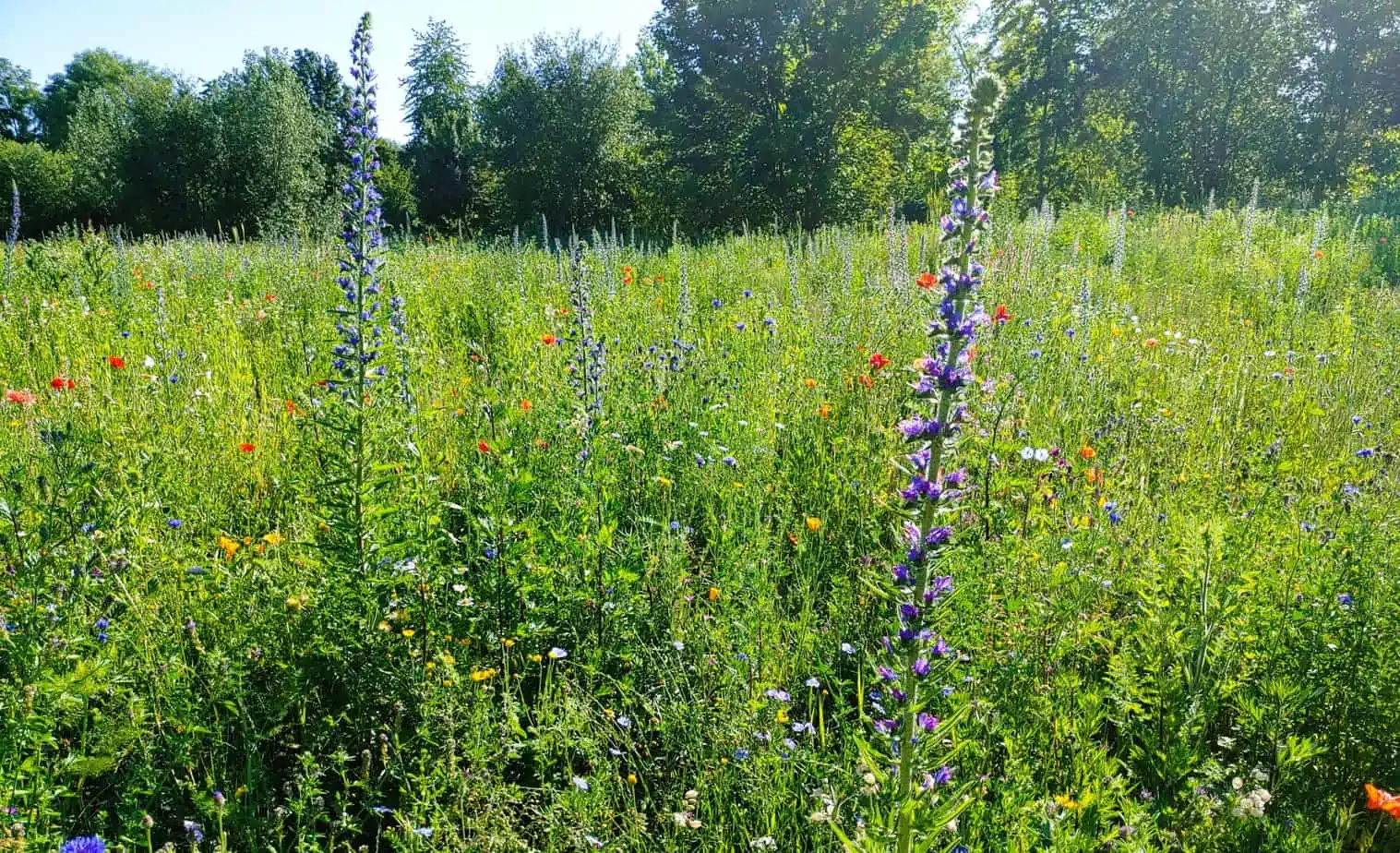
Habitat rough grassland – how the conversion works
A rough grassland like the one in the picture is fascinating: A variety of colours makes the meadow beyond the fairway a highlight of the round. It may well take several years for the meadow to reach this state. First of all, the areas have to be grazed, and the cuttings have to be removed regularly before species typical for the region can really establish and develop. Thus, the development of floral splendour usually takes at least two years.
Here’s how it works:
Information and tips on the subject of nutrient-poor grassland:
- Dry grassland is not a synonym for nutrient-poor grassland, but a type of nutrient-poor grassland whose lack of nutrients is due to severe drought.
- Other nutrient-poor grassland types are, for example: semi-arid grassland, sandy grassland, steppe grassland, mat grass and heath.
- Poor grasslands are characterized by low-growing, herbaceous plants, between which open ground is usually visible.
- They develop in warm, nutrient-poor and mostly dry locations. The ability of the soil to drain water also plays an important role.
- Typical nutrient-poor grassland plants are often drought-resistant and are considered true hunger artists.
- Classic plants in nutrient-poor grass areas are: violet salsify, meadow sage, orchid, feather grass, meadowsweet.
- The numerous plants ensure a large supply of food, which attracts the following animals, for example: oil beetle, gray sand bee, bombardier beetle, blue-winged grasshopper,






 Photo: Four Seasons Hotel