
Prince’s Golf Club: dunes, sand, and links Golf
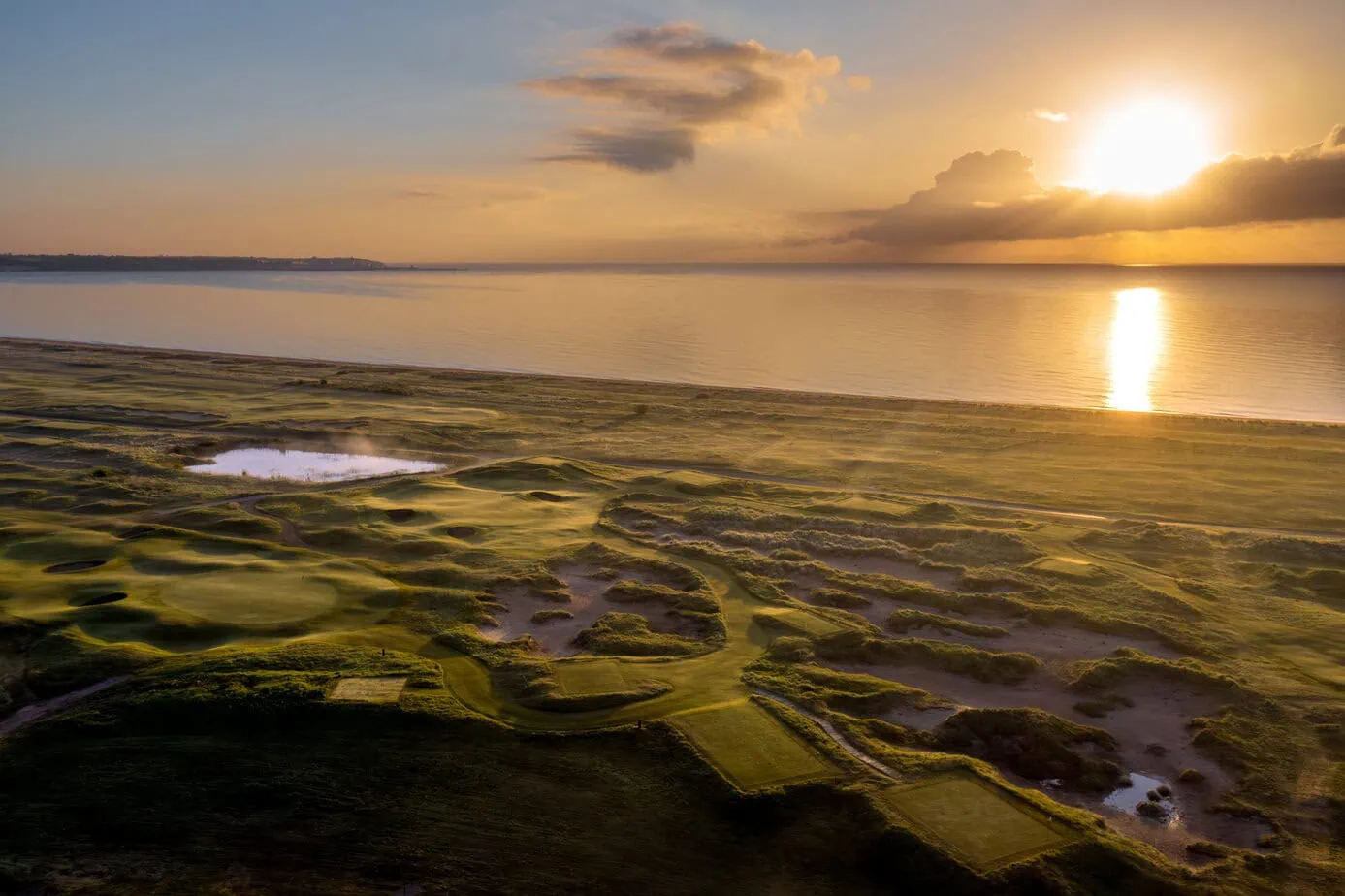
Some rounds of golf are magical. Anyone who plays a round early in the morning or late in the afternoon at the Prince’s Golf Club on the Kent coast and eventually reaches the coastal holes will discover the appeal of first-class links courses. On one side, dunes and the sea; the wind with its loud sounds; the salty air; and, to top it all off, a challenging golf hole that unfolds before you—hidden among beach grass and varied rough. This is how world-class golf blends with an outstanding experience of nature.
Open Qualifying Course
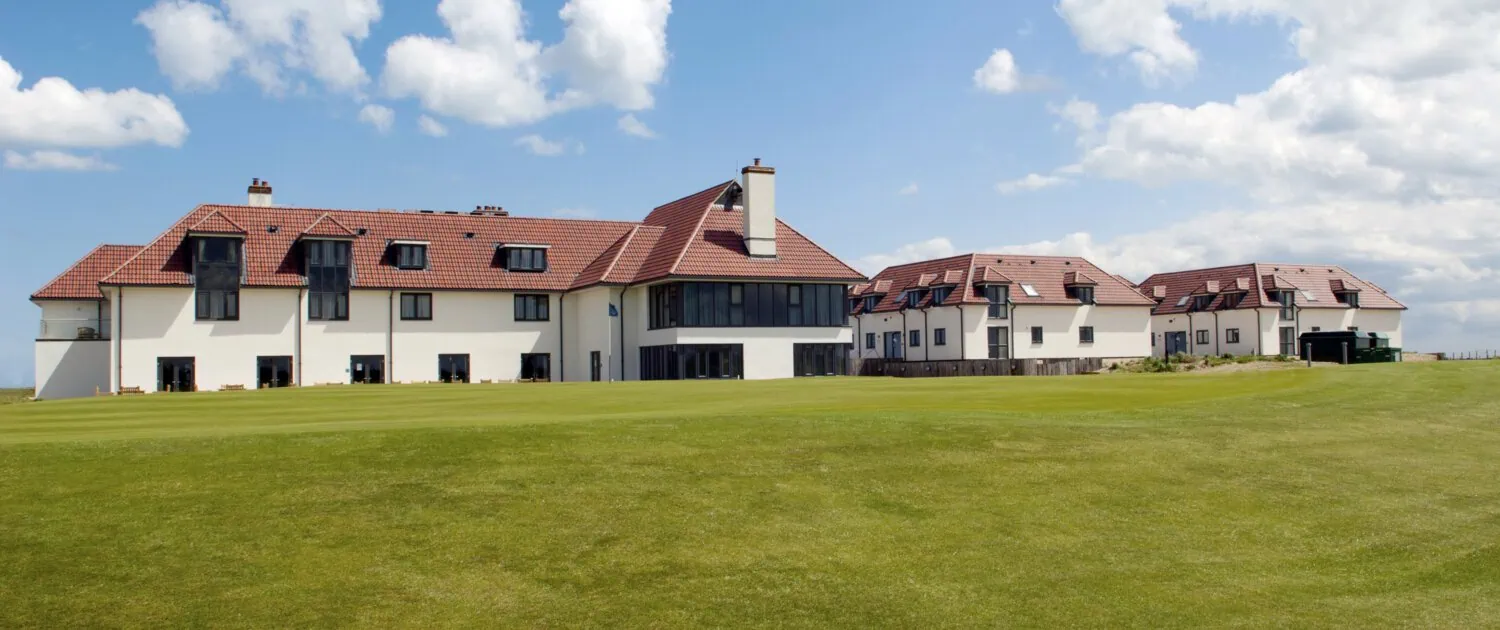
Prince’s Golf, a 27-hole club that reopened in 2021 after more than three years of renovations, is a special destination for anyone looking to take advantage of the summer for a short getaway from mainland Europe—whether by ferry or through the Eurotunnel—to England. Less than a quarter of an hour’s drive from the Open Championship course at Royal St. George’s, Prince’s offers a links-style golf experience that’s easily bookable even for green-fee players and vacationers. A small hotel with apartments and rooms is attached, and the quality of the golf course is undisputed following its renovation. In 2027, the course—which, with a green fee ranging from 100 to 215 pounds per round, is significantly more affordable than Royal St. George’s—will once again be among the qualifying courses for The Open.
If you want to get a sense of how a dune landscape is being brought back to life, you’ve come to the right place. As part of the renovation, all atypical bushes and shrubs were removed from the 27-hole course, and numerous new sandy areas were created between the holes. These are not designed as traditional bunkers, but rather as spacious, wild sandy areas.
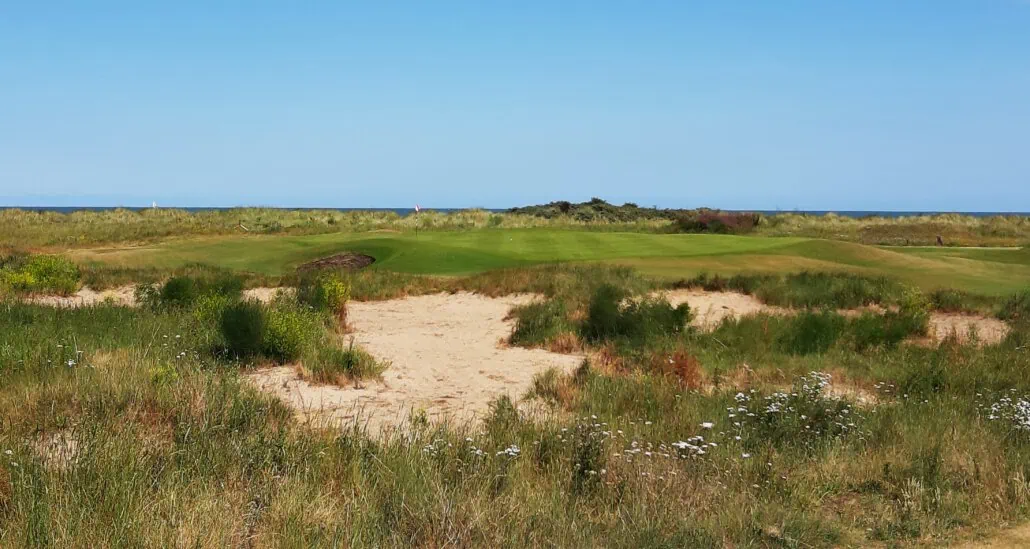
Sand plays a key role in the golf club’s sustainability plan, which is also certified by GEO. “We excavate sand from the site, screen it, and then re-use it on the course”, explains Course Manager Aaron Launchbury. The project is being carried out in consultation with Natural England. Invasive species keep regrowing in the rough areas and must be removed. “In doing so, we leave behind new dune slacks and sand scrapes. Sand, as a natural material, is thus part of a closed ecological cycle. Sand movement, temporary flooding, and natural succession are intended to become more effective again. This creates moist microhabitats in the newly formed depressions during the winter, while they dry out in the summer and provide nutrient-poor sites for specialised species.
The dune landscapes of Sandwich Bay, which formed primarily after the last Ice Age 6,000 to 10,000 years ago, benefit from this. Along the Prince’s Golf Club, there is a highly dynamic coastal ecosystem consisting of dunes, wetland depressions, and open sandy areas, where sports infrastructure and biodiversity coexist.
As part of a biodiversity monitoring project on golf courses commissioned by the R&A in St. Andrews, numerous typical dune and limestone indicator plants have been documented at Prince’s, including several orchid species such as the pyramidal dog’s-tooth violet, the helmet orchid, and the autumn helleborine. The variety of plants is enormous: beach grass is found in the dunes, and various heather species also appear in the new sandy areas. One small habitat follows another. With a total area of 134 hectares, 100 hectares alone are reserved for semi-rough and rough areas. The entire golf course, like the entire dune landscape, is a place in constant flux. Sandy and vegetated areas expand and then merge anew. A fascinating tapestry of living natural landscape.
For the golfer, who is preoccupied with the attractively undulating greens, a good mix of challenging holes, and—above all—the constantly shifting wind, the round of golf remains a memorable experience of nature. No, the goal here isn’t just to sell nature, says Launchbury. But players automatically take that experience of nature with them.
Golfers are usually unaware that behind the golf course—which will host the Walker Cup in 2030—lies an infrastructure that must also meet ever-increasing sustainability requirements. In particular, the issue of irrigating the playing surfaces—a sensitive topic in the United Kingdom—has been resolved here. For one thing, all the water used in the small hotel, the lodge, or the clubhouse is not pumped into the sewer system but is filtered and then directed into a storage pond. There, it is available for irrigation, just as is a certain amount of water from the North Stream, which runs along the coast.
Climate change has long been making itself felt here as well: “We’re having wetter and milder winters, which increases the risk of disease,” the course manager sums up. “It also means people are playing more.” At the same time, summers are increasingly dry and hot, making it necessary to irrigate as efficiently as possible.
You can often experience hot days in Kent. That’s when Prince’s Golf Course becomes a special experience. On the hard, dry fairways, the balls roll on and on. Just as they should on classic links courses. The inevitable search for balls in the beach grass is all part of the fun. It’s an outing you shouldn’t be too quick to curse. If you look closely, you might spot a species or two that would delight a botanist.