
Biodiversity lexicon: S for structural diversity
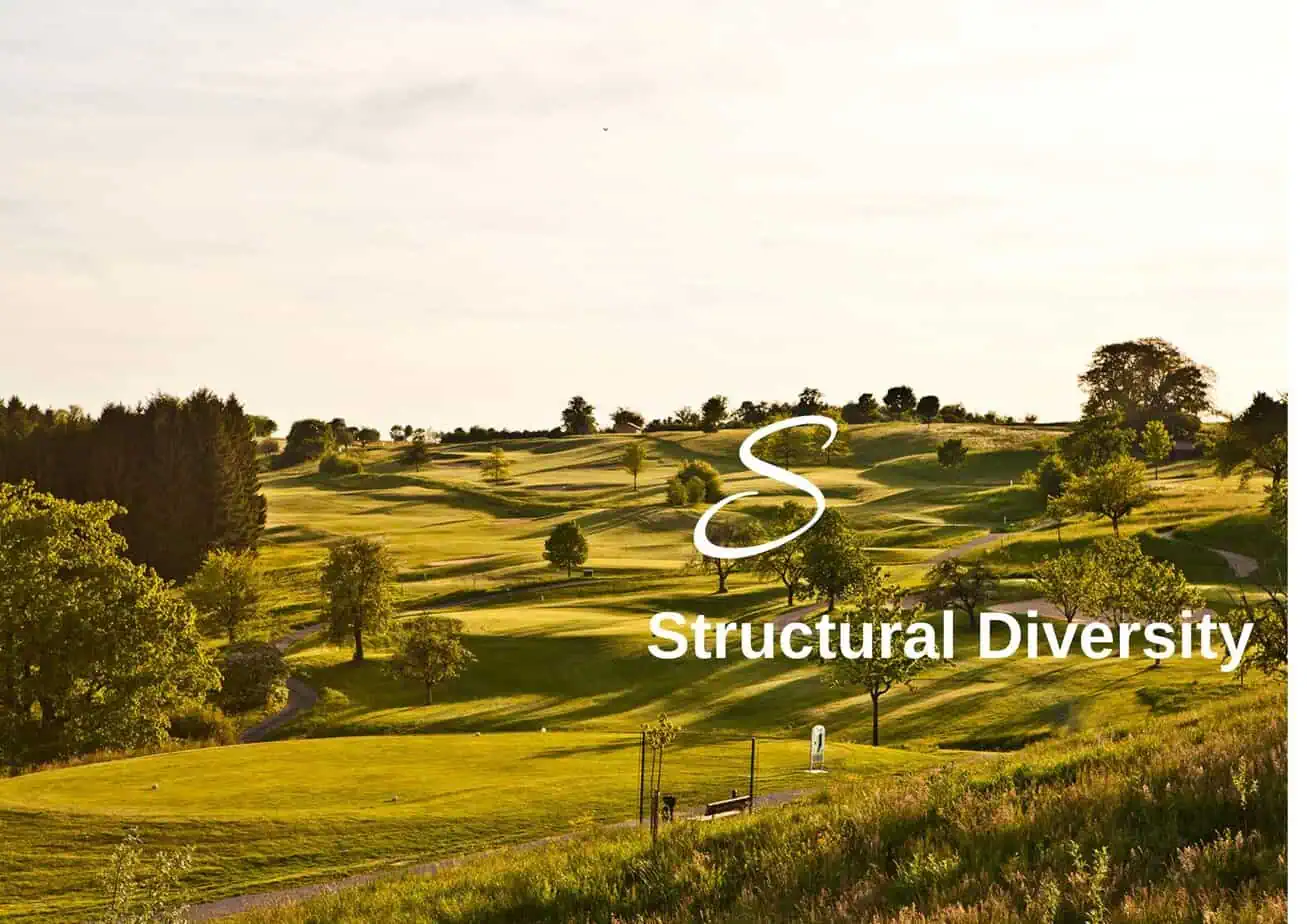
Structural diversity describes the spatial organization of a habitat – i.e. how many different layers, transitions and small structures there are in an area. The more diverse these structures are, the more species will find suitable conditions and retreats. The term structural diversity is therefore also used when analyzing golf courses. After all, there are also very different areas here in addition to the fairways. A distinction is made between vertical and horizontal structural diversity. While the vertical analysis includes, for example, tall trees, shrubs and open patches of ground, horizontal differences involve, for example, the alternation of dense, light, dry or damp areas.
Positive for biodiversity
High structural diversity creates many ecological niches in which different species can live side by side. This increases biodiversity and makes ecosystems more stable and resistant to disturbances such as heat waves, heavy rainfall or pests. Studies show that structurally rich forests and other diverse habitats can fulfill more functions at the same time: Carbon storage increases, the water balance is more balanced and there are more habitats, which is good for biodiversity.
The following applies to extensive areas on golf courses: flower-rich roughs, hedges, fringes, ponds, islands of old wood and extensively maintained meadows significantly increase structural diversity. If fairways, playing surfaces and rest areas are deliberately planned as a biotope network system, core areas and buffer zones are created that enable species migration and stabilize populations in the long term.
Practical consequences
Biodiversity projects on golf courses therefore focus on measures that specifically promote structural diversity. These include, for example, the conversion of species-poor lawns into flowering meadows, the creation of fringes and flower strips as well as allowing dead wood and old grass strips to grow. A differentiated maintenance concept with different mowing times and intensity of use is important to ensure that different structures develop and are maintained throughout the year. Regular monitoring of species diversity shows how structurally rich areas are developing and provides the basis for continuously adapting management decisions.




 Golf Sustainable