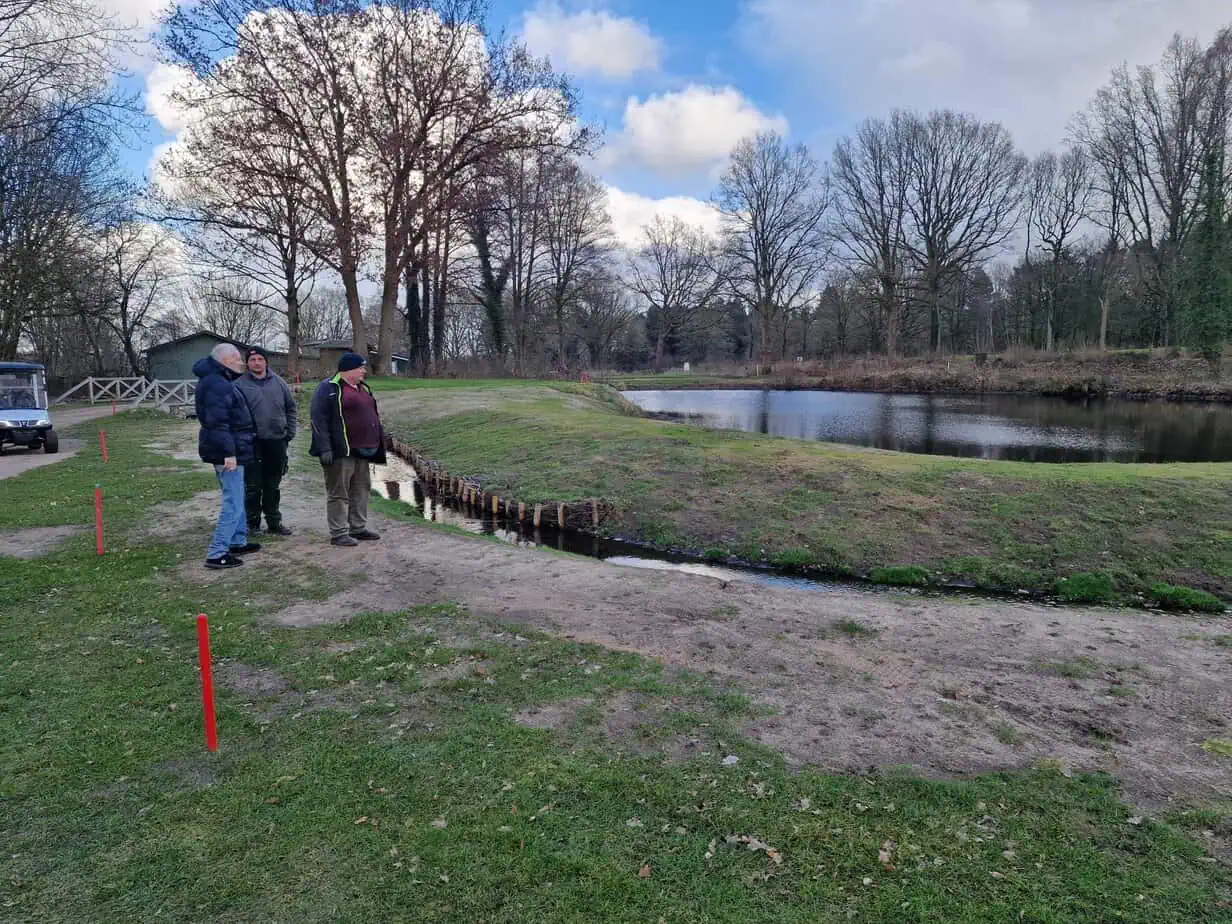
Today, the Sellbek meanders visibly through the landscape of the Mittelholstein Golf Club Aukrug – a near-natural stream that disappeared underground just a few decades ago. The construction project is a joint construction project between the Aukrug Nature Conservation Ring, Mittelholsteinischer GC Aukrug and the local nature conservation authorities and is therefore a prime example of how meaningful cooperation can work when it comes to golf and nature conservation.
“A golf course for golfers only – there’s no getting away from this view at GC Aukrug in central Schleswig-Holstein.” The traditional club from Schleswig-Holstein has consciously repositioned itself in recent years. Cooperation with scientists, conservationists and regional initiatives now characterize the development of the course. Projects such as Golf Biodivers or the “Blütenbunt-Insektenreich” initiative of the Schleswig-Holstein Nature Conservation Foundation show the ecological potential of golf courses – for example in the creation of species-rich meadows or the promotion of insect populations.
However, the Sellbek, a tributary of the Bünzau, is at the center of the current measures. Like many small watercourses in Germany, it was culverted around 60 years ago – an intervention that brought agricultural and infrastructural benefits, but had serious ecological consequences. Piped streams lose their natural dynamics, habitats disappear and water quality suffers.
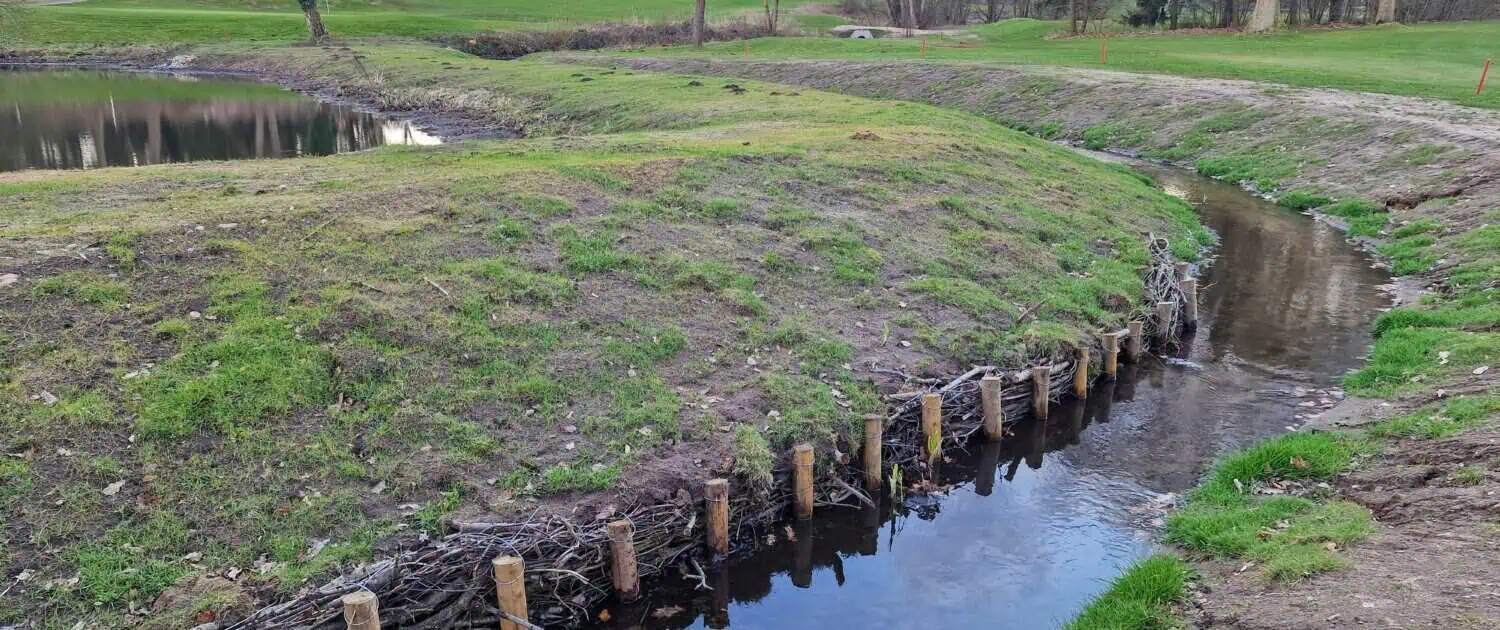
The renaturation of the Sellbek is now reversing this process. Over a period of several months in 2025, the watercourse was uncovered, desilted and redesigned in a near-natural way. Under the direction of a civil engineer for water management and accompanied by experts from the Aukrug Nature Conservation Ring and the Lower Nature Conservation Authority, new structures such as so-called bed slides were created. These shallow transitions allow microorganisms to cross the banks and open up new habitats.
More species – healthier ecosystem
The so-called macrozoobenthoses – invertebrate organisms such as insect larvae, worms or small crustaceans that live at the bottom of the water – benefit in particular from this. They form the basis of the aquatic food chain and are considered a sensitive indicator of water quality. The more diverse their species composition, the healthier the ecosystem. Renaturation therefore not only improves the landscape, but also the ecological function of the watercourse.
For the golf club itself, the project involved comparatively little financial outlay. The main burden of the costs was borne by public authorities, while the club’s greenkeepers, above all Arndt Harbeck and his colleague Malte Jeroschweski, mainly took on practical work such as laying old drainage pipes. “It was really interesting to see how much money goes into a project like this and how valuable it is for the authorities,” summarizes Harbeck.
The commitment has also met with approval from the members. “The membership was very interested and received everything very positively,” reportsgroundsman Heinz-Peter Gloistein. In fact, the course has also gained visually as a result of the measures: Open watercourses, near-natural bank zones and flowering border areas visibly enhance the fairways.
One principle remains central to the club: golf remains the focus. Nature conservation measures are implemented in a targeted manner so that they do not interfere with play. New flowering meadows are deliberately created outside the main playing areas, for example by converting little-used areas or extending existing meadows. In this way, ecological and sporting interests are reconciled.