
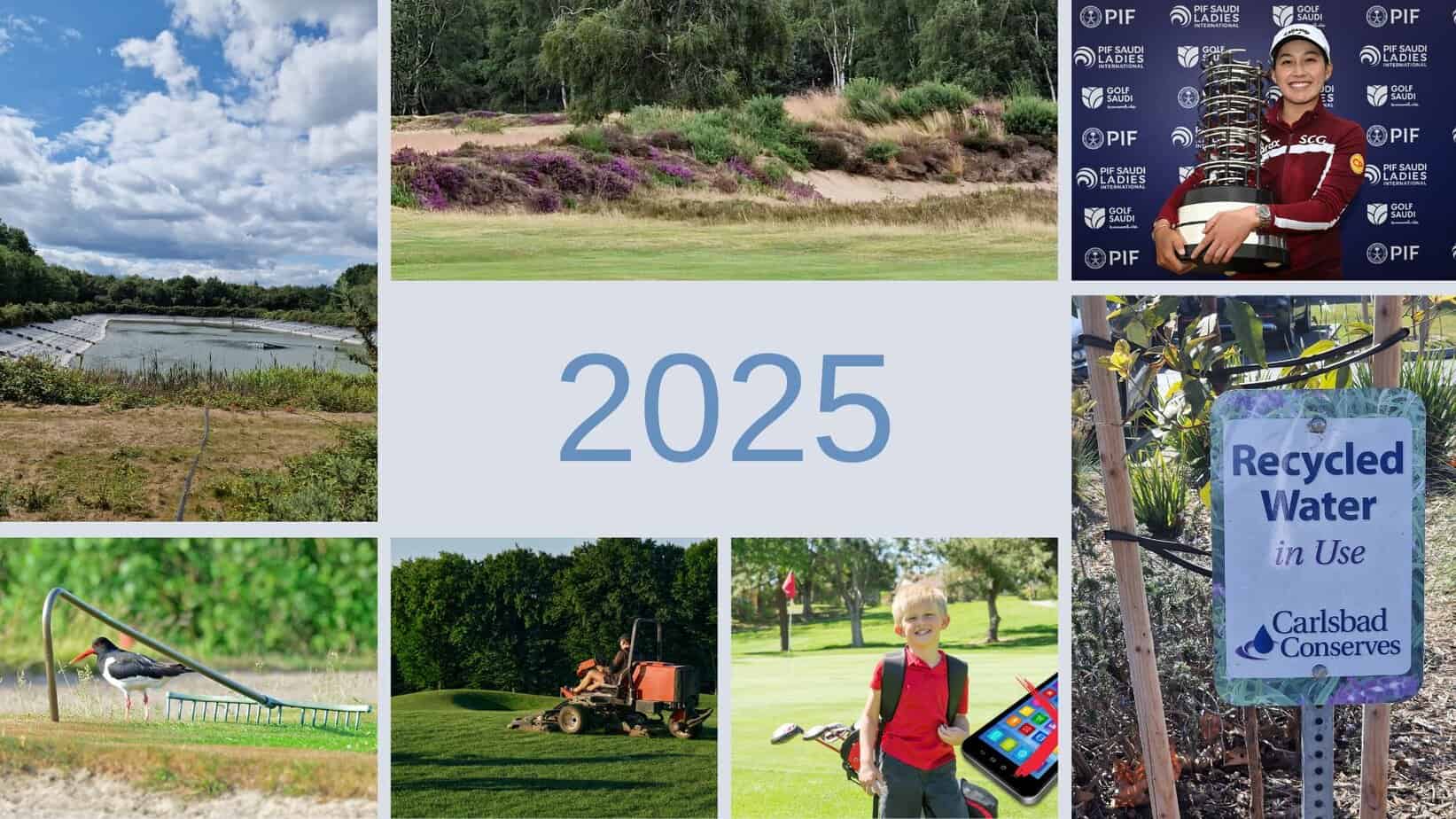
Unpredictability is in the air. Uncertainty about the future. What will climate change do to golf, how much erosion will links courses have to endure, how many more fires will sweep across California or Spain? As an outdoor industry, golf is particularly affected by climate change. The depressing thing about this fact is the knowledge that the weather is not a partner for a deal. It will not be negotiated with. We don’t know what this will mean for the sport in the future, to what extent it will be economically viable – we can only speculate.
The dance on the US volcano
The leading market, the USA, is going from one record to the next. According to the National Golf Foundation, the number of golfers is growing, as is the number of rounds played. New golf courses are being built. And yet the feeling of dancing on a volcano remains, because the extremely golf-affine states such as Florida, Arizona and California are increasingly suffering from water shortages, extreme weather conditions and fires. The Altadena Golf Course in Los Angeles, which was completely destroyed by fire last year, is still not open. Instead, the course has again been struggling with the extremely heavy rainfall over the past few days.
Anyone traveling through America as a golfer experiences a strange country in which open political discussions are hardly ever held in clubhouses or at trade fairs. When the word climate change is declared politically inappropriate and economic studies and the work of meteorological institutes such as NOAA are massively restricted or suppressed, it is difficult to discuss how an outdoor sport should adapt to the effects of this very climate change.
Politicization and sportswashing
The fact that US President Donald Trump is a golfer has damaged the image of golf – especially in Europe. There is hardly an important meeting with another head of state, hardly a Trump family real estate project that does not make reference to the fact that policy is being made at the Trump-owned Mar-a-Lago golf resort or that the Trump family is pushing ahead with golf projects in the Middle East such as the Aida project in Oman. Golf was even mentioned in connection with the development plans for the Gaza Strip. The fact that golf is more closely linked to a polarizing political agenda than ever before is a real burden for its neutral positioning.
The political entanglements with Saudi Arabia, which are known to exist in soccer as well as in other sports, have not let go of golf this year. The role of the PIF and Aramco as sponsors of the LIV, LPGA and LET tours remains dominant and the accusation of sportswashing omnipresent after Saudi Arabia once again blocked binding phase-out dates for fossil fuels at COP 30. The watering down of production limits in the UN plastics agreement by the Saudi delegation, among others, did not make the situation any easier. Golf has a special relationship with both fossil fuels and plastics, as plastic pollution is a serious issue in terms of soil and water protection, and persistent CO₂ emissions from fossil fuels do not make it any easier for golf to deal with extreme weather caused by climate change.
Extreme weather causes instability
Extreme weather, even if it is not partly the result of climate change, has long been causing growing instability on the professional tours, in golf tourism and on many local golf courses: Hurricane Jerry, which passed through the Caribbean in October, caused courses and hotels to be closed for weeks. Typhoon Nakri caused tournaments to be shortened at the Asian Swings of the tours. The final qualifying round of the LET in Morocco got off to a late start. At the same time, the increase in hot days over 35 is increasingly becoming a health risk for the older clientele in golf. Who will protect senior citizens from themselves if they want to head out for their weekly tournament at 12 noon even when the temperature is at record levels?
The economic consequences could no longer be overlooked in 2025: The Altadena Golf Club in Pasadena was a victim of the fires around Los Angeles in January. The Genesis Invitational at Rivieria Country Club had to be postponed due to the fires. The Kapalua Resort on Maui became the focus of a water rights distribution battle in the summer due to the ongoing drought. The Sentry tournament of the US PGA Tour was canceled. It was the most notable setback to date for the professional tours in dealing with the issue of water and a clear indication that rapid adaptation measures are needed.
Increasing ambitions among associations
In some areas of the golf industry, these have long been taking place, driven by government regulations, ambitious associations, extremely committed companies or individuals. A leading group in Europe has long since formed around the Scandinavian countries, the Netherlands, France and Switzerland, which is striving for topics such as data collection on energy, water consumption and fertilizer use, CO2 reduction or even pesticide reduction and even complete avoidance. The major European golfing nations of England and Germany, as well as the European Golf Association, are also becoming increasingly ambitious in this area. The discussion about avoiding pesticides is particularly important if golf is to continue to be marketed as a healthy sport.
This year has also shown that the combination of golf and nature offers some of the greatest opportunities for the outdoor sport of golf. The positive effects of nature on mental health, the reduction of heat stress and the improvement of air quality through green spaces, the possible escape from noise pollution and digital detox during a round of golf – these are all positive factors that golf as an outdoor sport can positively contribute to its marketing if it continues to succeed in preserving its natural environment.
Fortunately, large national collaborations with recognized international nature conservation organizations such as WWF, NABU or Audubon International are no longer an isolated case in golf. They work together with golf courses to enhance and preserve natural areas, promote greater biodiversity and support soil and water conservation. The value of the large areas of golf courses as biodiversity hotspots and wetlands is high. The joint steps taken by the USGA, R&A and STERF in the area of research are an important signpost in this regard.
The progress made on the event side is also encouraging. The DP World Tour with the major Rolex tournaments is making progress towards climate neutrality. Plastic avoidance, environmental education measures, waste avoidance, the use of renewable energies – these are all points where emphasis is being placed. At the Ryder Cup in New York, on the other hand, sustainable event management was not really a focus topic. If you click on the term sustainability in the footer of the official website rydercup.com today, you will come across the explanation of the Green Drive Initiative of the Ryder Cup in Italy more than two years ago. There is no mention of the event in the USA. The next Solheim Cup in 2026 at Bernardus Golf in the Netherlands, which the organizers are already promoting as the most sustainable Solheim Cup ever, offers hope. In view of the Dutch Golf Association’s determination to achieve its own ISO certification, one can hope that the goals will be realized. And the Camiral Resort in Girona, Spain, the venue for the 2031 Ryder Cup, is also considered ambitious when it comes to issues such as water management and biodiversity.
Network of sustainability supporters is growing
So they do exist – a multitude of individual projects that promote a sustainable transformation of golf. The people behind such measures, ambitious greenkeepers, secretaries and sustainability managers at the courses, as well as the individual golfers who work tirelessly to make golf more sustainable, are the sport’s greatest asset. They do not accept the argument that individuals cannot achieve much in the fight against climate change. Because the number of people in golf who support this attitude has continued to grow in 2025, it was an overwhelmingly good year for sustainability. Once again, it became clear that nobody can escape the issue.
INSERT_STEADY_NEWSLETTER_SIGNUP_HERE