Patience, strategy, consistency: the GC Abenberg’s recipe for success
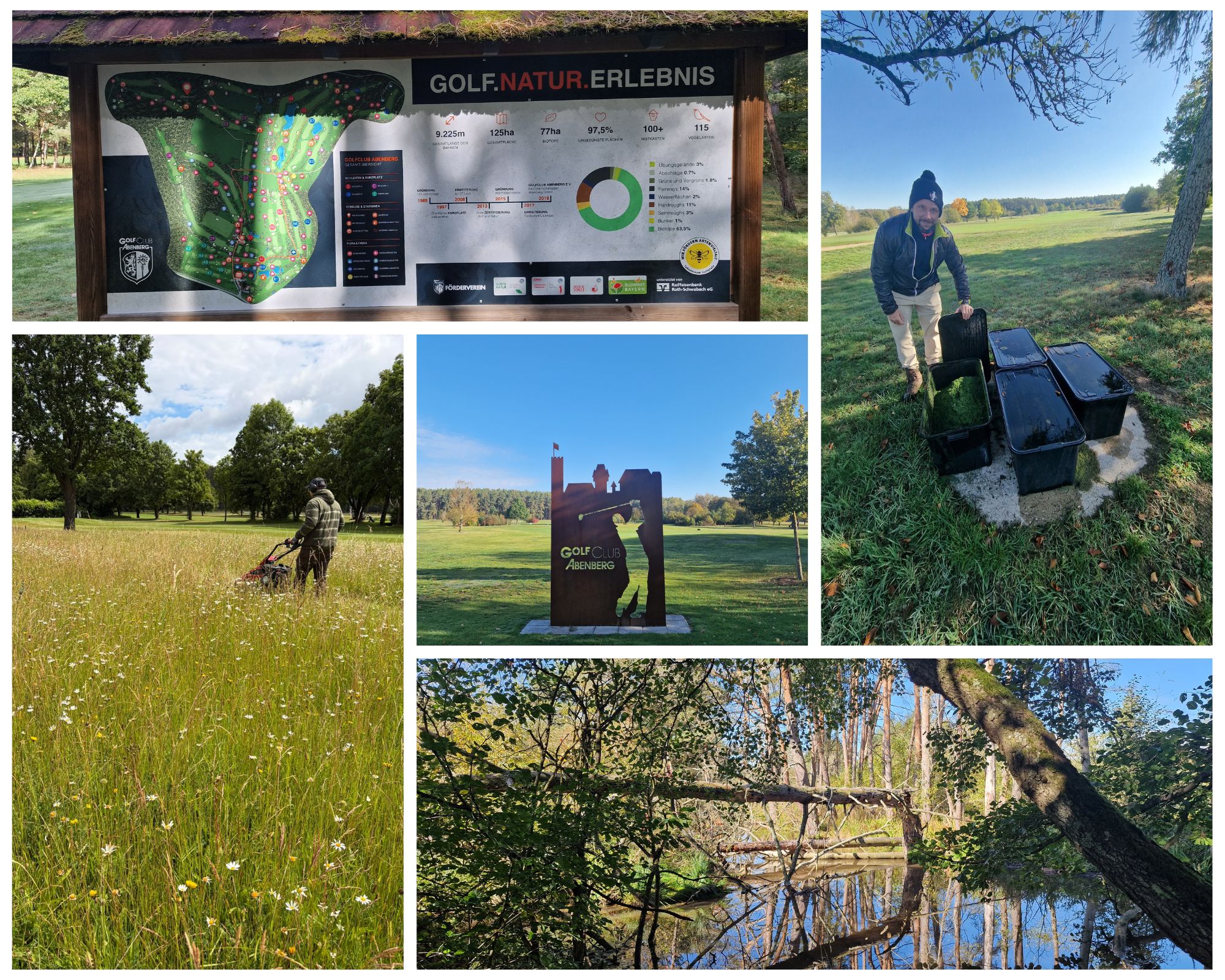
Three pillars form part of GC Abenberg’s recipe for success: patience, a long-term strategy, and consistency in club management and greenkeeping. The Franconian golf club is one of Germany’s leaders when it comes to the exemplary implementation of nature and environmental measures. Awards and certifications from Golf & Nature or the Bavarian Flower Pact of the Bavarian Golf Association in cooperation with the Bavarian Ministry of the Environment . However, the sheer number of projects becomes clear only when you see them in person during a tour of the 125-hectare facility.
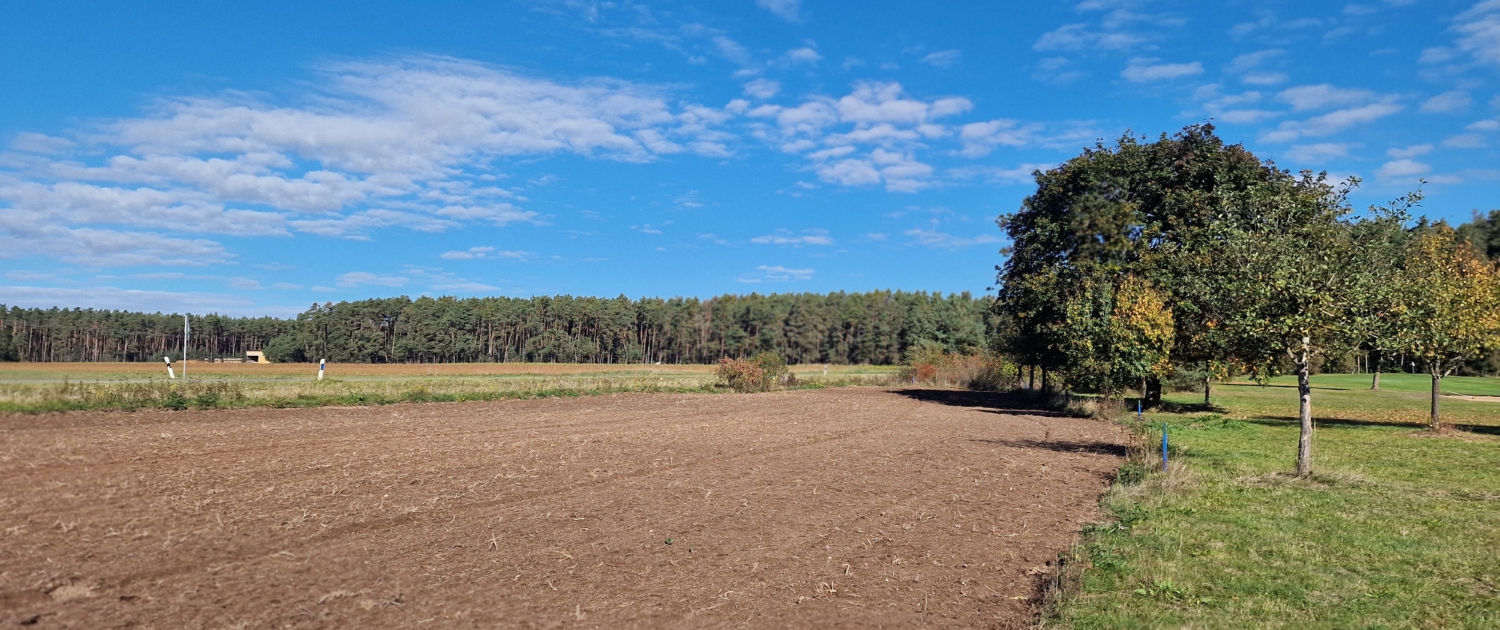
Perennial flowering meadows, 13 hornet boxes, mapped birdhouses, deadwood piles – all of these are initiatives that depend on consistent care and benefit from professional implementation. Just recently, the greenkeeping team led by Headgreenkeeper Alexander Bayer created a flowering meadow covering around 2,000 m² along the outer edge of the short course. “We always coordinate the seed selection closely with Rieger-Hofmann,” summarises the Course Manager. “Then, over the course of a few weeks, we send in a few photos and discuss the progress, asking whether we’re doing everything correctly.” Bayer maintains test plots on the course with different soil types and varying levels of sunlight, but using the same seed, in order to assess their development. Not mulching the areas benefits the meadows. Containers for grass clippings are situated between the individual fairways. The clippings are regularly disposed of at a biogas plant.
The club’s willingness to consult with experts beyond the golf course gives it a knowledge advantage that benefits both wildlife and plants. With help from a hornet expert, 13 colonies have been relocated to hornet boxes and housed there, a situation unique in Germany. In collaboration with experts from the Landesbund für Vogelschutz, a digitally managed mapping system for bird nesting boxes has also been developed; this is kept up to date and can be viewed on the club’s website. The collaboration with the LBV experts has been running smoothly for years. A few times per year, so Greenkeeper Werner Nißlein, who, as Alexander Bayer’s predecessor in the role of head greenkeeper, helped launch many environmental projects, said that LBV experts are on site to assess the current status of the projects.
Six hectares of contiguous habitat
The six-hectare biotope along holes 4 and 5 looks almost like untouched wilderness; several beaver families have long been busily using it to build their dams. As a habitat for insects and amphibians, this self-sustaining area provides tremendous added value. However, the beavers occasionally venture into other areas of the golf course – “and then, of course, we have to ensure traffic safety,” sums up Bayer, who has been in charge of greenkeeping since 2024.
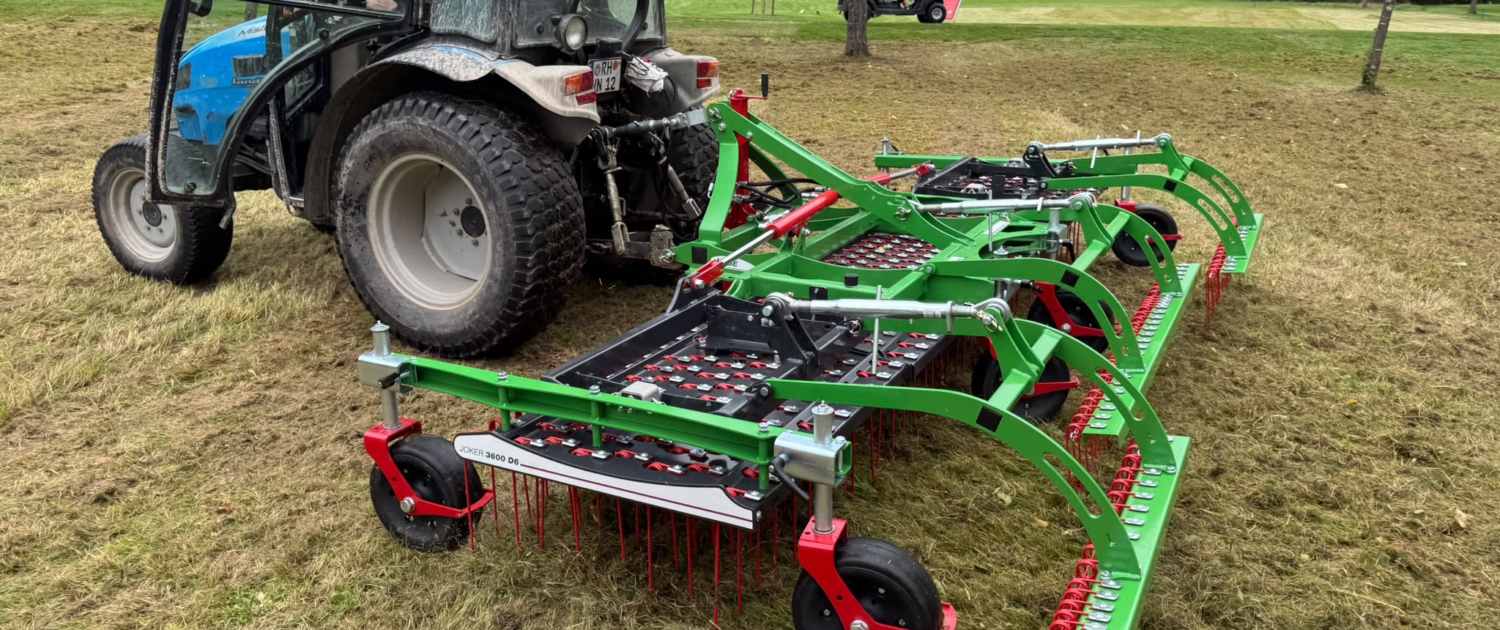
The foundation for the successful work of the golf club – which has over 1,000 members – in the area of nature and the environment is a support association founded in 2015 that is dedicated to “promoting nature conservation and landscape preservation at the GC Abenberg e.V. golf course and the promotion of golf among young people.” Whether it was the construction of the new washing area, the purchase of seeds, or the acquisition of the new harrow – which helps the meadows thrive even better – all of these investments were made possible with the support of the support association.
Drought: Challenge Number 1
The issue of drought is causing Bayer the most headaches. A glance across the course reveals that, despite the fairways being in excellent condition with no bare spots, the nearly dried-up Kaltenbach stream and a completely dried-up pond along the A4 fairway catch the eye. “If this continues indefinitely, we’ll have to come up with a solution,” Bayer muses, looking at the clay-like ground where currently only the footprints of golfers searching for their balls are visible.
Last summer, Bayer and his team spent over 750 hours manually watering the greens and fairways to maintain the courses’ usual quality despite the prolonged drought and limited water withdrawal allowances. He is now considering optimising the irrigation system to be better prepared for similar summers.
Communication is becoming increasingly important
For golf course irrigation, communication plays a crucial role for him. “Public hiking trails run through the golf course, so irrigation is becoming an increasingly important issue.” The golf course should document its value to nature – and thus to the general public – in this regard. Numerous information signs highlight the Bavarian Flower Pact and the Golf & Nature initiative, outline the layout of the grounds, and explain the golf course’s approach to habitat design.
In this way, the club’s golfers’ understanding of important biodiversity projects has grown over the years. There is no shortage of donations – and the greenkeeping team has plenty of project ideas. In that regard, participating in the Bavarian Flower Pact was a natural choice for the club. “We’ve just been certified by Golf & Natur with Golf for the fifth time,” Alexander Bayer sums up. Projects for the sixth certification are already in the works. The combination of top-class playing areas and the creation of high-quality habitats for flora and fauna – all of this can be successfully combined when the right conditions are in place: patience, strategy, and consistency.