Success for G&CC Seddiner See in the Largest Little Owl Project
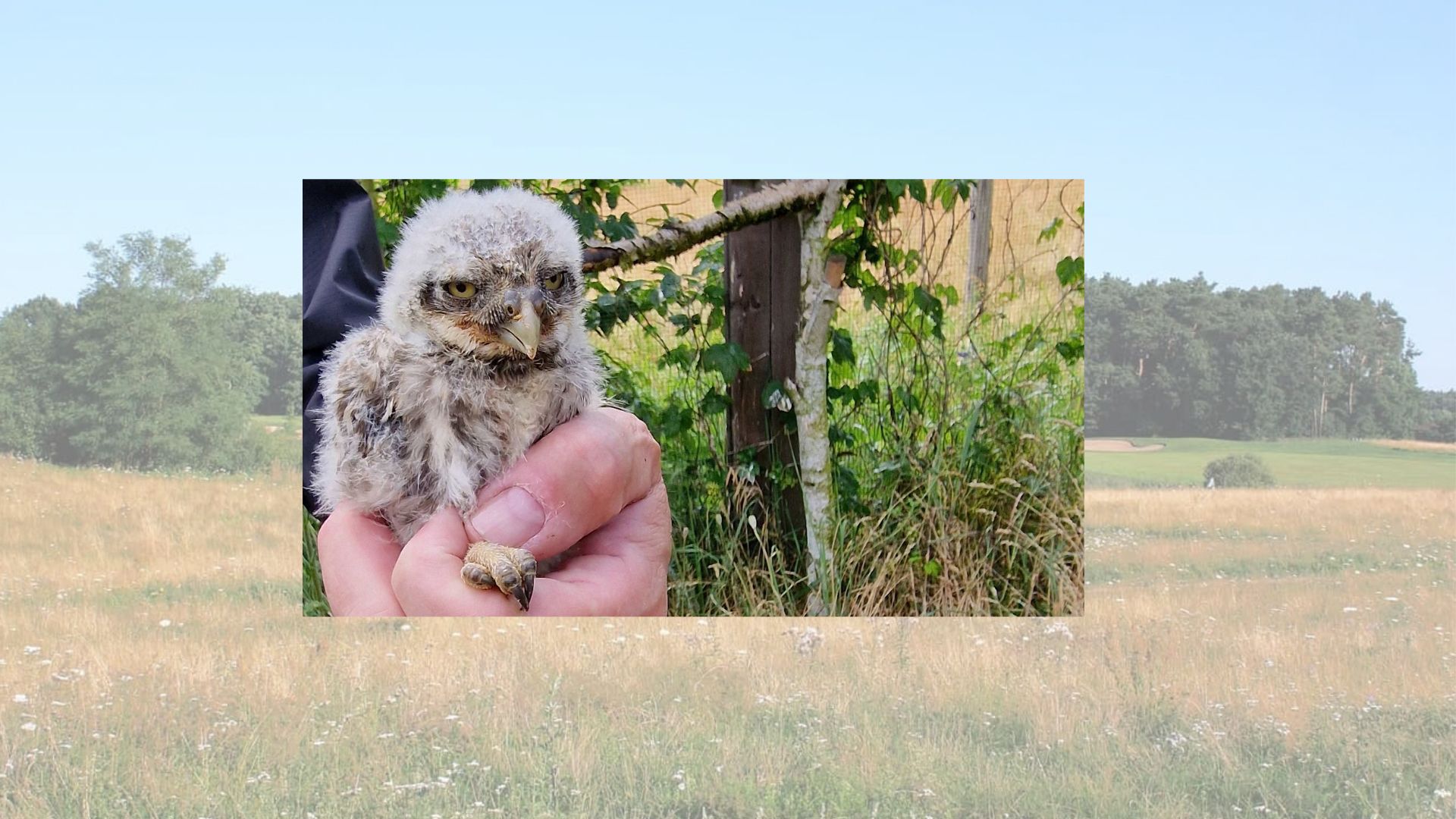
The G&CC Seddiner See is part of the most successful little owl project in Germany: Not a single little owl was recorded in the Nuthe-Nuplitz Nature Park in 2010. Sixteen years later, project manager Peter Koch of the Nuthe-Nieplitz Landscape Conservation Association speaks of “between 30 and 40 little owl territories” that we’ve identified during our monitoring. Some of the little owls that have reestablished themselves come from an aviary at G&CC Seddiner See, which has been participating in the project since 2014. “I wouldn’t want to miss this project for anything,” states Katja Ingenhoven, CEO of G&CC Seddiner See AG. “We continue to support the project and also have several members who contribute through donations.”
Starting from zero
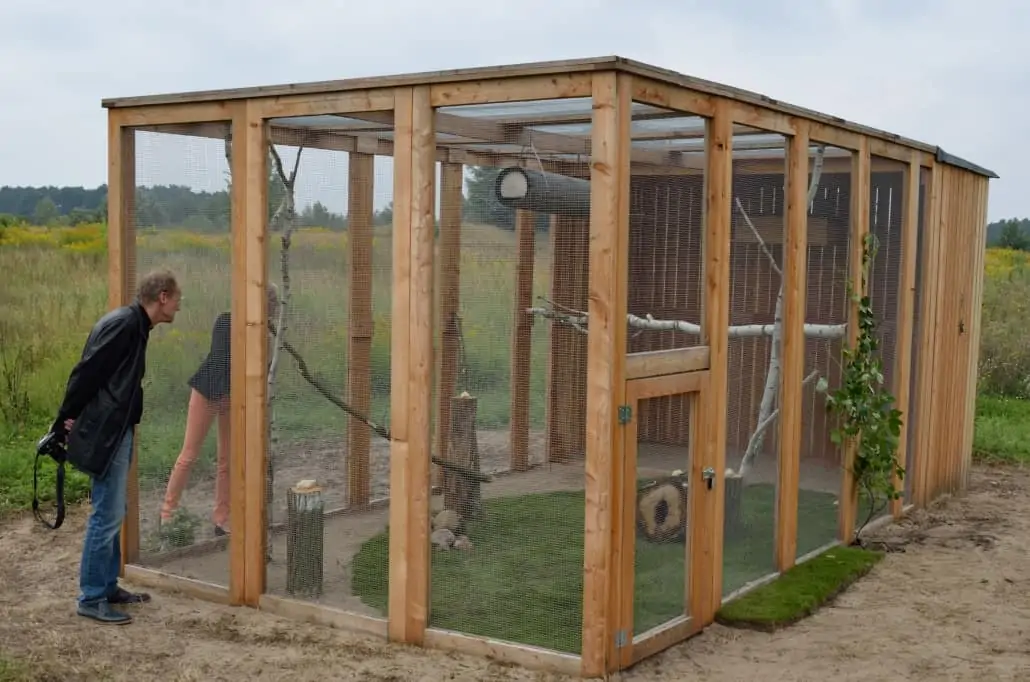
The aviary is not visible from the golf course and is tended to daily by the greenkeepers. “It’s really not much work,” says Head Greenkeeper David Duke. The pair of little owls that have made their home here are fed two day-old chicks each day. Every now and then, the aviary needs to be cleaned or tidied up; otherwise, over the past twelve years, the greenkeepers have become true little owl experts. “Now in the fall, you hear them hooting from the woods particularly often,” explains Duke, who has supported the landscape conservation association’s little owl reintroduction program from the very beginning.
“No other project in Germany started with zero little owls, so in that respect it’s unique and truly a great success for us,” Peter Koch sums up. “Projects like this are very long-term.” After 25 years, a total of 658 young and adult birds have been released into the wild. On average, each pair of little owls raised three chicks, but on average only 1.8 survived. According to Koch, the stone marten is now the biggest threat, which is why all the old nesting boxes are being replaced with models that the stone marten cannot access. “Projects like this are, of course, wonderful,” agrees Dr. Gunther Hardt, head of the German Golf Association’s Biodiversity Working Group, who once again awarded the club the Gold certificate under the “Gold & Natur” environmental seal in August 2026.
The open areas of the G&CC Seddiner See golf course are well-suited as a hunting ground for the little owl. “The little owl prefers small-scale habitats,” Koch explains: plenty of hedges, pastureland, and orchard meadows. It prefers areas where other animals live, simply because that’s where it can find food—including the mice that are so important to it. At the start of the project, he hadn’t considered the golf course as a potential partner. But an initial inspection of the grounds revealed that it was far more diverse than expected.
For the Landscape Conservation Association’s little owl project, the willingness of some members to donate was crucial because the aviary had to be purchased, food had to be paid for, and project funding was partially cut off in 2015 and 2016. However, the funding has since expired at the end of 2021; donations and little owl sponsorships are keeping the project alive. “We’d actually really like to have 100 pairs of little owls in the region,” Peter Koch said years ago, outlining the long-term goal. That’s likely to take a few more decades. But the G&CC Seddiner See is on board as a supporter.
The project:
- As part of a large-scale nature conservation project, an area that had previously been characterised largely by intensive agriculture – and was part of the Nuthe-Nauplitz Nature Park, which, including its outlying areas, covers more than 60 km² – was transformed between 1992 and 2004. This also created the conditions needed to reintroduce the little owl, which is listed on Germany’s Red List.
- In 2015, ten nesting tubes were installed on the golf course grounds as nesting sites, funded by donations. The club built an aviary (costing approximately 6,000 euros) and introduced a breeding pair of little owls. Golf club staff feed the birds daily.
- Since then, a total of ten adult birds and twelve juveniles have been released into the wild. As a result, a breeding pair settled near the town of Wildenbruch, not far from the golf course, in 2019 and has become firmly established, with annual breeding success.
- In total, the aviary on the golf course has been used five times since 2017 for reintroduction into the wild; that is, a breeding pair was placed there in the fall, and after they successfully bred and raised their chicks, the aviary was opened, and the family was released into the wild.
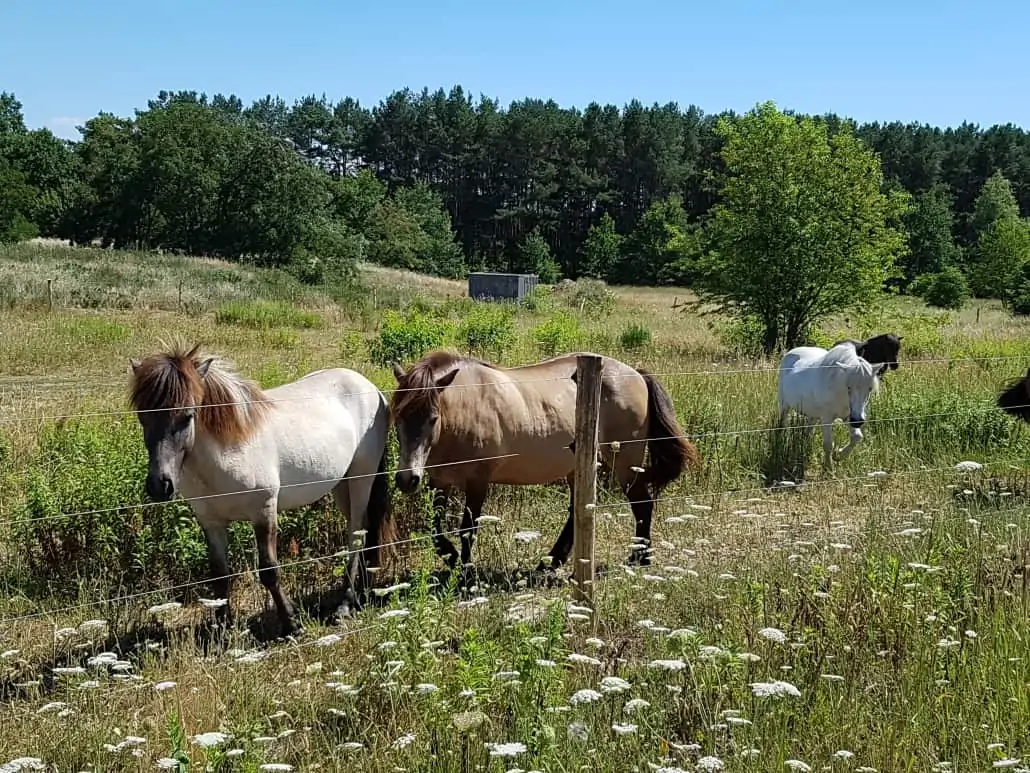
- To improve the little owl’s food supply, a fallow area on the golf course was converted into a horse pasture in 2018. The little owl prefers extensive grazing and favours short-grassed areas and flowering meadows with plenty of insects. The introduction of horses has made hunting significantly easier for the little owl.
- How do you count little owls? Spring is the main mating season. A sound device plays the little owl’s call, and any little owls nearby respond. The birds are then marked on a map.