
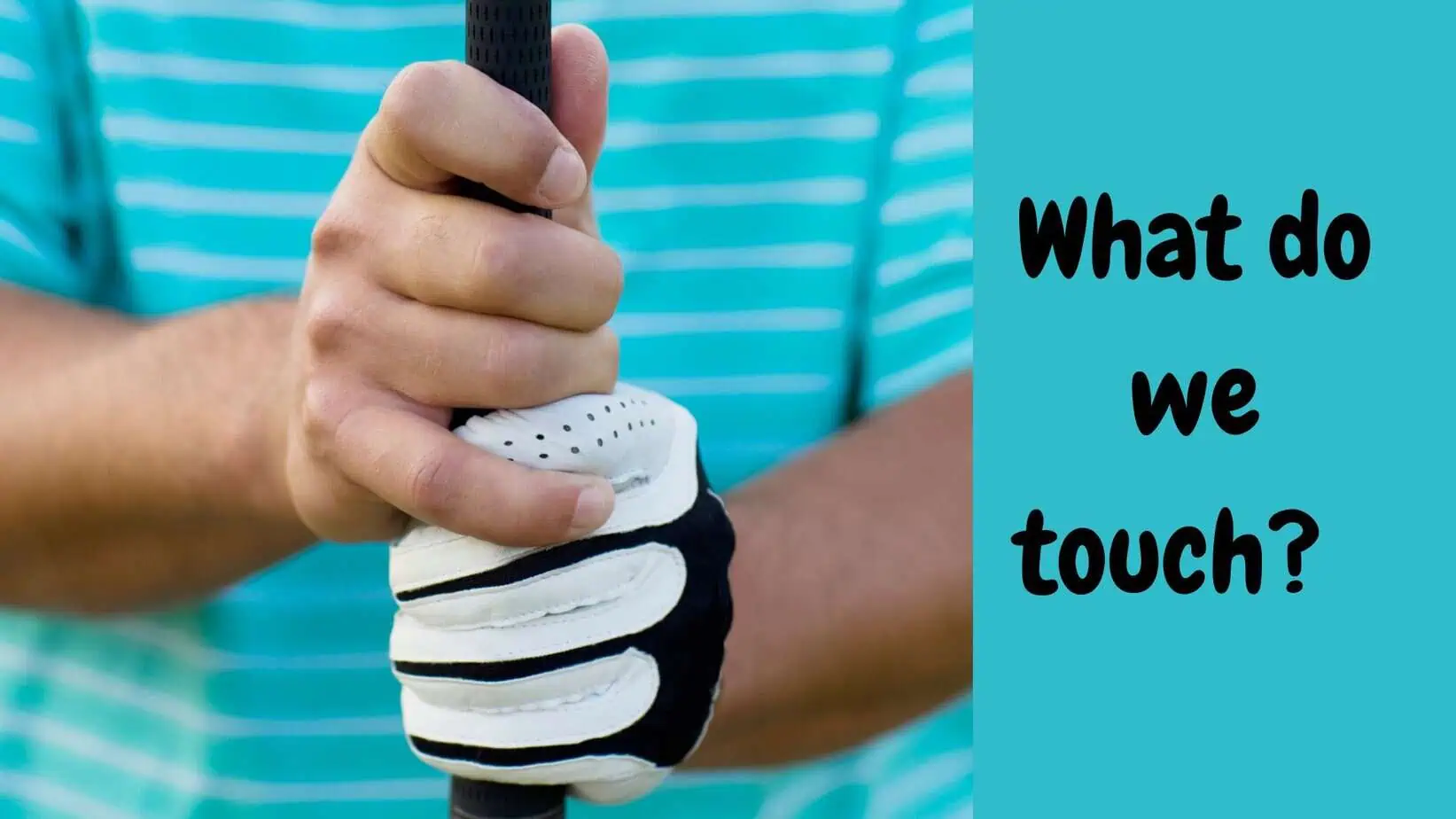
PFAS in golf gloves and golf grips – yes or no? Our survey of the most important manufacturers in the golf industry shows that transparency on the subject of Forever Chemicals leaves a lot to be desired, especially with the industry giants Titleist and TaylorMade. On the other hand, competitors such as Callaway score points with full documentation regarding the undesirable chemicals in their golf gloves.
Basically, PFAS (perfluorinated and polyfluorinated alkyl substances) are often used in the textile and leather industry for impregnation to make materials water-repellent, dirt-resistant and breathable. In leather or the fabrics of golf gloves, they are used for surface treatment during tanning or post-treatment to keep out moisture and improve grip in the rain. These chemicals do not degrade and are considered harmful to health and the environment, which is why the EU is discussing a complete ban.
Important for the consumer: Researching whether golf gloves contain PFAS or not is complicated. Textile labels such as OEKO-Tex Standard 100 or Bluesign completely rule out the use of PFAS, but were not used in any of the golf gloves we examined during our research. Retailers hardly provide any information about chemicals. Two examples: The retailers All4Golf and Golf House, which are extremely strong in the D-A-CH region, do not provide any information on their website about the use of PFAS in golf products, nor do they answer any questions about it. They did not respond to several inquiries from the editorial team. In contrast, the French sporting goods giant Decathlon communicates well on the subject of chemicals on its website and its willingness to provide information is excellent.
Decathlon can also refer to the usual test procedures and standards for its own brand Inesis. This sets a positive example for market leaders such as Titleist or Taylor Made, who are taking a dive when it comes to PFAS. Repeated questions from the editorial team about the use of chemicals were not answered.
In addition to the golf gloves, the golf grip is also a product that the golfer touches directly. That is why we have also Golf Pride and wanted to know: PFAS in the grips, yes or no. The answer: “To the best of our knowledge, Golf Pride products and packaging do not currently contain intentionally added PFAS as defined by the EPA in 40 CFR Section 705.3. We have received confirmation from all suppliers that PFAS are not used in any products or substances supplied to Golf Pride.” In short: Golf Pride does not describe the grips as PFAS-free, partly because it is obviously not willing to take 100 percent responsibility for all suppliers. In principle, however, golfers can assume that the grips do not have a PFAS problem.
Golf glove manufacturers at a glance:
- Callaway has also dispensed with PFAS in gloves since 2023.
- Hirzel does not use PFAS in its gloves.
- Inesis: All golf gloves are PFAS free.
- Nike has already replaced PFAS according to the current Nike Chemistry Playbook & RSL.
- Wilson: Although Wilson does not make a complete PFAS-free declaration for its gloves, it has very strict limit values and rules out the deliberate addition of PFAS.
- Titleist and Taylor Made: Neither company provides any information on the use of PFAS in their products, either on the website or on request.
- https://golfsustainable.com/en/tournament-gifts-great-presents-or-more-trash/