
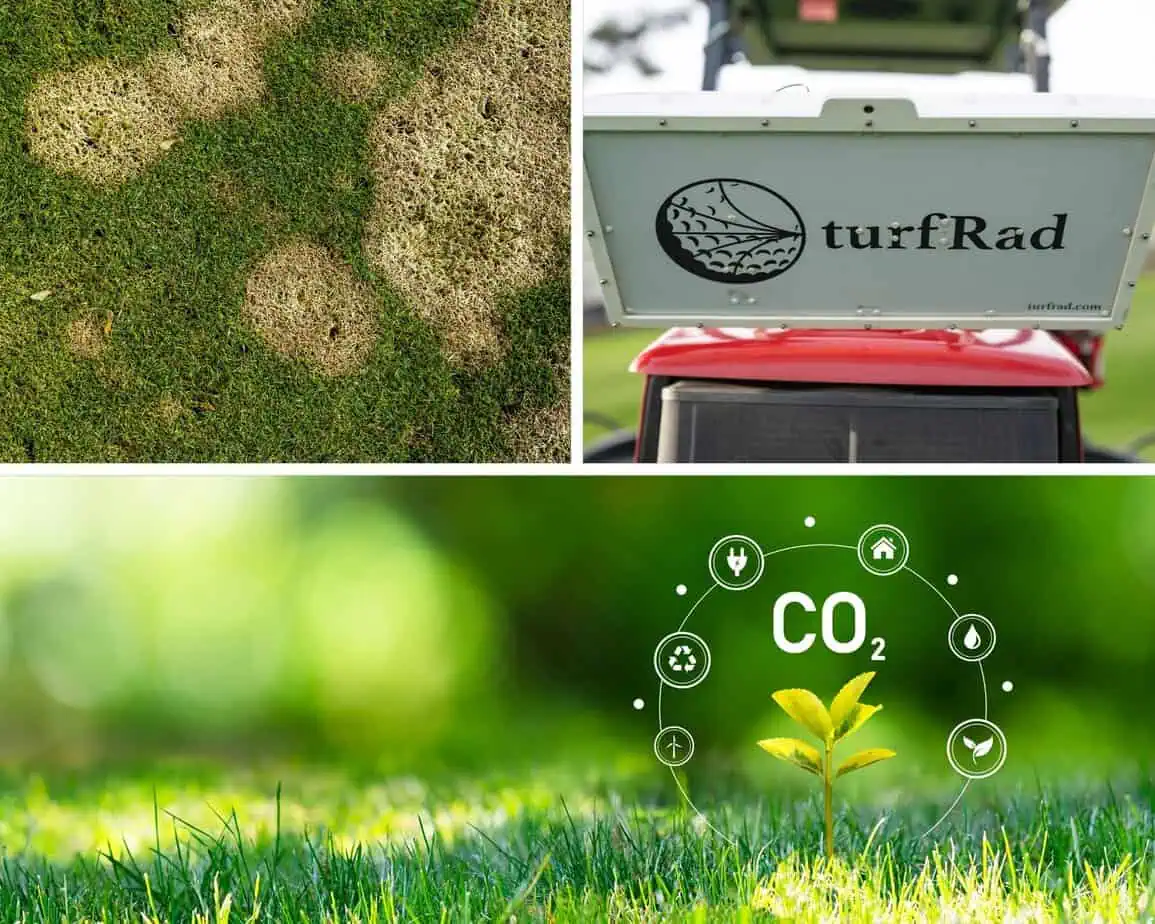
Dollar spot, water management and CO2 sequestration – these are the three major topics with which the International Turfgrass Research Initiative is now starting the scientific collaboration between STERF, R&A and USGA. At a kick-off event on February 24, the scientists from the first three teams to receive research grants presented their projects. After an elaborate selection process, they prevailed against other scientists last year.
Satellite data for irrigation
Under the leadership of Qiyu Zhou from NC State University, a team of five researchers from four universities will explore potential innovations in satellite data collection. These should help to reduce water consumption and, therefore, also water costs on golf courses. The aim is to create high-resolution soil moisture maps extending to a depth of 3 meters. In addition, the efficiency of precision irrigation should be compared with that of conventional irrigation methods.
CO2 content of the soil and CO2 emissions during maintenance
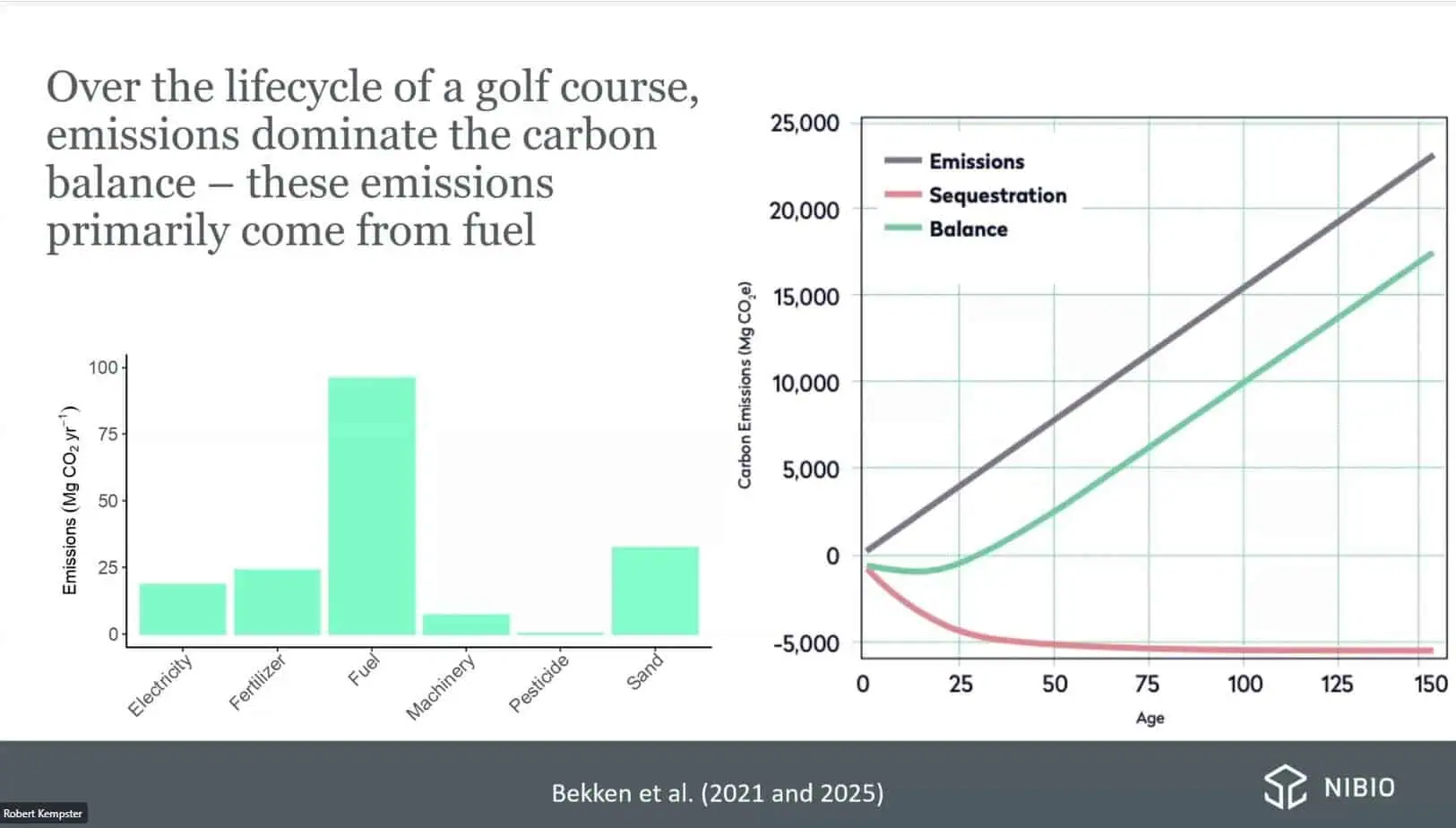
The scientist Robert Kempster is taking over the management of the project “Towards a climate-positive future for golf” from Michael Bekken, who is moving to Dublin for a research project. According to Kempster, the aim of the project is firstly to develop a globally valid procedure for determining the CO2 content in the soil of golf courses. In a second step, an equally valid basis for calculating a golf course’s management’s CO2 emissions is to be determined. According to Kempster, this will, in the best-case scenario, result in clear instructions on how to reduce CO2 emissions during golf course maintenance.
Dollar spot
Paul Koch, from the University of Wisconsin, and his team are researching the increasingly problematic turf disease, dollar spot. According to Koch, dollar spot is now the turf disease with the greatest economic impact on golf courses in the USA and is also becoming increasingly rampant in Europe, so the aim here is to develop new strategies for treatment – without the use of traditional fungicides.
Quality and acceptance of the golf course
All three research projects hit a nerve in the golf industry, as they address the quality of playing surfaces and, by extension, the attractiveness of golf. In the case of CO2, they also have a lot to do with the general public’s acceptance of golf. The fact that three of the most important organisations in golf – the R&A, USGA and STERF – are joining forces in a research initiative is new. However, this premiere underlines the need to join scientific forces, as Bruno Hedlund, Chairman of STERF, made clear to the Scandinavian Turfgrass Institute: “We all agreed that the challenges posed by climate change, the lack of resources and biodiversity loss require a global approach to ensure a sustainable approach to the golf sector in the future.”
Some of the research elite have apparently come together for this purpose. “We have brought together the best dollar spot researchers in the world,” summarised Maria Strandberg, Director of Research and Development at STERF, and also pointed out the excellence of the other two project groups, all of whom will be working across several locations in several countries and with several universities.
An approach that John Kemp, Vice Director Sustainable Golf Development at the R& A, also considers crucial: “This global research is of critical importance for the entire golf industry,” he said, pointing out how important it is to always ask the question of what quality golfers will accept on a golf course, for example when it comes to saving water or the occurrence of dollar spots.
With water costs on golf courses in some parts of the world already well over the million-dollar mark for 18 holes, and dollar spot long a global problem, the results of the three projects are likely to attract a lot of attention worldwide. “These research projects are pretty exciting for all of us,” said Cole Thompson, Director of Turfgrass and Environmental Research at the USGA, addressing the scholarship holders.
Research duration of several years
As is always the case with research projects that must meet high standards, publication of the results will take some time. The first scientific publications are planned for 2027, the last for 2029, but this also became clear during the kick-off meeting of the ITRI initiative: solid data material is the basis that must be created to draw the right conclusions in the end.
Within the golf industry itself, hardly any club managers, presidents, golf instructors or golfers will take note of the three projects in the coming weeks and months. The search for the keys to the future of the golf industry is not taking place on the big stage, but rather behind the scenes. This does not change their importance.
The three projects in detail:
Pathways to a climate positive future for golf, Michal Becken, Ph.D., Norwegian Institute of Bioeconomy Research (NIBIO)
Integrating alternative strategies to improve the sustainable management of dollar spot, Paul Koch Ph. D., University of Wisconsin-Madison
Leveraging Satellite Data for Water Conservation on Golf Course Fairway, Qiyu Zhou, Ph.D., North Carolina State University.
INSERT_STEADY_NEWSLETTER_SIGNUP_HERE