GC Stolpe: Top-Notch Golf and Nature
Anyone who wants to experience the full diversity of the Stolper Heide Golf Club in Berlin must venture off the fairways. There, they’ll discover a world of its own—a landscape where biologists, landscape architects, and nature experts could also spend quite a while exploring. Where bodies of water, natural soil, hedges, and small wooded areas meet, a diverse habitat has developed over the more than 30 years since the course opened in 1997, covering a total area of nearly 200 hectares. Yes, at first glance, this is a first-class golf resort with two 18-hole courses, a short course, and an extensive practice facility. But upon closer inspection, it becomes clear that over the past three decades, a high-quality landscape has also taken shape here, one that surprises with its diversity of flora and fauna.
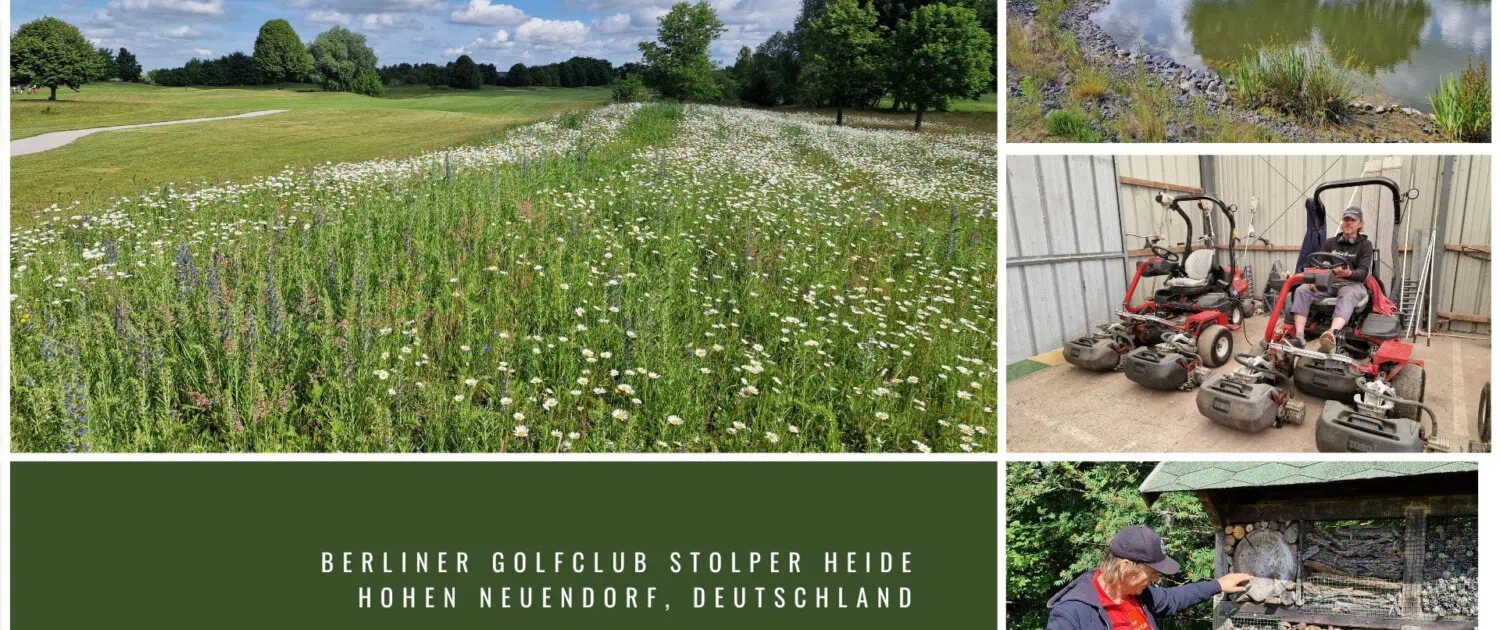
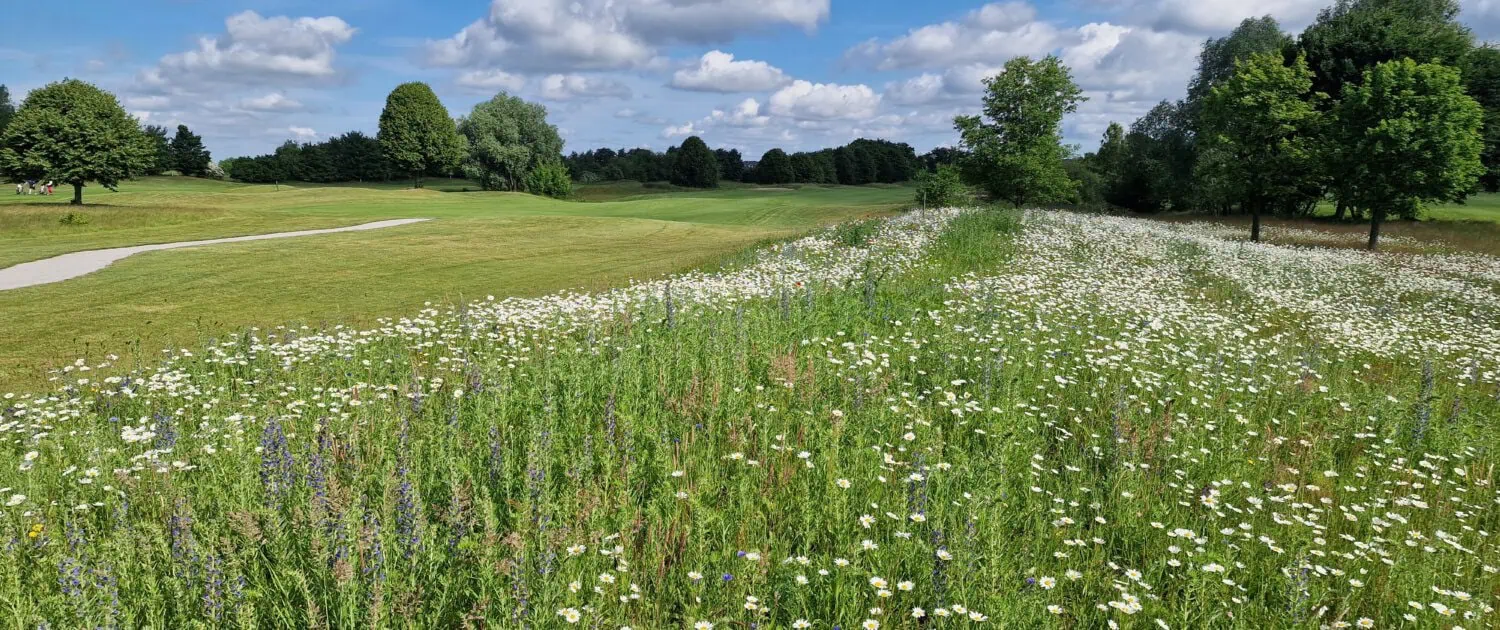
Such a positive development doesn’t happen on its own. It requires an operating company that’s willing to invest money in peripheral areas from time to time. For example, the seeds for the perennial meadows—which provide a visually appealing boundary between many fairways—are not cheap if, like Head Greenkeeper Christian Franke, you value regional, perennial seeds.
Hidden away in the machinery shed are also the bar mower and the baler, which the greenkeeping team uses every year to mow the meadows. This gives the Berliner GC Stolper Heide a truly unique position in the German golf scene. The golf club produces more than 300 bales of hay each year and then donates them free of charge to a local shepherd. The machines weren’t cheap, but Franke believes that renting them from outside providers would have added up to a significant cost over the years. “This is truly extraordinary and wonderful,” says nature conservation expert Dagmar Blacha of the State Association for Bird Protection, commenting on this case. She visits numerous golf courses every year to assist them in enhancing their ecological compensation areas. Many golf courses have trouble disposing of the hay because they can’t find a buyer to bale and haul it away.
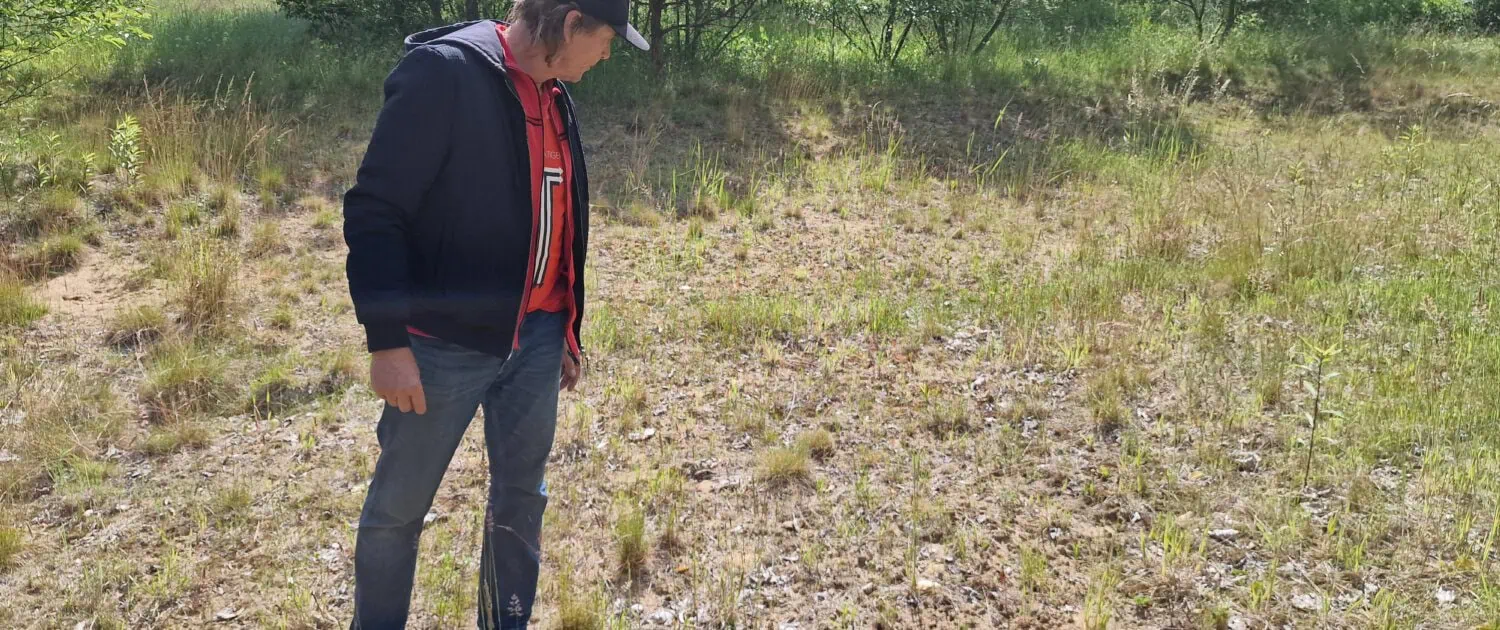
The club and the operating company’s commitment to sustainable management is complemented here by a head greenkeeper who says of himself, “I once wanted to become a conservation expert.” Christian Franke, who has been with the club for 15 years, has his playing surfaces under control. Shortly before a home match day for the club’s team in the 1st Bundesliga, the greens on the East Course are all hand-mowed, and the bunker edges are perfect. The fact that the club has plenty of demand from new members and tee times are well booked suggests that the course’s excellent condition is no exception.
Franke, who completed his training as an agronomist while still in the GDR and actually saw his professional home in one of the large agricultural production cooperatives (LPGs), gets emotional when he talks about the newly planted Benjes hedges, the salt licks for deer, and wildlife fences, wild bees, hidden areas of bare soil, or the numerous birdhouses that the greenkeeping team builds during quieter winter months.
That’s how the new walkway along the edge of the grounds came to be last winter; its surface material came—naturally—from wood that the golf course had chopped up itself. When Franke removes dead trees, the material ends up in deadwood piles or is put to other good uses. The head greenkeeper is certainly not short on ideas. A new water hazard was recently created from a pond that was too small, unattractive, and served no practical purpose for the game.
For biodiversity expert Gunther Hardt, who heads the Biodiversity Working Group at the German Golf Association and is also responsible for the “Golf & Natur” certification at GC Stolpe, the golf course is a model project. This is also because the club is committed to sustainability beyond just biodiversity. To prepare for a reduction in irrigation volumes as part of its water management efforts, the club has invested heavily in recent years in new, state-of-the-art sprinklers and, in some cases, a new fairway irrigation system. This allows for more precise control of water distribution, increases efficiency, and can reduce water consumption.
The solar array on one of the buildings powers the greenkeeping equipment, saving electricity. It generates 30 kWp, but “we’re not yet meeting our electricity needs,” summarizes Managing Director Joachim Otto, who, however, immediately points out that there are concrete plans to expand solar installations in other areas. Since some of the mowers and other machinery have already been converted to electric power, the demand for renewable energy is growing. The electric charging stations in front of the clubhouse are already seeing heavy use. Otto knows that water and energy are playing an increasingly important role in the resilience of golf courses.
INSERT_STEADY_NEWSLETTER_SIGNUP_HERE
Communication with golfers is always an integral part of this process. Especially when it comes to the grassy areas between the fairways and the issue of lost balls, there are sometimes disagreements between Christian Franke and the members. The website, the newsletter, and the Golf & Nature badge are all ways to spread the message that is so important to the club: Golf is a sport in and with nature—those who do not care for nature will ultimately face problems with the sport due to a lack of resources such as soil or water.