GC Garmisch: Blühpakt Bayern as the basis for new nature projects
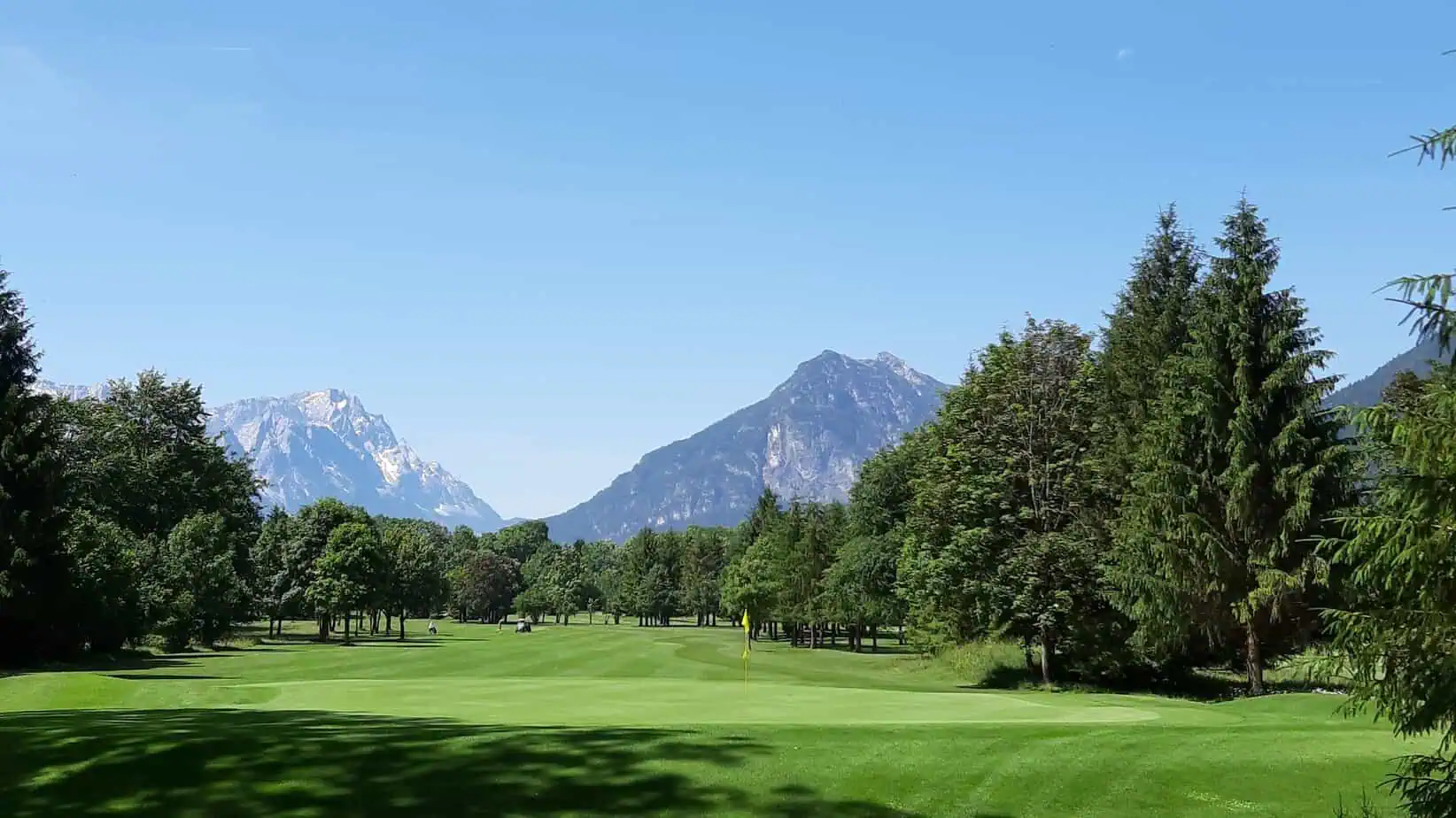
The GC Garmisch-Partenkirchen enriches the cultural landscape with its extensively maintained Hardrough areas. As part of the Bavarian Flowering Pact, a joint initiative of the Bavarian Golf Association and the Bavarian Ministry of the Environment, this was the result of an expert inspection of the golf course. Dagmar Blacha from the Bavarian Bird Protection Association drew a largely positive conclusion after her analysis of the areas. “Thanks to decades of extensive maintenance and continuation of the previous land use, species-rich extensive lowland meadows have been preserved,” she notes.
Club manager Felix Otto was given a crash course in botany during the biodiversity expert’s visit. Blacha not only discovered large areas of the red-listed species of ornamental grass in the meadows of the GC Garmisch-Partenkirchen, but also other valuable plants such as the meadow knob or the spotted orchid. However, these plants generally only appear where nitrogen depletion and extensive care prevail.
INSERT_STEADY_NEWSLETTER_SIGNUP_HERE
This is exactly what the LBV experts are trying to convey to the participating golf clubs in the Bavarian Flowering Pact: The areas beyond fairways and greens, which are considered to be rough, can be transformed into high-quality meadows if they are used properly. If a meadow is mowed several times a year and the cuttings are left lying around, often fewer than ten species can be found. On lean meadows, on the other hand, you can often find more than 40 plant species on just a few square meters. At GC Garmisch-Partenkirchen, the areas are only mowed once a year. Farmers in the region take care of this.
The grazing horses that golfers occasionally see from a distance on their round are also only good for biodiversity on the golf course. “The animals’ footsteps create small-scale disturbances and thus habitats for species that depend on these disturbances,” says Blacha.
Networking and rejuvenation
Like all golf courses, the golf club in the Upper Bavarian Loisach Valley, which is also involved in the drinking water supply for the greater Munich area thanks to its near-natural management of the course, still has potential for improvement. The numerous bushes, groups of trees and hedge elements, for example, should be more closely interlinked in future. Some of the plants need to be rejuvenated.
Club manager Otto has also already put the planning of an orchard meadow on his to-do list for 2026. It is clear that only native, site-appropriate and rare plants will be chosen, the acquisition of which will ideally be supported by the Bavarian Orchard Pact. It also makes sense to install large bird boxes on the orchard trees.
For club manager Otto, who welcomes participation in both the Bavarian Flowering Pact and the German Golf Association’s Golf & Nature environmental program, it is clear that all these projects cannot be managed by the greenkeeping staff alone. The golf club is now planning to spread the commitment to a wider circle of interested people with a Golf & Nature support association.
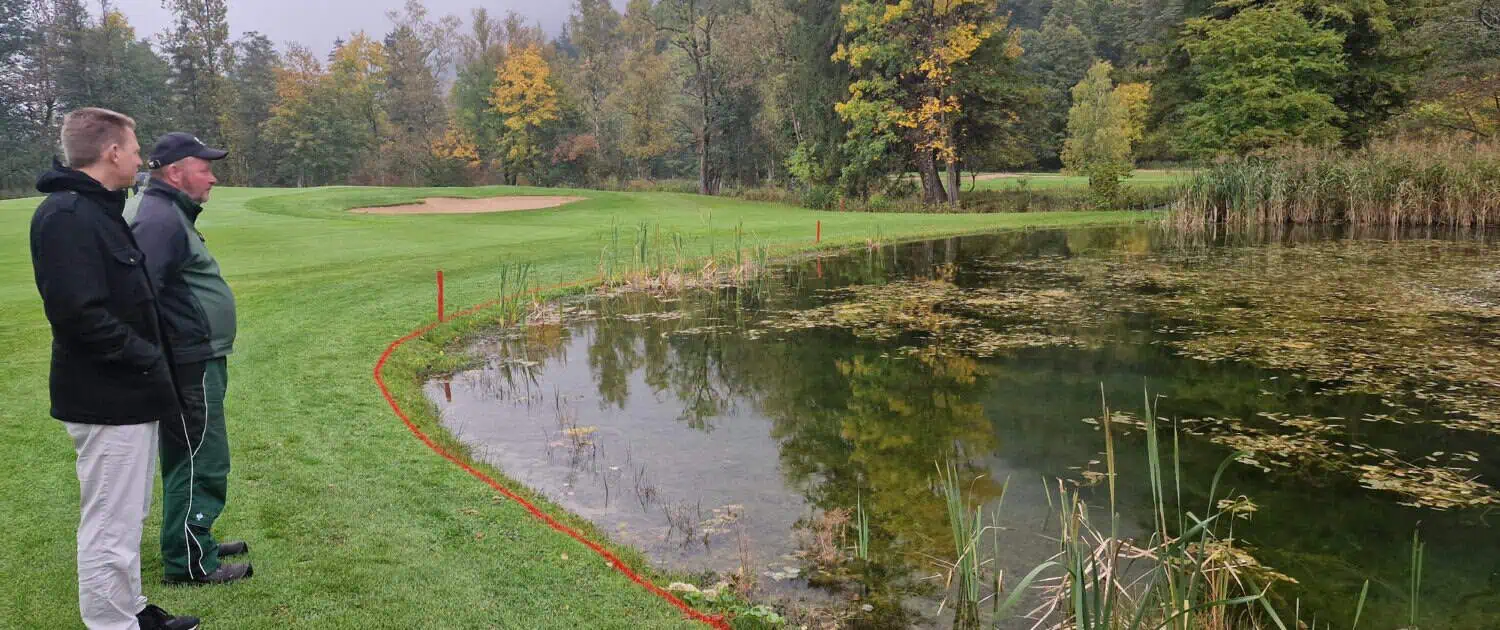
After all, those responsible at GC Garmisch-Partenkirchen are not short of ideas when it comes to environmental protection projects. The extensive areas, for example, are to be mapped in 2026 in order to have a more precise overview of habitats and species in the future. Otto’s initiatives have certainly generated a lot of positive feedback from the nature conservation authorities responsible for the golf course. Now that the golf course has also been certified at the highest Gold level, it is considered an important building block in terms of environmental protection in the region.
“The board and the management of the course have united behind the goal of advancing the club in terms of golf and nature,” says Dr. Gunther Hardt with satisfaction. The head of the biodiversity working group in the German Golf Association, who was also recently responsible for the gold certification of the course, is delighted with the progress made at GC Garmisch-Partenkirchen. “At the beginning of the golf and nature certifications in 2017, there were also fears here about additional costs, for example.” In the meantime, however, according to the positive summary, the realization that environmentally friendly course maintenance tends to save costs and in some cases even makes subsidies possible prevails.