
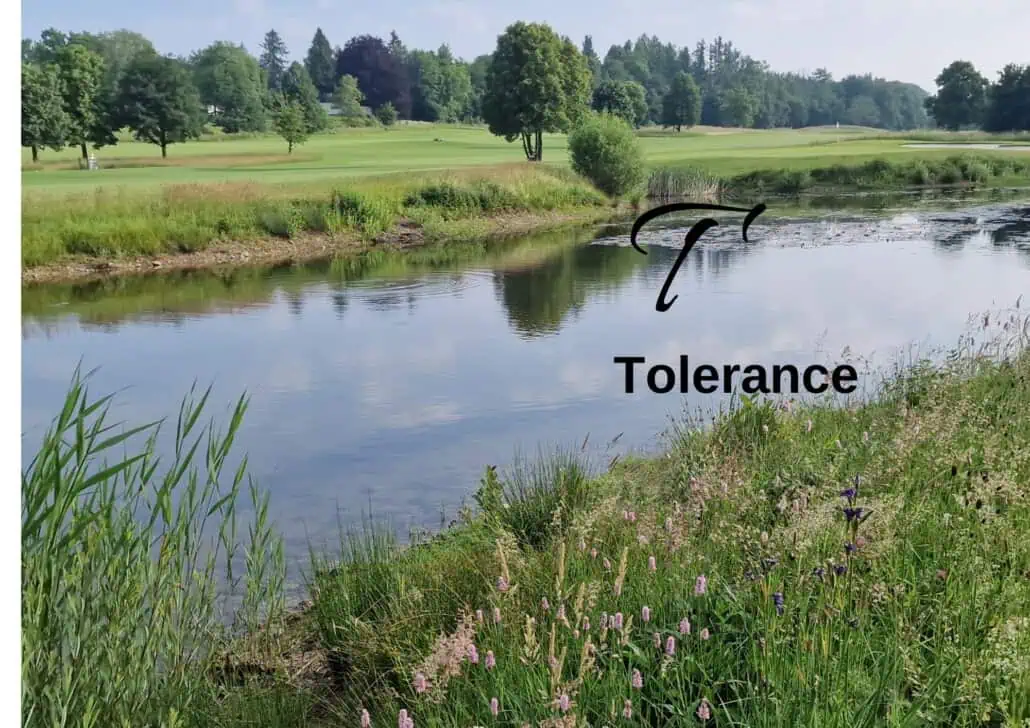
Biodiversity lexicon: T for tolerance
There are starvation artists on a golf course: the heather carnation, for example. Little fertiliser, little nutrient – that’s their thing. It simply tolerates a lean environment. Anyone who talks about biodiversity will always come across the term tolerance.
It describes the invisible boundary between thriving, surviving and the final disappearance of a species. The golfer relies on sunscreen and cool drinks when it gets hot and sunny. Plants and animals are at the mercy of their environment. Every living creature – from the smallest soil bacterium to the frog in the biotope on hole 12 – has its own personal comfort zone. Scientists call this the tolerance curve. This refers to the “ecological resilience”.
The optimum: Everything runs perfectly here. The plant is growing vigorously, the animal is reproducing. It’s like a perfect day on the golf course: not too hot, not too cold, just the right amount of water.
The stress area (pessimum): This is where things get uncomfortable. The living being is still surviving, but no longer has any energy for “extras” such as growth or offspring. It only fights against the circumstances.
The zero point: If the tolerance limit is exceeded, the species dies out at this location.
Beyond the fairways and greens you will come across two types of animals and plants:
The specialists: These species are extremely picky. They need just the right soil, a very specific moisture level and not too many nutrients. Many of our rare orchids or specialised wild bees are among them. They are extremely important for biodiversity, but they are “intolerant” of change. If their habitat deteriorates just a little, they retreat.
The generalists: Robust types such as the dandelion or the crow are insensitive. They have a wide tolerance range. The problem: If we “standardise” our places too much, we only promote the generalists. The specialists fall by the wayside.
Support specialists
The specialists can be encouraged, for example, in the rough: many of the most beautiful flowering meadows on the golf course grow where we do little. These plants have a low tolerance to nitrogen. If we accidentally fertilise these areas, plants such as the rattle pot literally “suffocate” from the oversupply and fat grasses take over. Here, nature conservation actually means respecting the intolerance of rough pasture plants.
Drought tolerance of grasses
Climate change is forcing golf courses to think about drought tolerance. Scientists are now specifically looking for grass varieties whose “comfort zone” extends even to over 30 degrees without continuous irrigation. A high heat tolerance can save thousands of cubic meters of water.
Fault tolerance
Interestingly, many wild animals on golf courses show remarkable tolerance to disturbance. As they realise that there is no danger from golfers on the paths, they get used to them. This applies to geese and brown hares, for example. The hare remains relaxed while we walk to the tee. This “habituation” is a form of tolerance that makes golf courses valuable retreats.
Promoting resilience
A golf course with high biodiversity is more resilient. If a course relies on species with a very narrow tolerance window, a single extremely dry summer or a new pest can bring the entire system crashing down. If, on the other hand, you promote a variety of species with different tolerance ranges, nature is much better at absorbing external shocks. If one type of grass suffers from the heat, another that prefers it warm takes over. The system remains stable, green and alive.
Tolerance in nature, therefore, means adaptability. If you understand the needs of the plants, animals and insects on golf courses, you can create specific niches.
INSERT_STEADY_NEWSLETTER_SIGNUP_HERE