Biodiversity lexicon: Q for Quercus
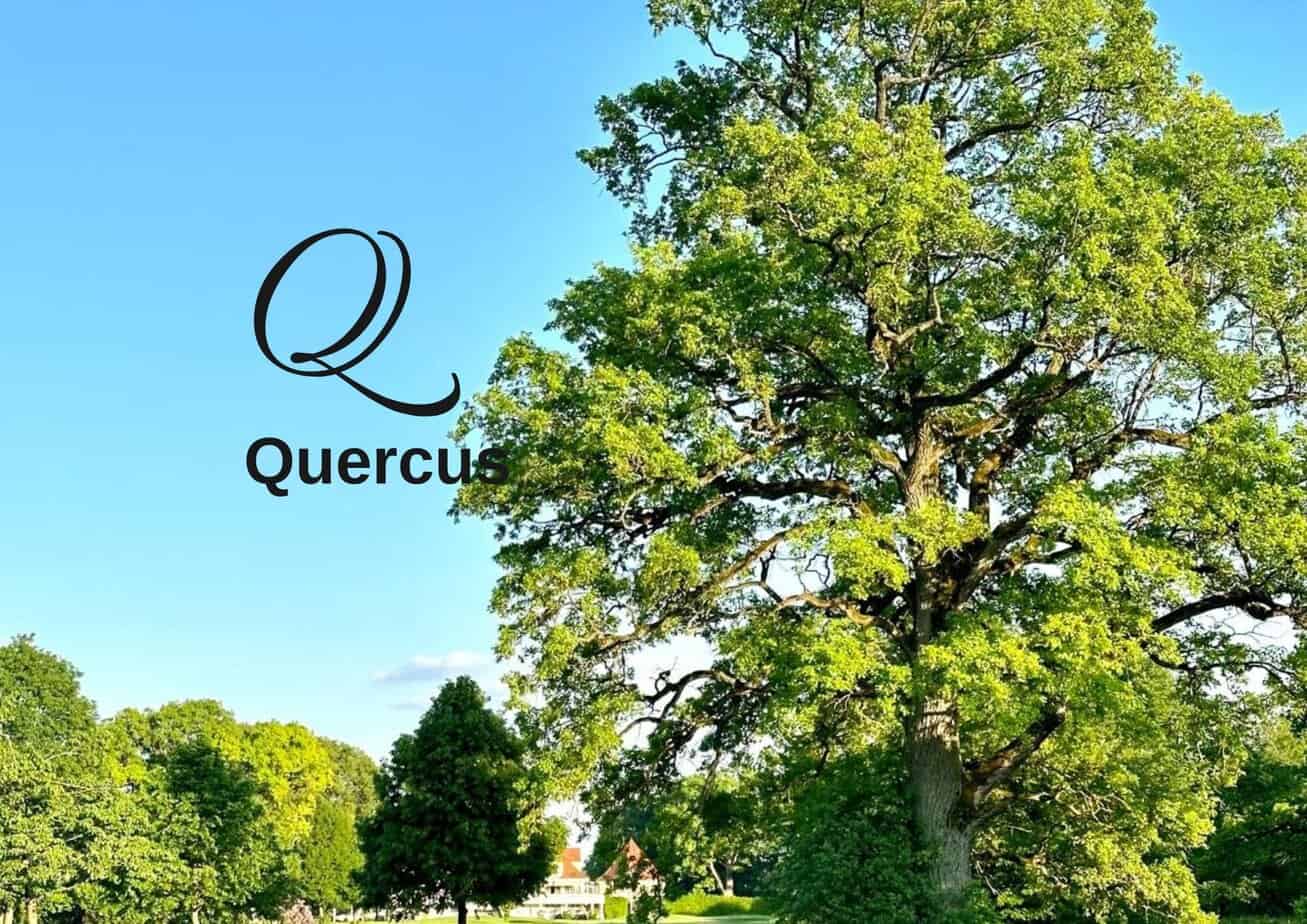
Quercus – this is the botanical name for the oak tree. As one of the most well-known and ecologically important plant species in Europe and North America, it also plays an important role on golf courses. Whether as a visual element, strategic obstacle or habitat for insects and plants. Due to its enormous contribution to biodiversity, quercus is even considered a key tree species.
There are around 500 different quercus species in total. These range from trees in temperate latitudes, which shed their leaves, to evergreen species in Mediterranean and subtropical regions, such as the holm oak or cork oak. Oaks can grow to very different sizes and can easily reach a height of 40 meters. The trunk circumference of old oaks is often considerable and can be up to ten meters. Many species live for several centuries, but their lifespan depends heavily on location, disease and climatic stress.
The oak processionary moth, for example, which greenkeepers on golf courses have to deal with time and again, does not kill the oaks, but it does make them more susceptible due to the voraciousness of the caterpillars, which eat young oak leaves in spring. Growth and photosynthesis performance suffer. The same applies to the problem of drought and climate change in general. Although oaks are considered to be relatively robust, growth and the ability to recover suffer in the event of severe or repeated water stress. The trees’ susceptibility to disease increases.
This in turn is bad for biodiversity. Oaks are considered biodiversity hotspots. A single oak tree can be home to hundreds of insect species, numerous fungi, lichens and moss species as well as birds and mammals. Acorns are an important food source for rodents, wild boar, deer, jays and squirrels; oak forests also store carbon and regulate the water balance.
In short: Quercus, the oak, is an outstanding tree. Its protection on golf courses is important.