Now it’s getting concrete: the EU Restoration Act is being implemented. The national restoration plans in the EU countries must be completed by September 1, 2026. The law, which was passed in August 2025, provides for restoration measures for damaged ecosystems that must be completed by 2050 at the latest, but in some cases by 2030.
In concrete terms for individual areas, this means, for example, that there must be no net loss of urban green spaces and tree canopies until 2030. From 2030, an increase is mandatory. Or when it comes to afforestation: individual countries must support the EU target of planting an additional three billion trees by 2030.
Effects on the sport of golf?
What impact does the law have on golf, the outdoor sport with the largest defined playing areas? To what extent will the value of golf course areas be assessed differently by the authorities? Will there be restrictions on the use of land in the future?
These are questions that are met with a shrug of the shoulders from the European golf associations. Whether in Italy, Germany or Denmark, to name just three examples: To date, the EU renaturation law has not yet taken any concrete form for them. But if you talk to experts, you realize that the increasing demand for renaturalized areas could be an opportunity for the golf industry. “Germany has a certain exemplary role within the EU. The Federal Agency for Nature Conservation will therefore certainly implement the law carefully. Golf courses could contribute to the enhancement of urban areas in particular,” summarizes Prof. Dr. Johannes Kollmann, Head of the Chair of Renaturation Ecology at the Technical University of Munich. As part of the Germany-wide GolfBiodivers research project, he is very familiar with enhancement measures on golf courses and is very positive about their potential.
As the EU Restoration Act affects a variety of ecosystems, including moors and rivers, for example, golf courses could become involved in different areas depending on the country, region and terrain. Bogs, for example, are hardly relevant on German golf courses, but are certainly relevant in other EU countries. In Germany, on the other hand, golf courses could play a role in the restoration of urban ecosystems, for example. The aim of the law is to achieve greater area coverage with large trees. The unsealing of surfaces also plays an important role.
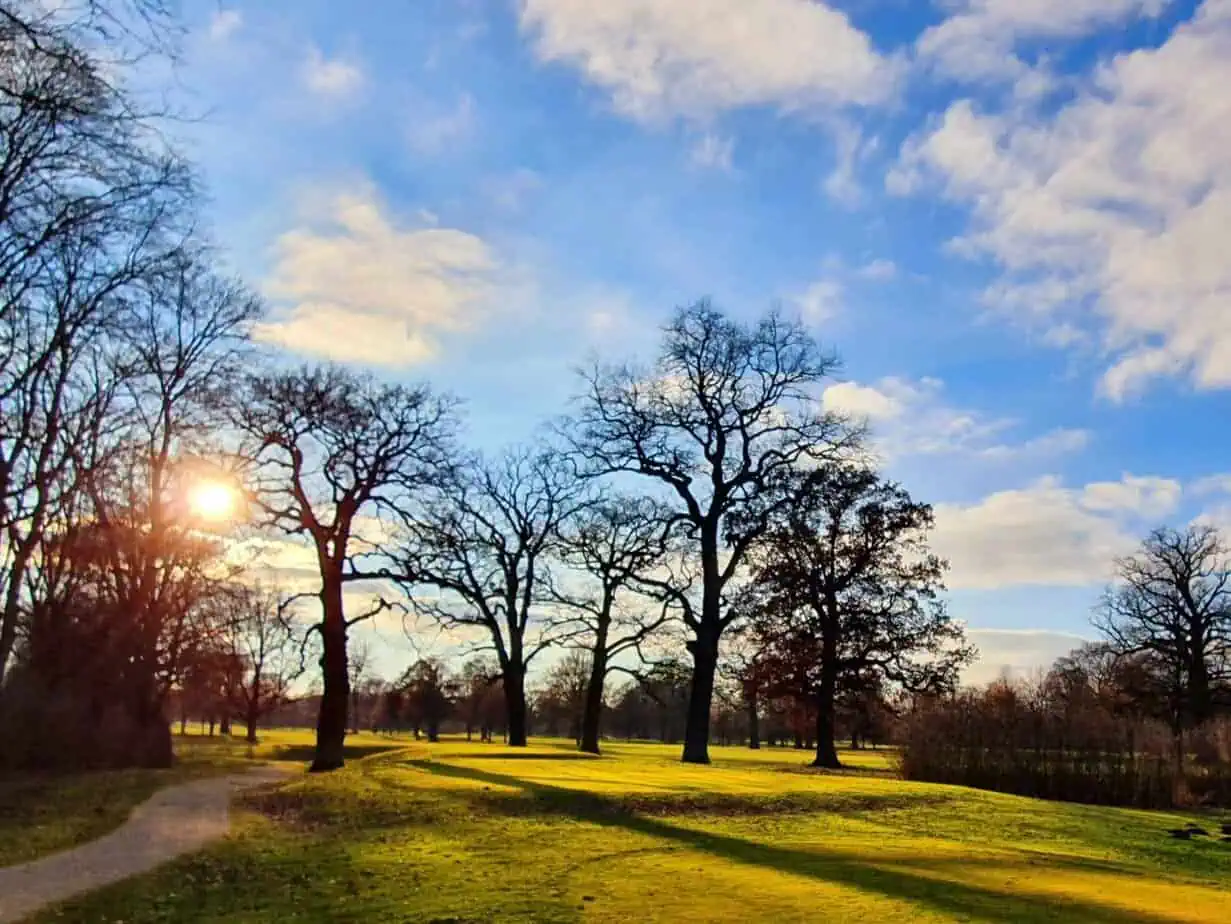
“If we think of golf courses such as the Frankfurt Golf Club, which are very centrally located in the city but at the same time have a large tree population, we can definitely think about the positive effects of the golf course on the health of the population in suburban areas,” summarizes Kollmann. He also points out that numerous golf courses maintain large trees by providing the necessary irrigation and maintenance. “For the golf scene, the law is also an opportunity to make a positive contribution with concepts and ideas.”
At least in Germany, golf associations and golf clubs also have the opportunity to actively participate in the development of the recovery plan. The first online events are already taking place in March.
Otherwise, the following currently applies throughout Europe: it will be exciting from September onwards when the individual nations submit their concepts to the EU for the first time. They will certainly look very different. In Italy, it is already clear that the focus will be on marine and coastal protection and the restoration of the Po Valley in order to increase coastal and marine protection. In France, where the public consultation was already completed in 2025, the focus will also be on restoring wetlands. In the end, only one thing is certain: the long-term recovery of all ecosystems, whether inside or outside the golf courses.