
• Home
  • Newsletter abonnieren
  • Das Team
  • Ziele
  • Deutsch Deutsch Deutsch de
  • English English Englisch en
Golf Sustainable
  • News
    • Club-News
  • Klimawandel
  • Wasser
  • Biodiversität
  • CO₂
  • Greenkeeping
  • Tourismus
  • Weitere Themen
    • Industrie & Equipment
    • Best Practice
    • Science
  • Click to open the search input field Click to open the search input field Suche
  • Menü Menü
Golfball mit Ameisen
Foto: Petra Himmel

Rough: Weg von Grasdominanz – hin zu mehr Diversität

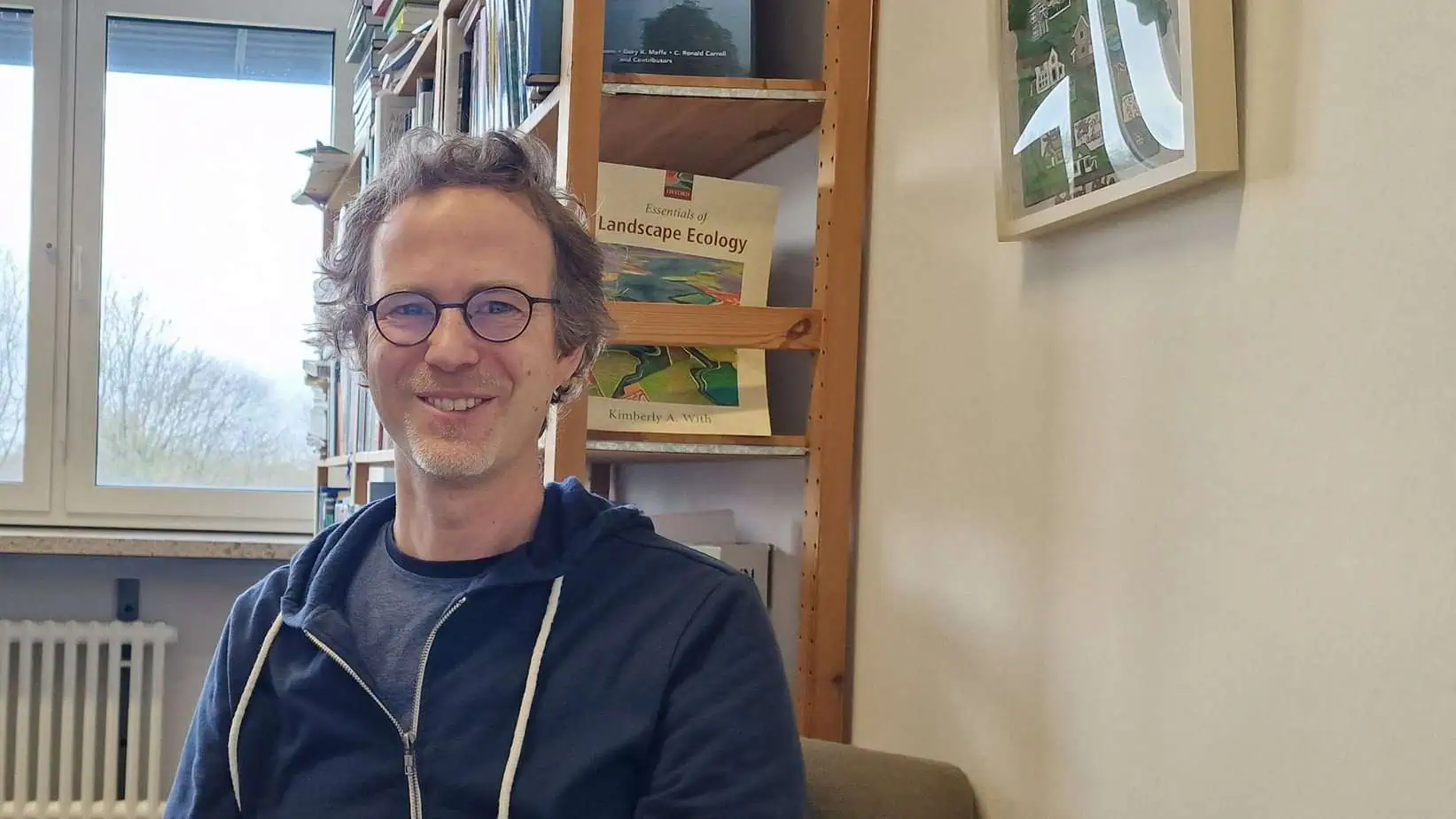
 Prof. Dr. Tim Diekötter ist seit 2014 Professor für Landschaftsökologie an der Christian-Albrechts-Universität zu Kiel. Die Universität Kiel ist eine der vier Universitäten, die am Projekt GolfBiodivers des Deutschen Golf Verbandes beteiligt ist. Diekötter selbst hatte vor diesem Projekt kaum Berührung zum Golfsport.

Die Universität Kiel hatte im Rahmen von GolfBiodivers zuerst mit den Golfanlagen Gut Wulfsmühle, Hoisdorf, Kitzeberg und Marine GC Sylt zu tun. Was war Ihr erster Eindruck, als Sie auf die Golfplätze gekommen sind?

Diekötter: Mein Eindruck war tatsächlich, dass die Golfplätze, die häufig in einer landwirtschaftlich geprägten Umgebung liegen, positiv hervorstechen, was die strukturelle Ausstattung der Landschaft angeht – gleichzeitig aber auch, dass dies eine große Fläche ist und es natürlich noch Potenzial nach oben gibt, wenn es um die Ressourcenvielfalt geht. Das ist ja auch das Ziel des Projektes.

Welchen Begriff würden Sie aus landschaftsökologischer Sicht zuerst mit einem Golfplatz verbinden?

Diekötter: Großflächigkeit. Dabei ist nur der eine Teil tatsächlich im Spielbetrieb und der andere Teil, der ja größer ist, birgt das Potenzial für mehr Artenvielfalt.

Golfplätze weltweit umfassen viele Lebensräume von Wüstenflächen bis Feuchtflächen. Sehen Sie in Deutschland das größte Potential bei artenreichen Wiesen?

Diekötter: Ich glaube schon, dass da das größte Potenzial liegt, weil sie häufig tatsächlich in der Kulturlandschaft eingebettet sind.

Es gibt auch Golfplätze in Deutschland, die zum Teil ausgetrocknete Moore auf dem Gelände haben? Kann man solche Moore zurückentwickeln?

Diekötter: Auf manchen Golfplätzen gibt es noch größere Gehölzbestände, da könnte man sich vielleicht kleinere Verlandungsmoore vorstellen. Ansonsten ist die Wiederbelebung von Mooren aufgrund der Hydrologie relativ schwierig, weil man sie großflächig wieder vernässen muss. Dann müssten also auch größere Bereiche in der Umgebung der ausgetrockneten Moore vernässt werden und wären dann nicht mehr bespielbar.

In Schleswig-Holstein, Hamburg und Niedersachsen finden sich auch einige Plätze mit Heideflächen – beschäftigen Sie sich im Rahmen von GolfBiodivers auch mit deren Weiterentwicklung?

Diekötter: Heide ist ein sehr hochwertiger Lebensraum. Der Platz in St. Dionys ist zum Beispiel ganz stark von Heide dominiert, auch im GC Kitzeberg haben wir kleine Heideflächen. Bei GolfBiodivers versuchen wir aber, auf allen Plätzen relativ ähnliche Maßnahmen durchzuführen, um Vergleichbarkeit zu erreichen und die Maßnahmen danach zu bewerten. Natürlich nehmen wir kleine Anpassungen vor, weil es Standortunterschiede gibt. Aber schlussendlich wollen wir nicht jeden Vegetationstyp extra behandeln. Es macht aber keinen Sinn, mit unseren Maßnahmen für eine artenreiche Flachland-Mähwiese in einen Heidebereich zu gehen. Wir werden uns daher also doch Gedanken darüber machen, wie man Heideflächen fördern oder zur Erhöhung der Ressourcenvielfalt in den benachbarten Flächen sinnvoll ergänzen kann.
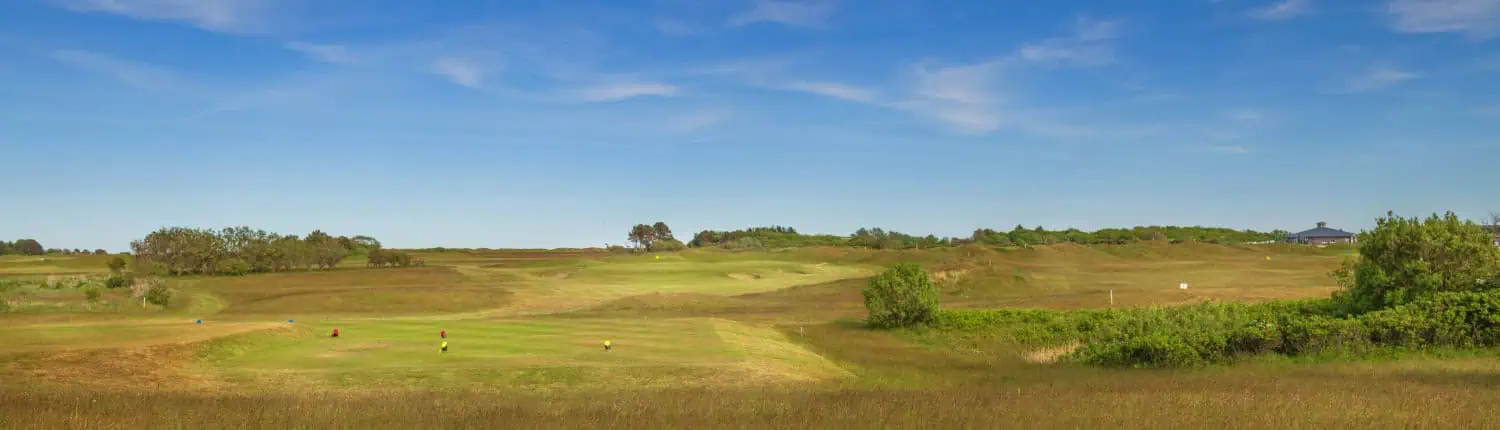
Bild auf die Spielbahn 2 des Marine Golf Club
Foto: Marine Golf Clubs Sylt

Angenommen eine Golfanlage möchte Flächen in artenreiche Wiesen umwandeln, ab welcher Größe macht es überhaupt Sinn?

Diekötter: Ich würde da keine Beschränkung sehen. Die Frage ist immer, was man erreichen möchte und für welche Arten. Bei GolfBiodivers stehen Insekten im Vordergrund und da sind auch kleine Parzellen schon hilfreich, weil sie wie ein Mosaik oder wie Trittsteine auf dem Platz die Fortbewegung dieser Arten ermöglichen. Wir haben teilweise relativ große Flächen zur Aufwertung zwischen den Spielbahnen, die wir natürlich gerne nutzen, aber die kleineren Flächen sind Verbindungselemente, auf die man nicht verzichten sollte. Generell kommt es immer auf die Arten an, die man im Fokus hat. An dieser Stelle müssen wir auch die Pflanzenarten selbst im Blick behalten. Die Vielfalt der Pflanzen bringt ja am Ende die Vielfalt der Tiere.

Wenn wir auf die grünen Flächen blicken, die nun aufgewertet werden sollen – was ist eigentlich schlecht daran.

Diekötter: Wichtig ist es, die Diversität der Blühpflanzen zu erhöhen. Im Moment ist fast alles grasdominiert. Die Standorte sind häufig zu nährstoffreich, dann dominieren die Gräser und verdrängen die kleineren krautartigen Blütenpflanzen. Die wollen wir jetzt fördern. Aber selbst wenn man jetzt eine magere Fläche schafft, kommen die Zielarten häufig nicht von alleine in die Fläche, da sie inzwischen in der Landschaft so selten geworden sind, dass sie in absehbarer Zeit nicht von alleine einwandern. Deshalb muss man diese Arten gezielt ansäen.

Haben Sie auf einem der Golfplätze schon eine Art gefunden, die Sie nicht erwartet hatten?

Diekötter: Große Überraschungen haben wir noch nicht erlebt. Wobei man sagen muss, dass zum Beispiel der Golfplatz auf Sylt, schon eine sehr hohe pflanzliche Diversität aufweist.

Wildbienen fördern: So geht’s

Gibt es ein Tier, über das Sie sich besonders freuen würden, wenn Sie darauf treffen?

Diekötter: Auf den küstennahen Plätzen würde ich mich sehr über die Mooshummel freuen, weil das die Art ist, mit der ich in meiner Diplomarbeit im Amöneburger Becken, einer hessischen Agrarlandschaft, gearbeitet habe. Ansonsten würde ich mich auch sehr über den Goldenen Scheckenfalter freuen. Aber es ist relativ unwahrscheinlich, dass wir auf ihn stoßen, da er in Schleswig-Holstein ausgestorben war und erst seit einigen Jahren in einem großen Projekt von der Stiftung Naturschutz wieder angesiedelt wird.

Grundsätzlich sind Golfplätze ja zuerst einmal Sportflächen. Besteht aus Ihrer Sicht hier ein grundlegender Konflikt mit den Zielsetzungen des Naturschutzes?

Diekötter: Auf den Golfanlagen, auf denen wir momentan arbeiten, gibt es eine sehr positive Grundhaltung gegenüber den naturschutzfachlichen Maßnahmen, die wir implementieren wollen und der Biodiversitätsfrage an sich. Wir stimmen uns für unsere Maßnahmenumsetzung eng mit den Greenkeepern ab; sie sagen uns, wo diese den Spielbetrieb stören würden oder wo ständig jemand in die neuen Wiesen laufen würde, was bei einer Flachland-Mähwiese übrigens gar nicht mal das Problem wäre.

Versteht der Golfer Ihren Ansatz?

Diekötter: Ein Ziel dieses Projektes ist es auch, mehr Verständnis für das Thema Biodiversität zu erreichen. Wenn wir das richtig kommunizieren, können wir vielleicht noch den einen oder anderen Spieler davon überzeugen, dass es ok ist, wenn Kräuter in der Fläche sind. Das ist dann vielleicht zwar etwas herausfordernder für das Spiel, aber es erhöht die Artenvielfalt.

Wie fällt denn die Reaktion der Golfer auf die Wissenschaftler bei der Arbeit auf dem Golfplatz aus?

Diekötter: Insgesamt sehr positiv. Sie kommen häufig und fragen, was war machen. Wir bekommen meistens interessierte Rückfragen.

Teiche richtig anlegen und pflegen

Teile diesen Eintrag
  • Teilen auf Facebook
  • Teilen auf X
  • Teilen auf WhatsApp
  • Teilen auf Pinterest
  • Teilen auf LinkedIn
  • Per E-Mail teilen

INSTAGRAM

golfsustainable

Golf Sustainable is an independent news platform, founded by Petra Himmel.

What happens when a golf club completely stops usi What happens when a golf club completely stops using fungicides over the winter? 🚫🍄 The result might surprise you.
With pesticide regulations tightening across Europe (including strict bans in Switzerland, France, and Belgium), the question for greenkeepers is no longer if chemical restrictions are coming, but when.

Michael Scheffold, Head Greenkeeper at GC Wörthsee (Germany), decided to do a real-world test run. This past winter, he completely dispensed with fungicides on his greens to see how they would react.

The verdict? Better than expected! Despite a little more snow mold, the greens recovered beautifully and by mid-May, they were almost as good as usual. 🌿

This success didn't happen by accident. It is the result of years of prioritizing Integrated Pest Management (IPM) and mechanical measures to build robust, naturally resilient soil and grass. Supported fully by Club Managing Director Sven Hilgenberg, GC Wörthsee is actively future-proofing its course.

Proactive greenkeeping beats waiting for the ban! 📈⛳️

Call to Actions:
🔗 Read the full case study: Tap the link in our bio to read the detailed interview on Golf Sustainable.
🎓 Learn Sustainable Management: Want to implement pesticide-free strategies at your club? Explore our advanced courses at the Golf Sustainable Akademie (Link in Bio!).
📺 Subscribe for more insights: Check out our YouTube Channel for expert talks on the future of greenkeeping and eco-friendly golf operations!

Foto: Nicolas Martin Beaumont

#GolfSustainable #SustainableGolf #Greenkeeping #GCWörthsee #PesticideFree #IntegratedPest Management #GolfCourseManagement #EcoGolf #TurfManagement #SustainableTurf #GolfManager #GolfAkademie #GolfInspiration #GolfEnvironment #SnowMold #EcoFriendlySports
🚨 What does Donald Trump's new ballroom have to do 🚨 What does Donald Trump's new ballroom have to do with the environmental problems of East Potomac Golf Links? 

A growing environmental controversy is unfolding at East Potomac Golf Links: according to reports by the New York Times and the U.S. National Park Service, thousands of cubic meters of soil and construction debris from the demolition work at the White House East Wing were deposited on the public golf course — including material reportedly contaminated with lead, chromium, pesticides, and other hazardous substances. 

The site is planned to become part of a future championship golf course redevelopment. Environmental groups and local residents, however, are raising serious concerns about potential impacts on ecosystems, waterways, and public access to one of Washington’s most historic municipal golf facilities. 

What makes the case especially sensitive: the golf course sits directly along the Potomac River and has long served as an accessible public space for golfers, walkers, and families alike. Critics warn the project could come at a high environmental and social cost. 

💬 The story is another reminder of how closely golf, urban development, and environmental responsibility are connected — and why transparency and sustainable land management matter for the future of the game.

#GolfSustainable #Sustainability #Golf #Environment #GolfCourseManagement #EnvironmentalIssues #PublicGolf #Biodiversity #WashingtonDC
Mauritius, the island in the Indian Ocean, is firs Mauritius, the island in the Indian Ocean, is first and foremost a dream destination for many golfers. For Philippe Espitalier-Noël, who, as CEO of the ER Group, is also responsible for major golf destinations such as Beachcomber and Heritage Resorts, among others, this dream destination is extreme pressure. A recent report by the World Bank Group on climate and development on the island of Mauritius entitled CCDR has prompted him to call for significant changes in the direction of tourism on the island.

Read the whole interview on https://golfsustainable.com. Link in the first comment
Follow our You Tube channel https://www.youtube.com/@golfsustainable

#mauritius #golf #golftravel #tourism #sustainabletravel
Copernicus has published the European State of the Copernicus has published the European State of the Climate Report. The golf industry must learn from data and scientific research, as outdoors sports are challenged by the resulty of climate change.
New competition for Bavarian golf clubs 🌿🦋 The 'B New competition for Bavarian golf clubs 🌿🦋

The 'Blühpakt Bayern' has launched a new competition specifically for golf clubs, that have combined a biodiversity project with a successful communication idea.  This isn't just about aesthetics; it's a critical move to boost biodiversity and protect our essential insect populations on golf. 

Golf Sustainable founder, Petra Himmel:

"This competition is a great motivator. However, the real success lies in long-term strategy and understanding ecological systems. Communication is an important part of a successful biodiversity strategy. 

All information about the enrollment in the first comment. 

#SustainableGolf #GolfSustainable #BlühpaktBayern #Biodiversity #EcologicalGolf #GolfCourseManagement #PetraHimmel #GolfAkademie #Greenkeeping #EcoFriendlySports #GolfGermany
Burgenland in Austria is now the first region to b Burgenland in Austria is now the first region to be certified with the Austrian Environmental Label.
International Day of Orchards. There are so many o International Day of Orchards. There are so many orchards and fruit trees on golf courses. As an important habitat for insects, birds and even bats, they are so much more than just a wonderful aesthetic element for our sport. 
#golf #golfsustainable #biodiversity #orachards #streuobstwiese #
#Nature #Wildlife #Birdwatching #BeeEaters #Austri #Nature #Wildlife #Birdwatching #BeeEaters #Austria #Burgenland #Biodiversity #NaturePhotography #HiddenNature #Conservation #Golf
Yes, the Masters Tournament and Augusta National G Yes, the Masters Tournament and Augusta National Golf Club are all about exclusivity. But it is important to realise that the whole town of Augusta has to agree with this concept and tradition. 

There is a huge economic value that comes with the tournament week, but there are other soft factors that secure the acceptance of The Masters in the town. 

The renovation of the municipal course at The Patch, plus the opening of The Loop at The Patch, is good news for the local community. Affordable, good golf is important to grow the game. Here, the Masters Charity Funds, First Tee of Augusta, and Augusta Technical College have teamed up to finance this important project. 
#firsttee #golf #golfsustainable #golfforeverybody #themasters #augusta #growthegame
Instagram-Beitrag 18158981992431306 Instagram-Beitrag 18158981992431306
Golf without the use of #pesticides? This is the s Golf without the use of #pesticides? This is the scenario the Swiss golfing community will face from January 2027. Due to a new classification of land use, the use of herbicides will be completely banned, whilst other plant protection products will be subject to much stricter regulations. 
The issue of #health protection is becoming increasingly important on sports grounds. This development is also relevant for golf courses in Germany and Austria. Here too, plant protection products are often the last resort in combating fungal diseases on greens.
We have talked to experts in Switzerland. The good news: some agronomists also see positive consequences arising from the regulation. 
#golf #greenkeeping #turfgrass #nopesticides #golfmanagement #golfsustainable
#golfsustainable #golf #water #golfsustainable #golf #water
#energycrisis #saveenergy #golf #greenkeeper #ada #energycrisis  #saveenergy #golf #greenkeeper #adaptation #golfclubs #golfmanagement #golfsustainable
Another inspiring story of a woman in the golf ind Another inspiring story of a woman in the golf industry

“Getting up with the sunrise and getting going, I just love it” says Elin Foyle, 24-year-old Assistant Headgreenkeeper from Golf Club Chieming in Upper Bavaria, Germany. The 24-year-old is getting to know the world with her greenkeeping job: As one of the scholarship holders of the annual FEGGA program, she was allowed to work at the renowned Kristianstad’s Golf Club in Sweden for six months with six other scholarship holders.
At the DP World Tournament Betfred British Masters at The Belfry, she stood on the course early in the morning together with the other greenkeepers and prepared it for the tournament. Her next goal in the fall is the Solheim Cup at the Bernardus Golf Resort in the Netherlands. 
Read her story: Link in comments

#golfsustainable #golfinbayern #womeningolf #turfgrass #greenkeeper #fegga #youngcareer #femalecareer #golf #scholarships
Golf has no voice without data.📊⛳️ This was the w Golf has no voice without data.📊⛳️

This was the wake-up call at the recent @FEGGA (Federation of European Golf Greenkeepers Associations) General Assembly in Portugal. 

As the pressure from EU regulations on water usage and pesticide bans grows, the message for the industry is clear: We can no longer rely on "feeling" sustainable. We have to prove it.

Why does this matter for your club?
Policy Power: As Petra Himmel reports from FEGGA meeting, transparent data sets are the only way to persuade governments to grant exemptions or support.
Quality Control: Without chemical solutions for threats like *Dollar Spot*, data-driven greenkeeping is the only way to maintain the playing surfaces we love.
Social License: In a world competing for land and resources, golf must prove its added value to society—or risk losing its place.

At Golf Sustainable, we don’t just report the news; we analyze the strategies that will define the next decade of our sport. From the Dutch "Zero Pesticide" goal by 2032 to French resource management—we bring the global perspective to your screen.

How is your club handling the data challenge? Are you tracking every drop and gram, or is the transition to digital reporting still a hurdle? Let’s discuss in the comments! 👇

🔗 Read the full FEGGA report and deep-dive analysis at golfsustainable.com (Link in Bio).

📺 More Insights: Visit our YouTube channel for exclusive interviews with industry leaders. 

#GolfSustainable #FEGGA #Greenkeeping #DataInGolf #GolfIndustry #EcoFriendlyGolf #GolfCourseManagement #FutureOfGolf
Instagram-Beitrag 18065912153650013 Instagram-Beitrag 18065912153650013
Warum Design über Kosten und Impact Deines Golfpl Warum Design  über Kosten und Impact Deines Golfplatzes entscheidet! ⛳️📐

Wusstest du, dass ein Großteil der späteren Pflegekosten und des Ressourcenverbrauchs bereits beim Design eines Golfplatzes festgelegt werden?

Ein nachhaltiges Design ist kein Luxus, sondern die Antwort auf:
💧 Wasserknappheit und Extremwetter
🐝 Artensterben
📉 Steigende Instandhaltungskosten

In der Golf Sustainable Akademie zeigt die Nachhaltigkeits-Expertin Petra Himmel, wie modernes Redesign und kluge Architektur Golfanlagen zukunftssicher machen. Das Beste: Unsere Webinare  sind kostenfrei zugänglich!

👉 Klicke unten auf „Mehr dazu“ und entdecke die Welt des nachhaltigen Golfplatzdesigns.

#GolfDesign #Golfarchitektur #Greenkeeping #GolfBusiness #Nachhaltigkeit #Golfplatz #Greenkeeper #Golf #Golfmanagement #GolfSustainable #ZukunftGolf
Design mit Weitblick: So wird dein Golfplatz zukun Design mit Weitblick: So wird dein Golfplatz zukunftssicher! ⛳️📐
Nachhaltigkeit beginnt nicht erst beim Mähen, sondern bereits am Zeichentisch. Ein kluges Golfplatzdesign ist die effektivste Waffe gegen steigende Kosten und strengere Umweltauflagen.

In der Golf Sustainable Akademie blicken wir tief in die moderne Platzarchitektur:
🌿 Wie fördern wir Biodiversität durch kluges Routing?
💧 Wie reduzieren wir den Wasserverbrauch durch strategisches Redesign?
🛠 Warum weniger gepflegte Flächen oft mehr Spielspaß bedeuten.

👉 Klicke unten auf „Mehr dazu“ und entdecke die Welt des nachhaltigen Golfplatzdesigns.
An important day for the golfing world, which will An important day for the golfing world, which will largely go unnoticed because research rarely has a big stage. Yesterday, the ITRI International Turfgrass Research Initiative, launched by STERF, USGA and R&A, officially kicked off with the first three projects on existential issues in golf: 

Why are these research topics existential? 
1️⃣ Clean Water is globally a shrinking resource. Golf courses have to reduce their consumption - and can reduce costs. There is no outdoor golf without water. 
2️⃣ If you want to keep golf a healthy sport, you have to combat dollar spot permanently without using fungicides or using only the absolute minimum. Those who lose the battle against dollar spot lose customers, members and market acceptance. Economic problems arise.
3️⃣ CO2 emissions are harmful to humanity, cause climate change, and thus create problems for golf. However, the question of how high the CO2 emissions of a golf course and its operation are cannot be answered because there is no standard calculation formula. The golf industry is unable to speak on CO2. This damages its image. A poor image is never good for business. 
#golfsustainable #turfgrass #reasarch #usga #randa #sterf #greenkeeping #dollarspot #watermanagement  #golfer #golf #golfcourse
#kidsgolf #DigitalWellbeing #Digitaldetox #golfand #kidsgolf #DigitalWellbeing #Digitaldetox #golfandnature #juniorgolf #golfsustainable
Instagram-Beitrag 18076579742102029 Instagram-Beitrag 18076579742102029
Instagram-Beitrag 18129593704521606 Instagram-Beitrag 18129593704521606
The EU Restoration Act is being implemented. The n The EU Restoration Act is being implemented. The national restoration plans in the EU countries must be completed by September 1, 2026. What does this mean for the golf industry? Might this even be a chance for golf courses to play a bigger role in national projects to renaturalize? 

Read the story: https://golfsustainable.com/en/eu-law-renaturation/

#golf #restoration #golfmanagement #biodiversity #golfsustainable #Renaturierung
Golf journeys are wonderful - plan them in a consc Golf journeys are wonderful - plan them in a conscious way

1. “Staycation”: Consider regional alternatives. The carbon footprint is drastically reduced if the journey is short.  For long-distance destinations transportation often accounts for over 70%.

2. Rail instead of road or flight: Travelling by train and bus with large golf luggage is a hassle. However, many golf resorts now offer first-class rental clubs so that you can travel light. If you prefer to travel by car, the electric version is a good option. And if you’re not alone in the car, but have a passenger, you’re setting a positive example.

3. Rethinking luxury: The type of accommodation has a massive impact. An overnight stay in a 5-star hotel with a large spa generates CO2 emissions that can be up to six times higher than those of an overnight stay in a vacation apartment. 

4, If flying, then without detours: If a flight is unavoidable, consistently book direct flights. A large proportion of emissions is generated during take-off and landing. 

5. Effectively offsetting emissions. Offsetting is an important intermediate step in offsetting unavoidable emissions. Almost all flight providers now offer flight offsetting, as do many tour operators.

6, Choose sustainably certified resorts: When booking, look for certifications and the resort’s commitment. 

7. Optimising mobility on site: Rental cars (gasoline) make up between 2% and 15% of the balance on site. Check whether the resort offers shuttle services.

8. Acting consciously on site: You can also cut a good ecological figure on vacation if you opt for a plant-based diet or fill your own bottle with water instead of using disposable plastic bottles on site. But your footprint also depends on how you move around the golf course. Walking is the responsible – and healthy – alternative to using a cart.

9. No short trips by plane: Travel longer and less. 

10. Create awareness: Perfection is not the goal, but talking about conscious decisions is changing the industry. Those who talk about their vacation decisions become role models and create imitators.

#golf #golfsustainable #tourismus #nachhaltigreisen #golftourism #golftourismus
Follow me!

Follow us on Facebook

Weitere News

  • Raingear PFAS-freeFoto: Canva/AI generated
    PFAS in der Golf-Regenbekleidung: Das müssen Sie wissen19. Mai 2026 - 10:00
  • Schafe - Biodiversität zum AnfassenFoto: Märkischer GC Potsdam
    Biodiversität zum Anfassen16. Mai 2026 - 14:49
  • Greenkeeper Michal Scheffold im GC WörthseeFoto: Nicolas Martin-Beaumont
    GC Wörthsee: Ohne Fungizide durch den Winter16. Mai 2026 - 13:59
  • Abriss des Ostflügels des Weißen Hauses sorgt für UmweltproblemePixabay
    Trumps neuer Ballsaal sorgt für Umweltproblem bei East Potomac Golf Links11. Mai 2026 - 19:28
  • Foto: Adobe i Stock
    Basiswissen Rote Liste und Golf8. Mai 2026 - 5:31

Kooperationen

© Copyright - Golf Sustainable | Website [ Bottega Design ]
  • Link zu Facebook
  • Link zu Instagram
  • Kontakt
  • Impressum
  • Datenschutzerklärung
  • Privatsphäre-Einstellungen ändern
  • Einwilligungen widerrufen
Link to: FEGGA: Golfszene muss proaktiv Pestizide reduzieren Link to: FEGGA: Golfszene muss proaktiv Pestizide reduzieren FEGGA: Golfszene muss proaktiv Pestizide reduzierenIcon für PestizideinsatzFotos: Shutterstock Link to: Harry Kane investiert bei Reflo Link to: Harry Kane investiert bei Reflo Foto: Petra HimmelHarry Kane investiert bei Reflo
Nach oben scrollen Nach oben scrollen Nach oben scrollen
DSGVO Cookie Consent mit Real Cookie Banner