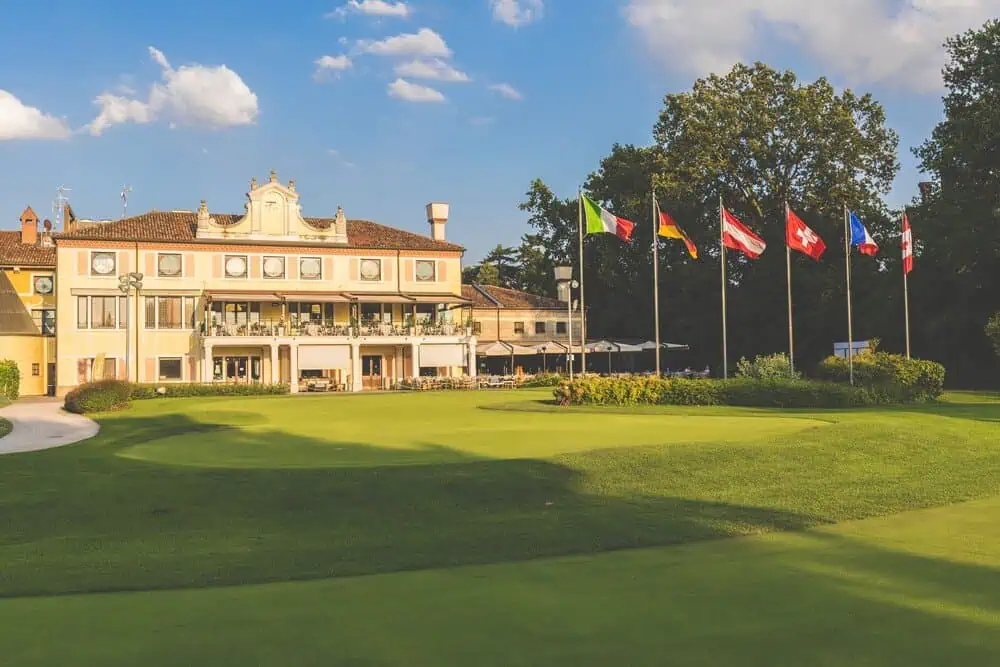
Bermuda grass in Veneto – many greenkeepers and golf club operators initially called this idea by Italian agronomist Alessandro de Luca “crazy”. It was 2004 and Montecchia, a small town not far from the world-famous Abano Therme spa, had been ravaged by drought in 2003, as had large parts of Italy. “Most of the golf courses looked terrible,” recalls de Luca today. Greens and fairways, largely sown with bentgrass, were starved for water. De Luca and his wife Maria Paola Casati, managing director of the 27-hole Golf della Montecchia course, were able to experience the effects of the heat and lack of water on their own golf course.
22 years later, opinions in the Italian golf scene have changed: Golf della Montecchia’s example of converting the fairways to Bermuda grass has now been followed by numerous golf courses in Italy. And that’s not all: the Olympic Stadium in Rome now also uses Bermuda grass. “This has had a very positive influence on opinion,” summarises de Luca.
The Italian, who is responsible for agronomy at the Green Section of the Italian Golf Federation, began the transformation to new grasses in 2010 in Montecchia, after some studies on the adaptability of this species conducted from 2004 to 2007 in collaboration with the universities of Pisa and Padova. Research work, in which he investigated the suitability of Bermuda, Paspalum, Zoysia and Kikuyu, was intended to lay the theoretical foundation.
Two factors repeatedly proved to be an obstacle: firstly, the negative example of a site in Tuscany was well known in the scene, which had had bad experiences when trying to implement Zoysia grasses in the 1970s, not due to adaptability issues of this species, but simply because of maintenance errors.
On the other hand, the Italian golf industry – despite its Mediterranean climate – was shaped by suppliers and experts from countries north of Italy. Whether France, Germany, Austria or Scandinavia – cool-season grasses were always the first choice here for a long time. In Italy, the same choice was made for a long time, although the climatic conditions are different.
50 to 70 percent less water consumption
At Golf della Montecchia, a successful field test phase with Tifway Bermuda on the driving range in 2007 was followed by introducing the grass on the 27-hole-championship course in 2010, 2011 and 2012. Whether in Veneto, in the greater Rome area or on courses around Bologna and Tuscany. “More and more followed suit.” According to de Luca, the advantages speak for themselves: “It has been our best innovation in Italy to date,” says the agronomist with satisfaction. “We use 50 to 70 per cent less water on the pitches, need less fertilizer and have virtually stopped using pesticides. Now that the availability of water is a major issue in Italy – as in many other European countries – the golf courses are also in a better position to argue with the authorities.
What’s more, according to de Luca, the quality of the grass and playability have improved from year to year.” Bermuda grass copes better with extreme heat in particular. At the same time, it also forms a kind of grass mat in wet winters, which in turn means that the drainage works better and it is significantly less muddy because of better drainage.
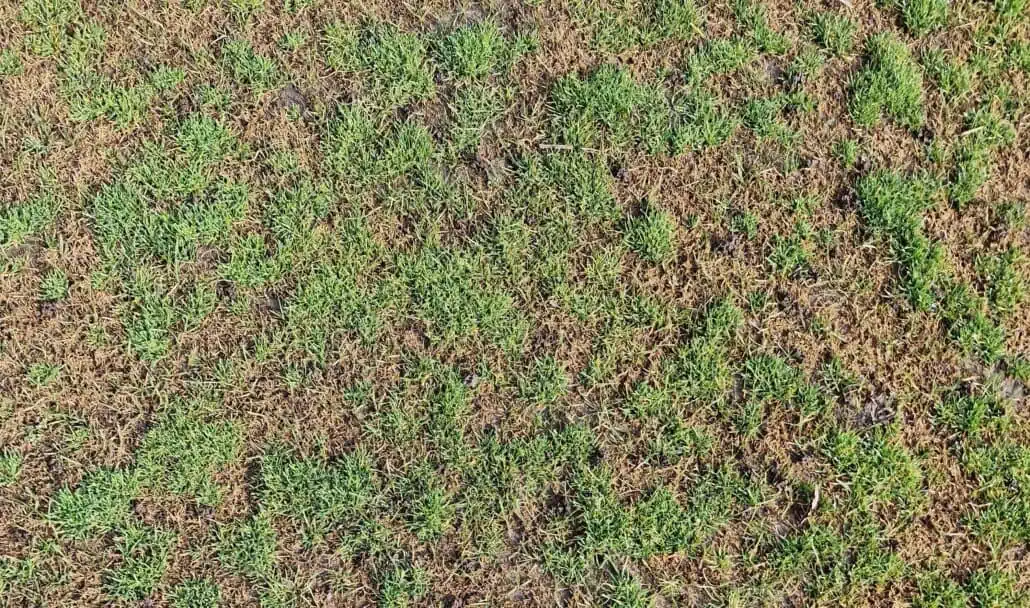
Only the issue of color is still a bit of a problem for golf course operators. “Tourists usually expect green courses when they come to us in the fall or spring,” de Luca has observed. The high season in Veneto, as in many other regions of Italy, is from March to May and then again from September to November, when it starts to get cool in northern Europe. It is precisely during this phase that Bermuda grass is at least partially yellowish because it goes into a kind of hibernation. The playability of the grass does not change, only its appearance. Overseeding with the grass variety Lolium perenne (ryegrass) for the winter ensures a green sheen even in the colder months.
De Luca’s mission in grass transformation is not over yet. In view of the ongoing climate change, which is leading to “really crazy weather” in Italy, the grass expert now has his sights set on research into Bermuda and Zoysia varieties for greens, which he wants to carry out together with the University of Padova and Pisa. Zoysia is otherwise often found in Asia.
So is this the next “crazy” idea for the Italian golf market? No idea, says the Italian with a smile. He relies on solid research and sustainable greenkeeping. The transformation towards more Bermuda grass in Italy was therefore not crazy, but a solution that has made many Italian golf courses more resilient.
.