
More education, knowledge and support for Irish golf clubs: with this goal in mind, Golf Ireland’s sustainability team has completed the first round of workshops at seven Irish golf clubs. “We held 3 sessions at each club and both the engagement and feedback were positive.,” says Ann Courtney, Golf Ireland’s sustainability manager. The clubs Headfort, Rosslare, Bray, Bandon, Killarney, Athenry and Strandhill kicked things off.
- Through the workshop series, which every Irish golf club can take part in free of charge, Golf Ireland is gradually implementing the sustainability strategy it developed with GEO. Each workshop day is divided into three parts:
- An expert in agronomy brings the greenkeepers up to date on the topics of turf, water, biodiversity and resilience of the pitches.
- Club managers, committees, presidents and captains will attend a special session to learn all about risk management, cost savings, funding opportunities and support from Golf Ireland.
- Finally, a member information session addresses the general balance between sustainability and playability in a club. This unit is aimed specifically at club members, i.e. the normal golfer.
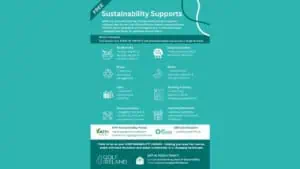
The feedback on the offer has been first-class: Around 120 clubs have already signed up. Golf Ireland is coping with the demand logistically by combining several golf clubs in roadshows or offering webinars, some of which are digital.
Courtney believes it is particularly important that the golf courses directly feel the support of the association and that the topic of sustainability is easily understood by all representatives of a golf club.
As always with programs of this kind, Golf Ireland is also confronted with the question of how to encourage even those clubs to participate that never actually take part in the association’s programs.
Free ecology audit
“We find offering a free ecology audit is a good way to open the door, and free access to the programme is attractive”, reports the sustainability team on its experiences. “They also hear about other clubs involved and don’t want to be left behind. Peer-to-peer learning is great.”
What is particularly striking about the Irish program is that it is not limited to the classic topics that are often occupied by associations when it comes to sustainability: It is not just about the promotion of biodiversity or the improvement of water management, but all the key aspects that arise in the overall complex of sustainability come into play: waste management or the issue of generating and reducing CO2 emissions, for example, are also addressed.
After the encouraging start to the workshop series, the motivation in Golf Ireland’s team is high: “We’ll keep going,” promises Ann Courtney. When it comes to sustainability, Golf Ireland has left the strategy development phase behind and is convincing with real projects. This puts the association one step ahead of many other associations in Europe, some of which do not even have a sustainability strategy yet.