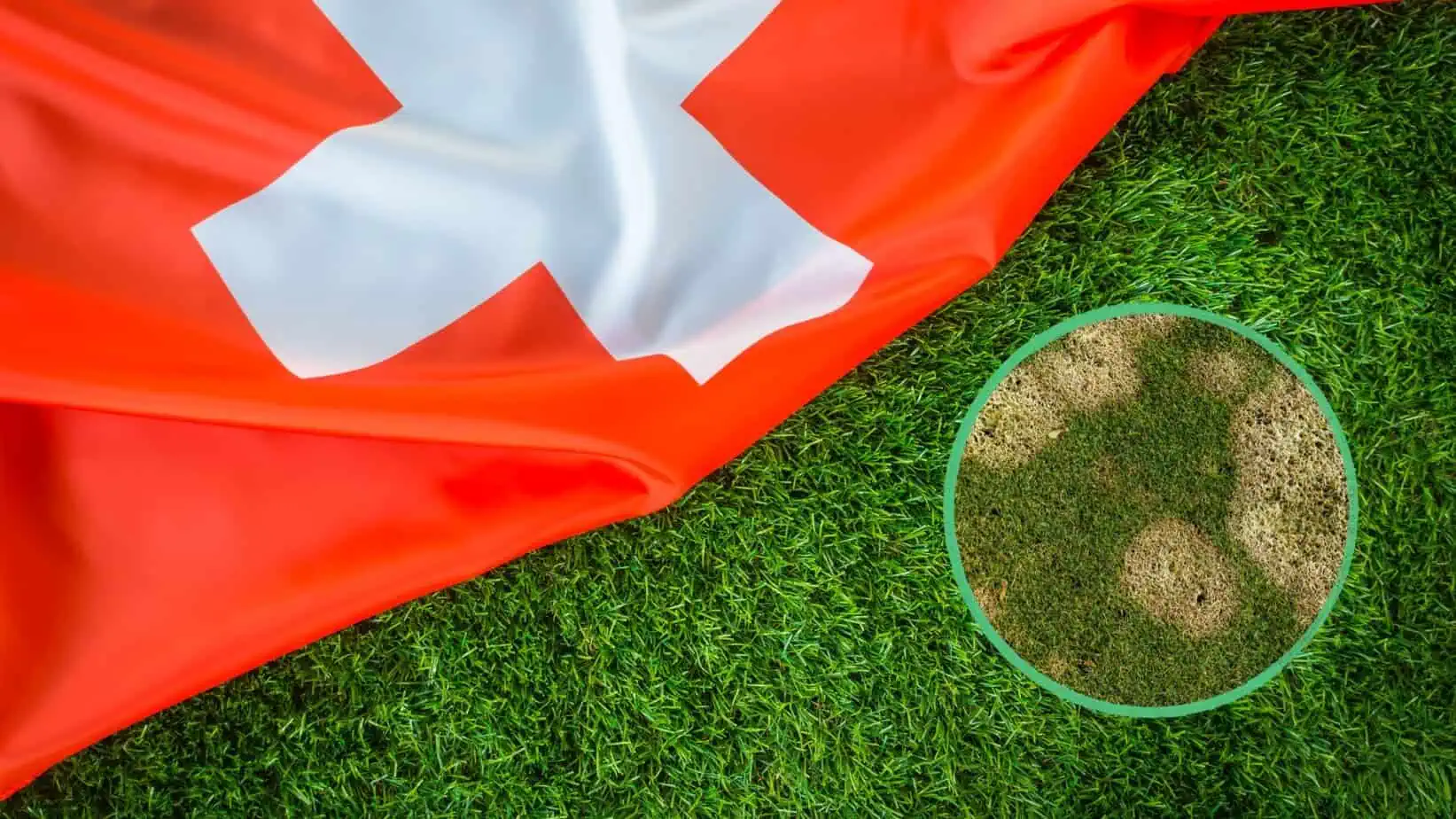
The idyll is deceptive: while Lake Zurich glistens crystal-clear in the sun and golfers in the Swiss capital set off on their first rounds of the season in perfect weather, behind the scenes the golf industry is in turmoil. As of January 1, 2027, the use of pesticides is extremely limited by law. Herbicides are banned except for a few narrow exceptions, and fungicide use is significantly reduced. Substances that were still permitted in Switzerland but already banned in the EU will now also be banned here. And: stricter distance rules apply to residential buildings, some of whose residents are entitled to view the digital spraying logs.
The reaction of the Swiss golf industry ranges from professional composure to “great unease”, as Etienne Marclay, responsible for sustainability on the board of the Swiss Golf Association, describes it. The reason: greenkeepers and operators of golf courses fear that without the use of pesticides they will no longer be able to offer the usual quality on the golf courses. Lukas Andreossi, President of the Swiss Greenkeeper Association, puts it this way: “We all work according to integrated pest management and try to manage without fungicides as long as possible. However, there are still no suitable alternative products, and the switch to more resistant grasses still takes time. The greenkeeping scene in Switzerland is currently trying out various strategies, is internationally networked and is exchanging ideas. However, we are not yet at the point where we can guarantee decent quality without pesticides.”
It is unclear why the unrest has only arisen now. The Swiss Federal Office responsible points to the fact that the Federal Council’s decision on the subject dates back to April 13, 2022. The amendments to the Chemical Risk Reduction Ordinance can also be found under the heading “Entry into force of measures for a more sustainable agriculture“. And this is precisely the crux of the matter: golf courses are designated as “areas intended for the general public”. They are therefore considered sensitive areas that require a higher level of health protection.
Swiss Golf: phase-out by 2030
In principle, the new regulations have been clear since 2022. In any case, the Swiss Golf Association had already set a target to phase out the use of synthetic pesticides by 2030 in its 2018 sustainability strategy. For golf courses, it had already been clear for eight years that an industry transformation was imperative and that implementation on the courses was necessary. “Some courses have continuously prepared themselves,” sums up turf expert Dr. Dirk Kauter, who is also aware of the biggest problem facing the golf industry. The fungal disease dollar spot, one of the top issues in greenkeeping internationally, is also an increasing threat to Swiss courses.
Together with the R&A and Swiss Golf, he conducted a study on opportunities to combat dollar spot. The result was sobering: “Golf courses need to emphasise preventive measures so that they can control the dollar spot.” According to the study, there is no effective non-chemical means of combating acute dollar spot infestation. Especially those golf courses that continue to work with a high proportion of poa in the greens, high fertilisation, and irrigation are likely to experience increasing quality problems.
The example of Switzerland once again shows the complete dilemma of the golf industry: many operators and golf course managers only pay attention to the issue of pesticides when a mandatory legal regulation becomes acute.
Golfing nations such as Denmark and France have negotiated transitional periods and exemptions with federal authorities by acting responsibly following legislation that assumed a complete ban. However, this required the golf industry to be transparent and to provide data-based documentation. This data is not available for the whole Swiss golf industry, as in most other European countries. In a working group, representatives of Swiss Golf, the Greenkeepers Association, and the industry are now discussing the creation of a digital platform to collect data and thus provide greater transparency vis-à-vis the authorities.
For the golfer on site, such bureaucratic debates don’t matter at first. For them, two things are most important: the quality of the course and their own health, which is affected, for example, when balls come into contact with greens that have been treated with pesticides shortly beforehand.
For golf courses that have long focused on reducing the use of pesticides, the consequences of the Federal Council’s decision from January 2027 are likely to be less severe. “We have been preparing for this for some time now,” explains Simon Doyle, Vice President of Agronomy at Troon, the world’s largest service provider for golf course maintenance. He is responsible for the Migros courses in Switzerland, among others. “What it does require is a higher level of precision in agronomy, supported by continued investment in infrastructure and an evolution of day-to-day maintenance practices.” The experienced agronomist, therefore, also sees opportunities for the Swiss golf industry “Swiss golf courses are already operating at a very high standard, and this transition will further drive innovation and attention to detail in how playing surfaces are prepared and protected. There is no doubt this will come at a cost, and like any service or commodity, that cost will need to be absorbed somewhere within the overall operation.”
Swiss golf courses still have nine months to prepare for the new plant protection regulations. For those who have been dealing with it since the law was passed in 2022, it is probably not a problem. For everyone else who has only recently started thinking about the issue, Dollarspot in particular is likely to be a real threat.