
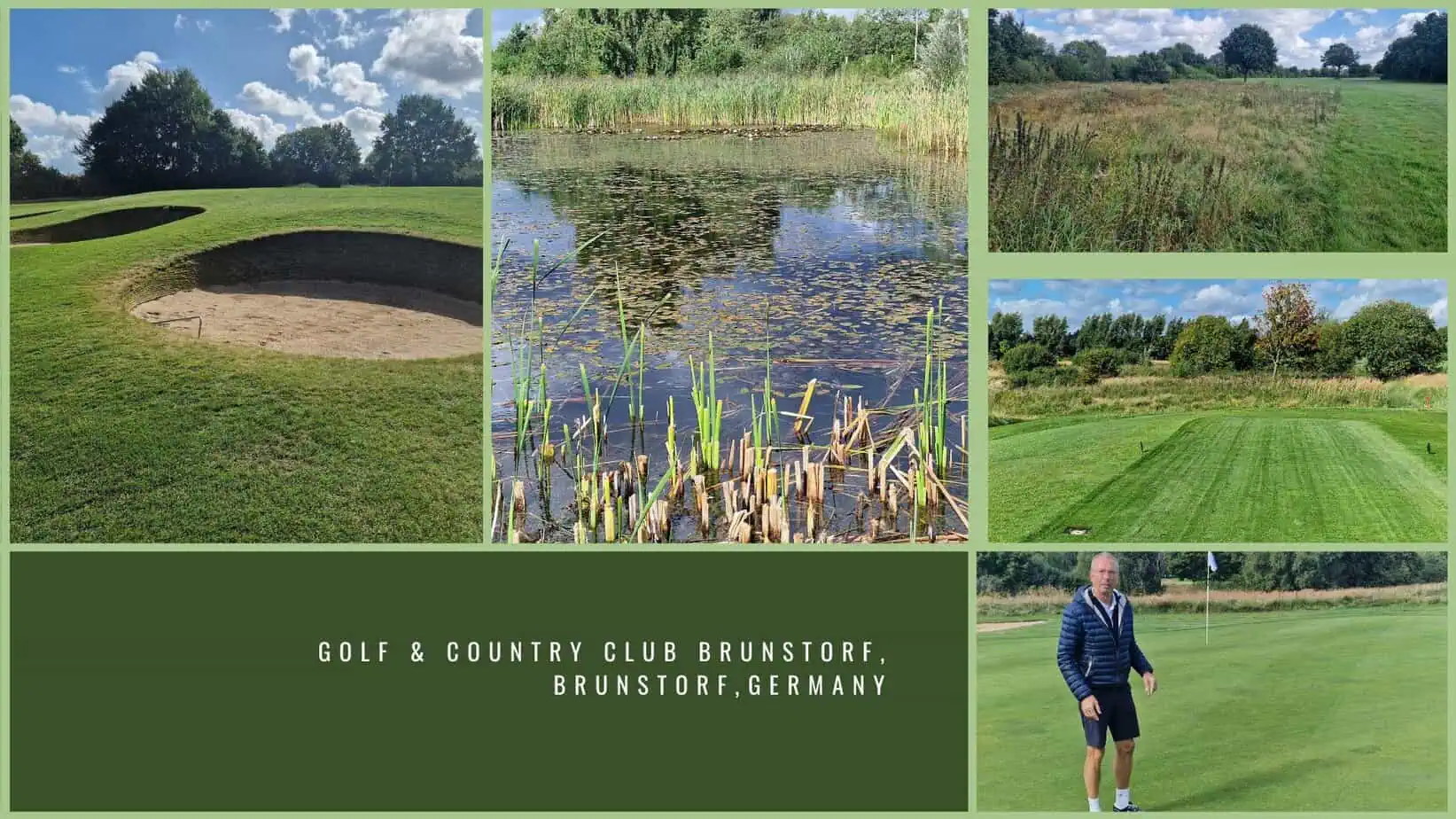
Sustainable golf club management is a case for calculations. And Christian Thiemann loves numbers – apart from golf, of course, where the ex-tennis player has achieved a single-digit handicap himself. Anyone who meets the owner and operator of the Brunstorf Golf & Country Club in his clubhouse in the greater Hamburg area quickly realises that the man is a sportsman through and through, but also a managing director who turns over every stone when it comes to profitability. The question of whether sustainable management is worthwhile can therefore be wonderfully discussed with him, who runs a 9-hole course in addition to an 18-hole championship course.
“The quality has improved, I save on diesel and I haven’t laid off a single employee,” is his initial analysis of greenkeeping. In Brunstorf, electric mowers are now running on the fairways, which Thiemann was initially quite critical of. He is now completely satisfied: “We save around 40 hours of mowing per week, and one employee can do something else in the meantime.” Especially in wet conditions, he also benefits from the fact that each electric mower weighs just 21 kilograms, leaving hardly any tracks and therefore also contributing to quality.
“Of course, it would be better if they were powered by solar energy,” he recognises self-critically. Thiemann has also taken a close look at the topic of renewable energies and would prefer to build a larger solar power system on his golf course. Not on the roof of the clubhouse, but on an unused area – after all, with a total area of 110 hectares, there is plenty of space. However, this is precisely where the Brunstorf owner has come up against a large number of legal conditions that make the process more difficult. These include an amended land use plan. “In the end, an external plant like this has to pay for itself in five to seven years,” he says. Green electricity is terrific, is his analysis, but the golf course also has to survive economically in the end. “I’m looking into all of this, but the result is not yet clear.”
Space reduction raises questions
Since he started running the golf course in 2006, Thiemann has learned many lessons about sustainability. Reducing space, for example, is not always easy for him. “The course is very important and the fairways have to be wide enough,” he says. In his view, the conflict between increasing biodiversity by expanding the rough areas and appropriate playing times, on the other hand, has not yet been resolved. At least not if the operator – as is the case in Brunstorf – has to deal with relatively rich soils where the rough is dense, and the proportion of grass is high.
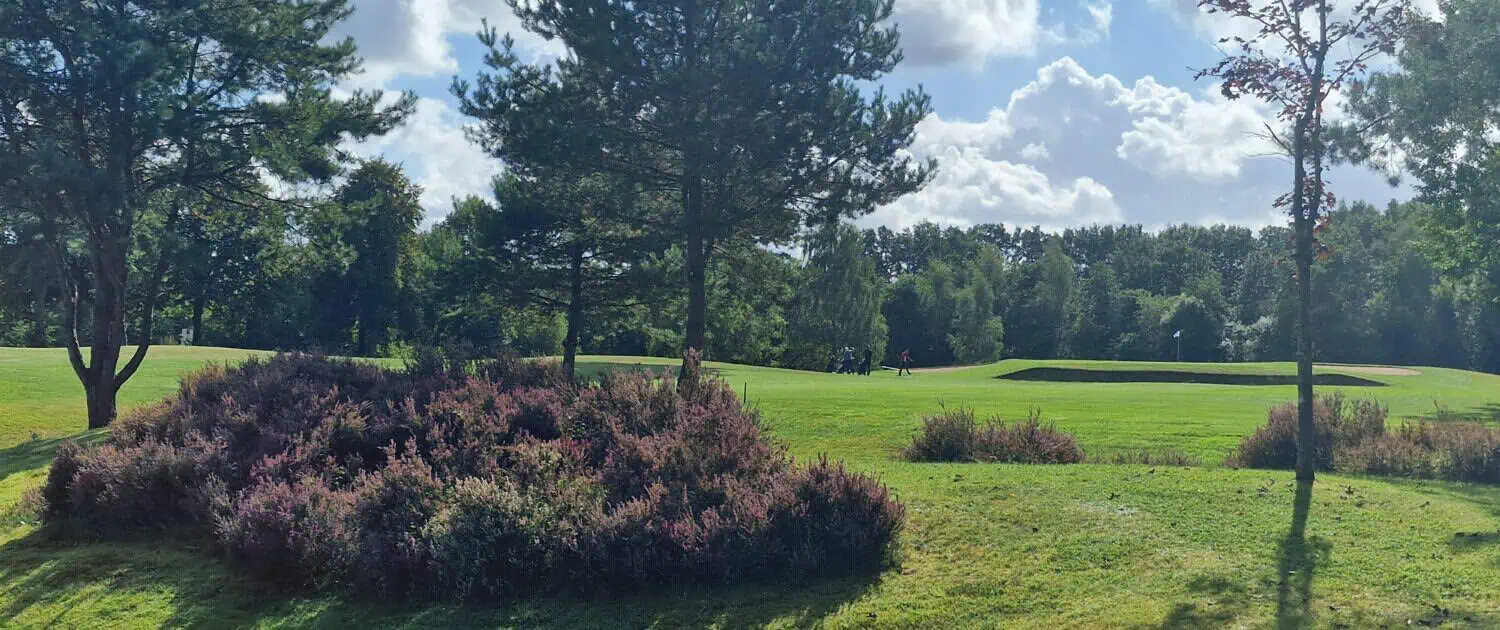
There is no shortage of compensation areas at Golf & Country Club Brunstorf due to its total size of 110 hectares: hedges, meadows and even a small area of heathland can be found on the sides facing away from the game, i.e. behind the tees or between the fairways. In many cases, water areas are designed to be near-natural, and there are often areas along the sides between the tees and fairways that are mowed only twice a year at most.
At Golf & Country Club Brunstorf, Thiemann also focuses on sensible measures that enhance the sustainability of sports and events. The North German Motorhome Open is one such project for him. The event took place for the third time in 2025 and the tournament has since become a hit among golfers who also own a motorhome. Due to the fact that the caravans are all parked on the course and Thiemann even offers a bread roll service in the morning, the participants stay almost exclusively on site with arrival and departure for three tournament rounds, the cars are hardly ever moved. Thiemann organizes a bus for the tournament round at GC Hoisdorf, so that the Caravan Open does not cause additional traffic congestion in the surrounding area.
For Thiemann, whose course is a thriving business with more than 1,000 members, the bottom line when it comes to sustainability is clear: he considers the topic to be important and good, but the combination with the economic factor is crucial. He advises other golf course operators to do one thing above all: it is essential to take a close look at the figures and data.


 The Scandinavian Golf Club Jacob Sjoman