
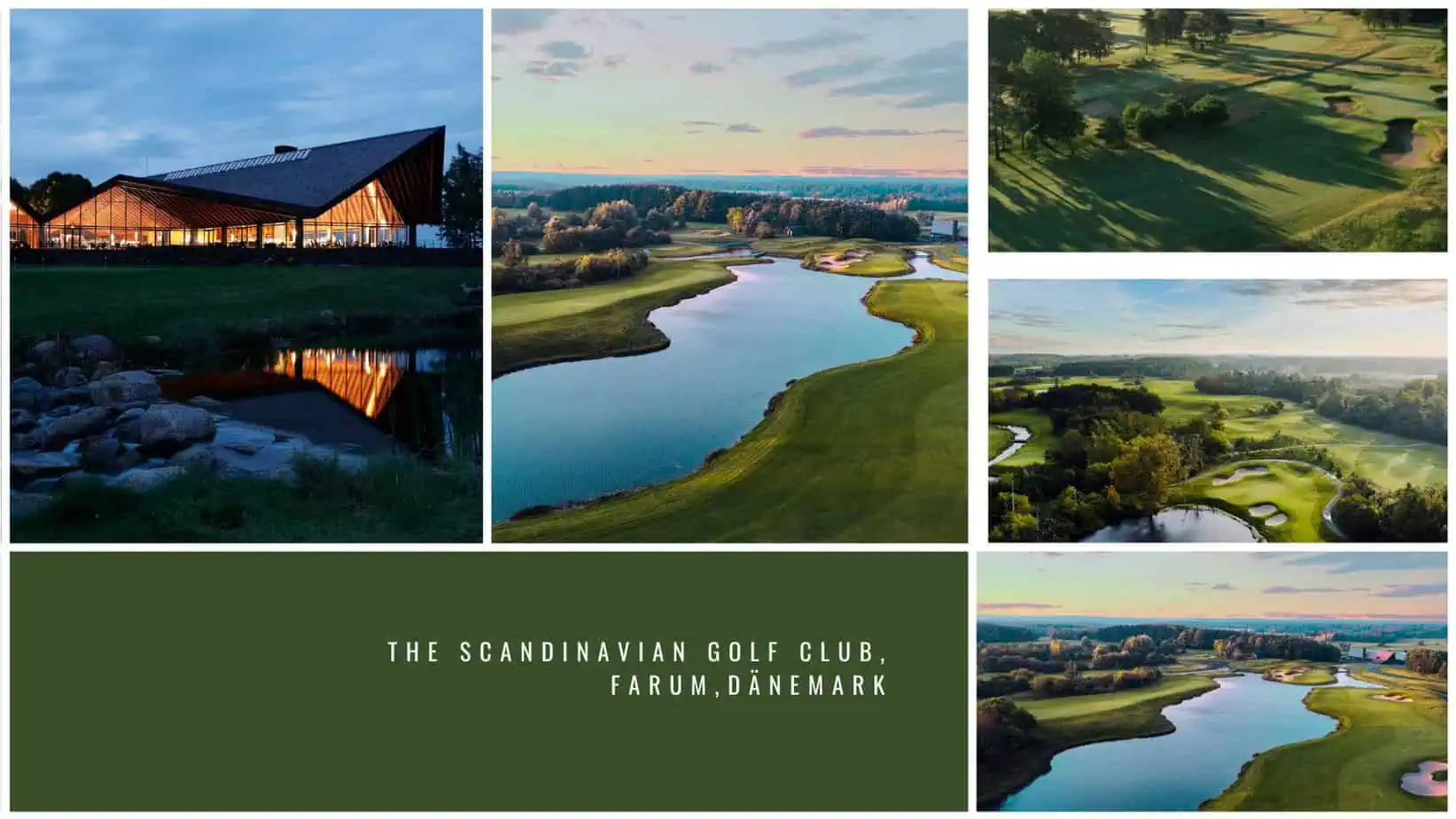
The first impression is impressive: a lush pink installation on the edge of the 18th fairway of the Old Course catches the eye after driving through an avenue of oak trees. Then the large, award-winning clubhouse of The Scandinavian Golf Club stands out. Henning Larsen, designer of the Copenhagen Opera House, wanted to bridge the gap between American golf course architecture and Danish nature.
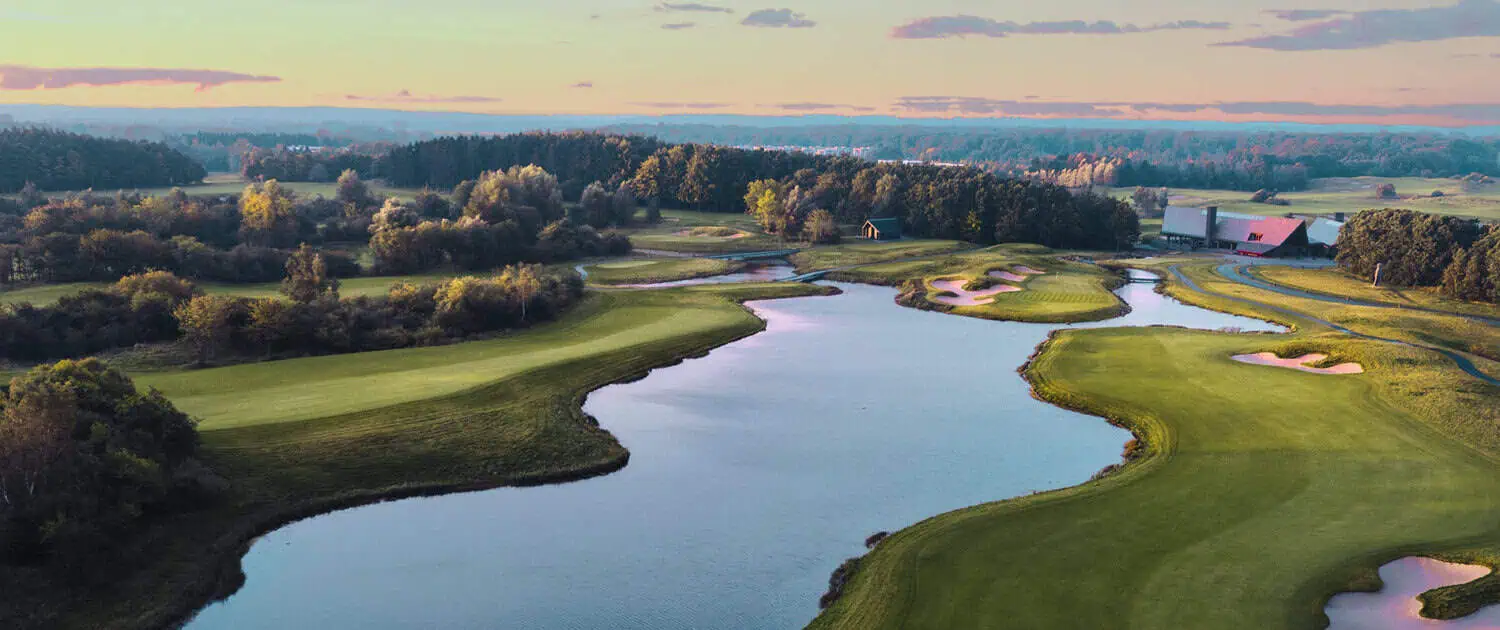
The latter is characterized by two elements: Plenty of forest and plenty of water, both of which dominate the two golf courses at The Scandinavian, which opened in 2010. Huge ponds, small biotopes, the occasional stream. You guessed it – water management played a major role in the planning of the Old and New Course, which are located around 20 kilometers from downtown Copenhagen, right from the start. Today, the high-end golf course, whose two courses are regularly listed among the top 100 golf courses in continental Europe by various magazines, is a prime example of self-sufficiency when it comes to irrigation.
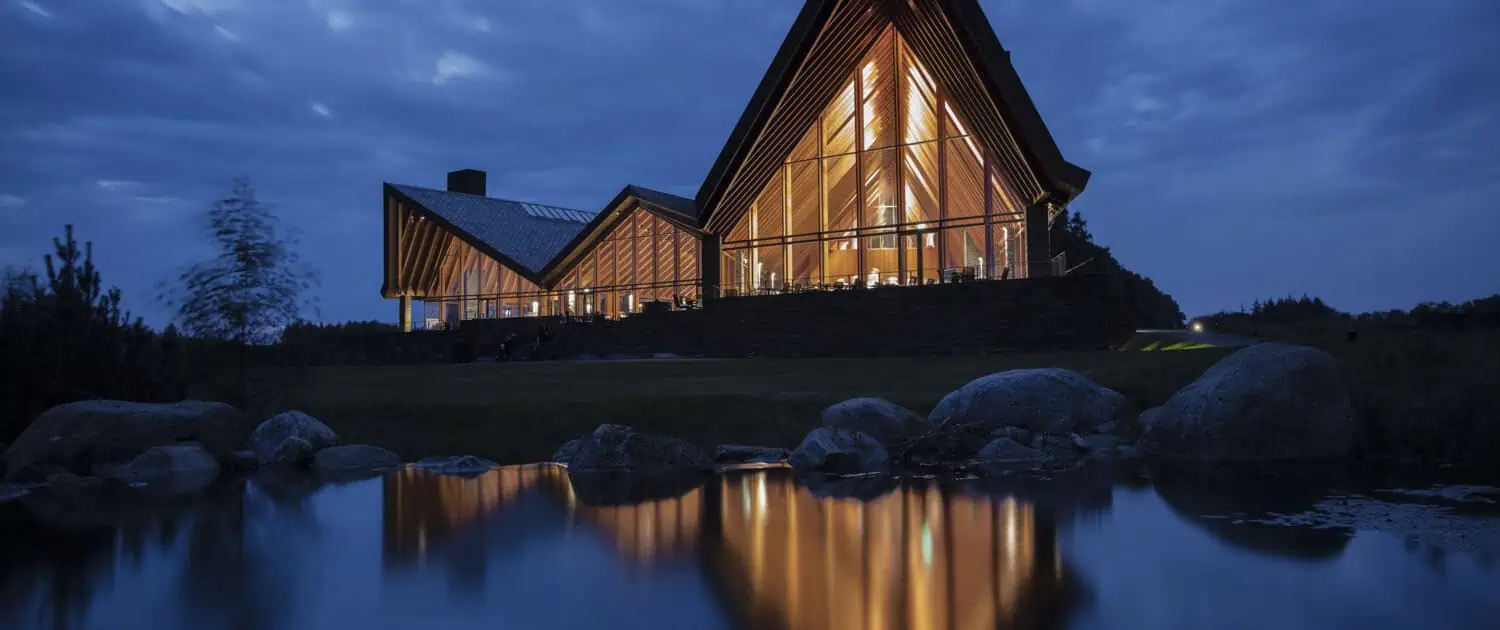
The issue of water scarcity did not actually play a role in the construction of the golf courses. When the three investors Jesper Balser, Peter Bang and Torben Wind, founder of the software company Navision, bought around 200 hectares of a former military site in Farum, it quickly became clear that the heavy, clayey soil was crying out for drainage. “It was actually mainly about getting rid of all the wetness,” explains Martin Svarree Selck, Deputy Course Manager and responsible for certifying the site at GEO. Countless kilometers of drainage carry the water into the ponds, some of which are also used to irrigate the fairways. In addition, better drainage was achieved during construction through sand capping, i.e. the installation of a layer of sand on all fairways.
In the meantime, however, the care requirements have changed. “2008, for example, was definitely too hot,” recalls Svarre Selck. “In general, we are experiencing more and more hot phases here.” However, the sandy soil now requires sufficient irrigation for the grass to grow. Water extraction from surface waters is limited by the authorities.
In view of the two golf courses in a classic American design by the golf course architecture firm Robert Trent Jones II, it is reasonable to assume that deep green fairways are the norm even in midsummer. Especially as the membership of the golf club, whose fees are the highest in Denmark, is considered to be demanding and well-traveled. “We built a reservoir after 2018 to prevent the courses from turning yellow after another drought,” says CEO Christian Tage Nyvang Hansen. For him, the challenge is clear: on the one hand, he has a top American product in The Scandinavian Golf Club, where the clientele expect quality on a par with a top US course, while on the other hand, Denmark’s strict regulations on water consumption and the use of pesticides do not allow course management as is standard on most American golf courses.
In addition, golf in Denmark is perceived by the public as being close to nature, and sustainable management is expected of courses with a high maintenance budget. And: the contributions that can be achieved in Denmark, even from a top facility, are in no way comparable with the American market. The high golf participation rate in Denmark of over 2.5 percent of the total population is also due to the very moderate price structure. In short, the management and greenkeeping environment is completely different to that of a comparable facility in the USA.
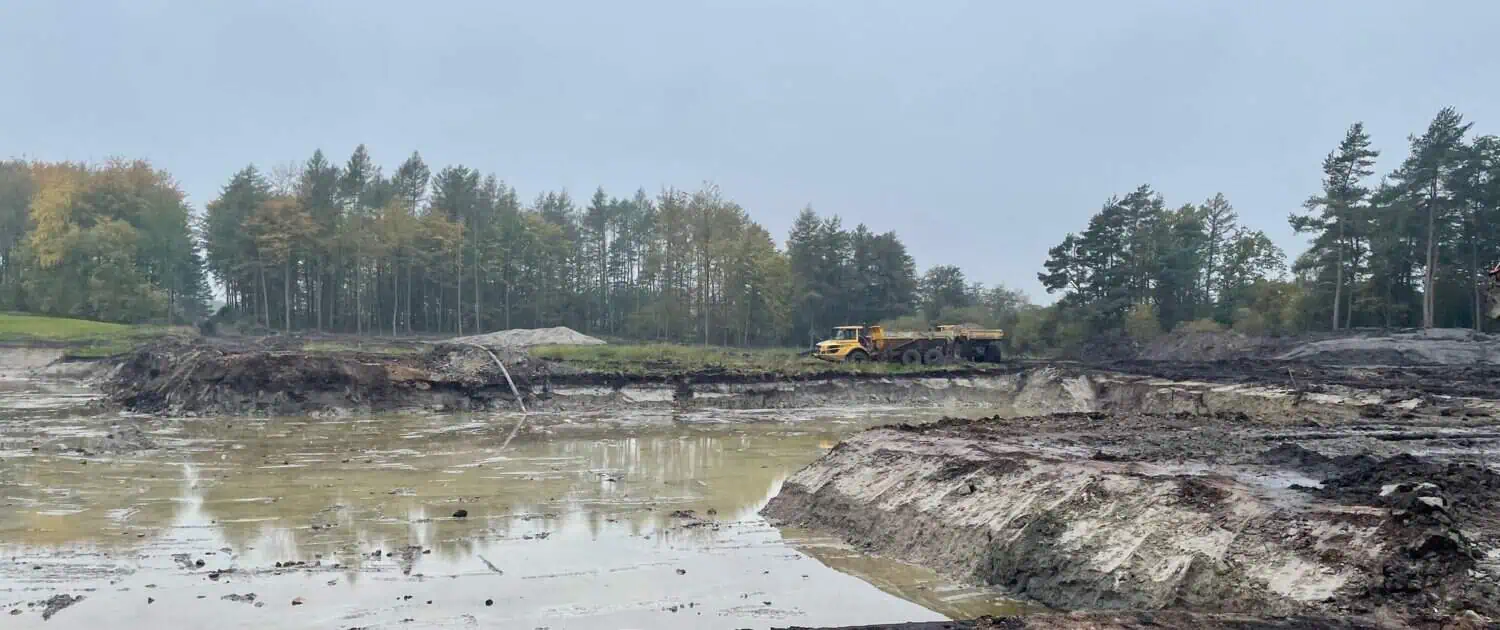
The construction of a new 55,000 cubic meter storage pond on the edge of the 14th hole of the New Course has provided a remedy for the water supply. What at first glance appears to be a completely natural reservoir is actually a back-up for hot and dry summers, into which drained water from the surrounding courses is fed. Incidentally, the loamy subsoil had a positive effect here – there was no need for expensive waterproofing membranes. Waterfowl have long since conquered the reservoir as a new habitat. “If you come here early in the morning or in the evening, the view is fantastic,” enthuses greenkeeper Svarre Selck.
The numerous water hazards play an extremely important role in terms of biodiversity. Extensive species monitoring was carried out back in 2005, before construction of the courses that border a Natura 2000 zone began, which ultimately influenced the planning of the water areas and their natural design. Denmark’s strict pesticide law also stipulates that sprays may only be used – if at all – at a maximum distance of two meters. The prophylactic use of pesticides is not permitted at all.
INSERT_STEADY_NEWSLETTER_SIGNUP_HERE
The problem of combating fungal diseases such as dollar spot therefore does not stop at the Scandinavian Golf Club. More heavy rain, higher temperatures and generally more humid air provide perfect living conditions for the fungi. Dollar spot has therefore been an increasing challenge for Scandinavian courses for several years.
“Communication plays a huge role for us,” says CEO Hansen, explaining the strategy for external presentation. For him, the task is to explain to members and guests how American golf course design, Danish regulations and high quality standards can come together when, on top of that, climate change with its unpredictable weather escapades comes into play. In the end, the best argument is probably the playing experience: in the current Golf World ranking of the top 100 courses in Europe, the New Course at the Scandinavian Golf Club is the best-placed course in the country at position 40. The Old Course in 47th place is number two in Denmark. The persuasive power of the course seems to be right.



 Flooding