

• Home
  • Newsletter abonnieren
  • Das Team
  • Ziele
  • Deutsch Deutsch Deutsch de
  • English English Englisch en
Golf Sustainable
  • News
    • Club-News
  • Klimawandel
  • Wasser
  • Biodiversität
  • Greenkeeping
  • Tourismus
  • Diversität
  • Weitere Themen
    • CO₂
    • Industrie & Equipment
    • Best Practice
    • Science
  • Click to open the search input field Click to open the search input field Suche
  • Menü Menü
Golfer und CO2-Fußabdruck
Foto: Bradley Klein

Vision 2050: Bradley Klein fordert Neuausrichtung des Golfsports

25. November 2025

Bradley Klein, einer der bekanntesten amerikanischen Meinungsführer beim Thema Golfplatzdesign, kennt die Golfplätze dieser Welt wie kaum ein anderer. Der Buchautor, Mitarbeiter des Golf Channel und Berater zahlreicher bekannter amerikanischer Golfanlagen, beobachtet die Veränderung der klimatischen und damit auch wirtschaftlichen Gegebenheiten vor allem in den USA kritisch. In unserer Serie Vision 2050 macht er klar: Die Betreiber und Verantwortlichen von Golfplätzen, die Verantwortlichen der Profitouren und die Spieler müssen ihre Arbeitsweisen ändern.

Bradley, Arizona litt 2024 unter einer extremen Hitzewelle, in Florida und South Carolina gab es enorme Regenfälle mit Überflutungen hinter sich. Wie beurteilen Sie die Situation der amerikanischen Golfszene mit Blick auf den Klimwandel?

Klein: Was den Klimawandel angeht, so gibt es mindestens drei Arten von Wetterextremen, die die Golfindustrie betreffen. Das erste, das wir vor etwa 10, 15 Jahren feststellten, war eine größere Häufigkeit extremer Regenereignisse. In Florida, um ein extremes Beispiel zu nennen, fielen zuletzt 16,5 Zentimeter Regen an einem Tag. Das ist eine ganze Menge. Das ist verrückt.
Und dazwischen gibt es immer wieder extreme Dürreperioden. Wir sehen, dass viele Golfplätze auf modernere Bewässerungssysteme umgerüstet werden, damit sie eine gleichmäßige Wasserversorgung haben, um die Trockenphasen zu überstehen. Gleichzeitig müssen sie in der Lage sein, die Abflüsse dieser massiven Regenereignisse aufzunehmen. Erschwerend kommt hinzu, dass viele der Golfplätze, die in ehemaligen Stadt- oder Vorstadtgebieten gebaut wurden, heute von befestigten Flächen aus Beton und Pflaster umgeben sind, sodass das Wasser nicht abfließen kann. Der Golfplatz wird im Wesentlichen zu einem Entwässerungsbecken für die Stadt.
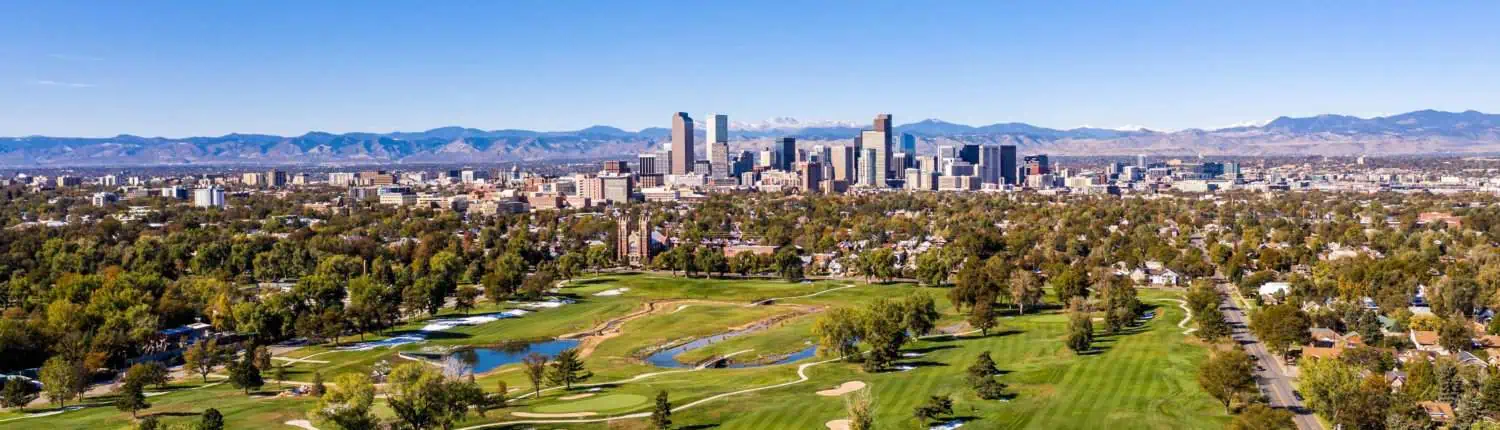
Blick auf einen Golfplatz vor der Kulisse von Denver
In Denver werden aufgrund von Wassermangel keine neuen Golfplätze genehmigt (Foto: Shutterstock)

Extreme Hitze ist ein Problem, weil sie den Bedarf an ständiger Bewässerung und höherem Wasserverbrauch erhöht. Außerdem stellt sie eine extreme Gesundheitsgefährdung für die im Freien arbeitenden Menschen dar.Und dies ist ein Bereich der Industrie, der bisher nicht wirklich berücksichtigt wurde. Es gibt inzwischen Staaten wie Texas, in denen man nicht einmal verpflichtet ist, den Arbeitern im Freien  Trinkwasser zur Verfügung zu stellen.  Dieses Recht der Arbeiter wurdeaufgehoben, was verrückt ist.

Das dritte Problem, das wir beobachten, ist der Anstieg des Küstenwassers, was vielleicht kein großes Problem zu sein scheint, wenn es nur ein oder zwei Zentimeter alle paar Jahre sind. Aber wenn man niedrig gelegene Golfplätze wie Seminole in Florida hat, muss man sich jetzt darauf vorbereiten, den Deich an der Außenseite zu erhöhen und die Fairways über den Grundwasserspiegel anzuheben. Außerdem gibt es Küstenerosion entlang der gesamten Ostküste, z. B. in der Gegend von Cape Cod, auf den Carolinas und rund um den gesamten Rand von Florida.

Haben Sie das Gefühl, dass die Golfbranche erkannt hat, wie groß das Problem ist?

Bradley Klein: Ich würde sagen, dass die Golfindustrie dies nur sehr langsam erkennt.
Sie muss aufholen. Die Kurzversion ist, dass die Greenkeeper die physikalischen geologischen Veränderungen, mit denen sie konfrontiert sind, verstehen. Das Problem ist aber, dass Golfplatzmanager, Pros, General Manager und Eigentümer zögerlich sind. Erstens, weil alles teuer ist. Und zweitens, weil die Golfindustrie politisch gesehen sehr konservativ ist. Die meisten Superintendents sind Republikaner. Aber es gibt auch eine politische Abneigung gegenüber der gesamten Agenda der Nachhaltigkeit und langfristigen Überlebensfähigkeit.

Wie sehen Sie die Zukunft neuer Golfplätze in Gegenden wie Nevada oder Arizona, wo es kein Wasser gibt und die Hitze extrem ist?
Bradley Klein: Denver ist ein gutes Beispiel. Denver hat nicht genug Süßwasser, um weitere neue Golfplätze zuzulassen. Auch wenn es also nach COVID eine Nachfrage nach dem Spiel geben könnte, ist für den Bau von Anlagen ein Zugang zu Wasser erforderlich. Und recyceltes Wasser kann man nur bis zu einem gewissen Grad nutzen. Recyceltes Wasser hat im Wesentlichen einen hohen Mineralgehalt, der durch die Nutzung durch Haushalte und Unternehmen entsteht. Man kann das Wasser zwar recyceln, aber nicht für Grünflächen verwenden, da sich Mineralien und Salze ansammeln, die man ausspülen muss. Wenn Sie also kein trinkbares Süßwasser haben, werden Sie wirklich Probleme mit dem Gras bekommen. Sie müssen also zumindest teilweise, wenn nicht sogar vollständig, Zugang zu Süßwasser haben. Das ist immer schwieriger zu bekommen, und es ist teurer. Ich denke, ein Teil des Problems, das die Zurückhaltung vieler Anlagen bei der Anpassung noch verstärkt, ist die Annahme, dass wohlhabende Mitglieder, die in diese Zweitwohnsitzgebiete gezogen sind, einfach für das Wasser bezahlen werden.

USGA startet 30-Millionen-Projekt zur Wasserforschung

Aber es gibt Golfplätze in Palm Springs, Kalifornien, oder in der Gegend von Las Vegas, die jedes Jahr eine Million Dollar für Wasser ausgeben. Das ist nicht tragbar. Es geht also nicht nur darum, dass der Preis steigt, sondern auch darum, dass die Verfügbarkeit abnimmt und die Golfanlagen sich anpassen müssen.
Dies alles betrifft vor allem einen bestimmten Bereich der Gesellschaft. 30 Prozent aller Clubs in Nordamerika sind privat. Viele Hausbesitzer – ich habe das zum Beispiel in Palm Springs erlebt – ziehen an einen Ort und wollen einen grünen Golfplatz. Sie wollen auch, dass er overseeded wird, was etwa 30 Prozent mehr Wasser absorbiert, als wenn man ihn nicht overseeded. Das ist in erster Linie aus ästhetischen Gründen so, damit der Platz grün ist. Gegen einen Golfplatz mit Gras in der Winterruhe ist eigentlich nichts einzuwenden. Er verträgt vielleicht Carts nicht gut, aber er lässt sich sehr gut spielen. Das Gras ist eben nur braun. Gott sei Dank wird das Gras in Pinehurst, wo die US Open stattgefunden haben, nicht mehr overseeded.

Golfplätze wie Royal Dornoch oder der Old Course in St. Andrews sind immer noch erstklassig. Was können Golfplatzarchitekten von diesen historischen Plätzen für die Zukunft lernen?

Klein: Die Architekten sind nicht das Problem. Das eigentliche Problem sind die Medien. Und die Medien verstehen die Thematik nicht. Die PGA Tour versteht sie auch nicht. Die PGA Tour kümmert sich nicht um dieses Thema. Sie wollen ihren Spielern eine grüne, saftige Grasfläche präsentieren, und das ist es, was die Medien zeigen und was die Leute dann im Fernsehen sehen.

Blick auf einen braunen Golfplatz
Dieser Platz wurde nicht für den Winter übersät. was Wasser spart (Foto: Petra Himmel)

Lassen Sie uns über die Länge der Plätzesprechen. Je länger sie werden, desto mehr Ressourcen brauchen sie. Sollten die Plätze in Zukunft kürzer werden?

Klein: Auf dem Elite-Niveau, das ein völlig anderes Spiel ist als das, das wir alle spielen, sind die Plätze natürlich länger geworden, sodass sie 6800 bis 7000 Meter, vielleicht 7300 Meter lang sein müssen. Ältere Plätze wie der Old Course oder mein Lieblingsplatz Wannamoiset haben eine Fläche von 45 bis 50 Hektar. Merion hat 45 Hektar. Ein moderner Golfplatz muss eher 60 bis 65 Hektar groß sein, aber das bedeutet nicht, dass man das alles pflegen muss. Man kann problemlos einen Golfplatz mit 5700 Meter Länge bauen, auf dem man gut spielen kann. Man muss dann nur hinten noch Abschläge einfügen und das Areal zwischen den Abschlägen aus der Pflege nehmen.
Die Green Section der USGA hat hier mit ihrer neuen Deakon-App sehr gute Arbeit geleistet. Sie versetzt den Club in die Lage, die tatsächliche Fläche, auf der gespielt wird, zu messen. Dann stellt sich heraus, dass es viele Bereiche gibt, in denen man das nicht mähen muss. Dies kann bei den meisten Golfplätzen zu einer Verringerung des Pflegeaufwands führen.
Was die Längenproblematik angeht, so haben sowohl der R&A als auch die USGA  Beschränkungen für die Fluglänge des Golfballs ausgegeben. Dadurch wird die Fluglänge, die unter den derzeitigen Spielbedingungen möglich wäre, um etwa vier oder 5 Prozent verringert. Das wird eine kleine Hilfe sein. Aber das eigentliche Problem ist, dass die meisten Golfplätze eine realistischere Einschätzung des tatsächlichen Pflegeaufwands vornehmen müssen.

Muss die Kommunikation besser werden, um die Golfer besser zu informieren?

Klein: Mit Sicherheit.Ich glaube, die meisten Golfer werden so erzogen oder haben die Erwartung, dass die Golfplätze an jeder Ecke gepflegt sind. Der Golfball hat überall eine gute Lage. All‘ das ist für mich eine Art purer Luxus.

Wenn Sie in die Zukunft blicken, etwa in 20 Jahren, glauben Sie dann, dass das allgemeine Erscheinungsbild von Golfplätzen ein wenig ungepflegter sein wird?

Klein: Nun, wir wissen aus Daten und Umfragen, dass jüngere Menschen ein größeres Bewusstsein für Umweltthemen haben. Wenn sie 35, 40 Jahre alt sind, gehören sie hoffentlich zur Mittelschicht und treten einem Golfclub bei. Vielleicht, so hoffen wir, werden sie dieses Umweltverständnis dort mit hinnehmen. Ich vermute also, dass es einen Generationswechsel in den Erwartungen der Menschen an ihre Golfplätze geben wird, dass es kein makellos gepflegter Rasen mehr sein muss. Stattdessen wird es eine angemessene, aber unberechenbare Spielfläche sein. Und das wäre das Ideal.

Ich glaube, dass es einige Trends gibt, die darauf hindeuten. Die Tatsache, dass Orte wie Bandon Dunes so beliebt sind oder dass jeder, der nach Schottland reist, beeindruckt von dem zurückkommt, was er gesehen hat, obwohl es ganz anders aussieht als das, was er von einem Country Club gewohnt ist. Das sind sehr positive Trends.

Wir haben in den letzten Jahren eine Entkopplung von Profi- und Amateurgolf erlebt, was die Spielfähigkeiten und die Plätze betrifft, auf denen gespielt wird. Wie werden wir damit in Zukunft umgehen?
Klein: Als Donald Ross und Alistair McKenzie und A.W. Tillinghast Golfplätze entwarfen, schlug der Elitespieler den Ball 220, 240 und der Durchschnittsgolfer 170, 180.Die Statistik für die US Open in Pinehurst zeigt, dass der durchschnittliche Drive bei 307 lag. Das ist verrückt. Ich denke also, der Schlüssel dazu ist, dass Eigentümer und Betreiber entscheiden müssen, wer ihr tatsächlicher Kundenstamm ist. Und der Fokus für Golf, für die Spieler am vorderen Abschlag, muss ein spielbarer Golfplatz aus 5.000 Yards sein. Für die meisten Golfer sind aber 6.200 bis 6.300 Yards vollkommen ausreichend. Und wenn man dann noch die hinteren Abschläge hinzufügt, ist es nicht mehr so, wie in den 80er und 90er Jahren, dass die Golfplätze von den hinteren Abschlägen aus entworfen wurden und die vorderen mittleren Abschläge eher ein nachträglicher Einfall waren. Wenn Sie für 98 % Ihrer Kunden entwerfen und die anderen 2 % vergessen, haben Sie eine bessere Chance, einen spielbaren Golfplatz zu schaffen, der auf lange Sicht nachhaltig ist.

Unter Druck: Golfplätze in Stadtnähe

Wie sollten Investoren im Golfsport Ihrer Meinung nach einen Standort auswählen?
Klein: Es wäre besser, wenn sich der Golfsport auf Standorte verlagern würde, die entweder einen natürlichen Abfluss entlang der Küste haben, oder wenn es sich um Industriebrachen handelt, die umgewandelt werden. Wir haben viel zu viele leere Parkplätze und Einkaufszentren, die in Golfplätze umgewandelt werden könnten. Wenn man sich also bei der Entwicklung von Golfplätzen auf ehemalige, in öffentliches Eigentum umgewandelte Flächen konzentrieren und diese als Grünflächen nutzen würde, könnte man etwas erreichen. Die Zersiedelung der Vorstädte und das extreme Aufkommen von Autobahnen und Betonflächen, das so viele Landschaften zerstört hat, würde umgekehrt werden. Hier kann Golf eine brauchbare Alternative sein, denn es ist auch ein Geldbringer.

Derzeit erleben wir einen Boom von exklusiven Anlagen, die zum Beispiel in Florida gebaut werden. Brauchen wir für eine nachhaltige Zukunft des Golfsports mehr bezahlbare Plätze?

Klein: Florida ist ein Phänomen. Wir erleben, dass lächerlich hohe Summen investiert werden und Mitglieder bereit sind, zwei bis 300.000 Dollar auszugeben, um einem Club beizutreten. Es ist ihnen egal, wenn der Bau des Golfplatzes 30 Millionen Dollar kostet. Teil des Problems ist auch, dass die Kosten für den Bau von Golfplätzen nach der COVID-Initiative höher sind als früher. Generell sind aber 80 Prozent der Golfplätze erschwinglich.

Man muss sich also darauf konzentrieren, dass der Golfsport auf den bestehenden Anlagen für jeden bezahlbar bleibt. Dort spielen die Einsteiger, die Senioren, die Junioren und die Anfänger. Das wird sich hoffentlich fortsetzen, aber es ist ein bisschen schwierig.

Nehmen wir an, Sie könnten drei verbindliche Richtlinien für Golfplatzdesigner für die Zukunft entwickeln – welche wären das?

Klein: Die erste ist, Golplätze nur bis maximal 5800 Meter zu entwerfen. Die zweite ist, die stark gepflegten Bereiche zu minimieren und sich auf Abschläge, Fairways und Grüns zu konzentrieren. Die letzte ist, nicht mehr zu versuchen, das Par zu verteidigen, was den Golfplatz schwierig macht, sondern sich stattdessen auf Spaß, Freude und Erfolg für den Alltagsgolfer zu konzentrieren.

Greenkeeping 2025: Innovativ denken, nachhaltig arbeiten

INSERT_STEADY_NEWSLETTER_SIGNUP_HERE

Teile diesen Eintrag
  • Teilen auf Facebook
  • Teilen auf X
  • Teilen auf WhatsApp
  • Teilen auf Pinterest
  • Teilen auf LinkedIn
  • Per E-Mail teilen

INSTAGRAM

golfsustainable

Golf Sustainable is an independent news platform, founded by Petra Himmel.

A crazy idea? Maybe. But now it is a global instit A crazy idea? Maybe. But now it is a global institution in golf: The Amundi Evian Championship

32 years ago, the idea seemed almost impossible. A small Ladies European Tour event on the shores of Lake Geneva. Most industry experts believed the project would fail. Instead, it became one of the greatest success stories in global sports as one of the five majors in women's golf. 

1️⃣ A long-term vision instead of short-term returns
From the very beginning, the ambition was to create a tournament that would still matter decades later. 

2️⃣ Putting athletes before the event
Many tournaments are designed around sponsors. Evian was designed around the players. Exceptional hospitality, attention to every detail, support for caddies, coaches and media created a tournament family. 

3️⃣ Excellence is found in the details
The Amundi Evian Championship is famous for its spectacular setting. Every element contributes to one coherent experience. 

4️⃣ Investing in women's sport before it became fashionable
Long before gender equality became mainstream, Riboud and Bungert believed in the commercial and sporting potential of women's golf. The arrival of Amundi as title partner accelerated that commitment. Prize money has grown from US$4.5 million in 2021 to US$9.1 million in 2026.

5️⃣ Building an ecosystem, not just a tournament
The road to Evian begins long before players reach the major. The Amundi Evian Kids Cup and Juniors Cup introduce the world's best young golfers to the venue.  Haeran Ryu is the perfect example. She won the Evian Juniors Cup in 2015. Eleven years later, she returned to set a new women's major championship scoring record with a brilliant 60 before lifting the trophy. Childhood dreams are connected with professional success.

For me The Amundi Evian Championship has become much more than a golf tournament. It demonstrates what is possible when leadership is guided by vision, consistency, excellence and genuine belief in women.

📷  Philippe Millereau
#Golf #WomensGolf #Leadership #SportsBusiness #SportsMarketing #EventManagement #WomenInSport #Diversity #BrandBuilding #GolfSustainable
⚡️ Can a world-class golf tournament run without d ⚡️ Can a world-class golf tournament run without diesel? The 2026 Genesis Scottish Open is proving that it can.

The DP World Tour is taking one of its biggest steps yet towards decarbonising tournament operations by replacing conventional diesel-powered infrastructure with an integrated renewable energy system at The Renaissance Club.

Here's how it works:

🔋 Two 250 kWh Green Hydrogen Power Units (HPUs), each equipped with an integrated Battery Energy Storage System (BESS), form the heart of the tournament's new energy infrastructure. Positioned between the 1st and 15th holes, they provide reliable power for one of the busiest areas of the championship site.

📺 The hydrogen units supply electricity for the hospitality facilities around the 15th hole, the Genesis Public Lounge, the merchandise area and the large LED video screens—critical infrastructure that has traditionally relied on diesel generators.

☀️ For the first time, the Fan Village's main stage and the merchandise shop are powered entirely by solar energy, demonstrating how temporary event infrastructure can successfully transition to renewable electricity.

🔋 The integrated battery storage balances demand peaks, stores excess renewable energy and ensures a stable electricity supply throughout the tournament while reducing the need for backup generators.

🌍 The impact is measurable:
• Approximately 16,200 kg of CO₂e are saved compared with a conventional diesel-powered energy system.
• Even compared with the tournament's 2025 setup, emissions are expected to be reduced by around 600 kg CO₂e.
• At the point of use, green hydrogen produces zero carbon emissions—its only by-product is water.

The Genesis Scottish Open is demonstrating that renewable energy is no longer a concept for the future—it is ready to power major international sporting events today. 
Foto: DP World Tour

#GolfSustainable #GenesisScottishOpen #DPWorldTour #GreenHydrogen #HydrogenPower #BatteryStorage #SolarEnergy #RenewableEnergy #Decarbonisation #SportsSustainability #ClimateAction #NetZero #Innovation #VisitScotland #GolfIndustry #FutureOfGolf
From groundwater to reclaimed water: Since July 8, From groundwater to reclaimed water: Since July 8, the Evian Golf Resort has been completely self-sufficient when it comes to water management. 

Through a partnership with Danone’s Evian bottling plant, treated industrial water is pumped via a five-kilometer pipeline to the Golf Academy and the golf resort, where it is used for irrigation. 

“We made this decision 18 months ago,” explains Franck Riboud, Honorary President of the Danone Group, which also owns the Evian Golf Resort. “We wanted freedom, and now we have it.” When Riboud speaks of freedom, he is referring to the increasingly strict French regulations governing the use of groundwater for irrigating sports fields. 

By installing a completely closed-loop system—which ensures full self-sufficiency for the golf courses—the golf club is no longer dependent on government regulations.

Fotos: The Amundi Evian Championship /Philippe Millereau, Petra Himmel
#amundi #evian #eviangolfresort #amundievianchampionship #lpga #let #professionalgolf #golfsustainable #SustainableGolf #watermanagement #greenkeeping #golf #golfer #womeningolf #resilience #innovation #water

The overall project is called “REUT” (Réutilisation des Eaux Usées Traitées)
At the Amundi Evian Championship meadows create ha At the Amundi Evian Championship meadows create habitats for insects between the playing area. This is the backdrop of hole No. 18.
This is history: A winner's cheque worth 1,950.000 This is history: A winner's cheque worth 1,950.0000 US dollars for Hae-Ran Ryu. The KPMG Women's PGA Championship has made a statement: Equal pay and gender equality are relevant topics in golf. 

Yes, there are still differences between the payouts for male and female golfers, but especially at the Majors, the gaps are closing. The KPMG Women's PGA Championship is the most recent striking example.

🔹 For the 2026 season, the prize money for the KPMG Women's PGA Championship has surged to $13.1 million. For context, the purse was just $10.4 million in 2025.

🔹 Narrowing the Divide: The men's PGA Championship currently sits at $20.5 million. While a gap still exists, it is shrinking at a record pace. At $13.1 million, the pay gap has been reduced to approximately 1.56x.

🔹 Equality by Exception: Unlike the regular tour, where the structural gap remains wider, these Majors are closing the gap massively.  The Amundi Evian Championship has also increased the prize money to $ 9,1 million. 

#Golf #KPMGWomensPGA #PGAChampionship #SportsBusiness #EqualPay #Leadership #LPGA #GenderEquality #womeningolf #femalegolfer #golf #prizemoney #golfsustainable

Foto: Scott Taetsch/PGA of America

#Golf #KPMGWomensPGA #PGAChampionship #SportsBusiness #EqualPay #Leadership #LPGA #GenderEquality
Prepared for extreme heat? Here’s what’s really ha Prepared for extreme heat? Here’s what’s really happening out here - some personal impressions from the last days in Munich: 

🤣 During my fitting session, the portable TrackMan keeps breaking down. At one point, we’re cooling it down with a wet towel just to get through. Poor thing. 

😉 The early morning round starts at 6:30. The temperature is perfect, and the course is surprisingly busy. But once you finish, don’t expect coffee—like always, the club restaurant doesn’t open until ten.

😅 Wednesday’s tournament? The organisers wisely moved the start-up to 11 am instead of noon. That hour makes really all the difference in beating the heat.

🙁 The club secretary’s phone won’t stop ringing with buggy requests. The only snag: most of the clubs don't have enough buggies to go around.

😩 Water stations on the course are another story. On most courses, you only find a refill station after nine holes. If you want more, you’d better pack an extra bottle or two. 

Conclusion: Extreme heat isn't just a health issue but also a management question. Clubs in cooler countries, which aren't used to heat,  have to adapt to different playing times and consumer needs in the future.
 Yes: This is also a business opportunity. 

📷 Generated by AI

#golf #golfmanagement #transformation #adaptation #extremeheat #golfer #golfinglife #golfclub #extremeheat #golfplatz
What happens when world-class links golf meets a p What happens when world-class links golf meets a perfectly closed ecological cycle? 🌿⛳️🌊

At Prince’s Golf Club on the Kent coast, they aren't just maintaining a stunning 27-hole Open Qualifying course—they are developing new dune habitats. 

Course Manager Aaron Launchbury and his team excavate and reuse sand directly from the site. By removing invasive species, they create moist microhabitats in the winter and nutrient-poor havens in the summer. The result? An ecosystem where 100 of their 134 hectares are reserved entirely for nature, welcoming rare orchids and specialized wildlife. 🌸🦅

👉 Link in the first comment: Read the full story on Golf Sustainable!
📺 Watch the breakdown: Head over to our YouTube channel for more expert insights on the future of sustainable golf, and make sure to subscribe!
Fotos: Prince's Golf Club, Petra Himmel
#golfinengland #linksgolf #greatgolfcourses #golfsustainable #sustainablegolf #naturalengland #golfandnature #golf #golfclub #golftravel
Is your golf course ready for the climate of tomor Is your golf course ready for the climate of tomorrow? 🌡️⛳️ TV weather expert Karsten Schwanke shares a clear forecast – and concrete solutions.

In an exclusive interview with leading sustainability consultant and golf strategist Petra Himmel, Schwanke breaks down exactly what changing weather patterns mean for the sport. With 2027 projected to be the hottest year on record globally, the DACH region needs to prepare for a Mediterranean climate: significantly drier summers, more intense thunderstorms, and much higher evaporation rates.

For regions like the Berlin area , which are already experiencing enormous drought stress, it is high time to act. Schwanke strongly warns against letting drainage water simply flow into the sewage system – calling it the "greatest sin." Instead, clubs need intelligent water retention strategies, fully in the spirit of the Sponge City concept, to capture heavy winter rainfall in storage ponds for the dry months. Furthermore, we must protect existing, often older tree populations from unprecedented heat.

The good news? The solutions for climate adaptation are already here; we just need to implement them much faster. 🌍💧

Read the full interview on Golf Sustainable to find out how to future-proof your course. Link in bio! 🔗

Foto: Ralf Wilschewski

#GolfSustainable #ClimateAdaptation #WaterManagement #SpongeCity #Greenkeeping #SustainableGolf #KarstenSchwanke #FutureOfGolf #GolfCourseManagement #GolfStrategy
Get on your bike for the Solheim Cup 😃 With fewer Get on your bike for the Solheim Cup 😃

With fewer than 90 days to go until the 2026 Solheim Cup, European PING Junior Solheim Cup Captain and Solheim Cup Vice Captain Anne van Dam completed the fan cycle route today in The Netherlands.

The Dutch star is back on home soil this week for the Dutch Ladies Open on the Ladies European Tour (LET) taking place at Goyer Golf & Country Club .
Get on your bike for the Solheim Cup

Van  Dam cycled from ’s-Hertogenbosch (known as Den Bosch) station to Bernardus Golf alongside Eva-Lotta Strömlid, Head of Client Partnerships at the LET, to replicate the scenic 9km route that fans will be completing in September.

Van Dam said: “As we get closer to the 2026 Solheim Cup, it’s great to be back in the Netherlands this week and to visit Bernardus. Cycling is such a key part of Dutch culture, I love being on my bike and I hope fans will take the option to cycle to Bernardus from Den Bosch station. It’s going to be an unforgettable week, and I can’t wait to have you all there with us.”

This journey is also a follow-up ride to the Road to Bernardus, which saw Strömlid complete a 1,000km journey from her home in Sweden to Bernardus Golf to mark one year until the 2026 Solheim Cup and showcase smarter eco-friendly travel options, as part of the LET Sustainability Initiative (LETSI).

#sustainabletravel #golfsustainable #SustainableGolf #SolheimCup #Bernardus #fantravel #sustainableevents
🏌️‍♀️ Elite Sports and Climate Action – An Unsolva 🏌️‍♀️ Elite Sports and Climate Action – An Unsolvable Conflict? 🌍

"I see myself as a bridge builder," says German professional golfer Celina Sattelkau in her new interview with Golf Sustainable. As an EcoAthlete she proves that high-performance golf and environmental awareness don't have to be a contradiction. 🌱

From offsetting her travel emissions through wind power projects in India to driving an EV on the Ladies European Tour – Celina is leading the way. But she also addresses the hard truth: our sport is already feeling the massive impacts of climate change, particularly through extreme weather. We simply can't afford to ignore this topic!

👉 Read the full, in-depth interview with fascinating insights now on golfsustainable.com! (Link in Bio 🔗)

Fotos: LET / Tristan Jones 

#GolfSustainable #NachhaltigkeitimSport #GolfundNatur #SustainableGolf #WomeninGolf #Frauengolf #Wassermanagement
Which golf club knows its carbon footprint? In gen Which golf club knows its carbon footprint? In general, the topic of the golf industry's carbon footprint is difficult, as there are few published numbers and only a few event hosts, federations, or tour officials have developed strategies to reduce their emissions. 

GC Kitzeberg in Germany is a well-known but not very big club whose board members decided to act positively: They commissioned a report from a credible external consultancy, realised that "we have to become better," and started working on the first projects. Buying some new electric mowers is one of the steps. Communication with the membership was important, but successful. 

The journey isn't finished; many projects remain for the future. But what we like is the commitment to improve. Good luck for the next steps. 
#golf #greenkeeping #golfer #co2 #carbonemissions
☀️ Golf in extreme heat is becoming the new realit ☀️ Golf in extreme heat is becoming the new reality.
Yesterday, London recorded its hottest May day ever with temperatures reaching 34.8°C — a dramatic new heat record for the British capital.

For golfers, greenkeepers and wildlife on the course, rising heat means much more than just “summer weather”:
🏌️ Increased health risks for players
🌱 Heat stress and drought damage on turf
🐝 Pressure on biodiversity and ecosystems

Our latest article explores how climate change is already reshaping golf — and why adaptation is becoming essential for the future of the game.

Read more via Golf Sustainable

#Golf #ClimateChange #Sustainability #GolfCourseManagement #Heatwave #London #GolfSustainable #SportsAndClimate #Greenkeeping #ExtremeHeat #Biodiversity #SustainableGolf
One glance across the fairway, and it’s clear: Nat One glance across the fairway, and it’s clear: Nature thrives here! 🌿✨

GC Feldafing, situated in historic Lennè Park,  beautifully demonstrates that golf courses are far more than just sports venues—they are intricate mosaics of vital ecosystems. What looks like a pristine playing surface at first glance is actually a network of crucial habitats:

🪵 Deadwood providing shelter for insects & small mammals
🦅 Perches designed for birds of prey
🌸 Species-rich meadows bustling with pollinators
💧 Natural waterways serving as thriving aquatic habitats
🌳 And the ultimate highlight: A true natural monument – the majestic oak tree!

Today, sustainability and modern golf course management go hand in hand. Want to bring this expertise to your home club? The Golf Sustainable Academy offers webinars for free 🎓⛳️

🔗 Link to the Academy & website is waiting for you in our bio! (@golfsustainable)

What does your home course look like? Do you have designated eco-zones or natural monuments on your fairways? Let us know in the comments below! 👇

#golfsustainable #biodiversity #golfing #sustainability #greenkeeping #naturelovers #sustainablegolf #growthegame #ecoheritage #biotope #creatureconservation #gcfeldafing #reels
🌿✨ **Bois d’Arlon – Europe’s Living Lab for Next-G 🌿✨ **Bois d’Arlon – Europe’s Living Lab for Next-Gen Golf Resorts** ✨🌿

Nestled across 220 hectares of untouched nature in Belgian Luxembourg, the Bois d’Arlon Golf & Resort is more than just a golf destination – it is emerging as a future blueprint for sustainable, high-end golf resorts in Europe.

We visited the project, which was opened in 2024, to talk with the greenkeeping team and the investor Robert Schintgen about their vision of a high-end golf resort in Wallonie, where pesticides aren't allowed, and the rules for irrigation only allowed the use of collected rainwater and recycled water from the hotel. 

With two distinct courses – a challenging 18-hole Heathland layout and a scenic 9-hole Parkland course – the resort combines **world-class design, biodiversity-rich landscapes, and year-round playability on sandy soil**. The vision blends sport and nature seamlessly, creating an immersive experience for golfers of all levels. ⛳🌱 

But Bois d’Arlon goes far beyond golf. The 4-star château hotel with 64 rooms, spa, restaurant, and event spaces positions the estate as a **fully integrated luxury ecosystem** where hospitality, wellness, and outdoor sports meet. 🏨🌳

What makes it stand out is its positioning as a future laboratory for sustainable resort development – demonstrating how modern golf destinations can evolve with nature rather than against it, while still delivering premium guest experiences.

Bois d’Arlon isn’t just a resort. It’s a model for how European golf destinations can redefine luxury through sustainability, landscape design, and long-term environmental thinking.

📍 Belgium | Luxembourg province
⛳ Golf | 🌿 Nature | 🏨 Luxury | ♻️ Sustainability

#BoisDArlon #GolfSustainable #SustainableGolf #LuxuryResort #GolfArchitecture #EcoTourism #GolfCourseDesign #SustainableTourism #FutureOfGolf #BelgiumGolf #GreenResorts #HospitalityInnovation
What happens when a golf club completely stops usi What happens when a golf club completely stops using fungicides over the winter? 🚫🍄 The result might surprise you.
With pesticide regulations tightening across Europe (including strict bans in Switzerland, France, and Belgium), the question for greenkeepers is no longer if chemical restrictions are coming, but when.

Michael Scheffold, Head Greenkeeper at GC Wörthsee (Germany), decided to do a real-world test run. This past winter, he completely dispensed with fungicides on his greens to see how they would react.

The verdict? Better than expected! Despite a little more snow mold, the greens recovered beautifully and by mid-May, they were almost as good as usual. 🌿

This success didn't happen by accident. It is the result of years of prioritizing Integrated Pest Management (IPM) and mechanical measures to build robust, naturally resilient soil and grass. Supported fully by Club Managing Director Sven Hilgenberg, GC Wörthsee is actively future-proofing its course.

Proactive greenkeeping beats waiting for the ban! 📈⛳️

Call to Actions:
🔗 Read the full case study: Tap the link in our bio to read the detailed interview on Golf Sustainable.
🎓 Learn Sustainable Management: Want to implement pesticide-free strategies at your club? Explore our advanced courses at the Golf Sustainable Akademie (Link in Bio!).
📺 Subscribe for more insights: Check out our YouTube Channel for expert talks on the future of greenkeeping and eco-friendly golf operations!

Foto: Nicolas Martin Beaumont

#GolfSustainable #SustainableGolf #Greenkeeping #GCWörthsee #PesticideFree #IntegratedPest Management #GolfCourseManagement #EcoGolf #TurfManagement #SustainableTurf #GolfManager #GolfAkademie #GolfInspiration #GolfEnvironment #SnowMold #EcoFriendlySports
🚨 What does Donald Trump's new ballroom have to do 🚨 What does Donald Trump's new ballroom have to do with the environmental problems of East Potomac Golf Links? 

A growing environmental controversy is unfolding at East Potomac Golf Links: according to reports by the New York Times and the U.S. National Park Service, thousands of cubic meters of soil and construction debris from the demolition work at the White House East Wing were deposited on the public golf course — including material reportedly contaminated with lead, chromium, pesticides, and other hazardous substances. 

The site is planned to become part of a future championship golf course redevelopment. Environmental groups and local residents, however, are raising serious concerns about potential impacts on ecosystems, waterways, and public access to one of Washington’s most historic municipal golf facilities. 

What makes the case especially sensitive: the golf course sits directly along the Potomac River and has long served as an accessible public space for golfers, walkers, and families alike. Critics warn the project could come at a high environmental and social cost. 

💬 The story is another reminder of how closely golf, urban development, and environmental responsibility are connected — and why transparency and sustainable land management matter for the future of the game.

#GolfSustainable #Sustainability #Golf #Environment #GolfCourseManagement #EnvironmentalIssues #PublicGolf #Biodiversity #WashingtonDC
Mauritius, the island in the Indian Ocean, is firs Mauritius, the island in the Indian Ocean, is first and foremost a dream destination for many golfers. For Philippe Espitalier-Noël, who, as CEO of the ER Group, is also responsible for major golf destinations such as Beachcomber and Heritage Resorts, among others, this dream destination is extreme pressure. A recent report by the World Bank Group on climate and development on the island of Mauritius entitled CCDR has prompted him to call for significant changes in the direction of tourism on the island.

Read the whole interview on https://golfsustainable.com. Link in the first comment
Follow our You Tube channel https://www.youtube.com/@golfsustainable

#mauritius #golf #golftravel #tourism #sustainabletravel
Copernicus has published the European State of the Copernicus has published the European State of the Climate Report. The golf industry must learn from data and scientific research, as outdoors sports are challenged by the resulty of climate change.
New competition for Bavarian golf clubs 🌿🦋 The 'B New competition for Bavarian golf clubs 🌿🦋

The 'Blühpakt Bayern' has launched a new competition specifically for golf clubs, that have combined a biodiversity project with a successful communication idea.  This isn't just about aesthetics; it's a critical move to boost biodiversity and protect our essential insect populations on golf. 

Golf Sustainable founder, Petra Himmel:

"This competition is a great motivator. However, the real success lies in long-term strategy and understanding ecological systems. Communication is an important part of a successful biodiversity strategy. 

All information about the enrollment in the first comment. 

#SustainableGolf #GolfSustainable #BlühpaktBayern #Biodiversity #EcologicalGolf #GolfCourseManagement #PetraHimmel #GolfAkademie #Greenkeeping #EcoFriendlySports #GolfGermany
Burgenland in Austria is now the first region to b Burgenland in Austria is now the first region to be certified with the Austrian Environmental Label.
International Day of Orchards. There are so many o International Day of Orchards. There are so many orchards and fruit trees on golf courses. As an important habitat for insects, birds and even bats, they are so much more than just a wonderful aesthetic element for our sport. 
#golf #golfsustainable #biodiversity #orachards #streuobstwiese #
#Nature #Wildlife #Birdwatching #BeeEaters #Austri #Nature #Wildlife #Birdwatching #BeeEaters #Austria #Burgenland #Biodiversity #NaturePhotography #HiddenNature #Conservation #Golf
Yes, the Masters Tournament and Augusta National G Yes, the Masters Tournament and Augusta National Golf Club are all about exclusivity. But it is important to realise that the whole town of Augusta has to agree with this concept and tradition. 

There is a huge economic value that comes with the tournament week, but there are other soft factors that secure the acceptance of The Masters in the town. 

The renovation of the municipal course at The Patch, plus the opening of The Loop at The Patch, is good news for the local community. Affordable, good golf is important to grow the game. Here, the Masters Charity Funds, First Tee of Augusta, and Augusta Technical College have teamed up to finance this important project. 
#firsttee #golf #golfsustainable #golfforeverybody #themasters #augusta #growthegame
Instagram-Beitrag 18158981992431306 Instagram-Beitrag 18158981992431306
Follow me!

Follow us on Facebook

Weitere News

  • Abschlag mit HitzeschadenFoto: Petra Himmel
    Zu heiß für das Gras?13. Juli 2026 - 8:16
  • Green Energy Scottish Open Golf SustainableFoto: DP World Tour
    Scottish Open setzt neue Maßstäbe bei Energiewende12. Juli 2026 - 8:05
  • Golf The Amundi Evian ChampionshipFoto: The Amundi Evian Championship - Philippe Mellereaux
    Evian Golf Resort: „Freiheit“ beim Thema Wasser10. Juli 2026 - 20:04
  • Collage mit Gras
    „Die Züchtung von Gras ist viel komplexer geworden“5. Juli 2026 - 16:05
  • Fotos: Nikolas Martin-Beaumont
    Blühpakt Bayern: Experten-Tipps vom LBV30. Juni 2026 - 12:23

Kooperationen

© Copyright - Golf Sustainable | Website [ Bottega Design ]
  • Link zu Facebook
  • Link zu Instagram
  • Kontakt
  • Impressum
  • Datenschutzerklärung
  • Privatsphäre-Einstellungen ändern
  • Einwilligungen widerrufen
Link to: Greener Golf startet Pilotprojekt mit Wildlife Trust Link to: Greener Golf startet Pilotprojekt mit Wildlife Trust Greener Golf startet Pilotprojekt mit Wildlife TrustFoto: Greener Golf Network Link to: Atempause bei EU-Plänen zu Pestizid-Verbot Link to: Atempause bei EU-Plänen zu Pestizid-Verbot Foto: CanvaAtempause bei EU-Plänen zu Pestizid-Verbot
Nach oben scrollen Nach oben scrollen Nach oben scrollen
DSGVO Cookie Consent mit Real Cookie Banner